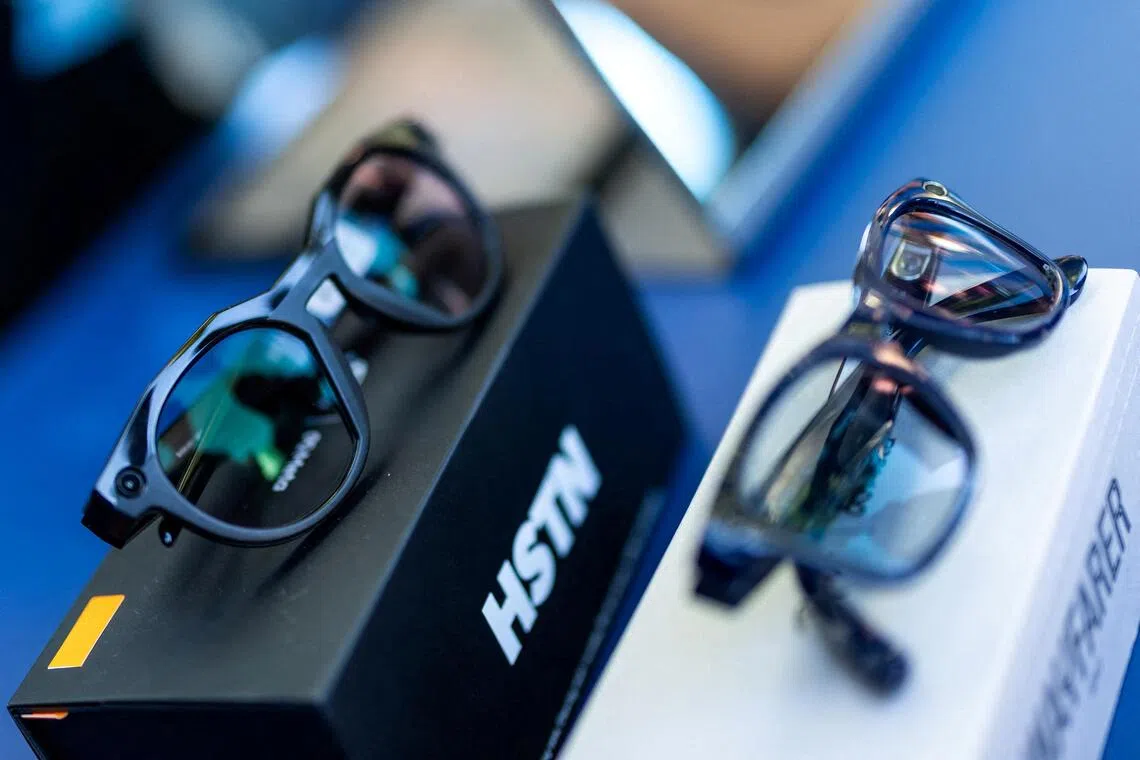
Photo via New York Post

Meta’s AI glasses accused in California lawsuit of secretly capturing sex, nudity and bathroom footage

Read the original at New York Post ↗
Cite

Peña, M. (2026, September 19). Meta’s AI glasses accused in California lawsuit of secretly capturing sex, nudity and bathroom footage. New York Post. https://nypost.com/2026/09/18/us-news/california-users-among-plaintiffs-suing-meta-over-smart-glasses/

Dated when The Aporia collected the article, usually within hours of publication. Check the original for its exact date and byline.

New York Post · collected 2026-09-19 · by Marina Peña

Quick Summary

A group of more than 70 individuals who purchased or were recorded by Meta’s smart glasses are suing the company, claiming sensitive footage was sent to contractors in Kenya for AI training purposes without their consent. The plaintiffs include Californians and allege that private moments like nudity, bathroom use, and sexual activity were captured and reviewed by overseas workers, despite efforts to blur identifying information. Meta denies these claims but faces further legal challenges related to the glasses’ facial recognition technology.
Written by AI on 2026-09-19, from this article's own text only (the story summary below draws on all the coverage).

AI analysis

Story summary

Meta’s development of AI-powered smart glasses has led to legal challenges, with over 70 people suing the company for allegedly capturing private moments without consent. The plaintiffs claim that their sensitive photos and videos were sent to contractors in Kenya, who use this data to train Meta’s artificial intelligence systems. Some individuals recorded using the bathroom, undressing, having sex, or entering passwords, unaware of the glasses’ recording capabilities. One California plaintiff discovered images of his relatives bathing and using the bathroom in his photo gallery after leaving his glasses unattended. The lawsuit, amended in late August, argues that Meta failed to inform users about the extent of data collection for AI training purposes.

Written for “Meta AI Glasses Privacy Lawsuit” on 2026-11-01, grounded in this article and the 0 other(s) covering the same event.

Story

📰 Meta AI Glasses Privacy Lawsuit
Other · 1 article(s) covering the same event.

Compared with similar articles

This article reads unscored and hedges 37% of its claims. Each row says how that neighbour differs.
The Straits Times
⚖️ Leans left Hedges 2 of 22 claims Outlet record 66/100
“The articles describe different legal actions concerning smart glasses: a lawsuit in California versus probes opened by French prosecutors.”
Semafor
⚖️ Leans right Hedges 1 of 6 claims Outlet record 60/100
“The articles describe different aspects of smart glasses technology and their implications, with Article A focusing on Chinese tech companies' push for AI in smart glasses, while Article B focuses on a legal lawsuit against Meta's smart glasses in the US.”
ABC News (AU)
⚖️ Leans left Hedges 2 of 35 claims Outlet record 68/100
“Article A discusses a potential ban on smart glasses in Commonwealth workplaces due to privacy and security concerns, while Article B reports on a lawsuit against Meta for alleged privacy violations with their AI glasses.”
South China Morning Post
Hedges 0 of 3 claims Outlet record 64/100
“The articles describe different legal actions: a lawsuit in California against Meta's AI glasses for capturing private moments and a separate investigation by French prosecutors into secret filming of women on the street without consent.”
How this article was measured signals, leaning charts, publisher record, byline, topics and claims

Signals How these are calculated →

Claims extracted
19
sentences that state something as happening or true
Uncertain
37%
7 of 19 hedged ("reportedly", "may", "according to")
Leaning
not political
takes no side on a contested political question
Publisher signals
66/100
New York Post's corrections and hedging, across everything collected from it. Not a measure of accuracy.
Outlets on this story
1
Other
Same framing elsewhere
1
articles that frame the event the way this one does
Analyzed 2026-09-19 · how these are computed

How this is being covered How these are calculated →

Article leaning vs. publisher reliability
Source leaning vs. consistency

Publisher

New York Post · 15824 article(s) · 35 correction(s) detected
Running correction rate · 35 correction(s)

Who wrote this

Marina Peña
62 article(s) here · 1 carrying a prediction
🔮 “I could tell you that, we have had issues with sleep.
🔮 The Supreme Court will ultimately decide this matter.”
🔮 Corona added that Ruiz also allegedly asked whether the girl’s mother would be home and talked about taking condoms.
🔮 Emil Barr warned the state’s political climate could drive away young business founders and cost residents job opportunities.
🔮 The blaze is also expected to cause traffic disruptions in the surrounding area, with drivers advised to take alternate routes.
🔮 Nithya Raman claimed she went into a “fugue state” and did not remember her Los Angeles mayoral debate with Karen Bass.
🔮 A tentative court ruling could reopen the door to fracking in Kern County, giving oil producers hope of tapping massive reserves that have remained out of reach under California’s ban.
🔮 “Katie was the kind of person who would send you a random text just to say she loved you or to give you encouragement when you needed it.
🔮 A crew from Coast Guard Station San Diego managed to locate the stranded vessel but could not reach it because of dangerously shallow waters and rough conditions.
🔮 Adelkoff declined to confirm where she lives, telling the newspaper that revealing her location could pose a security risk because the nonprofit serves victims fleeing abusive situations.
Also by Marina Peña
Nothing else under this byline is closely related to this article, so these are simply their most recent.
All 62 articles by Marina Peña →

Topics

California Kenya Menlo Park Meta the Los Angeles Times

Subjects

Meta ORG · 16× Facebook ORG · 3× California GPE · 2× Instagram ORG · 2× Kenya GPE · 2× Times ORG · 2× Wahl PERSON · 2× Menlo Park GPE · 1× PL18 PERSON · 1× Tina Wolfson PERSON · 1×

Narrative

Meta’s push to bring artificial intelligence into everyday eyewear is facing growing legal scrutiny — with dozens of people alleging the company’s smart glasses captured private moments that were later viewed by overseas workers helping train its AI systems.
framing: mixed · carried by 1 article(s) · first seen 2026-09-19
🔮 Tina Wolfson, an attorney representing the plaintiffs, told the Los Angeles Times the case also concerns people who may never have agreed to be recorded or have their images used to develop AI. “People who bought these glasses and thought that they were cool gadgets weren’t aware that every time they activated AI, video was sent to train Meta’s AI,” Wolfson said.

Claims (19 extracted, 7 hedged)

Meta’s push to bring artificial intelligence into everyday eyewear is facing growing legal scrutiny — with dozens of people alleging the company’s smart glasses captured private moments that were later viewed by overseas workers helping train its AI systems. asserted
that → bring → systems
More than 70 people who purchased, used or were recorded by Meta’s smart glasses are suing the company, alleging sensitive photos and videos were sent to contractors in Kenya who review and label data used to improve Meta’s artificial intelligence. asserted
who → purchase → intelligence
The plaintiffs, including some in California, say the footage captured people undressing, using the bathroom, having sex and entering passwords, according to a proposed class-action lawsuit amended in late August. uncertain
people → include → August
Some allege they did not know the glasses were recording. asserted
glasses → allege → ?
One California plaintiff, identified as PL18, said he discovered images of relatives bathing and using the bathroom in his photo gallery after leaving his glasses on a bathroom counter. asserted
relatives → identify → counter
“He noticed that at times photos of his family members using the bathroom and bathing began appearing in his gallery — footage no one in his household intended to take,” the lawsuit alleges. asserted
lawsuit → notice → household
The legal challenge comes as Meta prepares to unveil its latest wearable devices at its developers conference in Menlo Park on Sept. 23. asserted
Meta → come → Sept.
The company markets its smart glasses as a hands-free way to take photos and videos, make calls, listen to audio and interact with Meta AI. asserted
company → market → AI
Tina Wolfson, an attorney representing the plaintiffs, told the Los Angeles Times the case also concerns people who may never have agreed to be recorded or have their images used to develop AI. “People who bought these glasses and thought that they were cool gadgets weren’t aware that every time they activated AI, video was sent to train Meta’s AI,” Wolfson said. uncertain
Wolfson → represent → AI
Meta disputes the allegations and says it plans to fight the lawsuit. asserted
it → dispute → lawsuit
A company spokesperson told the Times that when people use Meta AI, some data may be reviewed to improve its products, adding that Meta takes steps to remove identifying information and protect privacy. uncertain
Meta → tell → privacy
The lawsuit cites a February investigation by Swedish newspapers Svenska Dagbladet and Göteborgs-Posten, which interviewed more than 30 current and former employees of Meta subcontractor Sama and former Meta workers. asserted
which → cite → Sama
Some contractors in Kenya said they reviewed images captured through Meta glasses and that people’s faces were sometimes visible despite efforts to blur them. asserted
faces → say → them
Plaintiffs allege video and audio can be transmitted to Meta when wearers activate the AI assistant by saying “Hey Meta,” and that the feature can sometimes be triggered unintentionally. asserted
feature → allege → assistant
The legal scrutiny also extends to facial recognition technology Meta has considered for its glasses. asserted
Meta → extend → glasses
Meta Chief Technology Officer Andrew Bosworth discussed a potential feature known as “NameTag” in July that could help wearers remember the names of people they meet. uncertain
they → discuss → people
A separate proposed class-action lawsuit filed this month in Illinois alleges Meta used photographs publicly posted on Facebook and Instagram to train artificial intelligence that could eventually power NameTag and other facial-recognition tools. uncertain
that → propose → NameTag
According to the lawsuit, Wahl posted photographs of himself and his daughter on Facebook and Instagram. uncertain
Wahl → accord → Facebook
Wahl alleges Meta never told him those photographs could be used to train NameTag and believes the company has used them for that purpose. “People shouldn’t have to worry if their biometric information will be misused simply because their photographs appear on a social media platform,” Justin Boley, an attorney representing the plaintiffs, told the Times in a statement. uncertain
Boley → allege → statement

💬Give feedback
🕘History 🎫Support