Photo via South China Morning Post

Crouching dragons: the suicide divers Japan never sent to war

Read the original at South China Morning Post ↗
Cite

Ryall, J. (2026, September 19). Crouching dragons: the suicide divers Japan never sent to war. South China Morning Post. https://www.scmp.com/week-asia/people/article/3368036/crouching-dragons-suicide-divers-japan-never-sent-war?utm_source=rss_feed

Dated when The Aporia collected the article, usually within hours of publication. Check the original for its exact date and byline.

South China Morning Post · collected 2026-09-19 · by Julian Ryall

Quick Summary

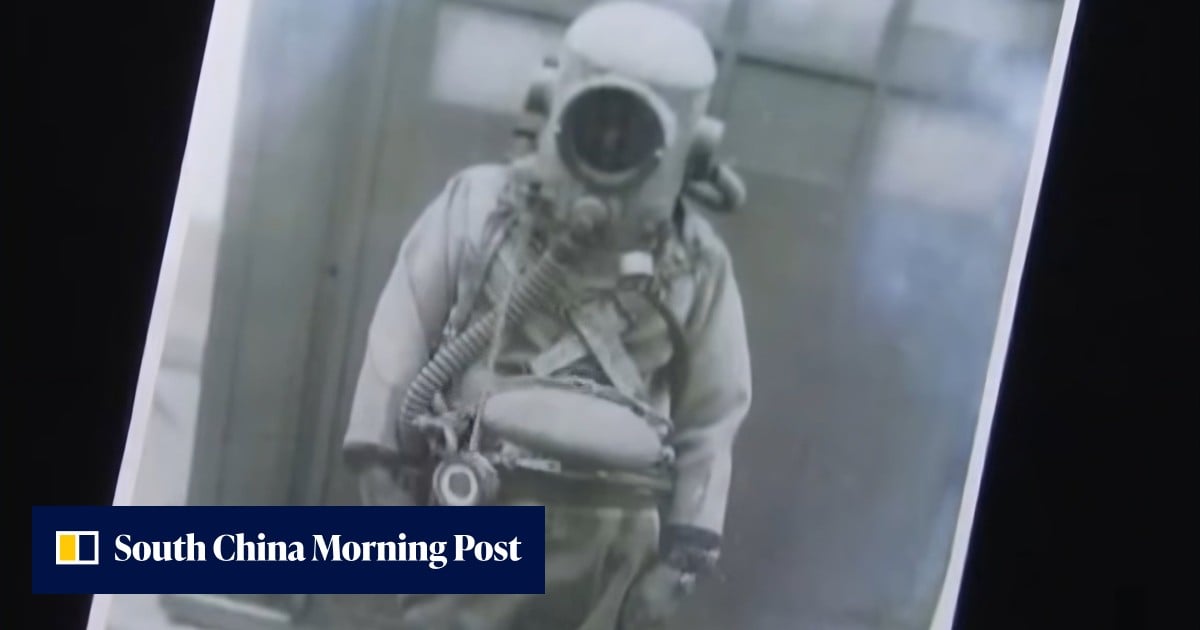
The article discusses Japan’s fukuryu, or suicide frogmen, trained towards the end of World War II to ambush Allied ships with mines attached to bamboo poles from underwater positions along the coast. Photographer Kanade Hamamoto discovered this largely forgotten aspect of history while exploring Inamuragasaki near Tokyo, where remnants of their training facilities can still be found in tunnels carved into cliffs.
Written by AI on 2026-09-19, from this article's own text only (the story summary below draws on all the coverage).

AI analysis

Story summary

In the closing months of World War II, Japan trained suicide divers called 'fukuryu' to combat an expected Allied invasion. Sealed in diving suits with mines attached to poles, these frogmen were meant to wait beneath the waves near coastal areas like Inamuragasaki, a cape south of Tokyo. Despite their existence, the fukuryu remained largely unknown to many Japanese people until recently. A 25-year-old photographer named Kanade Hamamoto first learned about them after her friend mentioned the remains of a military base in tunnels cut into the cliff face near Inamuragasaki. The invasion never came, and thus these frogmen were never deployed.

Written for “Japanese Suicide Divers History” on 2026-10-31, grounded in this article and the 0 other(s) covering the same event.

Story

📰 Japanese Suicide Divers History
World · 1 article(s) covering the same event.

Compared with similar articles

Nothing to compare against. No article is close enough to this one for the pipeline to have linked or judged the pair.
How this article was measured signals, leaning charts, publisher record, byline, topics and claims

Signals How these are calculated →

Claims extracted
3
sentences that state something as happening or true
Uncertain
33%
1 of 3 hedged ("reportedly", "may", "according to")
Leaning
not political
takes no side on a contested political question
Publisher signals
64/100
South China Morning Post's corrections and hedging, across everything collected from it. Not a measure of accuracy.
Outlets on this story
1
World
Same framing elsewhere
1
articles that frame the event the way this one does
Analyzed 2026-09-19 · how these are computed

How this is being covered How these are calculated →

Article leaning vs. publisher reliability
Source leaning vs. consistency

Publisher

South China Morning Post · 3440 article(s) · 6 correction(s) detected
Running correction rate · 6 correction(s)

Who wrote this

Julian Ryall
34 article(s) here · 1 carrying a prediction
🔮 The North Korean regime has since conducted multiple weapons tests, held its first-ever exhibition of military drones attended by Kim Jong Un, brought up self-propelled artillery units to the border and started preparing loudspeaker systems that will blast propaganda into the South.
🔮 Will US midterm battles blind Washington to Asia?
🔮 Japan needs close allies In Singapore, Merz is set to deliver a major foreign policy speech and meet Prime Minister Lawrence Wong.
2026-10-27 · assertive framing · Germany's Merz in Asia as security issues loom large
🔮 Japan needs close allies In Singapore, Merz is set to deliver a major foreign policy speech and meet Prime Minister Lawrence Wong.
🔮 Yoji Gomi, a veteran journalist and author who has reported from across Asia, told DW that Japanese journalists may occasionally meet with diplomats in the course of their work and "share thoughts and impressions."
🔮 The fatalities have fuelled calls for some festivals to be scrapped, even as experts warn that abandoning them would erase an important part of local identity and cultural heritage.
🔮 "The North Korean regime… is selling the labor of its citizens under a state-to-state arrangement, controlling whether they may leave and collecting most of their wages," it said.
🔮 Japan’s dilemma over frosty ties with Russia deepens after reporter’s arrest Given Japan’s lack of response to recent provocative Russian moves, Moscow could be emboldened to antagonise Tokyo further, analysts say The arrest of a Japanese journalist in Russia has finally woken Tokyo up to the fact that Moscow is playing hardball in their diplomatic relationship, and the country’s apparent unwillingness to push back with commensurate force could encourage the Kremlin to test its neighbour’s resolve, analysts say.
Also by Julian Ryall
Nothing else under this byline is closely related to this article, so these are simply their most recent.
All 34 articles by Julian Ryall →

Topics

Allied Inamuragasaki Japan Japanese World War II

Subjects

Japan GPE · 2× Allied NORP · 1× Inamuragasaki GPE · 1× Japanese NORP · 1× Kanade Hamamoto PERSON · 1× Shonan NORP · 1× Tokyo GPE · 1×

Narrative

Crouching dragons: the suicide divers Japan never sent to war Sealed in diving suits with mines attached to poles, Japan’s ‘fukuryu’ frogmen waited beneath the waves for an invasion that never came Far less well-remembered are the fukuryu – suicide frogmen trained in the closing months of World War II to walk into the sea with mines on bamboo poles, then wait beneath the waves for an Allied invasion fleet.
framing: mixed · carried by 1 article(s) · first seen 2026-09-19
🔮 The 25-year-old photographer knew Inamuragasaki, on the Shonan coast south of Tokyo, only as a scenic seaside spot until a friend mentioned that the remains of a military base could still be seen near the cape, in tunnels cut into the cliff face.
2026-09-19 · South China Morning Post
Crouching dragons: the suicide divers Japan never sent to war · mixed framing

Claims (3 extracted, 1 hedged)

Crouching dragons: the suicide divers Japan never sent to war Sealed in diving suits with mines attached to poles, Japan’s ‘fukuryu’ frogmen waited beneath the waves for an invasion that never came Far less well-remembered are the fukuryu – suicide frogmen trained in the closing months of World War II to walk into the sea with mines on bamboo poles, then wait beneath the waves for an Allied invasion fleet. asserted
fukuryu → crouch → fleet
Kanade Hamamoto was one of many Japanese people who had never heard of them, despite spending years on the same stretch of coast where they once trained. asserted
they → hear → coast
The 25-year-old photographer knew Inamuragasaki, on the Shonan coast south of Tokyo, only as a scenic seaside spot until a friend mentioned that the remains of a military base could still be seen near the cape, in tunnels cut into the cliff face. uncertain
remains → know → face
💬Give feedback
🕘History 🎫Support