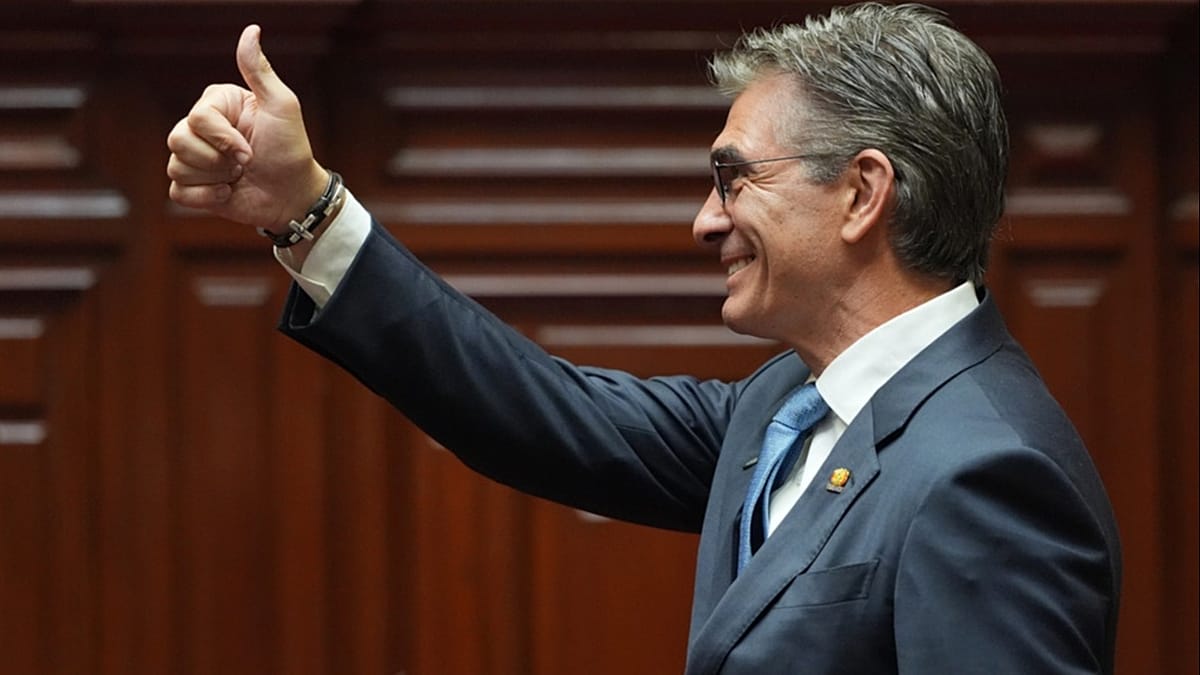
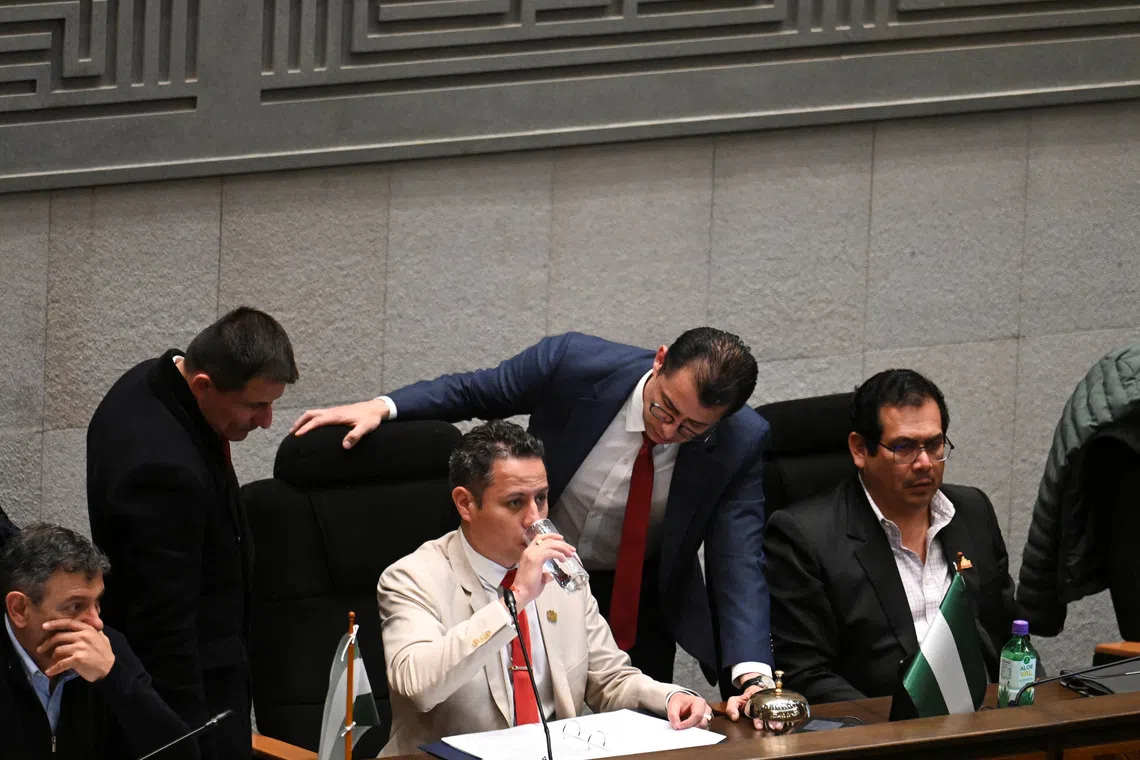
Photo via Euronews

Bolivia slashes diesel subsidies as its Congress ratifies $1.9 billion IMF deal to ease deep economic crisis

Read the original at Euronews ↗
Cite

Fouda, M. (2026, September 19). Bolivia slashes diesel subsidies as its Congress ratifies $1.9 billion IMF deal to ease deep economic crisis. Euronews. https://www.euronews.com/2026/09/19/bolivia-slashes-diesel-subsidies-as-its-congress-ratifies-19-billion-imf-deal-to-ease-deep

Dated when The Aporia collected the article, usually within hours of publication. Check the original for its exact date and byline.

Euronews · collected 2026-09-19 · by Malek Fouda

Quick Summary

Bolivia’s Congress ratified a $1.9 billion loan agreement with the International Monetary Fund to address the country's economic crisis, which includes high inflation and weak growth. Following this approval, President Rodrigo Paz announced an end to diesel subsidies immediately as part of the IMF’s requirements. The deal aims to stabilize Bolivia’s economy by replenishing foreign reserves and securing additional financing from institutions like the World Bank. However, it faces opposition from unions who fear that the economic measures will increase living costs for low-income families.
Written by AI on 2026-09-19, from this article's own text only (the story summary below draws on all the coverage).

AI analysis

Story summary

Bolivia's Congress approved a $1.9 billion loan agreement with the International Monetary Fund (IMF) on Friday, aimed at replenishing dwindling foreign reserves and stabilizing an economy hit by high inflation and weak growth. The deal still requires final approval from the IMF’s executive board before funds can be disbursed. President Rodrigo Paz announced an immediate end to diesel subsidies as part of meeting IMF demands for austerity measures. Unions have denounced these cuts, warning that they could lead to renewed protests amid the country's economic crisis following nearly two decades of socialist rule and now facing surging global oil prices.

Written for “Bolivia IMF Deal Controversy” on 2026-11-04, grounded in this article and the 2 other(s) covering the same event.

Story

📰 Bolivia IMF Deal Controversy
Economy/Business · 3 article(s) covering the same event. Compare every outlet's account →

Compared with similar articles

This article reads leans right and hedges 0% of its claims. Each row says how that neighbour differs.
Toronto Star
⚖️ Leans right Hedges 0 of 4 claims Outlet record 64/100
Al Jazeera
⚖️ Leans right Hedges 1 of 15 claims Outlet record 60/100
The Straits Times
⚖️ Centre further left than this Hedges 1 of 7 claims Outlet record 66/100
“The articles describe different events: one about extending a state of emergency due to potential blockades and the other about approving an IMF loan deal amid threats of protests.”
How this article was measured signals, leaning charts, publisher record, byline, topics and claims

Signals How these are calculated →

Claims extracted
20
sentences that state something as happening or true
Uncertain
0%
0 of 20 hedged ("reportedly", "may", "according to")
Leaning
Leans right
of the writing, not the subject · beta estimate
Publisher signals
60/100
Euronews's corrections and hedging, across everything collected from it. Not a measure of accuracy.
Outlets on this story
3
Economy/Business
Same framing elsewhere
1
articles that frame the event the way this one does
Analyzed 2026-09-19 · how these are computed

How this is being covered How these are calculated →

Article leaning vs. publisher reliability
Source leaning vs. consistency

Publisher

Euronews · 1182 article(s) · 1 correction(s) detected
Running correction rate · 1 correction(s)

Who wrote this

Malek Fouda
34 article(s) here · 1 carrying a prediction
🔮 Chilean President José Antonio Kast declared a state of emergency in Las Condes, a wealthy suburb east of Santiago, giving government agencies more power to respond as torrential rains turned key roads into impassable waterways. The district's mayor, Catalina San Martín, said 14.4 centimetres of rain had fallen in recent days — about nine times the average October rainfall — leaving the area “totally drenched.” The Mapocho River, which runs through Santiago, overflowed, prompting evacuation orders. Chile’s disaster-response agency put 10 other districts on high alert for more landslides and ordered schools to close on Friday.
🔮 New York City Mayor Zohran Mamdani and New York Governor Kathy Hochul said they had received reports the agents fired at the man while he was inside a vehicle with a 5-year-old child, who was apparently unhurt.
🔮 South Korea said on Thursday it will recall its ambassador to Ukraine, stepping up its protest against President Volodymyr Zelenskyy’s recent revelation of a supposedly secret transfer of two North Korean prisoners of war to Seoul.
🔮 A minority government means PQ will need support from opposition lawmakers to pass key legislation and survive confidence votes.
🔮 Flávio Bolsonaro, a Brazilian Senator and ally of US President Donald Trump, and Brazil’s incumbent President Luiz Inácio Lula da Silva will face off in a runoff on the 25th of October 5 for the top job of Latin America’s powerhouse economy after neither won a majority in Sunday's presidential vote.
🔮 The agency downplayed the new measures, insisting they’re mere reminders and that current protocols will continue.
🔮 Top US diplomat Marco Rubio signed off on the waiver but argued that Washington’s concerns over its Middle Eastern ally’s human rights record will remain a point of discussion in full bilateral discussions.
🔮 “In the days ahead, our focus will remain on caring for our people, supporting their families and honouring the lives and service of those we have lost,” REACH said in a statement.
🔮 The investigation comes as both Lula and Flavio Bolsonaro prepare to contest each other for what is being described as a consequential election in Brazil, that could shape the developing economy’s forecast and future for decades to come.
🔮 Under new rules that will come into effect in stages, foreign residents wishing to stay in Japan permanently will have to prove their annual income is above average and they can carry casual conversations in Japanese.
Also by Malek Fouda
Nothing else under this byline is closely related to this article, so these are simply their most recent.
All 34 articles by Malek Fouda →

Topics

Bolivia Bolivian Congress IMF Paz

Subjects

Paz PERSON · 8× IMF ORG · 6× Bolivia GPE · 4× Bolivian NORP · 3× Congress ORG · 3× La Paz GPE · 1× Latin American NORP · 1× Rodrigo Paz PERSON · 1× the International Monetary Fund ORG · 1× the World Bank ORG · 1×

Narrative

The Iran war dramatically surging global oil prices have made fuel subsidies even more burdensome and dug the country into a deeper financial hole. “No one can buy something expensive and sell it cheap,” Paz said in his late-night declaration that diesel in Bolivia would now be sold at international prices.
framing: assertive · carried by 1 article(s) · first seen 2026-09-19
🔮 La Paz hopes the deal, awaiting final authorisation by the IMF’s executive board, will open other lines of finances from different institutions, like the World Bank, as the country works to restore its struggling credit status.

Claims (20 extracted, 0 hedged)

La Paz hopes the deal, awaiting final authorisation by the IMF’s executive board, will open other lines of finances from different institutions, like the World Bank, as the country works to restore its struggling credit status. asserted
country → hop → status
Bolivian lawmakers approved a $1.9 billion (€1.65bn) loan agreement with the International Monetary Fund on Friday, delivering the conservative government a key victory in its efforts to ease the country's deep economic crisis as unions threatened to renew protests. asserted
unions → approve → protests
Just hours after Congress approved the loan, President Rodrigo Paz announced an immediate end to subsidies for the diesel powering Bolivia’s trucks, buses and tractors — a step towards meeting IMF demands. asserted
Paz → approve → demands
Gasoline, used mainly in private cars, would remain subsidised for now, though Paz had already scaled back that support in recent months. asserted
Paz → use → months
The Bolivian Senate ratified the IMF agreement a day after the lower house approved it, clearing the final legislative hurdle for the three-year financing programme aimed at replenishing dwindling foreign reserves and stabilising an ailing economy marked by high inflation and weak growth. asserted
house → ratify → inflation
The IMF first announced the staff-level agreement in July after months of negotiations with Paz’s market-friendly government, which took power last year after nearly two decades of socialist rule as part of a wave of new Latin American leaders allied with the Trump administration. asserted
which → announce → administration
The programme still requires approval from the IMF’s executive board before funds can be disbursed. asserted
funds → require → board
Economy Minister Christian Morales told senators that the deal would give other lenders, including the World Bank and the Inter-American Development Bank, greater confidence in the government and help it secure about $5 billion in additional financing. asserted
it → tell → financing
But the assistance is conditioned on tough economic measures, including the elimination of fuel subsidies, that threaten to reignite unrest in Bolivia, where weeks of road blockades in June and July paralysed much of the South American nation as protesters demanded Paz’s resignation. asserted
protesters → condition → resignation
Congress on Thursday extended for another 90-days a state of emergency that Paz had declared to clear roads during the protests. asserted
Paz → extend → protests
It allows for military intervention and the suspension of some civil liberties to quell unrest. asserted
It → allow → unrest
The Bolivian Workers’ Central, the country’s main labour federation, and other unions have voiced fierce opposition to the IMF loan, warning that the government spending cuts required under the deal would drive up living costs and deepen hardship for low-income and struggling families. asserted
cuts → voice → families
Although Paz’s Christian Democratic Party lacks a majority in Congress, the centrist and right-wing lawmakers that dominate both chambers rallied behind the deal. asserted
that → lack → deal
The Movement Toward Socialism, the party that dominated Bolivian politics after the former coca growers’ union leader Evo Morales won the presidency in 2005, now holds just two of the 130 seats in the lower house and none in the 36-member Senate. asserted
leader → dominate → Senate
Declining natural gas exports have deprived Bolivia of billions of dollars it had relied on previously to import gasoline and diesel, contributing to chronic fuel shortages that began in 2023 and have persisted under Paz. asserted
that → decline → Paz
The Iran war dramatically surging global oil prices have made fuel subsidies even more burdensome and dug the country into a deeper financial hole. “No one can buy something expensive and sell it cheap,” Paz said in his late-night declaration that diesel in Bolivia would now be sold at international prices. asserted
diesel → surge → prices
To cushion the blow, he announced about $79 million (€68.8m) in cash assistance for approximately 2.9 million Bolivians, along with loans on preferential terms for truckers, small businesses and producers facing the new higher diesel costs. asserted
he → cushion → costs
He pledged to redirect subsidy spending toward schools, hospitals and roads. asserted
He → pledge → schools
Paz also promised the change would end the country’s persistent diesel shortages, which have disrupted harvests and delayed deliveries of imported goods. asserted
which → promise → goods
“With this measure, we guarantee supplies 24 hours a day, seven days a week,” he said. asserted
he → guarantee → measure

💬Give feedback
🕘History 🎫Support