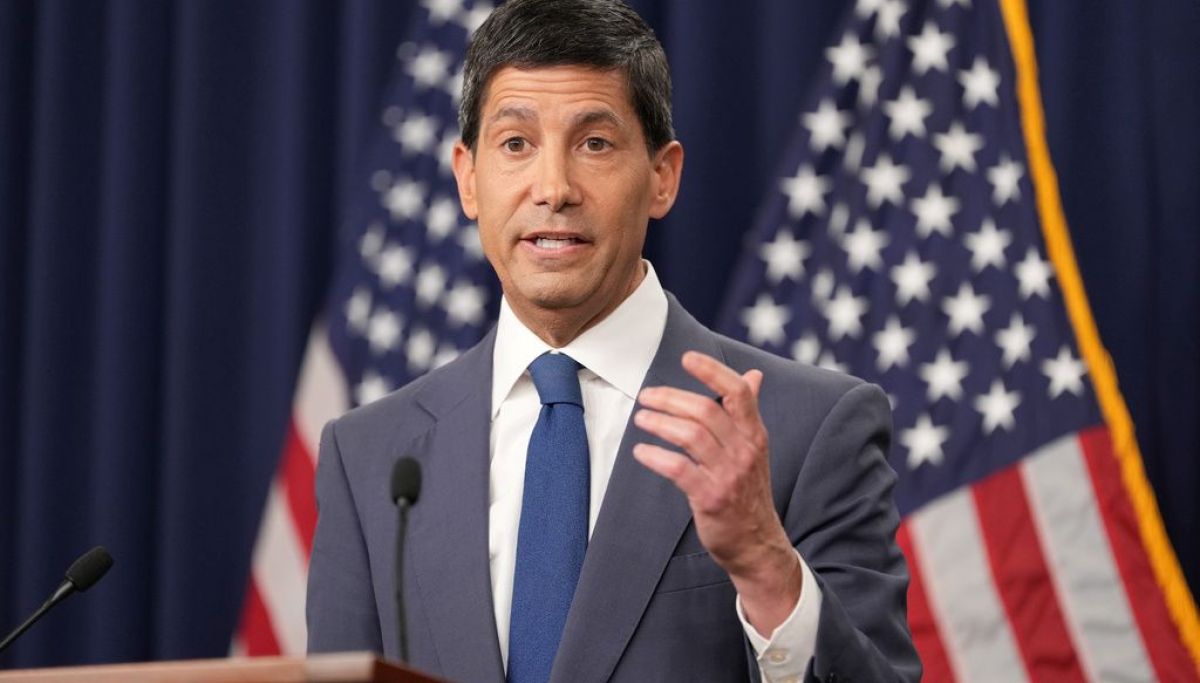
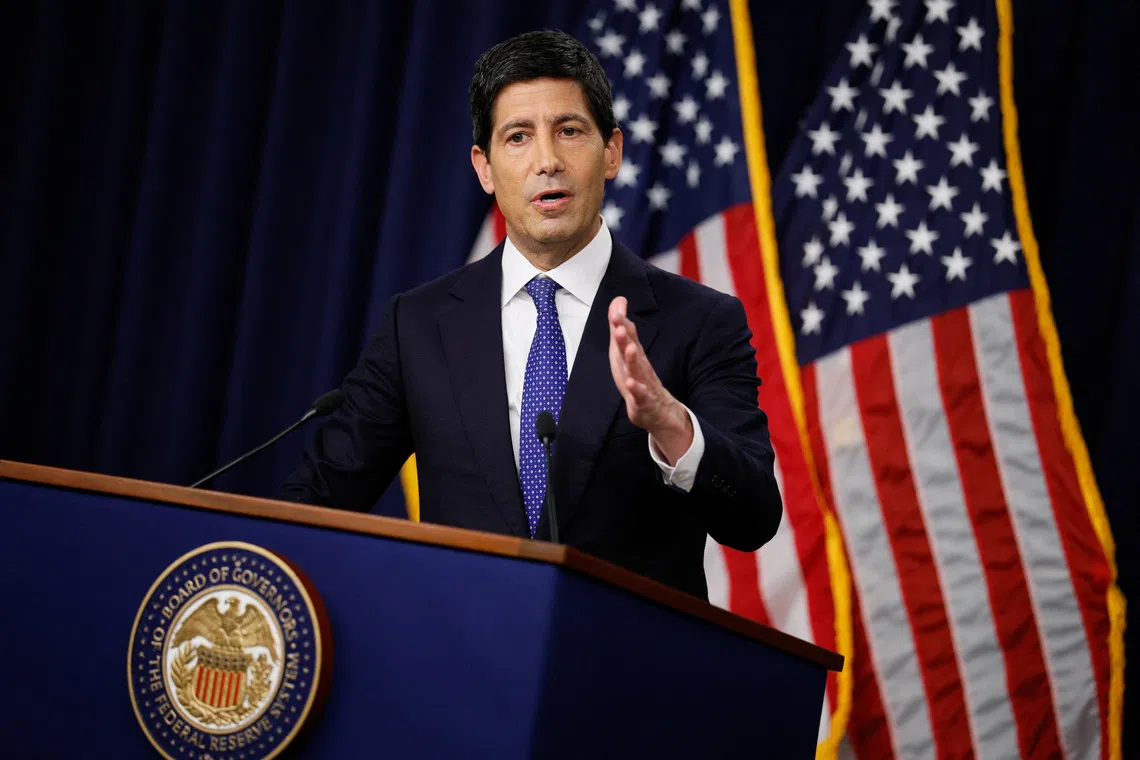
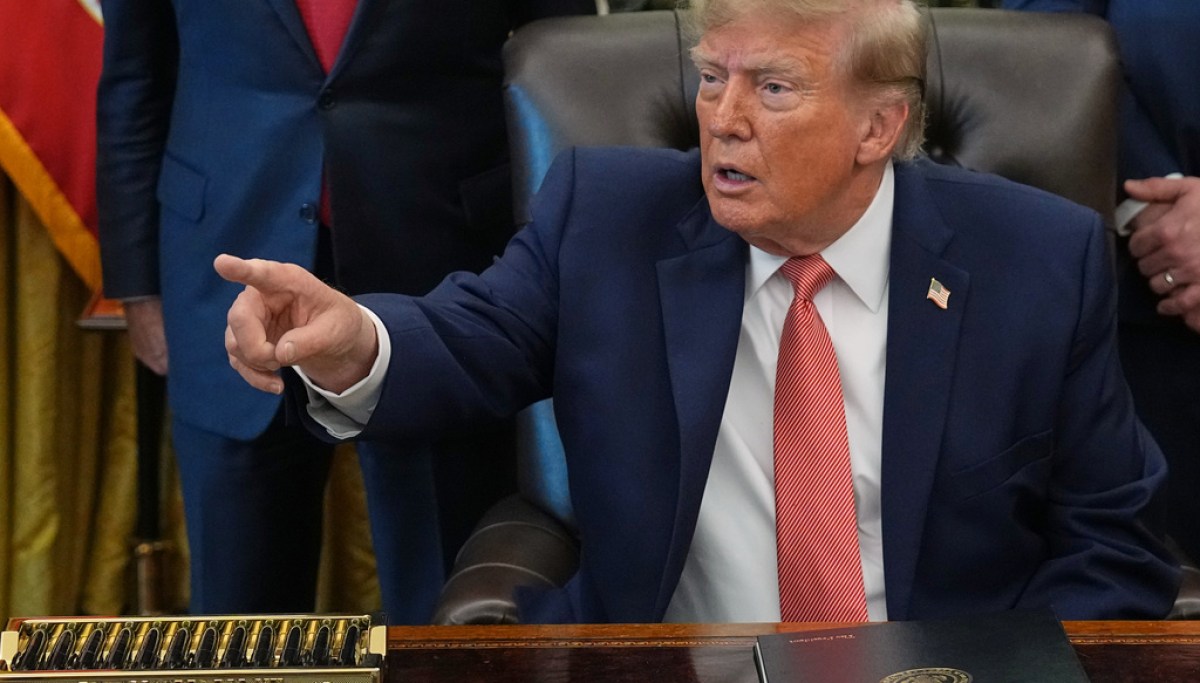
Photo via Washington Examiner

The Fed just ended Washington’s cheap-money era

Read the original at Washington Examiner ↗
Cite

Examiner, W. (2026, September 19). The Fed just ended Washington’s cheap-money era. Washington Examiner. https://www.washingtonexaminer.com/opinion/editorials/4732209/federal-reserve-ended-washington-cheap-money-era-interest-rates/

Dated when The Aporia collected the article, usually within hours of publication. Check the original for its exact date and byline.

Washington Examiner · collected 2026-09-19 · by Washington Examiner

Quick Summary

The Federal Reserve raised its benchmark interest rate by a quarter percentage point to 4%, aligning with expectations given current inflation and economic conditions. Fed Chairman Kevin Warsh emphasized that the central bank’s oversized balance sheet, bloated by post-2008 quantitative easing measures, is no longer sustainable, indicating an end to artificially low borrowing costs for the government. This shift means rising interest payments on federal debt, projected to surpass $1 trillion in 2026 and nearly double to over $2.1 trillion by 2036, significantly altering fiscal policy considerations in Congress.
Written by AI on 2026-09-19, from this article's own text only (the story summary below draws on all the coverage).

AI analysis

Story summary

On September 16, 2023, the Federal Reserve is expected to raise its benchmark interest rate by 25 basis points to a range between 3.75% and 4.00%, according to predictions from financial analysts like CME Group's FedWatch tool. This move reflects growing concerns over inflation, which has risen above the central bank’s target of 2%, despite previous attempts at stabilization. The decision comes amid pressure from President Donald Trump for lower rates and economic turbulence due to rising oil prices following conflicts in the Middle East, pushing crude costs past $100 per barrel. Despite political tensions, financial markets overwhelmingly anticipate a rate hike to combat inflation, with some economists predicting additional increases before year-end to achieve a “timelier return” to the 2% target.

Written for “Fed Interest Rate Hike” on 2026-10-31, grounded in this article and the 55 other(s) covering the same event.

Story

📰 Fed Interest Rate Hike
Economy/Business · 56 article(s) covering the same event. Compare every outlet's account →

Compared with similar articles

This article reads leans right and hedges 6% of its claims. Each row says how that neighbour differs.
The Guardian
Hedges 1 of 24 claims Outlet record 66/100
ABC News (US)
Hedges 3 of 20 claims Outlet record 70/100
ABC News (AU)
⚖️ Leans left further left than this Hedges 2 of 27 claims Outlet record 68/100
ABC News (AU)
⚖️ Leans left further left than this Hedges 2 of 26 claims Outlet record 68/100
New York Post
⚖️ Leans left further left than this Hedges 8 of 34 claims Outlet record 66/100
BBC News
Hedges 6 of 27 claims Outlet record 69/100
ABC News (AU)
Hedges 1 of 29 claims Outlet record 68/100
The Straits Times
⚖️ Leans right Hedges 4 of 15 claims Outlet record 66/100
Al Jazeera
Hedges 5 of 36 claims Outlet record 60/100
CBS News
Hedges 0 of 4 claims Outlet record 66/100
How this article was measured signals, leaning charts, publisher record, byline, topics and claims

Signals How these are calculated →

Claims extracted
35
sentences that state something as happening or true
Uncertain
6%
2 of 35 hedged ("reportedly", "may", "according to")
Leaning
Leans right
of the writing, not the subject · beta estimate
Publisher signals
70/100
Washington Examiner's corrections and hedging, across everything collected from it. Not a measure of accuracy.
Outlets on this story
56
Economy/Business
Same framing elsewhere
1
articles that frame the event the way this one does
Analyzed 2026-09-19 · how these are computed

How this is being covered How these are calculated →

Article leaning vs. publisher reliability
Source leaning vs. consistency

Publisher

Washington Examiner · 3814 article(s) · 7 correction(s) detected
Running correction rate · 7 correction(s)

Who wrote this

Washington Examiner
31 article(s) here · 1 carrying a prediction
🔮 Reporting published Wednesday revealed that aides to Democratic Senate candidate Mary Peltola worked with campaign lawyers and senior staff at the Democratic Senatorial Campaign Committee to recruit candidates who could siphon support from Sen. Dan Sullivan (R-AK).
🔮 Americans will welcome immigrants less warmly if we know Democratic prosecutors give them special immunity for even their worst crimes.
2026-10-26 · assertive framing · Democrats can’t fight crime by freeing criminals
🔮 We are about to find out just how far Trump is willing to go in blaming the victim rather than the aggressor.
🔮 And that is before you get to the even bigger concern that, at some point, America may not be able to pay its debts.
🔮 Universal pre-K and childcare were part of President Joe Biden’s Build Back Better agenda, part of Vice President Kamala Harris’s presidential campaign, and a centerpiece of New York City Mayor Zohran Mamdani’s promise to voters.
🔮 Rising gas and diesel prices are a major reason Republicans risk losing the House and possibly the Senate in November, but President Donald Trump’s energy deal with Russia will not fix that.
2026-10-13 · assertive framing · Trump’s worse-than-useless Russian diesel deal
🔮 The report attributes the limited enforcement to a Sept. 30, 2021, memorandum written by Homeland Security Secretary Alejandro Mayorkas that directed ICE to focus its resources on threats to “national security, public safety, and border security.”
🔮 But when President Donald Trump said what is obviously true and blamed the mayhem on mass migration, France’s leaders reacted by pretending that this latest display of unassimilated alien violence was about spending cuts.
2026-10-11 · assertive framing · A red-green warning from France
🔮 Restored energy flows may somewhat shield Republican candidates from public anger over high energy costs and inflation in the run-up to the midterm elections.
🔮 The final result won’t be known until later this month, but if the first round of Brazil’s election is any indication, it will soon become the latest Latin American country to turn back to conservatism after socialism led to crime, inflation, and stagnant economic growth.
2026-10-09 · assertive framing · Latin America turns right as Democrats turn left
Also by Washington Examiner
Democrats can’t fight crime by freeing criminals
2026-10-26 · Washington Examiner
Nothing else under this byline is closely related to this article, so these are simply their most recent.
All 31 articles by Washington Examiner →

Topics

Congress Fed Medicare The Federal Reserve’s Treasury

Subjects

Fed ORG · 9× Congress ORG · 7× Treasury ORG · 5× Social Security ORG · 4× Medicare ORG · 2× Kevin Warsh PERSON · 1× The Congressional Budget Office ORG · 1× The Federal Reserve’s ORG · 1× Warsh PERSON · 1× the White House GPE · 1×

Narrative

Before taking the chair, he called the balance sheet, which is weighed down by $7 trillion of government IOUs, “trillions larger than it needs to be” and advocated a big withdrawal of the Fed’s presence in financial markets.
framing: assertive · carried by 1 article(s) · first seen 2026-09-19
🔮 For years, lawmakers could run enormous deficits while interest rates were kept artificially low.
2026-09-19 · Washington Examiner
The Fed just ended Washington’s cheap-money era · assertive framing

Claims (35 extracted, 2 hedged)

The Federal Reserve’s decision Wednesday to raise its benchmark interest rate by a quarter percentage point to 4% surprised almost no one. asserted
decision → raise → one
Economic activity is expanding at a solid pace. asserted
activity → expand → pace
Capital investment is robust, job gains have kept pace with the workforce, and unemployment has changed little. asserted
unemployment → keep → workforce
But the White House and Congress should pay attention to another message the Fed is sending: the government cannot count on cheap borrowing anymore. asserted
government → pay → borrowing
Fed Chairman Kevin Warsh has spent years arguing that the central bank’s balance sheet became too big after the 2008 financial crisis. asserted
sheet → spend → crisis
Before taking the chair, he called the balance sheet, which is weighed down by $7 trillion of government IOUs, “trillions larger than it needs to be” and advocated a big withdrawal of the Fed’s presence in financial markets. asserted
it → take → markets
That matters to Congress because the Fed’s post-2008 purchase of Treasury paper pushed down long-term interest rates. asserted
purchase → matter → rates
The central bank bought trillions of dollars in Treasury securities and mortgage-backed securities to achieve what is called quantitative easing, deliberately removing long-term bonds from private markets. asserted
what → buy → markets
The Fed’s own research found that those purchases substantially reduced long-term Treasury yields. asserted
purchases → find → yields
Lower Treasury yields meant cheaper borrowing not just for homeowners and businesses, but also for the federal government. asserted
yields → mean → government
Congress took advantage of this to ramp up spending. asserted
Congress → take → spending
At the end of fiscal 2008, gross federal debt stood at roughly $10 trillion. asserted
debt → stand → trillion
Last month, it crossed $40 trillion. asserted
it → cross → trillion
Debt held by the public is now roughly equal to the nation’s annual economic output. asserted
Debt → hold → output
For years, lawmakers could run enormous deficits while interest rates were kept artificially low. uncertain
rates → run → deficits
This masked some of the cost of borrowing; the principal accumulated, but servicing it remained relatively manageable. asserted
servicing → mask → it
Through August, the federal government had already spent $1 trillion on interest this fiscal year, compared with about $833 billion on defense and $979 billion on Medicare. asserted
government → spend → Medicare
Debt servicing has therefore passed defense and Medicare and is now second only to Social Security among major categories of federal spending. asserted
servicing → pass → spending
The Congressional Budget Office projects that net interest costs will exceed $1 trillion for 2026 and more than double to $2.1 trillion by 2036. asserted
costs → project → 2036
By then, interest alone would consume 4.6% of GDP. asserted
interest → consume → GDP
The Fed does not dictate fiscal policy, and Warsh has been careful not to seem to do so. asserted
Warsh → dictate → policy
Treasury must refinance maturing debt, and when old debt issued at low rates is replaced with new debt at higher rates, the government’s interest bill rises. asserted
bill → refinance → rates
That changes the arithmetic facing Congress. asserted
That → change → Congress
Washington does not have a revenue problem but a spending problem. asserted
Washington → have → problem
Federal revenue this year is expected to be slightly above its historical average as a share of the economy. asserted
revenue → expect → economy
Spending, however, is running well above its historical average. asserted
Spending → run → average
In a high-interest-rate world, deficits become more expensive. asserted
deficits → become → world
More spending means more borrowing, more borrowing means higher interest costs, and higher interest costs mean still more borrowing. asserted
costs → mean → borrowing
Congress cannot count on cheap debt to hide the cost of overspending any longer. asserted
Congress → count → overspending
Social Security trustees forecast that the trust fund will exhaust its reserves in 2032. asserted
fund → forecast → 2032
That is not bankruptcy — payroll taxes would continue coming in — but without legislative changes, incoming revenue would cover only 78% of scheduled Social Security benefits. asserted
revenue → continue → benefits
Congress will have to address Social Security sooner or later. asserted
Congress → have → Security
Waiting until 2032 would mean fewer options and sharper changes. asserted
Waiting → wait → options
Acting earlier would allow reforms to be phased in more gradually and give workers more time to plan. asserted
reforms → act → time
But for Congress, it underscores a broader fiscal reality: the era in which Washington could borrow trillions of dollars at unusually low cost should be assumed to be over, perhaps never to return. uncertain
Washington → underscore → cost

💬Give feedback
🕘History 🎫Support