Six years ago this month, Israel, the United Arab Emirates, and Bahrain signed the Abraham Accords on the White House lawn, later followed by Morocco and Sudan.
asserted
Israel → sign → Morocco
The deal broke the Arab League’s decadeslong policy, in place since 1967, of “no peace, no negotiation, no recognition” with Israel, proving that governments could choose acceptance over isolation.
uncertain
governments → break → isolation
As an Ismaili Muslim who has advocated Muslim-Jewish coexistence and normalization with Israel, and who has been criticized for it frequently, I’ve spent the years since wondering what that diplomatic choice actually built.
asserted
choice → advocate → what
The past six years have delivered more steps back than forward: Oct. 7, 2023, the war in Gaza, the escalation with Hezbollah, and a direct conflict with Iran.
asserted
years → deliver → Iran
Together, they make the gains that came out of the Abraham Accords feel fragile.
asserted
that → make → Accords
Normalization, it turned out, was never a switch that stays on once flipped.
asserted
that → turn → ?
It has to be defended and rebuilt with every new crisis.
asserted
It → have → crisis
That raises an uncomfortable question.
asserted
That → raise → question
Can governments carry the full weight of normalization alone, or does lasting peace depend as much on ordinary people choosing to build it themselves?
asserted
people → carry → it
I’ve seen firsthand what gets in the way of answering that question.
asserted
what → see → question
When anti-Israel protesters tried to shut down my graduation at McGill this summer, it felt less about opposing the war in Gaza and more about whether someone with my views belonged in the room.
asserted
someone → try → room
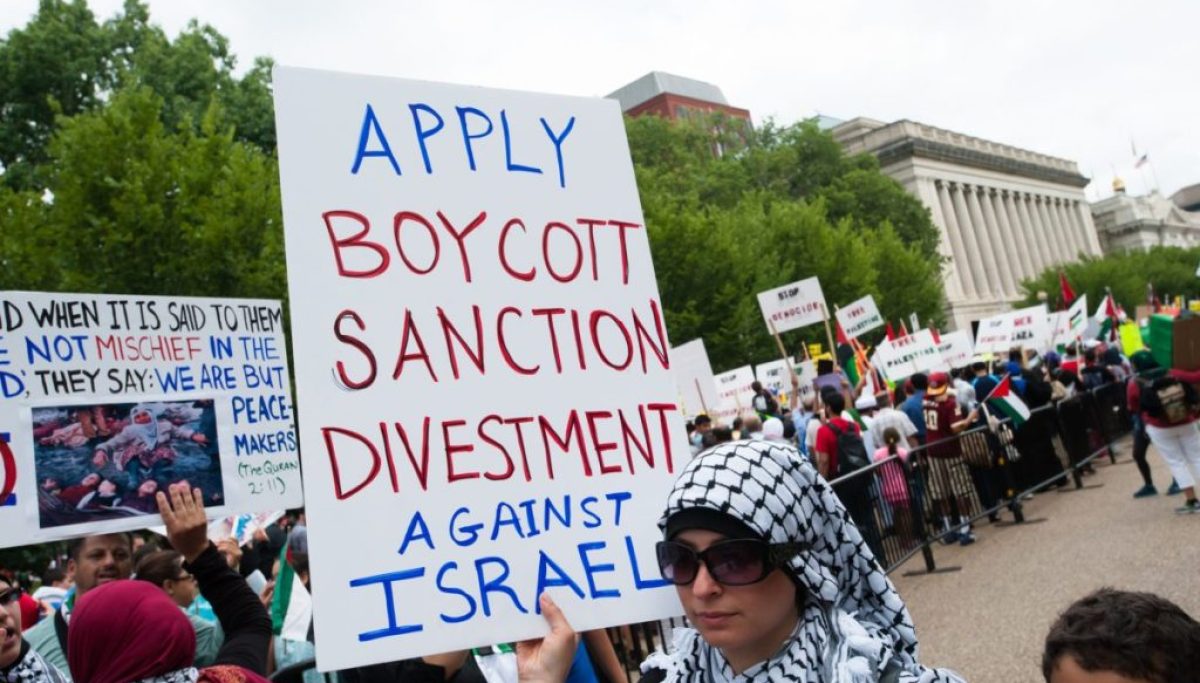
That same absolutism drives the Boycott, Divestment, and Sanctions movement against Israel, which presents itself as a campaign for Palestinian rights but actually calls for cutting the research and business ties that connect Israelis and Palestinians.
asserted
that → drive → Israelis
On campus, the movement treats dissent as morally suspect, not merely a differing opinion.
asserted
movement → treat → opinion
But I’ve also seen what happens when people actually try.
asserted
people → see → ?
This June, I took part in the Tel Aviv Institute’s New Middle East Laboratory in London, a multiday program built on the premise that people with roots in the region’s most divided communities can sit in a room together and actually talk.
asserted
people → take → room
We didn’t agree on everything.
asserted
We → agree → everything
We argued about Israel, Iran, religion, whose history gets remembered and whose gets sidelined.
asserted
whose → argue → Israel
But we also ate and laughed together, while asking real questions and listening to the answers.
asserted
we → eat → answers
Nobody left having changed their politics wholesale.
asserted
Nobody → leave → politics
What did change was smaller, and more lasting — we stopped seeing each other as caricatures we’d inherited.
asserted
we → change → caricatures
Had that room run on BDS logic, it would never have gotten off the ground.
asserted
it → run → ground
Not everyone can attend a program like the New Middle East Lab.
asserted
everyone → attend → Lab
But its model of connection over exclusion and curiosity over condemnation requires neither a plane ticket to London nor government sanction.
asserted
model → require → London
It can be practiced anywhere, from campuses to family group chats to dinner tables.
asserted
It → practice → tables
Governments still play a limited role.
asserted
Governments → play → role
They can sign documents and convene summits.
asserted
They → sign → summits
What they can’t do is make ordinary people curious enough about each other to have hard conversations.
asserted
people → make → conversations
This might sound idealistic.
uncertain
This → sound → ?
But idealism isn’t a word you’d use for something that already happened.
asserted
that → use → something
The lab ran, disagreements happened, and nobody walked out.
asserted
nobody → run → ?
If anything, the more violent the region gets, the stronger the case for doing more of this, not less.
asserted
region → get → less
That’s because wars end at negotiating tables staffed by leaders who have been shaped by whether their societies believed peace was possible.
asserted
peace → ’ → leaders
The old “three no’s” were a closed door.
asserted
’s → close → ?
The Abraham Accords forced it open.
asserted
Accords → force → it
But opening a door isn’t the same as walking through it, and that part is still ours to do.
asserted
part → open → it
Normalization doesn’t require unanimity.
asserted
Normalization → require → unanimity
It requires the same give-and-take between neighbors that the Accords required between dignitaries.
asserted
Accords → require → dignitaries
It requires treating someone else’s lived experience as real.
asserted
It → require → experience
Six years later, the real test is not whether more countries sign on, but whether enough of us still believe it’s worth sitting down with people on the other side of the argument.
asserted
it → sign → argument
The question now is who else will join in?
asserted
who → join → ?
…and 2 more, not listed.
 The Aporia