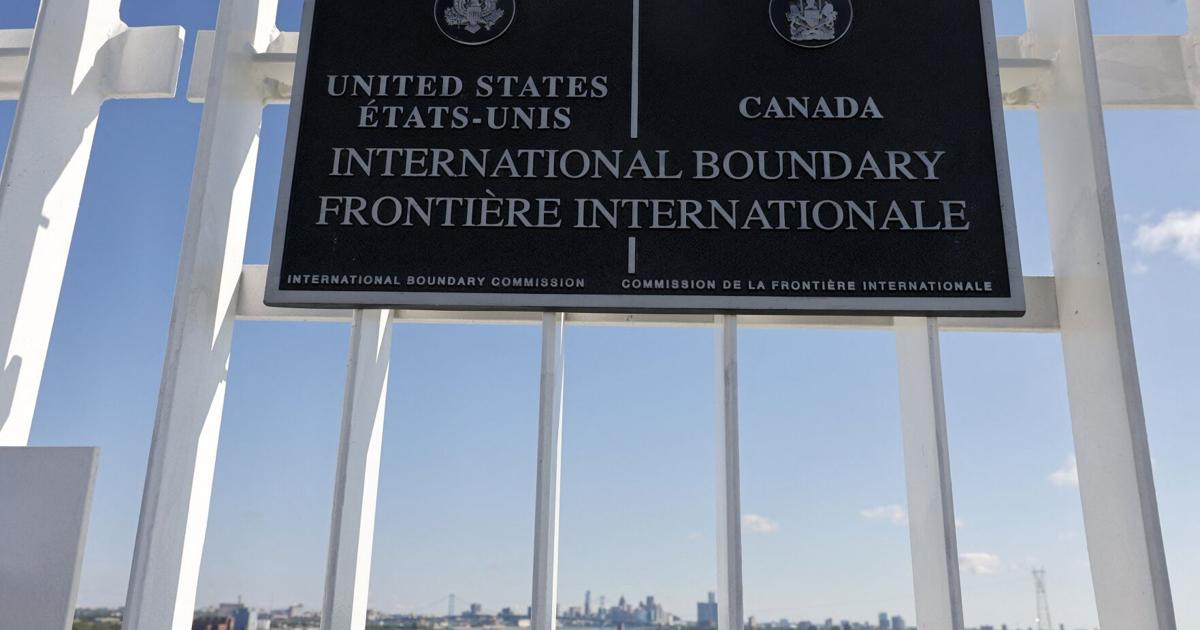
An image of Lake Ontario was pulled up on my public hotel computer kiosk in Manitoba recently.
asserted
image → pull → Manitoba
The website was Google Maps, which shows the correct name to Canadians and the Trump-ordered “Lake America” to Americans.
asserted
which → show → Americans
No one was using the computer when I came across it.
asserted
I → use → it
Someone had just called up Lake Ontario then left the kiosk, perhaps wishing to remind all who strolled by: Don’t forget this insanity for a second.
asserted
who → call → second
I’d gone to Manitoba for my cousin’s wedding.
asserted
I → go → wedding
The groom, whom I’d only met a few times, asked where I was living: Ontario?
asserted
I → meet → whom
I explained that I lived part-time in Windsor, but I taught full-time in Ohio during the school year.
asserted
I → explain → year
“We’ll come visit you in Windsor,” he said without missing a beat.
asserted
he → visit → beat
“But I don’t cross that border.”
asserted
I → cross → border
It made me sad, but of course I couldn’t blame him.
asserted
I → make → him
I responded by shaking his hand.
asserted
I → respond → hand
Canadians will not be mystified by the above interactions.
asserted
Canadians → mystify → interactions
Americans, however, find such anecdotes more head-spinning.
asserted
anecdotes → find → ?
“People just aren’t crossing the border,” a close friend asked in disbelief the other day.
asserted
friend → cross → disbelief
This is a year and a half after the southbound traffic dropped off a cliff.
asserted
traffic → drop → cliff
Here’s a frustrating fact for Canadians: Most Americans are only dimly aware this whole fracas is happening at all.
asserted
fracas → ’ → Canadians
Everyone in my U.S. life knows that I’m Canadian.
asserted
I → know → life
Most of my American friends and professional contacts are well-informed people who pay attention to the news.
asserted
who → inform → news
They’ve never once asked me about all this.
asserted
They → ask → this
It doesn’t come up.
asserted
It → come → ?
Sometimes leftists will express bafflement that I still live in the U.S., but it’s always connected to other subjects: Disgust with the violence Trump has wreaked, fear of encroaching political oppression, personal risks with me being transgender — take your pick.
asserted
me → express → pick
No one ever brings up Canada.
asserted
one → bring → Canada
Some reporting has focused on the trade war disrupting border state politics.
asserted
reporting → focus → politics
I believe these stories, but I also wonder if, when taking the whole country into view, they aren’t anomalous, the exceptions that prove the rule.
asserted
that → believe → rule
“How much do you know about the U.S.-Canada trade war?” I asked a well-informed friend in Ohio a few weeks ago.
asserted
I → know → Ohio
We are good friends, she has visited me in Windsor, she works in journalism.
asserted
she → visit → journalism
She did a double take, then admitted “not much.”
asserted
She → do → much
Did she know about the latest (at the time) trade blow-up where Carney walked away from the deal?
asserted
Carney → know → deal
Americans are befuddled when I tell them every product up north now bears a maple leaf wherever it can be justified, that my Canadian friends trade tips on which grocery products are U.S. ingredient-free.
asserted
products → befuddle → tips
They gape when I recount how even cannabis stores promise “100% CANADIAN” wares — despite weed being, you know, a substance one cannot by law import.
asserted
one → gape → law
I don’t think my experience is anomalous.
asserted
experience → think → ?
Last summer, NYMag ran a feature article titled, “You Have No Idea How Furious The Canadians Are,” in which an American journalist roams Toronto, marvelling at the knock-on effects of his government’s belligerence and how they’d infected Canadian daily life.
asserted
they → run → life
It’s sort of funny to read now, grim to think little’s changed.
asserted
little → ’ → ?
Americans don’t actually like the tariffs, or the 51st state threats, belligerence, or the trollish renaming of Great Lakes.
asserted
Americans → like → Lakes
They think it’s all stupid.
asserted
it → think → ?
A majority say tariffs hurt their own economy.
asserted
tariffs → say → economy
Virtually everybody with an opinion takes a dim view of renaming Lake Ontario.
asserted
everybody → take → Ontario
Among those with an opinion, more Americans even approve of Canada’s counter-tariffs than not.
asserted
Americans → approve → tariffs
The above facts exist in the same strange universe where most Americans don’t even know who Mark Carney is.
asserted
Carney → exist → universe
The average Yank hasn’t been given reason to care.
asserted
Yank → give → reason
…and 9 more, not listed.
 The Aporia