In the summer of 1995, an unusual photograph of Temple Newsam, a historic estate in Leeds, England, captured strange marks across the grass.
asserted
photograph → capture → grass
To Mike Turpin and other local archaeology enthusiasts, the patterns looked like they could reveal foundations hidden beneath the lawn.
uncertain
they → look → lawn
More than three decades later, their suspicion has gained support.
asserted
suspicion → gain → support
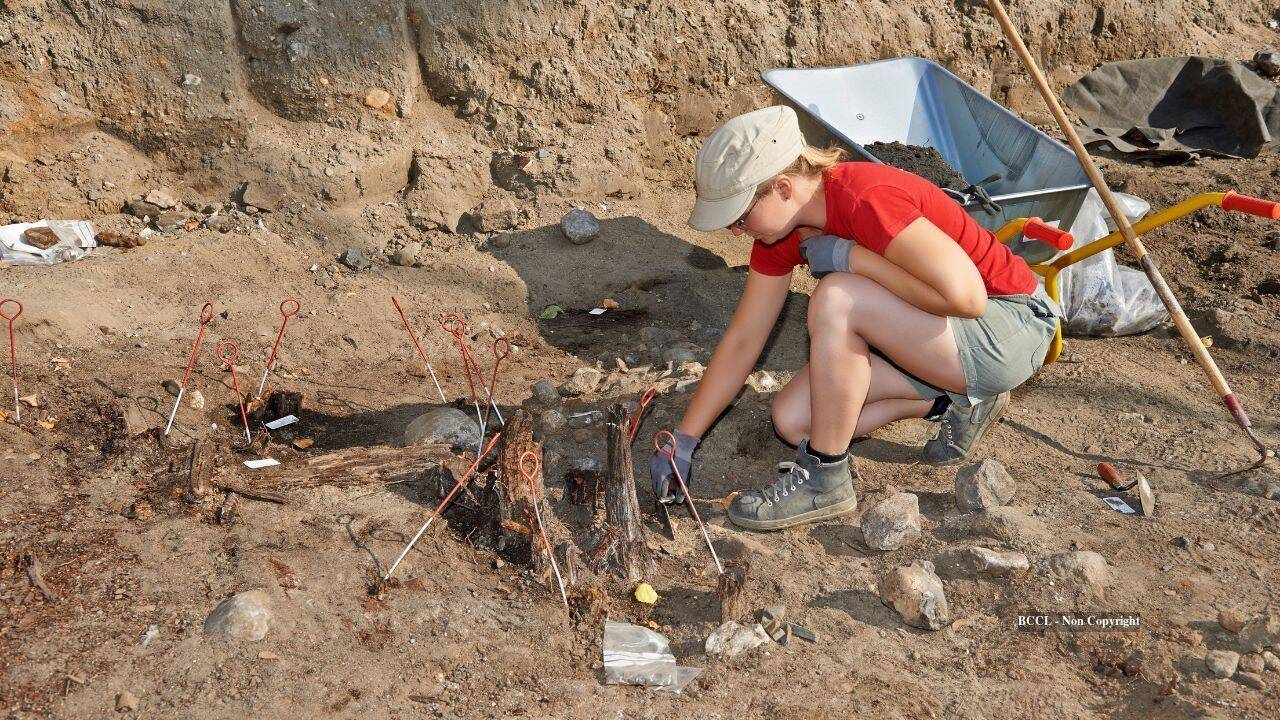
According to Discover Magazine, members of South Leeds Archaeology excavated the site and uncovered foundations belonging to an outbuilding that may be more than 280 years old.
uncertain
that → accord → outbuilding
The discovery could also help solve a mystery in an 18th-century painting, which appears to show a building once thought to have existed only as part of an unfinished renovation plan.
uncertain
which → help → plan
The excavation has not answered every question, but it has brought a forgotten piece of Temple Newsam’s history back into view.
asserted
it → answer → view
Clues hidden in the grass
The story began with an image rather than a shovel.
asserted
story → hide → image
During the hot summer of 1995, Mike Turpin noticed unusual marks on the lawns of Temple Newsam.
asserted
Turpin → notice → Newsam
There were no standing walls or obvious ruins, only variations in the grass that suggested something might be buried underneath.
uncertain
something → be → grass
Buried walls and foundations may affect how grass grows above them.
uncertain
grass → bury → them
Differences in soil depth, moisture and drainage can create visible marks from the air or at ground level, especially during dry weather.
asserted
Differences → create → weather
Turpin and other archaeology enthusiasts believed the marks could represent the remains of a building.
uncertain
marks → believe → building
The idea remained a possibility for years, waiting for the right opportunity and a team willing to investigate it.
asserted
idea → remain → it
That opportunity came when members of South Leeds Archaeology began fieldwork at the historic estate.
asserted
members → come → estate
After months of planning and excavation, they opened several trenches across the area where the marks had appeared.
asserted
marks → open → area
Beneath the grass, they found foundations belonging to an outbuilding that appears to date back more than 280 years.
asserted
that → find → years
The discovery suggested that the photograph had captured a real archaeological feature rather than a random pattern in the lawn.
uncertain
photograph → suggest → lawn
Temple Newsam’s forgotten structure
The excavated foundations have raised questions about a building that seems to have disappeared from the visible landscape.
asserted
that → forget → landscape
The remains may connect to a building shown in a painting dating from around 1750.
uncertain
remains → connect → 1750
In the artwork, the structure appears beside an existing stable block.
asserted
structure → appear → block
For a long time, historians believed the painting showed renovations that were proposed but never completed.
asserted
that → believe → renovations
The newly uncovered foundations create another possibility.
asserted
foundations → uncover → possibility
The artist may have painted a building that had actually been constructed.
uncertain
that → paint → building
The archaeological team has not determined precisely what the building was used for, how much of it was completed or whether it served the same purpose as the existing stable block.
asserted
it → determine → block
However, the similarities are enough to make the discovery significant.
asserted
discovery → make → ?
Archaeology often works by bringing together different kinds of evidence, including written records, paintings, maps, photographs, soil marks and physical remains.
asserted
Archaeology → work → records
In this case, a 1995 photograph led researchers towards foundations, while an 18th-century painting provided a possible visual record of the building’s appearance.
asserted
painting → lead → appearance
Excavation brings the evidence to light
Jim Jackson and Phil Jones led the fieldwork for South Leeds Archaeology.
asserted
Jackson → bring → Archaeology
The group meets monthly in nearby Rothwell and includes volunteers with an interest in investigating the region’s past.
asserted
group → meet → past
The team dug a series of trenches to test whether the suspected building was beneath the lawn.
asserted
building → dig → lawn
Excavation allowed them to examine the soil layers and identify the stones and other features that formed the structure’s foundations.
asserted
that → allow → foundations
Finding foundations does not automatically reveal the entire history of a building.
asserted
Finding → find → building
Archaeologists must determine the shape and extent of the remains, establish when they were built and compare them with historical records.
They also need to consider whether a structure was completed, altered or demolished in stages.
asserted
structure → determine → stages
Buildings on large estates were often changed as owners updated their homes, redesigned gardens or adapted spaces for new uses.
asserted
owners → change → uses
The excavated remains may represent only part of the building.
uncertain
remains → excavate → building
Further work could show whether the structure matched the one in the painting or whether it belonged to a different phase of development.
uncertain
it → show → development
South Leeds Archaeology hopes to return to the estate for another season of digging.
asserted
Archaeology → hop → digging
A future excavation could expose more of the foundations and provide clues about the building’s function.
uncertain
excavation → expose → function
A landscape shaped many times
Temple Newsam’s grounds have not remained unchanged throughout history.
asserted
grounds → shape → history
The estate has been remodelled and landscaped repeatedly, leaving behind layers from different periods.
asserted
estate → remodelle → periods
…and 61 more, not listed.
 The Aporia