In Focus delivers deeper coverage of the political, cultural, and ideological issues shaping America.
asserted
Focus → deliver → America
Published daily by senior writers and experts, these in-depth pieces go beyond the headlines to give readers the full picture.
asserted
pieces → publish → picture
You can find our full list of In Focus pieces here.
asserted
You → find → pieces
The Midwest has spent the past decade moving toward Republicans.
asserted
Midwest → spend → Republicans
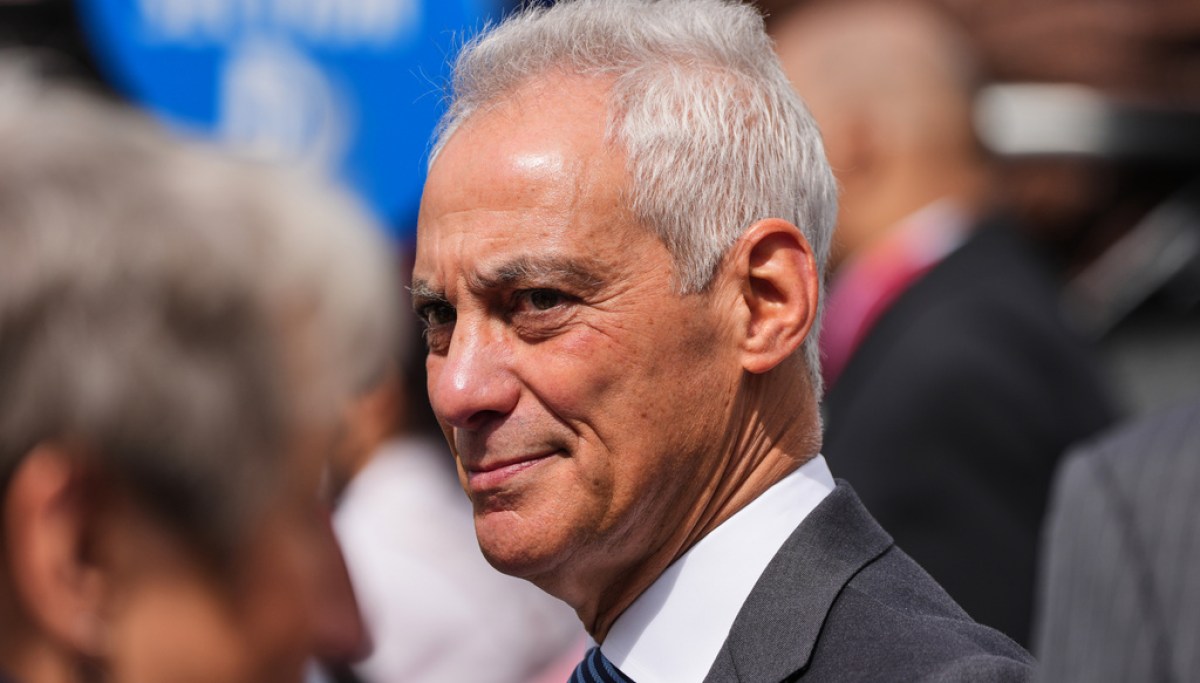
Former Chicago Mayor Rahm Emanuel thinks Democrats may finally be in a position to win some of it back.
uncertain
Democrats → think → it
Emanuel pointed to Democratic candidates in Iowa, Ohio, Michigan, Wisconsin, and Minnesota as evidence that the Midwest could be returning to its role as the nation’s political bellwether in a Wall Street Journal op-ed.
uncertain
Midwest → point → ed
But political strategists and analysts say the emerging competitiveness in some of those races does not necessarily mean Midwestern voters are moving back toward the Democratic Party.
asserted
voters → say → Party
Instead, they believe the 2026 elections could be testing something more politically complicated — whether voters who have moved away from Democrats are becoming less attached to Republicans, too.
uncertain
who → believe → Republicans
“I’m not convinced the Midwest is becoming Democratic,” Mark Cohen, a former Air Force JAG and agricultural-law attorney running as an independent in Nebraska’s 3rd Congressional District, told the Washington Examiner.
asserted
Cohen → convince → Examiner
“I think Midwestern voters are becoming more willing to judge candidates individually.
asserted
voters → think → candidates
That distinction could be critical for Democrats hoping to turn several competitive 2026 races into a lasting realignment.
uncertain
distinction → hop → realignment
A region that moved sharply right
Emanuel’s argument comes against a backdrop of significant Republican gains across the Midwest.
asserted
argument → move → Midwest
President Donald Trump won Iowa by 13.2 percentage points in 2024, a sharp departure from former President Barack Obama’s victories there in 2008 and 2012.
asserted
Trump → win → 2008
Ohio has undergone a similar political shift, moving from a closely watched presidential battleground to a state where Trump won by a double-digit margin in 2024.
asserted
Trump → undergo → 2024
In Iowa, Democratic state Auditor Rob Sand is running against Republican Zach Lahn for governor.
asserted
Sand → run → governor
A recent polling average had Sand ahead.
asserted
average → have → ?
In Ohio, Democrat Amy Acton and Republican Vivek Ramaswamy are running a close race for governor.
asserted
Acton → run → governor
A polling average as of Sept. 18 put Acton at 47.5% and Ramaswamy at 46.1%.
asserted
average → put → %
Michigan also has a competitive gubernatorial contest, with Democratic nominee Jocelyn Benson leading Republican John James in several recent polls.
asserted
Benson → have → polls
Emanuel said he sees those races as evidence that the Midwest is becoming “the nation’s pre-eminent battleground” again.
asserted
Midwest → say → evidence
But Garry South, a veteran Democratic political strategist, said Democrats cannot assume competitive races translate into durable change in party allegiance.
asserted
races → say → allegiance
“Whether Democrats can truly become competitive again in parts of the Midwest depends on three things: putting up good candidates who resonate in their particular state, running good, well-funded campaigns, and engaging in party building in off years,” South told the Washington Examiner.
asserted
South → become → Examiner
He pointed to Obama’s victories in Iowa and Ohio as evidence that Democrats can compete in states that later moved sharply right.
asserted
that → point → states
“It is possible,” South said, “but the party needs to invest in infrastructure and voter registration in these states on an ongoing basis, not just in election years.”
asserted
party → say → years
Democratic strategist Jared Kamrass, a Midwest-based partner at Techicolor Campaigns, argues the 2026 environment is particularly difficult for Republicans because Trump is not on the ballot, while voters are focused heavily on economic concerns.
asserted
voters → base → concerns
“Midwestern states look very different in years when Trump is on the ballot than when he isn’t,” Kamrass told the Washington Examiner.
asserted
Kamrass → look → Examiner
He noted that Democrats rebounded in the 2018 midterms after Trump carried the region in 2016, including winning an Ohio Senate race that year.
asserted
Trump → note → race
“This year, the political environment looks even worse for Republicans because the economy is in much worse shape,” Kamrass said.
asserted
Kamrass → look → shape
“And voters put the blame squarely on Trump.”
asserted
voters → put → Trump
Kamrass said Democrats have also nominated strong candidates in a number of Midwestern races, but he sees a longer-term challenge for Republicans beyond this election cycle.
asserted
he → say → cycle
“They simply can’t recreate their Trump-led coalition, especially when he will never appear on a ballot again,” he said.
asserted
he → recreate → ballot
That gets to the heart of Emanuel’s argument – whether strong Democratic performances in the Midwest in 2026 would signal a durable shift in voters’ party preferences or a temporary reaction to the political environment.
asserted
performances → get → environment
Michael Fahey, a political strategist, said it is too early to make that determination.
asserted
it → say → determination
“I think we have to be really careful about declaring a political realignment based on one election cycle,” Fahey told the Washington Examiner.
asserted
Fahey → think → Examiner
But competitive races and a rebuilt coalition are two very different things.”
asserted
races → rebuild → ?
He added: “The test isn’t whether Democrats win a governor’s race in Iowa or Ohio in a favorable midterm environment.
asserted
Democrats → add → environment
The test is whether they can take those voters who are willing to cross over in 2026 and keep them in 2028, 2030 and beyond.”
asserted
who → take → 2028
Fahey described the current environment as “an opening,” but said calling it a realignment would be premature.
asserted
calling → describe → it
Candidate quality
One of Emanuel’s main points is that Midwestern Democrats are running candidates who look different from the national party and are more focused on economic issues and bipartisan governing.
asserted
who → run → issues
Sand has emphasized corruption and utility costs in Iowa, while Acton has focused on issues including prescription drug prices.
asserted
Acton → emphasize → prices
…and 39 more, not listed.
 The Aporia