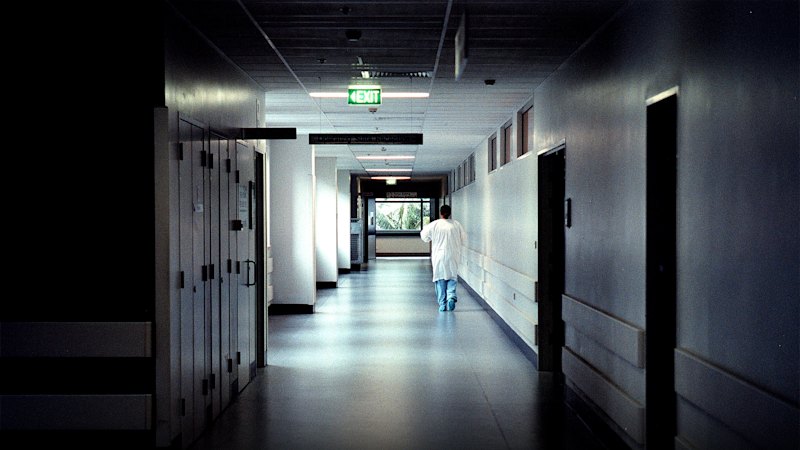
Victorian emergency room doctors and nurses are being increasingly assaulted at work, with the number of violent workplace incidents reported at public hospitals soaring 44 per cent in the past three years.
asserted
number → assault → years
Australasian College for Emergency Medicine Victoria branch chair Associate Professor Mark Putland said healthcare workers across the state were being bitten, punched, pushed, kicked, spat on and verbally abused, leading to widespread burnout, psychological harm, and driving staff out of the profession.
asserted
workers → say → profession
“It’s increasing.
asserted
It → increase → ?
It’s getting worse,” the Melbourne emergency doctor said.
asserted
doctor → get → ?
“Getting punched, shoved, kicked and particularly being spat on is a routine experience now.”
asserted
punched → punch → ?
Putland said there are had also been a troubling rise in “virulent verbal abuse”, which was often sexualised or racialised in nature.
asserted
which → say → nature
“This is extremely damaging and really, really hard on staff,” he said.
asserted
he → say → staff
“It makes it really difficult for them to front up and provide care again the next day.
asserted
them → make → care
Female staff, in particular, cop a lot of horrific sexualised abuse.
asserted
staff → cop → abuse
As Victoria heads towards a state election in November, the Australasian College for Emergency Medicine and the College of Emergency Nursing Australasia are demanding action from all sides of politics to support healthcare workers who are being subjected to record levels of violence.
asserted
who → head → violence
They want 24/7 dedicated, specially trained security guards stationed in every emergency department, along with a specialised taskforce with a direct reporting line to the health minister, to ensure a coordinated response to tackle violence in hospitals.
asserted
guards → want → hospitals
Putland warned security remained variable and patchy in smaller hospitals and regional health services and clinicians wanted to see teams of five specialist trained security guards rolled out at every hospital.
asserted
teams → warn → hospital
Last year, the state’s public hospitals recorded nearly 24,000 violent incidents, a 21 per cent spike from the previous year and a 44 per cent increase from 2022-23, equating to some 65 incidents every day.
asserted
hospitals → record → incidents
The Age has revealed broken noses and dislocated shoulders were among the serious injuries sustained by healthcare workers on the job as healthcare workers warned more patients were carrying weapons into emergency departments.
asserted
patients → reveal → departments
Healthcare workers warned the state’s hospitals were on track again to reach unprecedented levels of violence this year.
asserted
hospitals → warn → violence
The most recent data from the Australian Institute of Health and Welfare showed in the 2024/25 financial year at least 230 healthcare workers were hospitalised after being assaulted at work in Victoria.
asserted
workers → show → Victoria
The state recorded the second-highest number of violent assaults in Australia, behind NSW, where 242 healthcare workers were hospitalised.
asserted
workers → record → NSW
Assault-related hospitalisations of Australian healthcare workers have more than doubled in the past decade.
asserted
hospitalisations → relate → decade
Putland said every emergency healthcare worker had experienced severe verbal abuse or violence.
asserted
worker → say → abuse
“This could be being told that that person’s going to kill you or come after your family or do other horrible things and hearing them say revolting things to the person next to you
uncertain
them → tell → you
,” he said.
asserted
he → say → ?
“This is causing profound harm and physical and psychological trauma to people who have dedicated their lives and careers to caring for others when they need it most.”
asserted
they → cause → it
Etched in his memory are his own traumatic encounters with unpredictable patients.
asserted
encounters → etch → patients
“I can think of two people over the years, where I’ve just found myself standing in the corridor, face to face with someone who, in that particular moment, is absolutely terrifying,” Putland said.
asserted
Putland → think → moment
“You’re left wondering if they’re [security] going to get here in time this time.”
asserted
they → leave → time
College of Emergency Nursing Australasia national president Associate Professor Kelli Innes said nurses were also reporting huge increases in violence and aggression.
asserted
nurses → say → violence
“Both physical and verbal violence is increasing, and that’s really affecting staff wellbeing, and it impacts patient safety because the ED becomes an unsafe environment for everybody,” Innes said.
asserted
Innes → increase → everybody
“Unless the government acts, we risk losing more highly skilled and experienced people from an already pressured workforce.”
asserted
we → act → workforce
She said any security guards who worked in hospitals must be trained in de-escalation and trauma-informed care, including how to manage people in the grips of a mental health crisis or those who may be under the influence of substances.
uncertain
who → say → substances
Data from the Victorian government showed that between January and March, upwards of 3000 people spent more than 24 hours in a hospital emergency department.
asserted
people → show → department
Doctors and nurses are also calling for at least 2000 more in-patient beds and a ministerial directive that no patient remain in a Victorian emergency department for more than 24 hours.
asserted
patient → call → hours
“This represents a critical safety threshold requiring urgent whole-of-hospital escalation and intervention,” the emergency healthcare colleges said.
asserted
colleges → represent → escalation
In the past year, more 13,000 Victorians have spent more than 24 hours in an emergency department.
asserted
Victorians → spend → department
“We lost our grip around the time of the pandemic, and it’s just blown out,” Putland said.
asserted
Putland → lose → pandemic
Mentally unwell and elderly people were the bulk of patients spending days in emergency due to a lack of beds.
asserted
people → spend → beds
“The great majority of people with mental health conditions are not violent or aggressive,” Putland said.
asserted
Putland → say → conditions
“But mental health patients in the ED are at the very extreme end of their illness and, when they’re stuck there for a long time, that’s a recipe for disaster.”
asserted
that → stick → disaster
Putland said there were many reasons for increased violence and aggression in the emergency department including overcrowding, rising wait times, elevated drug and alcohol use, underinvestment in general practice, and wave of patients presenting with complex needs.
asserted
Putland → say → needs
He said demand for care was also intensifying due to Australia’s ageing population, while a shortage of mental health beds and community services meant people were often critically unwell by the time they reached the emergency department.
asserted
they → say → department
The physician has also observed a troubling eroding of public trust in healthcare institutions in recent years.
asserted
physician → observe → years
…and 9 more, not listed.
 The Aporia