Some Canadians are already embracing their newfound European identities after the European Union floated the potential for “associate member” status amid the trade war with the United States.
asserted
Union → embrace → States
“Telling my boss I don’t need to show up for work today cuz I’m [European],” an X user joked as talk of closer ties between Canada and the EU spawned a flood of memes about everything from cigarettes for breakfast to generous European vacation time.
asserted
talk → tell → time
Recommended Stories
list of 4 items- list 1 of 4Trump says Canada becoming EU ‘associate member’ could be ‘hostile act’
- list 2 of 4UK’s Burnham, Canada’s Carney discuss AI risks, defence cooperation
- list 3 of 4Canada’s Carney welcomes EU’s associated membership proposal
- list 4 of 4Can ‘middle powers’ come together to build a new economic alliance?
“If Canada joins the EU I’m taking [seven] weeks off work next summer,” wrote another user.
uncertain
user → say → work
Canada is not joining the EU, but the prospect of a new kind of relationship with Europe had been kicking around for days.
asserted
prospect → join → days
It comes after Canada and the US’s trade war broke out as negotiations failed to head off US President Donald Trump’s threatened 50 percent tariffs on nearly $20bn worth of Canadian products, including machinery, textiles and hockey sticks.
asserted
negotiations → come → machinery
Back-and-forth retaliatory measures have resulted in both sides slapping new tariffs on each other.
asserted
sides → result → other
Canadian officials initially pushed back on news reports of the “associate membership” possibility with the EU.
asserted
officials → push → EU
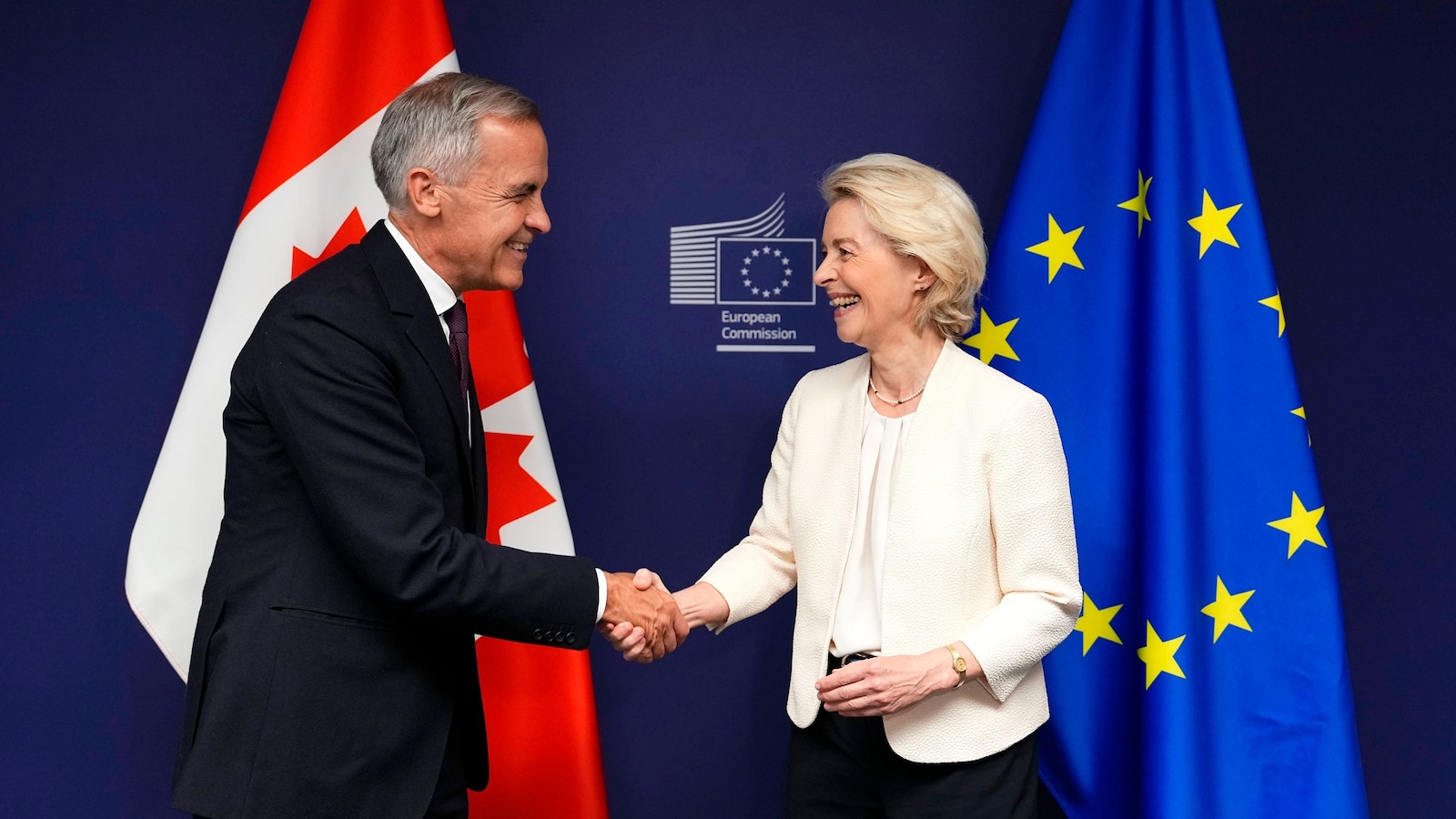
Then, on Wednesday, European Commission President Ursula von der Leyen made the proposal public.
asserted
proposal → make → Wednesday
By Thursday, Canada’s own vision was becoming clearer.
asserted
vision → become → Thursday
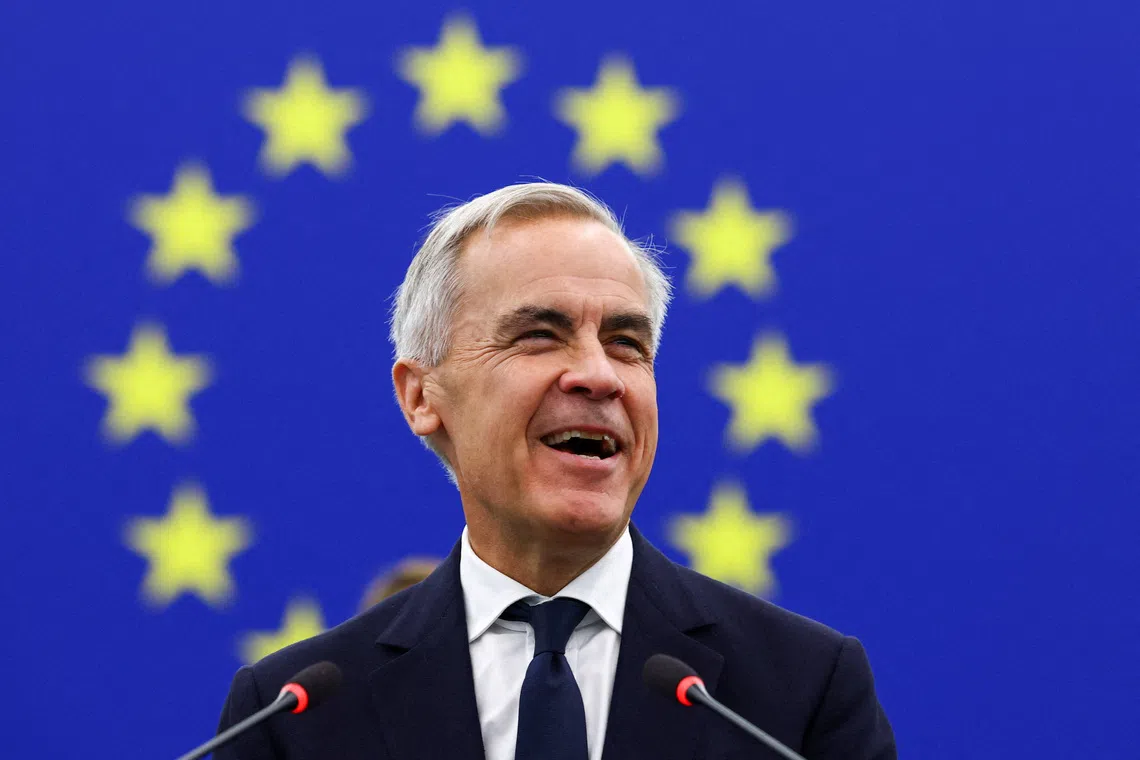
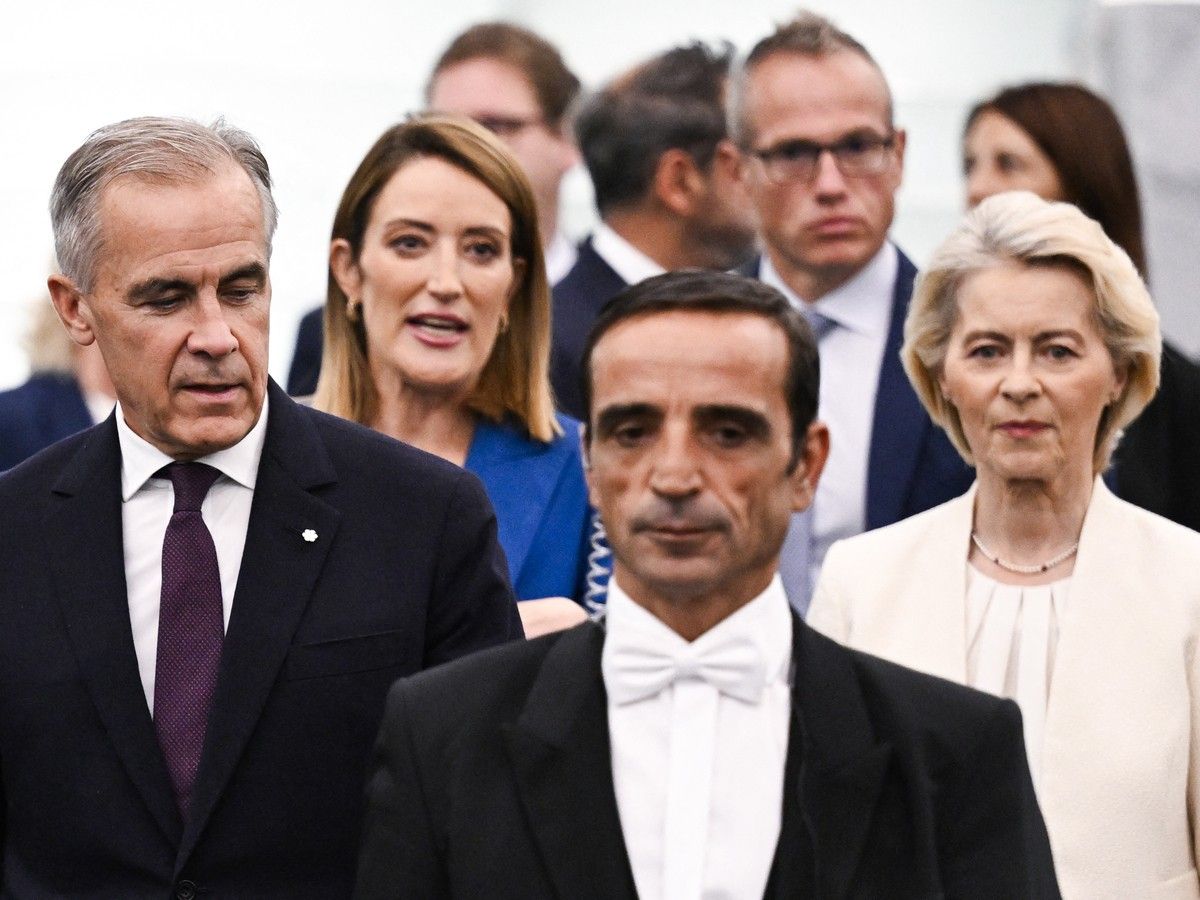
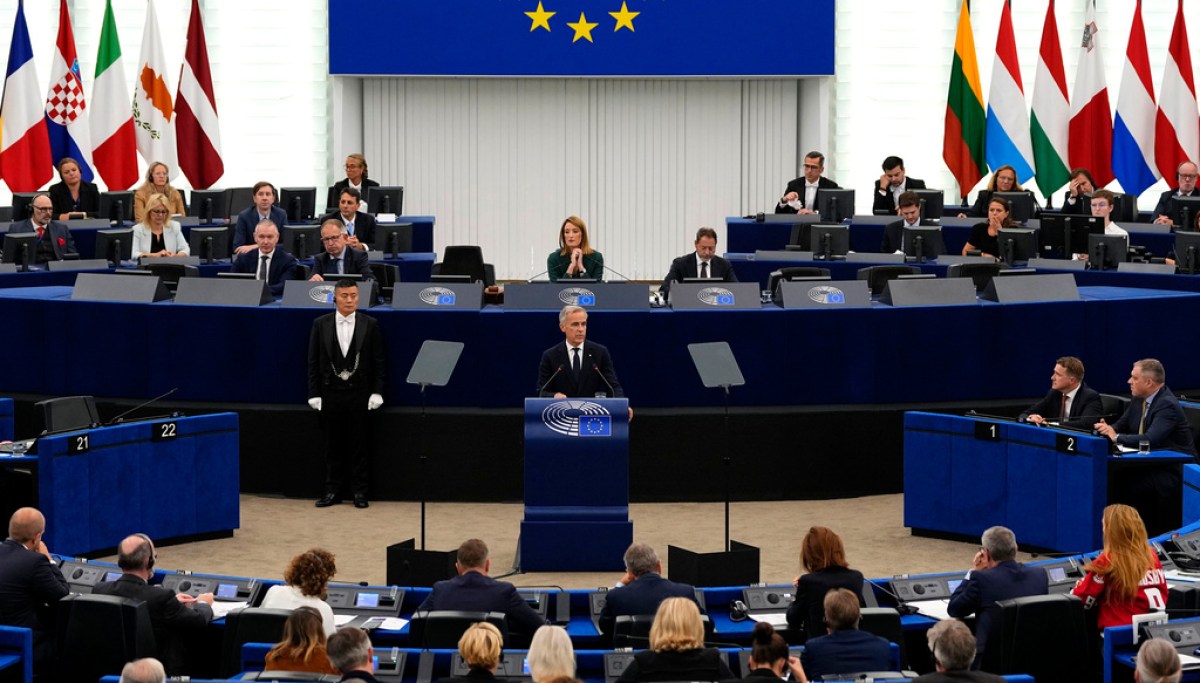
Addressing the European Parliament in Strasbourg, Prime Minister Mark Carney welcomed von der Leyen’s ambition, describing what he wanted as an “alliance for the future” spanning critical minerals, defence, artificial intelligence, energy, digital trade, research and financial services.
asserted
he → address → minerals
He also called for making it easier for young Canadians and Europeans to work, study and live on either side of the Atlantic.
asserted
Canadians → call → Atlantic
“Canada and Europe are each strong,” Carney told EU legislators.
asserted
Carney → tell → legislators
In response to the talks of closer economic relations, Trump threatened to take action against the EU if it moves forward with von der Leyen’s proposal of associate membership for Canada.
asserted
it → threaten → Canada
“If they do that, if I think it’s at all a hostile act, I will put very serious tariffs or stop trading with Europe on many things,” Trump told reporters, calling the proposal “laughable”.
asserted
Trump → do → proposal
Looking beyond the US
Whatever the partnership is ultimately called, getting closer to Europe appears to have broad support at home.
asserted
getting → look → home
An Abacus Data survey conducted from September 4 to 9, before the proposal was officially confirmed, found 81 percent of Canadians supported closer integration with the EU while remaining outside the bloc, including making it easier for transatlantic trade, travel, work and study.
asserted
it → conduct → trade
Eighty percent backed deeper cooperation on foreign policy, defence and economic priorities, up six percentage points since February.
asserted
percent → back → February
David Coletto, founder and CEO of Abacus Data, said he did not expect those numbers to have shifted significantly now that the conversation has turned to “associate membership”.
asserted
conversation → say → membership
He said the support makes more sense against a striking shift in how Canadians view the United States.
asserted
Canadians → say → States
Positive impressions of the EU have risen to 71 percent, while just 21 percent now have a positive view of the US.
asserted
percent → rise → US
“Canadians overwhelmingly [feel] still angry and a sense of betrayal over how the Trump administration has approached the Canada-US relationship,” Coletto told Al Jazeera.
asserted
Coletto → feel → Jazeera
Flight attendant Donna Gordon welcomes closer ties.
asserted
Gordon → welcome → ties
She was among several people Al Jazeera spoke to in Nathan Phillips Square in Toronto on Thursday.
asserted
Jazeera → speak → Thursday
She said they made sense given “the state of our negotiations with the United States right now, or lack thereof”.
asserted
they → say → States
Having travelled frequently to Europe for work, she said she had seen its “efficiency” and “innovation” firsthand.
asserted
she → travel → efficiency
She was particularly excited about what closer ties could mean for younger Canadians, including greater opportunities to study and work in Europe.
uncertain
ties → mean → Europe
The Canadian who works for a tech company in New York said greater freedom to live and work in Europe was particularly appealing.
asserted
freedom → work → Europe
“I would love to have the opportunity,” he said.
asserted
he → love → opportunity
“I want to be able to have that freedom of movement.”
asserted
I → want → movement
While older Canadians were more likely to prioritise trade and security, 38 percent of 18-to-29-year-olds polled by Abacus listed study, training and research among their top priorities for a closer EU relationship.
asserted
percent → prioritise → relationship
“The thing that most people in Canada and I think a lot of people around the world are just seeking more agency, more control to make choices for themselves,” Coletto said.
asserted
Coletto → think → themselves
For many Canadians, Europe may feel like a natural place to exercise that choice.
uncertain
Europe → feel → choice
Asked which side they had more in common with in terms of values, way of life and outlook on the world, 56 percent chose countries in the EU.
asserted
percent → ask → EU
Only 16 percent chose the United States.
asserted
percent → choose → States
Peter Van Driel is a hydrogeologist whose father is Dutch Canadian and who previously lived in Germany.
asserted
who → live → Germany
He described Canada as culturally “sort of in between” Europe and the United States, pointing to differences in healthcare, gun laws, parental leave and vacation time.
asserted
He → describe → healthcare
“We’re not as generous as Europe, but more generous than the States,” he said.
asserted
he → say → States
But while Van Driel said there was little point trying to please a US administration that was “not being a good partner”, he cautioned against pursuing closer ties with Europe simply as a reaction to Washington.
“I want to see us explore EU partnerships for positive reasons,” he said, pointing to Canada’s natural resources and critical minerals, as well as similarities in education and values.
asserted
he → say → education
Defining the relationship
What those partnerships will actually entail, however, remains an open question.
asserted
entail → define → What
The two sides are expected to keep fleshing out the relationship in the coming weeks, including at a Canada-EU summit in Montreal next month.
asserted
sides → expect → Montreal
…and 15 more, not listed.
 The Aporia