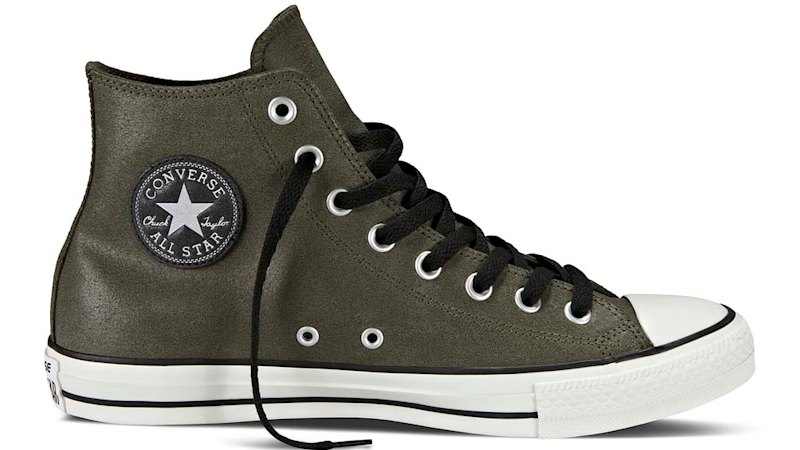
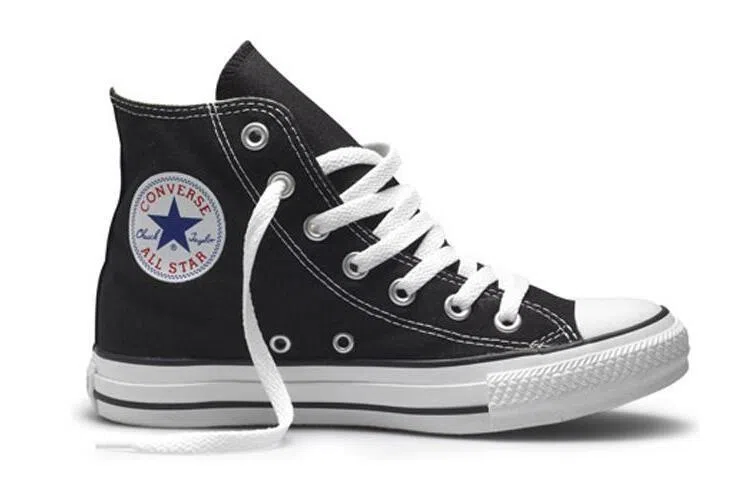
The footwear and apparel company Converse said this past week that it had taken down a sneaker advertisement that set off intense backlash as social media users said it was evocative of Ku Klux Klan imagery.
asserted
it → say → imagery
One image in the campaign featured the bottom half of a person wearing a white garment, which commentators likened to a Klan robe, while the figure holds a pair of black sneakers.
asserted
figure → feature → sneakers
The lighting is such that the shoes, critics said, appear to be dangling in the air as if someone were being hanged.
asserted
someone → say → air
The shadows also create the outline of a long, tapering triangle that was compared to the pointed hood of a Klan robe, an image of racism indelibly seared into American history.
asserted
that → create → history
“As a Black man and someone who loves Converse shoes, I find this very insensitive and distasteful,” Kendall Peacock, who runs the Education Firm, a tutoring and mentorship program in Atlanta, said on social media.
asserted
who → love → media
“Deliberate racist intent hasn’t been established yet, but that doesn’t erase the impact,” he added.
asserted
he → establish → impact
Stephanie Schwartz, a social justice photographer, wrote on social media, “Every photographer can tell you, whoever did this ad knew EXACTLY what they were doing.”
Online commentators said that, taken together, the design evoked a lynching.
asserted
design → write → lynching
“We’re sorry,” Converse said in an emailed statement Saturday.
asserted
Converse → ’re → statement
“We understand why this image is deeply upsetting and recognise that we got this wrong.”
“We removed it from our channels and are working to remove it everywhere it appeared,” the statement added.
asserted
statement → understand → it
“This should not have happened and we will do better.”
asserted
we → happen → ?
It was not immediately clear who designed or approved the advertisement.
asserted
who → design → advertisement
Converse did not immediately respond to a request for further comment.
asserted
Converse → respond → comment
The photo was part of a campaign that started internationally at the end of August to promote the Chuck 70 X sneaker.
asserted
that → start → sneaker
She was appointed as a global ambassador for Converse in June.
asserted
She → appoint → June
Representatives for Karina did not immediately respond to a request for comment.
asserted
Representatives → respond → comment
Converse introduced the first sneaker mass-produced for basketball players in 1917.
asserted
Converse → introduce → 1917
Chuck Taylors, or Chucks, as the style came to be known, were named after the company’s most popular spokesperson, Chuck Taylor, himself a famous basketball player who joined the company in the early 1920s.
asserted
who → come → 1920s
In August, the US retailer Target, which has no connection beyond the name to its Australian counterpart, stopped selling a children’s Halloween costume that many said evoked racist stereotypes of Black Americans.
asserted
many → have → Americans
The product depicted a circus clown costume with accessories including gloves, a top hat and a mask shaped like a grinning mouth with large teeth.
asserted
product → depict → teeth
Critics said those features, in addition to a promotional image that appeared to show a Black child wearing the costume, echoed caricatures from Jim Crow-era minstrel shows.
asserted
that → say → shows
This article originally appeared in The New York Times.
asserted
article → appear → Times
The Business Briefing newsletter delivers major stories, exclusive coverage and expert opinion.
asserted
newsletter → deliver → stories
 The Aporia