Photo via The Hindu

BRICS condemns EU carbon tax

Read the original at The Hindu ↗
Cite

Koshy, J. (2026, September 20). BRICS condemns EU carbon tax. The Hindu. https://www.thehindu.com/sci-tech/energy-and-environment/brics-condemns-eu-carbon-tax/article71361332.ece

Dated when The Aporia collected the article, usually within hours of publication. Check the original for its exact date and byline.

The Hindu · collected 2026-09-20 · by Jacob Koshy

Quick Summary

At the 12th BRICS Environment Ministers’ Meeting on August 18, 2026, in New Delhi, India, BRICS nations criticized the European Union’s Carbon Border Adjustment Mechanisms (CBAMs) as unfair and protectionist. The ministers emphasized that such measures could hinder developing countries' climate efforts and resilience-building. The CBAM affects imports of carbon-intensive products like iron and steel from India, which accounts for about 90% of affected exports to the EU. BRICS also called for increased international funding for adaptation in developing nations, urging developed countries to meet their commitment to triple adaptation finance by 2035.
Written by AI on 2026-09-20, from this article's own text only (the story summary below draws on all the coverage).

AI analysis

Story summary

On August 18, 2026, during the 12th BRICS Environment Ministers’ Meeting in New Delhi, India, BRICS countries criticized what they deemed as "unilateral, punitive, discriminatory and protectionist" climate measures, specifically targeting the European Union’s Carbon Border Adjustment Mechanisms (CBAM). The ministers argued that such carbon border measures could undermine developing nations' ability to address climate change and build resilience. The EU CBAM, which entered its definitive phase on January 1, 2023, requires importers of carbon-intensive products like iron, steel, aluminum, cement, fertilizers, hydrogen, and electricity to account for the associated emissions. This mechanism aims to prevent "carbon leakage" — the relocation of carbon-intensive industries outside the EU due to less stringent regulations elsewhere. The BRICS countries also called for increased international funding to support developing nations in adapting to climate change.

Written for “BRICS EU Carbon Tax Dispute” on 2026-10-31, grounded in this article and the 0 other(s) covering the same event.

Story

📰 BRICS EU Carbon Tax Dispute
Politics · 1 article(s) covering the same event.

Compared with similar articles

This article reads leans left and hedges 5% of its claims. Each row says how that neighbour differs.
The Hindu
Hedges 0 of 3 claims Outlet record 60/100
“The articles cover different aspects of the BRICS summit and related meetings; Article A focuses on diplomatic achievements and reforms, while Article B discusses opposition to EU carbon tax and climate funding.”
South China Morning Post
⚖️ Leans left Hedges 0 of 3 claims Outlet record 64/100
“The articles describe different aspects of the Brics summit in Delhi, but they are reporting on separate meetings and declarations.”
Semafor
⚖️ Leans left Hedges 0 of 4 claims Outlet record 60/100
“The articles cover different topics within the BRICS framework: one focuses on opposition to US tariffs, while the other addresses condemnation of EU carbon taxes at a separate environmental meeting.”
Washington Examiner
Hedges 1 of 38 claims Outlet record 70/100
“The articles discuss different aspects of the BRICS summit; one focuses on the overall structure and purpose, while the other addresses a specific condemnation by BRICS countries regarding EU carbon taxes.”
How this article was measured signals, leaning charts, publisher record, byline, topics and claims

Signals How these are calculated →

Claims extracted
19
sentences that state something as happening or true
Uncertain
5%
1 of 19 hedged ("reportedly", "may", "according to")
Leaning
Leans left
of the writing, not the subject · beta estimate
Publisher signals
60/100
The Hindu's corrections and hedging, across everything collected from it. Not a measure of accuracy.
Outlets on this story
1
Politics
Same framing elsewhere
1
articles that frame the event the way this one does
Analyzed 2026-09-20 · how these are computed

How this is being covered How these are calculated →

Article leaning vs. publisher reliability
Source leaning vs. consistency

Publisher

The Hindu · 907 article(s) · 2 correction(s) detected
Running correction rate · 2 correction(s)

Who wrote this

Jacob Koshy
3 article(s) here · 1 carrying a prediction
🔮 Any further such submissions will need separate Board decisions, and the Secretariat will assess lessons for the Fund’s long-term model.
🔮 There was no official figure immediately available on how much money the Fund had on hand, and the disbursement, even in the Nepal case, will rest on donors making good on their pledges in time.
🔮 The Ministers specifically said that carbon border measures such as CBAMs could “undermine developing countries' efforts to address climate change and build resilience”.
2026-09-20 · assertive framing · BRICS condemns EU carbon tax
Also by Jacob Koshy
Nothing else under this byline is closely related to this article, so these are simply their most recent.

Topics

BRICS CBAM India Indian the European Union’s

Subjects

India GPE · 6× BRICS ORG · 3× Indian NORP · 2× the European Union’s ORG · 2× Bangladesh GPE · 1× CBAM ORG · 1× Modi PERSON · 1× Nature Climate Change ORG · 1× New Delhi GPE · 1× Rahman PERSON · 1×

Narrative

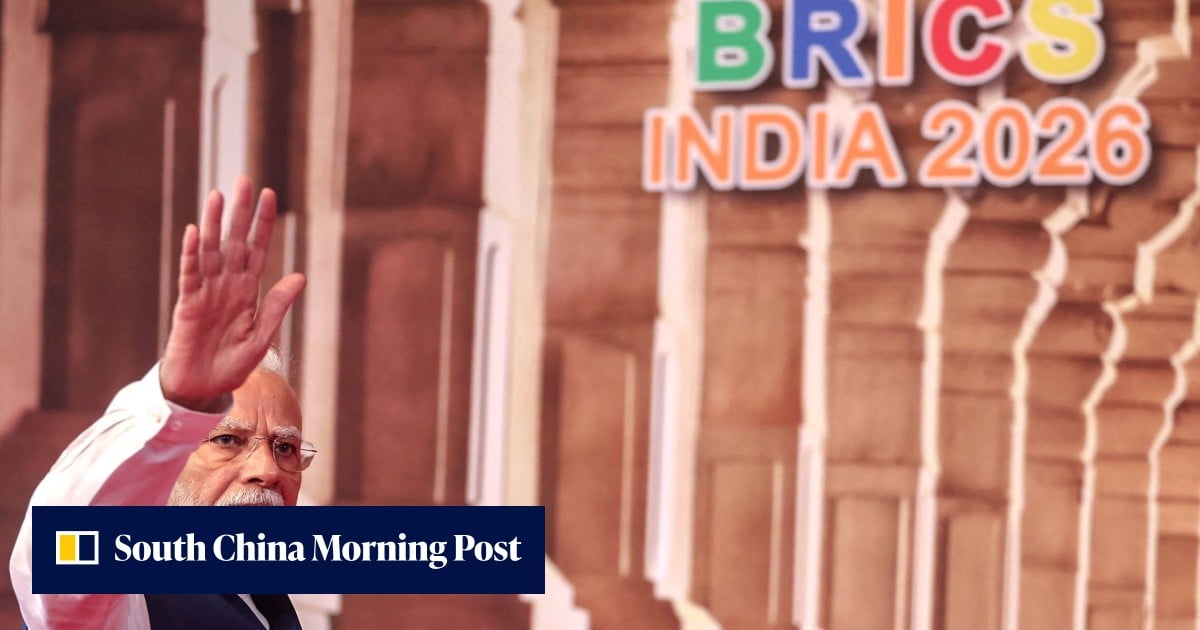
BRICS countries on Tuesday (August 18, 2026) opposed what they described as “unilateral, punitive, discriminatory and protectionist” climate measures, including the European Union’s Carbon Border Adjustment Mechanisms (CBAMs), while calling for a significant increase in international funding to help developing countries adapt to climate change.
framing: assertive · carried by 1 article(s) · first seen 2026-09-20
🔮 The Ministers specifically said that carbon border measures such as CBAMs could “undermine developing countries' efforts to address climate change and build resilience”.
2026-09-20 · The Hindu
BRICS condemns EU carbon tax · assertive framing

Claims (19 extracted, 1 hedged)

BRICS countries on Tuesday (August 18, 2026) opposed what they described as “unilateral, punitive, discriminatory and protectionist” climate measures, including the European Union’s Carbon Border Adjustment Mechanisms (CBAMs), while calling for a significant increase in international funding to help developing countries adapt to climate change. asserted
countries → oppose → change
Also Read: PM Modi wants Rahman’s India visit to be ‘memorable’, says Envoy to Bangladesh asserted
Envoy → read → Bangladesh
The positions were contained in the joint statement adopted at the 12th BRICS Environment Ministers’ Meeting in New Delhi, held under India’s chairship. asserted
positions → contain → chairship
The Ministers specifically said that carbon border measures such as CBAMs could “undermine developing countries' efforts to address climate change and build resilience”. uncertain
measures → say → resilience
The statement comes as the European Union’s CBAM entered its definitive phase from January 1 this year. asserted
CBAM → come → January
The mechanism requires importers of carbon-intensive products, consisting of iron and steel, aluminium, cement, fertilisers, hydrogen and electricity, to account for the carbon emissions associated with their production. asserted
mechanism → require → production
The EU says the measure is intended to prevent “carbon leakage” — the shifting of carbon-intensive production outside the bloc because of differences in climate policies. asserted
measure → say → policies
A recent analysis found that iron and steel account for about 90% of India’s exports to the EU that fall within the CBAM framework. asserted
that → find → framework
A June 2026 analysis in Nature Climate Change, based on shipment-level trade data and facility-level emissions estimates, found that high-emission Indian steel firms had reduced their export quantities and revenues to the EU during the CBAM reporting phase, while lower-emission firms maintained their export levels. asserted
firms → base → levels
The BRICS position therefore comes as the EU and India move to implement a free trade agreement negotiated earlier this year, while Indian exporters face the additional carbon-related compliance requirements in the European market. asserted
exporters → come → market
The Ministers also called for an urgent increase in adaptation finance from developed countries. asserted
Ministers → call → countries
They said support should be “new, additional, predictable, adequate and accessible,” and should be provided through grants and concessional finance without increasing the financial vulnerabilities of developing countries. asserted
support → say → countries
They urged developed countries to meet the commitment agreed at the UN climate conference in 2025 to triple adaptation finance to developing countries by 2035. asserted
They → urge → 2035
Adaptation finance is used to help countries and communities cope with climate impacts that can no longer be avoided, including measures to strengthen water security, agriculture, infrastructure, disaster preparedness and climate-resilient livelihoods. asserted
that → use → security
It differs from mitigation finance, which is directed towards reducing greenhouse-gas emissions. asserted
which → differ → emissions
The demand assumes significance ahead of the UN climate conference, COP31, in Turkey in November. asserted
demand → assume → November
Adaptation finance was among the issues left unresolved at the June climate talks in Bonn – an annual forerunner to Conference of the Parties (COP) deliberations — with negotiations on several finance-related questions failing to produce agreement. asserted
negotiations → leave → agreement
The BRICS statement also stressed that adaptation finance should be easier for developing countries to access and that delivery and impact of such support should be tracked. asserted
delivery → stress → support
Much of India’s climate-finance requirement is increasingly linked to adapting to heat, erratic rainfall, floods, droughts and other climate impacts, while adaptation has historically received a smaller share of climate finance than mitigation. asserted
adaptation → link → mitigation

💬Give feedback
🕘History 🎫Support