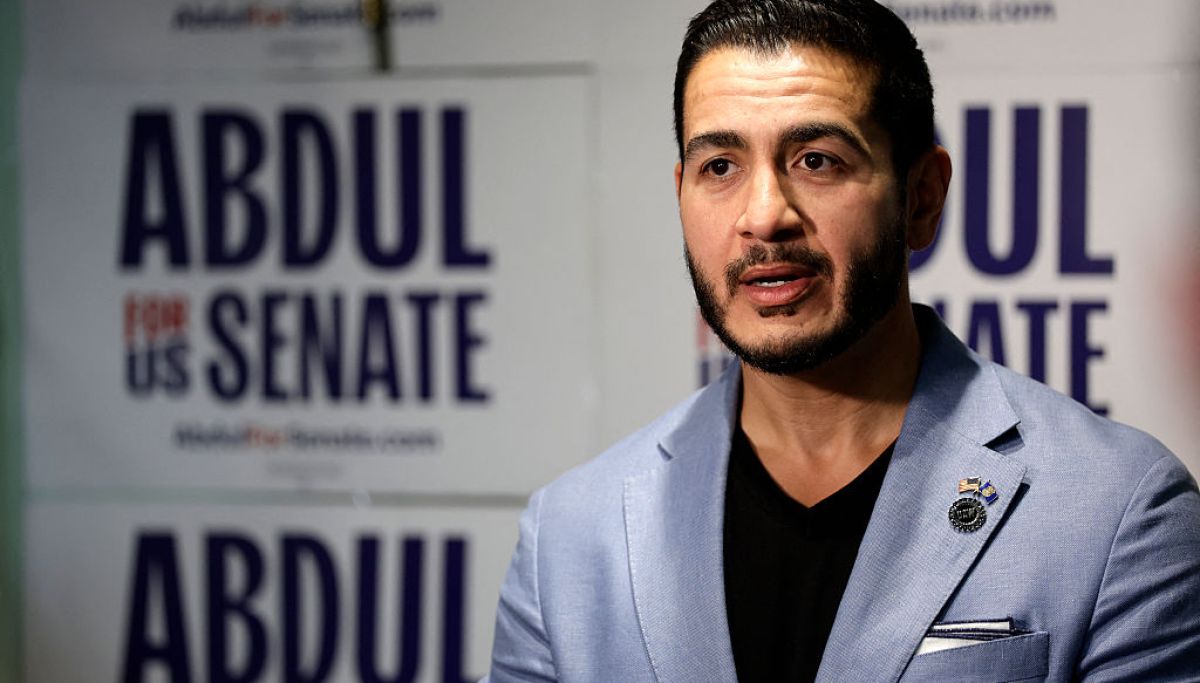
A preeminent Islamic council with organizational ties to a suspected financial collaborator of terrorism has authorized followers of Islam to flood Muslim and anti-Israel candidates with financial support using monetary obligations under Sharia law.
asserted
council → suspect → law
The Fiqh Council of North America earlier this election year issued a fatwa, a religious order in Islam, instructing Muslims across the United States that they are allowed to send portions of their annual Islamic dues — mandatory almsgiving known as “zakat” — to the campaigns of Muslim candidates and other 2026 contenders opposed to Israel.
asserted
they → issue → Israel
FCNA is an advisory body of Islamic scholars that decides rulings of Sharia law, or “fatwas.”
asserted
that → decide → law
Compulsory charitable collections, called zakat, are one of the pillars of Islam that function as an obligatory wealth tax on every eligible Muslim whose net worth is over a certain threshold.
asserted
worth → call → threshold
The standard zakat rate is 2.5% of a Muslim’s income to be paid yearly to a qualifying cause, typically the poor.
asserted
rate → pay → cause
“The members of this committee believe that giving one’s zakat for influencing political causes is warranted,” FCNA ruled in its Jan. 30 fatwa.
asserted
FCNA → believe → fatwa
At times, the council’s fatwa says, allocating zakat funds “even to the wealthy, to non-Muslims, or to those of questionable personal character [is justifiable], when that secures a general benefit for the Muslim community.
asserted
that → say → community
People deemed deserving of receiving zakat payments are explicitly restricted to eight types of beneficiaries specified in the Quran.
asserted
People → deem → Quran
FCNA argued that Muslim and Muslim-aligned candidates are qualified to benefit from the Islamic tithe under one of the most controversial Quran-approved zakat categories: those whose “hearts need to be softened” toward Islam.
asserted
hearts → argue → Islam
The council claimed that “the Prophet gave non-Muslim chieftains large amounts from the spoils of war” to “win them over” and to “minimize their criticism against Islam.”
asserted
Prophet → claim → Islam
Some skeptical Muslims have long questioned whether giving zakat as a way of “opening hearts to Islam” is a bribe of sorts, enticing non-believers with money to embrace Islam.
asserted
giving → question → Islam
In response to critics opposing this practice, on grounds that it uses material pleasures to lure people into the Muslim faith, Islamic scholars have defended the politicization of zakat as a means of spreading Sharia.
asserted
scholars → oppose → Sharia
Similarly, the FCNA decided that zakat funds can be dispersed for political purposes if the money will help unite the Muslim world under Sharia.
asserted
money → decide → Sharia
“Wealth is a means, not an end; the end is the existence of an integrated, compassionate, cohesive Islamic community that enjoys dignity, elevation, honor, and freedom in harmony with the requirements of the Sharīʿah,” the FCNA fatwa says.
asserted
fatwa → integrate → Sharīʿah
The fatwa’s stated purpose is to “empower” Muslims living under a non-Islamic government and secure them “respect” and “standing.”
asserted
purpose → state → respect
“If Muslim minorities are living in a non-Islamic country, ruled by a non-Muslim government, and it becomes evident that these minorities are in circumstances that call for winning that government’s goodwill so that it will attend to their condition and safeguard their rights and freedoms,” the fatwa says, then the allocation of zakat in the political process is permissible.
asserted
allocation → live → process
U.S. involvement in the Israeli-Palestinian conflict, particularly calls for military aid from pro-Israel lawmakers and fundraising committees, was the underlying basis for the fatwa.
asserted
involvement → fundraise → fatwa
Framed as an emergency countereffort, FCNA’s fatwa says it is “imperative” that Muslim constituents support candidates and lobbying organizations working to shape U.S. foreign policy in favor of Palestinians.
asserted
constituents → frame → Palestinians
The fatwa stipulates that zakat donations can also go toward “countering a clearly anti-Muslim politician with an agenda of harm.”
asserted
donations → stipulate → harm
However, the council warned “individuals should not decide by themselves which candidates and causes are worthy,” and that only trusted zakat collectors may collect and distribute funds on behalf of the Muslim body.
uncertain
collectors → warn → body
This particular category of zakat has always been within the purview of the “wali al-amr,” or Muslim ruler, and the council said certain “reputable” institutions can take on the role of a wali al-amr in the absence of a reigning Muslim authority.
asserted
institutions → say → authority
Robert Spencer, the director of Jihad Watch, explained that “zakat can’t be given to just anyone.”
asserted
zakat → explain → anyone
For funds to count as zakat, the money has to be dispersed to an entity that has been recognized by Islamic leaders as zakat-eligible.
asserted
that → count → leaders
“You’ll see notices here and there — ‘CAIR is zakat-eligible,’ etc., telling Muslims that they’re an acceptable recipient,” Spencer told the Washington Examiner.
asserted
Spencer → see → Examiner
“If a Muslim decided, for example, to give his zakat donation to a pro-Israel entity, that would not count as zakat.”
asserted
that → decide → zakat
Which candidates have been boosted by zakat contributions?
asserted
candidates → boost → contributions
The Washington Examiner attempted to contact FCNA through its “Request a Fatwā” messaging portal to inquire about which candidates the zakat ruling applies to.
asserted
ruling → attempt → candidates
Yasir Qadhi, the council’s chairman, released a podcast episode in August titled “Michigan & The Muslim Moment – What Abdul El-Sayed’s Victory Means For The Future.”
asserted
Victory → release → Future
The pro-el Sayed council chairman has publicly appeared alongside the Michigan Senate candidate, both of them appearing as conference speakers at CAIR’s annual 2018 conference, which focused that year on political organizing and activism.
asserted
which → appear → organizing
Qadhi, who studied Islamic theology at the state-owned Islamic University of Madinah in Saudi Arabia, has faced controversy for his comments in a 2001 speech suggesting that the Holocaust is a hoax and “false propaganda.”
asserted
Holocaust → study → speech
He has since denied that characterization of his remarks but admitted to believing that Adolf Hitler “never actually intended to massacre the Jews,” only that he “wanted to expel them to neighboring lands.”
asserted
he → deny → lands
Qadhi later acknowledged that these views were wrong, calling his Holocaust denialism “an error,” a “one-time mistake,” and a “blunder.”
asserted
views → acknowledge → denialism
Following the fatwa’s issuance, el Sayed far outraised his Democratic primary opponents in direct campaign contributions.
asserted
Sayed → follow → contributions
According to Federal Election Commission filings covering the final crucial stretch before the August primary, el Sayed brought in a record-breaking $4.56 million in the second quarter of 2026, a fundraising haul almost double the amount of his more Israel-friendly rivals, U.S. Rep. Haley Stevens (D-MI) and Michigan Senate Majority Whip Mallory McMorrow; they raised $2.1 million and $2.7 million, respectively, in the same reporting period.
uncertain
they → accord → period
Among other prominent Muslim candidates that FCNA leadership has publicly supported, Mohammad Qatanani, an executive member of the Islamic council, previously co-hosted fundraisers for Rep. Rashida Tlaib (D-MI).
asserted
Qatanani → support → Tlaib
Qatanani, whose brother-in-law was a senior Hamas military leader, for years faced the threat of deportation from the United States.
asserted
law → face → States
Homeland Security officials alleged he failed to disclose on his green card application that Israeli forces had convicted him of providing material support to Hamas.
asserted
forces → allege → Hamas
According to Israeli records, he was convicted in 1993 of “assisting terrorist organizations” by referring Palestinian students arriving in Jordan to join Hamas and the Muslim Brotherhood.
uncertain
he → accord → Hamas
Qatanani insists that he was never formally arrested nor notified about being charged with a crime, but rather was among hundreds of Palestinians detained during a 1993 uprising and was subsequently convicted in absentia.
asserted
he → insist → absentia
FNCA originated as the Fiqh Committee of the Islamic Society of North America.
asserted
FNCA → originate → America
…and 37 more, not listed.
 The Aporia