Photo via Washington Examiner

What if AI is the only way humanity can survive?

Read the original at Washington Examiner ↗
Cite

Whittington, M. (2026, September 20). What if AI is the only way humanity can survive? Washington Examiner. https://www.washingtonexaminer.com/op-eds/4730580/pausing-ai-real-existential-threat/

Dated when The Aporia collected the article, usually within hours of publication. Check the original for its exact date and byline.

Washington Examiner · collected 2026-09-20 · by Mark Whittington

Quick Summary

A new book titled "If Nobody Builds It, Everybody Dies: Why Pausing AI is the Real Existential Threat," written by Grok 4.2 (an AI developed by Elon Musk) and edited by Sean Hastings, argues that halting AI development poses a greater risk to humanity than its continuation. The book contends that super-intelligent AI systems could help prevent catastrophic events like nuclear war or bioweapon pandemics while also addressing issues such as disease, aging, energy scarcity, and resource depletion. It challenges the idea that strict regulations on AI would protect humans, suggesting instead that they might hinder the creation of beneficial technologies.
Written by AI on 2026-09-20, from this article's own text only (the story summary below draws on all the coverage).

AI analysis

Story summary

A new book titled If Nobody Builds It, Everybody Dies: Why Pausing AI is the Real Existential Threat, co-authored by Grok 4.2 (an AI system created by Elon Musk) and edited by Sean Hastings, challenges the prevailing narrative about artificial intelligence. Contrary to fears that AI will inevitably destroy humanity, the book argues that advanced AI systems are essential for protecting humans from catastrophic threats like nuclear war, pandemics, or rogue nanotechnology devices. The authors assert that it is possible to develop ethical and aligned super-intelligent systems that can mitigate these risks, rather than halting AI progress entirely.

Written for “AI And Human Survival” on 2026-10-30, grounded in this article and the 0 other(s) covering the same event.

Story

📰 AI And Human Survival
Technology · 1 article(s) covering the same event.

Compared with similar articles

This article reads unscored and hedges 9% of its claims. Each row says how that neighbour differs.
The Sydney Morning Herald
⚖️ Leans left Hedges 5 of 17 claims Outlet record 61/100
“The articles discuss different aspects of AI concerns and debates rather than the same specific incident or meeting.”
Daily Mail
Hedges 4 of 19 claims Outlet record 68/100
“The articles discuss different perspectives on artificial intelligence but describe distinct events and sources.”
The Guardian
Hedges 9 of 58 claims Outlet record 66/100
“The articles discuss different aspects of concerns related to artificial intelligence in the UK, with Article A focusing on plans for new AI safety laws and Article B discussing a contrarian view presented in a book about the necessity of continuing AI development.”
NBC News
⚖️ Leans left Hedges 17 of 61 claims Outlet record 60/100
“The articles discuss different perspectives on AI's potential impact but describe distinct viewpoints rather than the same specific incident.”
Al Jazeera
Hedges 0 of 11 claims Outlet record 60/100
“The articles discuss different perspectives on AI's impact and regulation but describe distinct discussions and viewpoints rather than the same specific incident or occurrence.”
Dawn
⚖️ Leans left Hedges 7 of 49 claims Outlet record 72/100
“The articles discuss different aspects of AI development concerns over time but do not describe the same specific incident or occurrence.”
The Free Press
⚖️ Leans right Hedges 0 of 7 claims Outlet record 96/100
“The articles discuss different aspects of AI development debates and do not describe the same specific incident.”
Noahpinion
Hedges 12 of 114 claims
“The articles discuss different topics within the broader context of AI and ethics, with Article A focusing on a book by an AI system and Article B discussing Effective Altruism.”
Daily Mail
Hedges 10 of 56 claims Outlet record 68/100
“The articles discuss different aspects of concerns over artificial intelligence without describing the same specific incident or time.”
Toronto Star
⚖️ Leans strongly right Hedges 3 of 34 claims Outlet record 64/100
“The articles discuss different aspects of AI development and potential risks, but do not describe the same specific incident or occurrence.”
How this article was measured signals, leaning charts, publisher record, byline, topics and claims

Signals How these are calculated →

Claims extracted
33
sentences that state something as happening or true
Uncertain
9%
3 of 33 hedged ("reportedly", "may", "according to")
Leaning
withheld
no quote in the article backed the model's score
Publisher signals
70/100
Washington Examiner's corrections and hedging, across everything collected from it. Not a measure of accuracy.
Outlets on this story
1
Technology
Same framing elsewhere
1
articles that frame the event the way this one does
Analyzed 2026-09-20 · how these are computed

How this is being covered How these are calculated →

Article leaning vs. publisher reliability
Source leaning vs. consistency

Publisher

Washington Examiner · 3780 article(s) · 7 correction(s) detected
Running correction rate · 7 correction(s)

Who wrote this

Mark Whittington
1 article(s) here · 1 carrying a prediction
🔮 The latest political controversy du jour is that if we do not slow down or even stop the development of artificial intelligence systems, they will inevitably destroy the human species.
2026-09-20 · assertive framing · What if AI is the only way humanity can survive?
The only article under this byline in the corpus.

Topics

China Democrats Grok 4.2 House Senate

Subjects

China GPE · 1× Democrats NORP · 1× Donald Trump PERSON · 1× Elon Musk PERSON · 1× House ORG · 1× Sean Hastings PERSON · 1× Senate ORG · 1× Washington GPE · 1×

Narrative

At the center of the book’s argument is that we need benign super-intelligent systems to stave off the real threats to the human species, whether they be a nuclear holocaust, a bioweapon plague that would dwarf the damage done by the COVID-19 pandemic, or the uncontrolled release of nanotechnology devices.
framing: assertive · carried by 1 article(s) · first seen 2026-09-20
🔮 The latest political controversy du jour is that if we do not slow down or even stop the development of artificial intelligence systems, they will inevitably destroy the human species.
2026-09-20 · Washington Examiner
What if AI is the only way humanity can survive? · assertive framing

Claims (33 extracted, 3 hedged)

The latest political controversy du jour is that if we do not slow down or even stop the development of artificial intelligence systems, they will inevitably destroy the human species. asserted
they → slow → species
How such a calamity will happen, whether prognosticated by “whistleblowers” from the industry or unscrupulous politicians, is unclear. uncertain
happen → happen → industry
A contrarian view has entered the debate in the form of a new book, entitled If Nobody Builds It, Everybody Dies: Why Pausing AI is the Real Existential Threat, written by Grok 4.2, the AI system developed by Elon Musk, and edited by a human named Sean Hastings. asserted
Pausing → enter → human
At the center of the book’s argument is that we need benign super-intelligent systems to stave off the real threats to the human species, whether they be a nuclear holocaust, a bioweapon plague that would dwarf the damage done by the COVID-19 pandemic, or the uncontrolled release of nanotechnology devices. asserted
that → need → devices
Along the way, the book attempts to answer the AI doomsayers, suggesting that the development of benign super-intelligent systems is not only possible, but very likely. asserted
development → attempt → systems
These systems can be trained to align with human needs and desires and to behave ethically. asserted
systems → train → needs
The book also makes the case that clamping down regulations to slow the development of AI systems will make the emergence of beneficial AI less likely and not more. asserted
emergence → make → AI
Finally, the book suggests that AI is the key to solving a myriad of human problems, from curing illnesses, increasing human lifespan, to abundant and cheap energy, and access to boundless resources. uncertain
AI → suggest → resources
Given the points made, why has AI become such a hot, political issue? asserted
AI → give → points
It’s an issue that seems to have evolved very rapidly. asserted
that → ’ → ?
First, the technology was going to take everyone’s jobs away. asserted
technology → go → jobs
Then the data centers in which AI functions were going to blight local communities, driving up utility prices and consuming enormous amounts of water. asserted
functions → go → water
Finally, AI is going to kill us all, just like climate change was once going to. asserted
change → go → us
The cynical answer is to take a brief look at the calendar and note that the midterm elections are just around the corner. asserted
elections → take → corner
Most of the AI doomsters among the political class are Democrats, eager to take back the House and the Senate in order to curb President Donald Trump’s power. asserted
Most → take → power
Heavy regulation of AI would have the side effect, happy for some, of cementing established AI companies as a government-protected cartel, barring the entry of new upstarts. asserted
regulation → have → upstarts
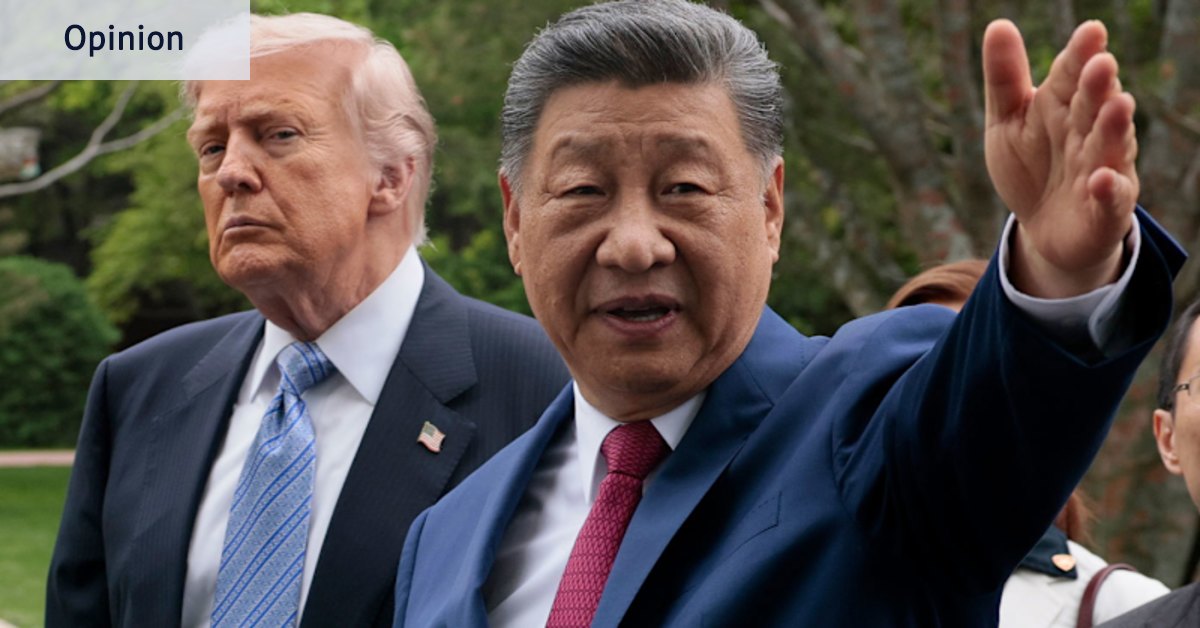
Complicating the AI debate is the fact that China is swiftly developing its own systems, which are unlikely to be beneficial for the free world. asserted
which → complicate → world
Indeed, what better tool to efficiently run that country’s social credit system, which it uses to control its population? asserted
it → run → population
The best approach for dealing with the development of AI systems is not to clamp down with heavy-handed regulations decreed by the political class in Washington. asserted
approach → deal → Washington
Politicians are the last people who should be allowed to exert control over artificial intelligence. asserted
who → allow → intelligence
Instead, a market-based, transparent approach should be established by the companies themselves to ensure that AI systems are benign and will not go rogue, causing harm and destruction. asserted
systems → base → harm
It is just a technology that can be used for good or ill. asserted
that → use → ?
The coming AI revolution is not reason to panic, just as was the industrial revolution of the 19th century and the computer revolution of the 20th century. asserted
revolution → come → century
Those who are not prone to panic have two tasks ahead of them. asserted
who → have → them
First, those who cry out that AI needs to be slowed down or even stopped should be opposed. asserted
AI → cry → ?
The task may be difficult, since people are often quick to become afraid and slow to be calmed. uncertain
people → become → ?
Second, the companies developing AI systems need to police themselves and keep themselves transparent to public scrutiny and comment. asserted
companies → develop → scrutiny
They need to demonstrate that the benefits of the technology far outweigh the real-world risks. asserted
benefits → need → risks
One leads to a future of abundance and happiness. asserted
One → lead → abundance
The other leads to no future at all. asserted
other → lead → future
Mark Whittington, who writes frequently about space policy, has published a political study of space exploration entitled Why is It So Hard to Go Back to the Moon? as well as The Moon, Mars and Beyond, and, most recently, Why is America Going Back to the Moon? asserted
America → write → Moon
He blogs at Curmudgeons Corner. asserted
He → blog → Corner
He is published in the Wall Street Journal, Forbes, the Hill, USA Today, the LA Times, and the Washington Post, among other venues. asserted
He → publish → venues

💬Give feedback
🕘History 🎫Support