Photo via The Sydney Morning Herald

Albanese takes AI fight to UN as Australia launches Security Council bid

Read the original at The Sydney Morning Herald ↗
Cite

Harris, R. (2026, September 20). Albanese takes AI fight to UN as Australia launches Security Council bid. The Sydney Morning Herald. https://www.smh.com.au/politics/federal/albanese-takes-ai-fight-to-un-as-australia-launches-security-council-bid-20260920-p60yxo.html?ref=rss&utm_medium=rss&utm_source=rss_feed

Dated when The Aporia collected the article, usually within hours of publication. Check the original for its exact date and byline.

The Sydney Morning Herald · collected 2026-09-20 · by Rob Harris

Quick Summary

Prime Minister Anthony Albanese is campaigning for Australia's bid to join the United Nations Security Council for a two-year term starting in 2024. During his visit to New York, Albanese emphasized the role of middle powers like Australia in shaping international AI governance amid growing competition between the US and China. He called for an agreement on artificial intelligence similar to nuclear non-proliferation treaties, advocating that smaller nations should have more influence over global issues such as wars and technological advancements.
Written by AI on 2026-09-20, from this article's own text only (the story summary below draws on all the coverage).

AI analysis

Story summary

Anthony Albanese, the Prime Minister of Australia, launched a campaign for a two-year term on the United Nations Security Council (UNSC) starting from 2029. The council currently faces criticism for its handling of global crises due to veto powers held by Russia and China. Alongside Finland, Australia is the only other country nominated for the two non-permanent seats available. A secret ballot will take place in mid-2028, requiring a two-thirds majority vote from UN General Assembly members for success.

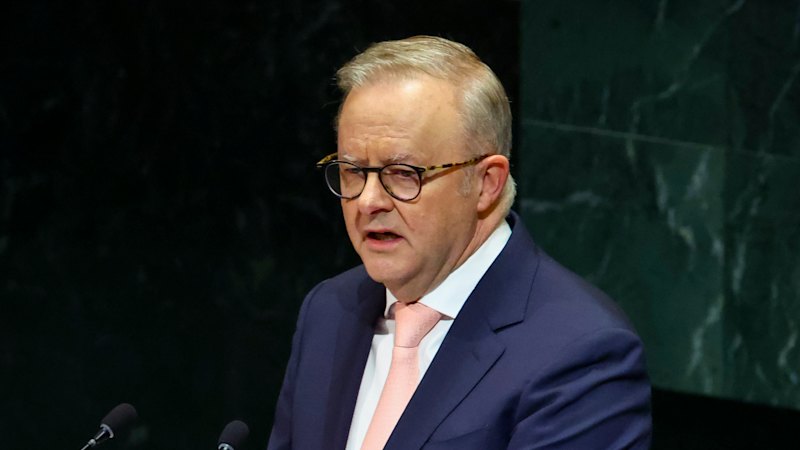
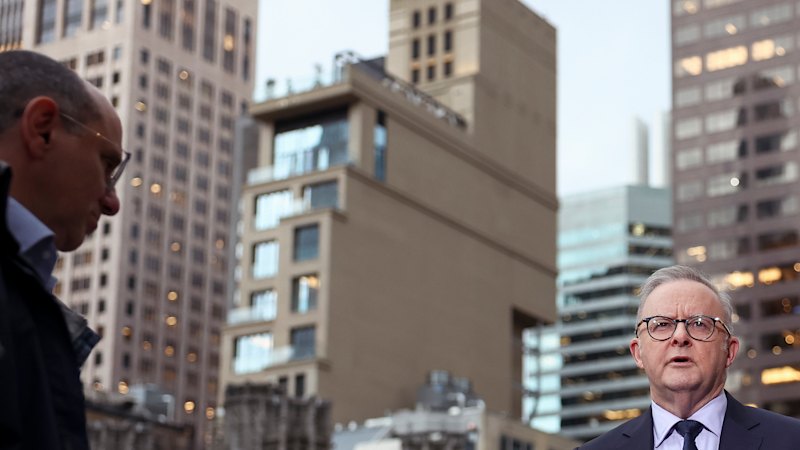
During his campaign launch in New York on Sunday (local time), Albanese emphasized that smaller and middle-sized nations should have greater influence over global issues like artificial intelligence and geopolitical tensions. He highlighted Australia’s role as a "middle power" capable of contributing to shaping international rules, particularly regarding AI, as the US and China vie for dominance. Additionally, he urged the US and China to collaborate on establishing international guidelines for AI to prevent potential misuse.

Albanese also named Siobhan McKenna, a former executive at News Corp, as Australia’s next Consul-General in New York, a prestigious diplomatic posting. The Prime Minister stressed that securing a seat on the UNSC would benefit ordinary Australians by enabling their country to influence global policies affecting daily life and economic stability.

Written for “Australia UN Security Council Bid” on 2026-10-31, grounded in this article and the 3 other(s) covering the same event.

Story

📰 Australia UN Security Council Bid
Politics · 4 article(s) covering the same event. Compare every outlet's account →

Compared with similar articles

This article reads unscored and hedges 3% of its claims. Each row says how that neighbour differs.
The Straits Times
Hedges 3 of 21 claims Outlet record 66/100
“The articles describe different events occurring at different times and involving different people.”
The Straits Times
Hedges 1 of 8 claims Outlet record 66/100
“Article A discusses Sam Altman's briefing on AI at the UN Security Council meeting, while Article B covers Anthony Albanese's campaign for Australia to join the UN Security Council.”
ABC News (AU)
Hedges 0 of 3 claims Outlet record 68/100
Washington Examiner
Hedges 2 of 14 claims Outlet record 70/100
“The articles discuss different aspects of AI concerns; one focuses on Australia's bid for a UN Security Council seat and its stance on AI regulation, while the other is an opinion piece about US concerns regarding China's technological advancement.”
ABC News (AU)
Hedges 0 of 31 claims Outlet record 68/100
The Guardian
Hedges 2 of 24 claims Outlet record 66/100
Washington Examiner
Hedges 2 of 15 claims Outlet record 70/100
“Article A describes Albanese's pitch for Australia's bid on the UN Security Council, while Article B discusses a coalition of nations calling for global oversight on AI ahead of the UN summit. Although both relate to AI and the UN, they describe different specific events.”
ABC News (AU)
⚖️ Leans left Hedges 0 of 3 claims Outlet record 68/100
“The articles describe different events: one is about Australia's bid for the UN Security Council and AI regulations, while the other is about defending social media reforms amid US backlash.”
The Sydney Morning Herald
⚖️ Leans left Hedges 0 of 32 claims Outlet record 61/100
“The articles describe different speeches or addresses by Albanese at distinct times, with differing themes and focuses.”
The Straits Times
⚖️ Leans left Hedges 3 of 20 claims Outlet record 66/100
“The articles describe different events: one about Australia's bid for a seat on the UN Security Council and the other about AI leaders briefing the UN Security Council.”
How this article was measured signals, leaning charts, publisher record, byline, topics and claims

Signals How these are calculated →

Claims extracted
34
sentences that state something as happening or true
Uncertain
3%
1 of 34 hedged ("reportedly", "may", "according to")
Leaning
withheld
no quote in the article backed the model's score
Publisher signals
61/100
The Sydney Morning Herald's corrections and hedging, across everything collected from it. Not a measure of accuracy.
Outlets on this story
4
Politics
Same framing elsewhere
1
articles that frame the event the way this one does
Analyzed 2026-09-20 · how these are computed

How this is being covered How these are calculated →

Article leaning vs. publisher reliability
Source leaning vs. consistency

Publisher

The Sydney Morning Herald · 5658 article(s) · 15 correction(s) detected
Running correction rate · 15 correction(s)

Who wrote this

Rob Harris
30 article(s) here · 1 carrying a prediction
🔮 “Some commanders were alert to this data and rumours that accompanied it while others were not, which may suggest an abandonment of curiosity,” the report found.
🔮 A damning new report prepared for the Albanese government reveals almost two-thirds of homelessness providers are turning away desperate Australians they would once have helped, with some rejecting as many people as they take in.
🔮 She said many of those who had helped elect Haines were struggling to comprehend how the democratic process they had worked to strengthen could become the target of such violence.
🔮 A delegation of frontline workers and people with lived experience of homelessness, family violence and financial hardship will travel to Canberra during the next parliamentary sitting week to press the case directly with politicians.
🔮 Artificial intelligence could become a new weapon in the fight against Australia’s burgeoning fox population, as technology is developed to identify the invasive predators and deliver poison while sparing native wildlife.
🔮 Jim Chalmers knows the government is under the pump and he says Labor must up its game to battle inflation, the unintended consequences of its May budget and keep voters’ trust through a painful period of interest rate rises.
🔮 The findings will intensify pressure on federal and state governments – the majority of them Labor – to overhaul rural health funding, with the National Rural Health Alliance warning that Medicare’s traditional reliance on payments for individual consultations cannot sustain services in communities with small populations, higher operating costs and further workforce shortages.
🔮 “We can’t tolerate 12 or 18 months of will-he-or-won’t-he.”
2026-10-12 · assertive framing · A grateful son or a relentless self-promoter?
🔮 The Pentagon announced last week that the execution of Nidal Malik Hasan, convicted of killing 13 people at a military base at Fort Hood in Texas in 2009, would be livestreamed on December 3.
🔮 The earlier grants were made through programs where local MPs could nominate organisations for funding and were classified as “closed, non-competitive”.
Also by Rob Harris
Nothing else under this byline is closely related to this article, so these are simply their most recent.
All 30 articles by Rob Harris →

Topics

Albanese Australia China New York Security Council

Subjects

Australia GPE · 11× Albanese PERSON · 4× China GPE · 4× New York GPE · 2× Security Council ORG · 2× Trump PERSON · 2× the UN Security Council ORG · 2× Anthony Albanese PERSON · 1× Washington GPE · 1× the United Nations Security Council ORG · 1×

Narrative

The prime minister will formally launch Australia’s campaign for a two-year term on the United Nations Security Council in New York on Sunday (local time), using the bid to argue that smaller and middle-sized nations must have a greater say over the global response to AI, wars and rising geopolitical tensions.
framing: assertive · carried by 1 article(s) · first seen 2026-09-20
🔮 Australia will state its case for a seat at the world’s most powerful diplomatic table, with Anthony Albanese pitching the country as a middle power capable of helping write the rules for artificial intelligence as the US and China race for technological dominance.
2026-09-20 · The Sydney Morning Herald
Albanese takes AI fight to UN as Australia launches Security Council bid · assertive framing

Claims (34 extracted, 1 hedged)

Australia will state its case for a seat at the world’s most powerful diplomatic table, with Anthony Albanese pitching the country as a middle power capable of helping write the rules for artificial intelligence as the US and China race for technological dominance. asserted
US → state → dominance
The prime minister will formally launch Australia’s campaign for a two-year term on the United Nations Security Council in New York on Sunday (local time), using the bid to argue that smaller and middle-sized nations must have a greater say over the global response to AI, wars and rising geopolitical tensions. asserted
nations → launch → AI
Albanese also urged Washington and Beijing to help strike a global agreement on artificial intelligence akin to a nuclear non-proliferation treaty at the weekend, saying nations need international rules to ensure humans “remain in control” amid doomsday predictions. asserted
humans → urge → predictions
His call came as US President Donald Trump doubled down on the race for AI supremacy, declaring the United States must maintain its lead over China and announcing an “AI force” to guard against the technology’s “decimation or destruction”. asserted
States → come → decimation
“We are leading China, and the rest of the World, and I intend to keep it that way!” Trump wrote on social media, adding he would not “hinder or stifle” growth in the industry. asserted
he → lead → industry
Albanese told ABC’s Insiders he hoped there would be progress when Trump met Chinese President Xi Jinping at the White House this week amid potential doomsday offerings in recent weeks from industry insiders. asserted
Trump → tell → insiders
He said that middle powers could help bridge the gap between the major powers competing for technological and strategic advantage. uncertain
powers → say → advantage
“The truth is, they’re the big two giants here,” he said. asserted
he → ’re → ?
“We want to see co-operation. asserted
We → want → operation
We’ve seen that in the past with new technologies, even on nuclear weapons, for example. asserted
We → see → example
I think middle powers, such as Australia, have a role to play here as well.” asserted
powers → think → role
Albanese will argue that a seat on the UN Security Council would give Australia greater influence over conflicts including Ukraine and the Middle East, while allowing it to push issues including AI, climate security, ocean protection and international law up the global agenda. asserted
it → argue → agenda
“The hopes of Australians are the hopes of people everywhere – to live in peace and to build a better future,” Albanese said. asserted
Albanese → live → future
“Australia played a pivotal role in the founding of the United Nations – because we have always understood how important it is for small and mid-sized nations to have their voices heard on the challenges facing our world.” asserted
voices → play → world
Australia will point to its previous Security Council term in 2013 and 2014, when it worked on issues including accountability for the downing of MH17, humanitarian access, women, peace and security, and international peacebuilding. asserted
it → point → MH17
It has had a seat on the council five times, including holding the first Security Council presidency in 1946, and two-year terms in the 1950s, 1970s and the 1980s. asserted
It → have → 1950s
The Security Council has 15 members, including five permanent members – the US, Britain, China, Russia and France – and 10 non-permanent members elected for overlapping two-year terms. asserted
Council → have → terms
Australia and Finland are so far uncontested for the two positions but still must secure two-thirds of members present and voting in the secret ballot. asserted
Australia → secure → ballot
If all 193 countries vote, it would require at least 128 votes. asserted
it → vote → votes
The campaign will be built around the slogan “We listen. asserted
We → build → slogan
We partner. asserted
We → partner → ?
We protect.” asserted
We → protect → ?
A kangaroo features in the campaign logo and promotional material. asserted
kangaroo → feature → logo
Australia is seeking a seat for 2029 and 2030, with members to vote in June 2028. asserted
members → seek → June
A campaign brochure also highlights Australia’s record in UN peacekeeping, saying more than 65,000 Australian personnel have served in more than 60 UN and multilateral peace and security operations since 1947. asserted
personnel → highlight → 1947
Foreign Affairs Minister Penny Wong said Australia had a practical role to play as an “active and ambitious middle power”. asserted
Australia → say → power
“A safer world is one governed by rules, not power and force alone,” Wong said. asserted
Wong → govern → rules
“Australia’s focus on the UN Security Council will be conflict prevention, the protection of civilians and defending the rules that protect us all.” asserted
that → defend → us
The government will also use Australia’s relationships in the Pacific and its role in climate negotiations to argue it can amplify the concerns of smaller nations, alongside its campaign on climate and ocean security. asserted
it → use → security
The campaign will also call for reform of the UN and uphold the UN Convention on the Law of the Sea. asserted
campaign → call → Sea
Albanese raised the need for international AI rules during his visit to California, where he met Apple executive chairman Tim Cook and the global technology giant’s executive team. asserted
he → raise → Cook
“Australia’s national interests are served by us engaging, by us recognising that there are risks which need to be mitigated,” he said. asserted
he → serve → ?
“That is something that we will continue to pursue, and something that is common.” asserted
that → continue → that
Subscribers can sign up to our weekly Inside Politics newsletter. asserted
Subscribers → sign → newsletter

💬Give feedback
🕘History 🎫Support