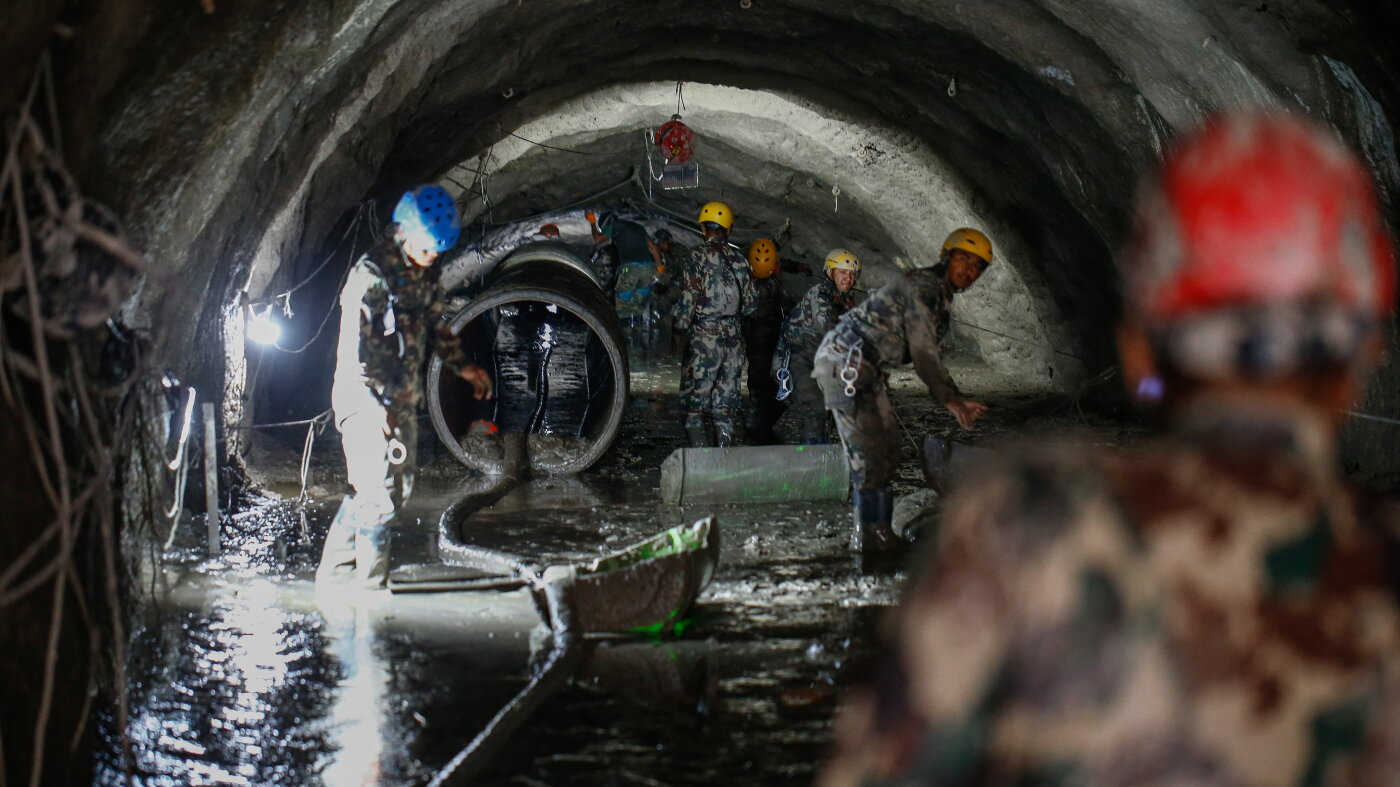
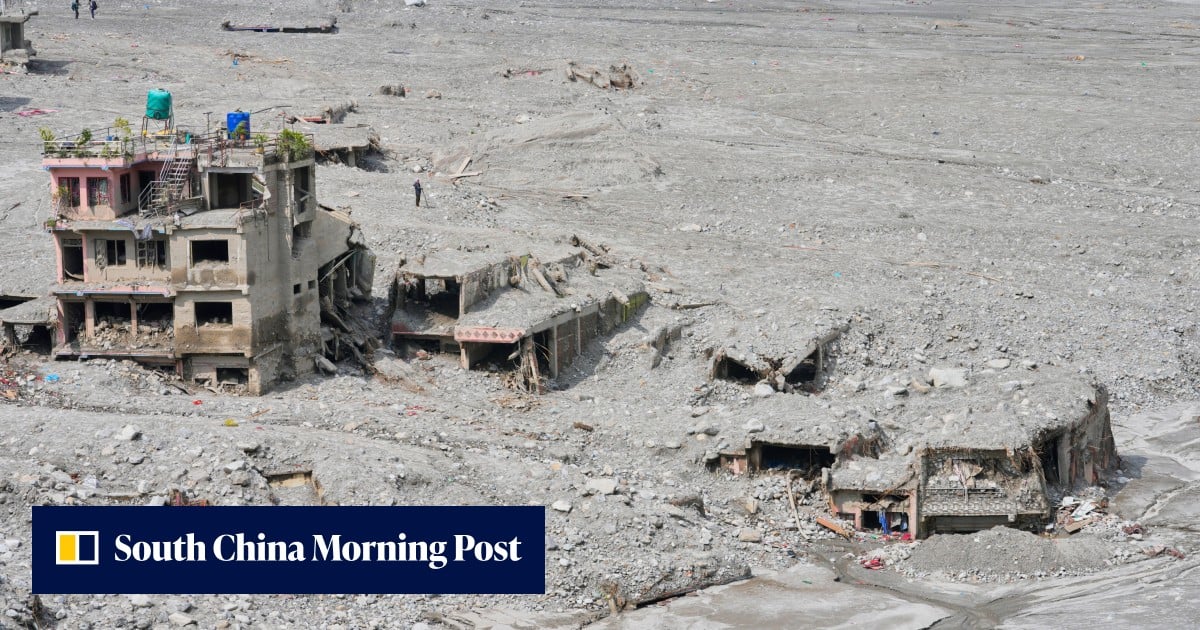
Photo via The Hindu

Old era of jingoism, equating Nepali nationalism with anti-Indianism, is over: Nepal Finance Minister

Read the original at The Hindu ↗
Cite

Haidar, S. (2026, September 20). Old era of jingoism, equating Nepali nationalism with anti-Indianism, is over: Nepal Finance Minister. The Hindu. https://www.thehindu.com/news/national/old-era-of-jingoism-equating-nepali-nationalism-with-anti-indianism-is-over-nepal-finance-minister/article71487515.ece

Dated when The Aporia collected the article, usually within hours of publication. Check the original for its exact date and byline.

The Hindu · collected 2026-09-20 · by Suhasini Haidar

Quick Summary

Nepal’s Finance Minister Swarnim Wagle recently visited Delhi to discuss flood recovery efforts with the Indian government, aiming for a $5 billion reconstruction project over three to five years. The minister highlighted the need for a "reset" in Indo-Nepal relations and sought support through grants and lines of credit denominated in Indian rupees for infrastructure projects like roads, bridges, and public housing. Wagle also emphasized the importance of addressing issues such as border disputes constructively.
Written by AI on 2026-09-20, from this article's own text only (the story summary below draws on all the coverage).

AI analysis

Story summary

Nepal’s Finance Minister Swarnim Wagle, an economist and former UNDP official, made his first foreign trip to Delhi in late August to discuss recovery plans with the Indian government following severe floods that devastated large areas of Nepal. The new Balen Shah-led government aims for a "reset" in relations with India, revisiting old trade and connectivity projects like overflight rights for Nepalese airports. Minister Wagle is also scheduled to attend meetings at the Asian Infrastructure Investment Bank (AIIB), International Monetary Fund (IMF), and the World Bank to seek support for an estimated $5 billion recovery project. He emphasized a more constructive approach towards managing sensitive issues such as the border dispute between Nepal and India, marking a shift from previous anti-Indian sentiments in Nepalese nationalism.

Written for “Nepal Finance Minister Speech” on 2026-11-02, grounded in this article and the 0 other(s) covering the same event.

Story

📰 Nepal Finance Minister Speech
Politics · 1 article(s) covering the same event.

Compared with similar articles

This article reads unscored and hedges 5% of its claims. Each row says how that neighbour differs.
NPR
⚖️ Leans left Hedges 9 of 75 claims Outlet record 60/100
“Article A discusses Nepal's Finance Minister's efforts to secure aid for reconstruction after floods, while Article B describes ongoing protests and the scale of the disaster.”
Al Jazeera
⚖️ Leans strongly left Hedges 1 of 17 claims Outlet record 60/100
“Article A discusses the Finance Minister's efforts to support reconstruction after floods and reset relations with India, while Article B focuses on the Prime Minister's address at the UN General Assembly regarding climate change warnings from the flood disaster.”
South China Morning Post
Hedges 0 of 5 claims Outlet record 63/100
“The articles discuss different aspects of Nepal's efforts after floods, with Article A focusing on the Finance Minister's economic recovery trip to India and international meetings, while Article B focuses on PM Shah's proposal for a climate deal at the UN General Assembly.”
The Hindu
Hedges 2 of 16 claims Outlet record 60/100
“Article A describes a meeting between Nepal's Finance Minister and India's External Affairs Minister on September 18, while Article B discusses Nepal's Finance Minister's broader efforts to reset relations with India and seek international support for reconstruction, which seems to be part of a larger ongoing effort rather than the same specific event.”
How this article was measured signals, leaning charts, publisher record, byline, topics and claims

Signals How these are calculated →

Claims extracted
128
sentences that state something as happening or true
Uncertain
5%
6 of 128 hedged ("reportedly", "may", "according to")
Leaning
not political
takes no side on a contested political question
Publisher signals
60/100
The Hindu's corrections and hedging, across everything collected from it. Not a measure of accuracy.
Outlets on this story
1
Politics
Same framing elsewhere
2
articles that frame the event the way this one does
Analyzed 2026-09-20 · how these are computed

How this is being covered How these are calculated →

Article leaning vs. publisher reliability
Source leaning vs. consistency

Publisher

The Hindu · 907 article(s) · 2 correction(s) detected
Running correction rate · 2 correction(s)

Who wrote this

Suhasini Haidar
11 article(s) here · 1 carrying a prediction
🔮 A week after United States Secretary of State Marco Rubio’s visit to India, External Affairs Minister S. Jaishankar will travel to the U.S. city of Atlanta to attend the meeting of G20 Foreign Ministers hosted by Mr. Rubio.
🔮 On Wednesday morning (October 14), Ms. Anand and Mr. Jaishankar will be part of a panel discussion to discuss the “Middle Power Moment”, along with former British Prime Minister Rishi Sunak and former Australian Prime Minister Kevin Rudd.
🔮 Sources confirmed to The Hindu that the agreement or proposal for Mr. Dalela was forwarded to Kathmandu on Tuesday (October 6, 2026) and is expected to be approved soon by the Balen Shah government.
🔮 Talking on India’s stand on the conflict, he said, “Our position on that conflict has been very clear, which is that we would like to see an end to this conflict, and we believe that this will require dialogue and diplomacy.
🔮 , although he will not address the UN General Assembly this year.
🔮 The agenda will include engagements aimed at three additional multilateral platforms — the upcoming BRICS Summit in September, the two-year UN Security Council term of 2028-2029, and planning for the long-pending India-Central Asia Summit, which has not met since 2022.
🔮 Bangladesh will host the next BIMSTEC summit next year, and Mr. Modi congratulated Mr. Yunus for assuming its chairmanship.
🔮 Nepal’s Finance Minister Swarnim Wagle, an economist and former UNDP official, made his first visit abroad to Delhi to discuss plans with the government, and will soon travel to meetings of the Asian Infrastructure Investment Bank (AIIB), International Monetary Fund (IMF), and the World Bank to seek support for an estimated $5 billion recovery project.
🔮 According to officials, the entire reconstruction required after the floods on August 26, that have left more than 1,400 dead, and more than 6,000 missing, will top $5 billion.
🔮 She also says that if her party decides she should step down, she would.
Also by Suhasini Haidar
Nothing else under this byline is closely related to this article, so these are simply their most recent.
All 11 articles by Suhasini Haidar →

Topics

Delhi Finance India Nepal UNDP

Subjects

India GPE · 7× Nepal GPE · 6× Delhi GPE · 2× AIIB ORG · 1× Finance ORG · 1× IMF ORG · 1× International Monetary Fund ORG · 1× Swarnim Wagle PERSON · 1× UNDP ORG · 1× the Asian Infrastructure Investment Bank ORG · 1×

Narrative

Nepal’s Finance Minister Swarnim Wagle, an economist and former UNDP official, made his first visit abroad to Delhi to discuss plans with the government, and will soon travel to meetings of the Asian Infrastructure Investment Bank (AIIB), International Monetary Fund (IMF), and the World Bank to seek support for an estimated $5 billion recovery project.
framing: assertive · carried by 2 article(s) · first seen 2026-09-20
🔮 Nepal’s Finance Minister Swarnim Wagle, an economist and former UNDP official, made his first visit abroad to Delhi to discuss plans with the government, and will soon travel to meetings of the Asian Infrastructure Investment Bank (AIIB), International Monetary Fund (IMF), and the World Bank to seek support for an estimated $5 billion recovery project.
2026-09-22 · The Hindu
Punished for importing Russian oil · assertive framing

Claims (128 extracted, 6 hedged)

A month after floods wrecked large areas in Nepal, its new government is intensifying efforts to support reconstruction. asserted
government → wreck → reconstruction
Nepal’s Finance Minister Swarnim Wagle, an economist and former UNDP official, made his first visit abroad to Delhi to discuss plans with the government, and will soon travel to meetings of the Asian Infrastructure Investment Bank (AIIB), International Monetary Fund (IMF), and the World Bank to seek support for an estimated $5 billion recovery project. asserted
Wagle → make → project
In an exclusive interview with The Hindu, Mr. Wagle said the new Balen Shah government in Nepal wants a “reset” with India, and a revision of old trade and connectivity projects, including the push for long-delayed overflight rights for Nepal airports, and managing difficult issues, such as the border dispute, in a “constructive” manner. asserted
government → say → manner
We have been able to do two very rapid assessments, one by the National Disaster Risk Reduction and Management Authority, which was set up in the immediate aftermath of the 2015 earthquake. asserted
which → do → earthquake
Relying on government sources and government statistics, they came up with a figure of about $1.8 billion in direct damages and around $900 million in losses, but all that’s at replacement value. asserted
that → rely → value
However, we are not going to replace what existed before, but rebuild for resilience in the future, and that’s going to be more costly. asserted
that → go → future
We are estimating $4.7-5 billion in reconstruction needs over the next three to five years. asserted
We → estimate → years
How can India help? asserted
India → help → ?
What specifically did you discuss during your visit to Delhi about projects that India can be involved in? asserted
India → discuss → that
India has been very supportive, very proactive, even in reaching out to us, and we are keen to explore ways we can reset and renew Indo-Nepal ties. asserted
we → reach → ties
We have talked about some big signature projects or forms of assistance, which I think can be adapted to the reconstruction needs. asserted
I → talk → needs
After the 2015 earthquake, India had given us about $250 million of grant assistance, and $750 million as a Line of Credit. asserted
India → give → Credit
And [the late former External Affairs Minister] Ms. Sushma Swaraj was able to announce in Kathmandu a billion dollars worth of support, which was received very positively. asserted
which → announce → support
Lines of Credit are more amenable to energy-related projects, and we are keen to borrow from India. asserted
we → relate → India
In December last year (2025), there was an agreement that any subsequent Indian assistance in the form of a Line of Credit would be denominated in INR (Indian rupee), which is good for us, which is what we asked, and I think there are only a few countries to which India extends that facility. asserted
India → be → facility
Some of those Lines of Credit would need to go into the rehabilitation of our energy infrastructure. asserted
Some → need → infrastructure
Now, publicly built hydropower plants, transmission lines, and substations would ideally be addressed through concessional credit. asserted
plants → build → credit
But projects like roads and bridges, and even public housing, I think, would benefit from grant-based assistance. asserted
I → think → assistance
We leave it to the Government of India to organise their package in a way they feel appropriate. asserted
they → leave → way
In 2015, I was in the government at the time as a member of the National Planning Commission, but charged with very much the same task of assessing the damage and losses. asserted
I → charge → damage
At the time, we came up with an eight-billion-dollar figure — four billion in public, four billion in private — but the estimates were so credible that when we went to the international community and said we needed $4 billion of public assistance, we got a pledge of $4 billion. asserted
we → come → billion
This time around, it’s going to be slightly different, because unlike the earthquake, which covered a vast territory, the flood has been much more concentrated, but the human fatalities have been comparable. asserted
fatalities → go → territory
You know, when the final numbers are confirmed, we fear they will be in the region of 8,000-10,000 [lives lost]. asserted
they → know → lives
So, it’s roads, bridges, suspension bridges, public and private housing, and hydropower. asserted
it → ’ → ?
Nepal’s Foreign Minister had also said that the big climate polluters — India, China, and the U.S. — bear some of the responsibility for this flooding, and that they owe Nepal reparations. asserted
they → say → reparations
Would you agree? asserted
you → agree → ?
At this point in time, I think that line of thinking is rather unhelpful for us and for countries that have generously stepped in to help. asserted
that → think → countries
However, some of these issues will come up at CoP (Conference of the Parties), including the next one in Turkiye (in November 2026). asserted
some → come → November
It was a long struggle to set up the loss and damage fund, but it is completely unfit for purpose and inadequate. asserted
it → set → purpose
Just to make the effort, we did write to them. asserted
we → make → them
And I think a modest amount of $20 million was granted. asserted
amount → think → million
So, I hope we will be able to restart the discourse. asserted
we → hope → discourse
We need to look at this event scientifically — and the world weather attribution group has concluded that climate change contributed to the thaw of the permafrost and to glacial thinning. asserted
change → need → thinning
A Dutch scientist told me that the portion of the rock that collapsed and then dropped almost 1,200 m might have been buried under ice for 30 million years, but because of global warming, it would have been exposed in the last 30 years. uncertain
it → tell → years
All sorts of global warming effects are visible in the Himalaya — and permafrost, the mud, the mountain wall that was held together is now just cracking up. asserted
that → hold → Himalaya
Given this conclusion, is Nepal rethinking the way it plans big development projects, mass tourism, and mega hydropower dams? asserted
it → give → projects
It’s just that we need to do things differently and learn from some of the conspicuous errors that we might have made — for example, tunnels built too close to the river banks, and without more than one point for entry and exit. uncertain
we → ’ → entry
We also need to review our expensively constructed highways right on the river bank, like the Japanese-built B.P. Koirala Highway from Dhulikhel to Simboli that was swept away last year. asserted
that → need → Simboli
Nepal’s first highway, from Kathmandu to Raxaul/Birgunj, was built by India (in 1956), and it went along the ridges of the mountains and can withstand the weather. asserted
it → build → weather
Subsequently, however, we started to build along the river, which was easier, but makes us more vulnerable to floods. asserted
us → start → floods
…and 88 more, not listed.

💬Give feedback
🕘History 🎫Support