Photo via Times of India

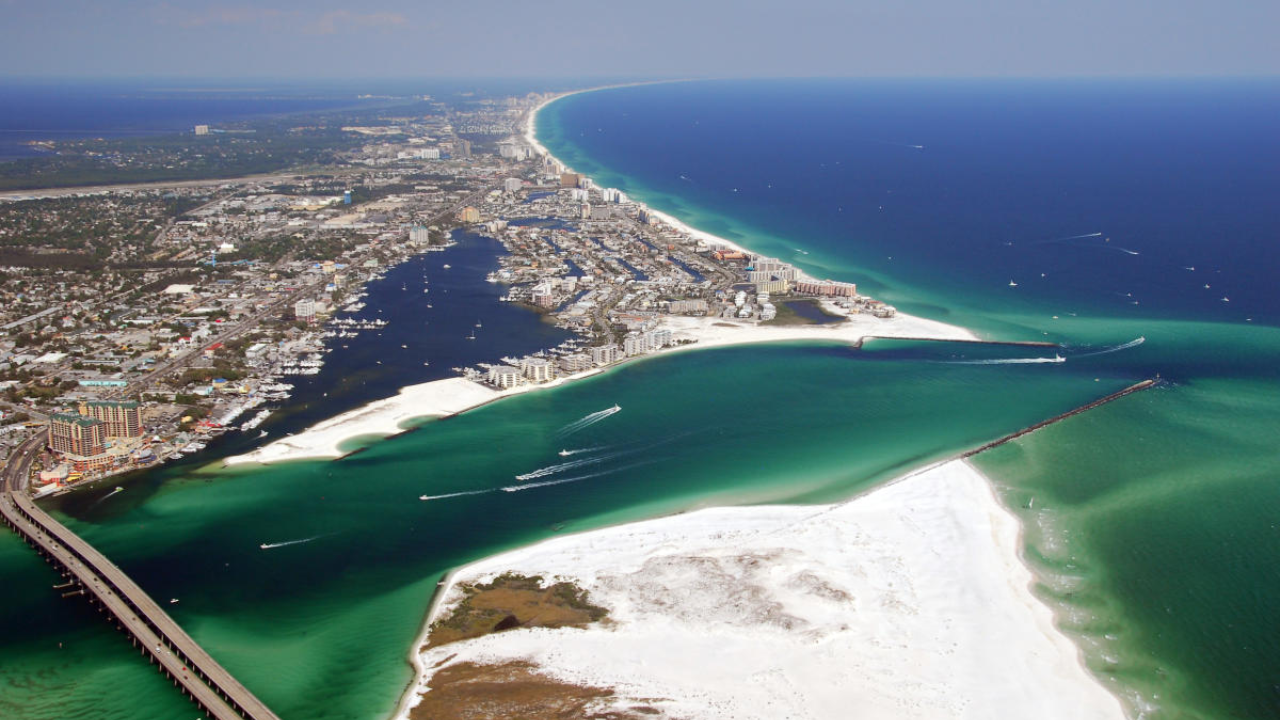
Florida is sinking 3 million pounds of repurposed concrete culverts off Destin-Fort Walton Beach

Read the original at Times of India ↗
Cite

TOI World Desk. (2026, September 20). Florida is sinking 3 million pounds of repurposed concrete culverts off Destin-Fort Walton Beach. Times of India. https://timesofindia.indiatimes.com/world/us/florida-is-sinking-3-million-pounds-of-repurposed-concrete-culverts-off-destin-fort-walton-beach-the-discarded-structures-will-form-three-artificial-reefs-each-built-from-about-500-tons-of-concrete/articleshow/134370215.cms

Dated when The Aporia collected the article, usually within hours of publication. Check the original for its exact date and byline.

Times of India · collected 2026-09-20 · by TOI World Desk

Quick Summary

Florida is dropping more than 1,300 tonnes (approximately three million pounds) of recycled concrete culverts into the Gulf of Mexico off Destin-Fort Walton Beach to create artificial reefs. The project, led by Okaloosa County’s Natural Resources Team and supported by state agencies, involves placing about 500 tons of material at each of three sites, four to eight nautical miles from East Pass in waters up to 74 feet deep. The initiative aims to support marine life and local fisheries by providing hard surfaces for organisms like algae and sponges to grow, which in turn attract fish such as grouper and snapper.
Written by AI on 2026-09-20, from this article's own text only (the story summary below draws on all the coverage).

AI analysis

Story summary

Florida is dropping more than 1,300 tonnes of recycled concrete pipes into the Gulf of Mexico off the coast of Destin-Fort Walton Beach to create artificial reefs. This project involves three million pounds of material split across three separate underwater habitats, with each site receiving approximately 500 tons. The initiative is part of Florida's Coastal Corridor program and is led by Okaloosa County’s Natural Resources Team, alongside the Fish & Wildlife Foundation of Florida and the Florida Fish and Wildlife Conservation Commission.

The concrete pipes are being placed at depths between 68 to 74 feet below sea level, roughly four to eight nautical miles from East Pass. The placement aims to enhance marine habitat conservation by supporting the long-term health of Florida's fisheries. Roger Young, Executive Director of the Florida Fish and Wildlife Conservation Commission, noted that such reefs can significantly benefit marine life and ecosystem health.

Written for “Florida Reef Restoration” on 2026-11-03, grounded in this article and the 0 other(s) covering the same event.

Story

📰 Florida Reef Restoration
Environment · 1 article(s) covering the same event.

Compared with similar articles

Nothing to compare against. No article is close enough to this one for the pipeline to have linked or judged the pair.
How this article was measured signals, leaning charts, publisher record, byline, topics and claims

Signals How these are calculated →

Claims extracted
26
sentences that state something as happening or true
Uncertain
8%
2 of 26 hedged ("reportedly", "may", "according to")
Leaning
not political
takes no side on a contested political question
Publisher signals
59/100
Times of India's corrections and hedging, across everything collected from it. Not a measure of accuracy.
Outlets on this story
1
Environment
Same framing elsewhere
1
articles that frame the event the way this one does
Analyzed 2026-09-20 · how these are computed

How this is being covered How these are calculated →

Article leaning vs. publisher reliability
Source leaning vs. consistency

Publisher

Times of India · 3996 article(s) · 3 correction(s) detected
Running correction rate · 3 correction(s)

Who wrote this

TOI World Desk
1383 article(s) here · 1 carrying a prediction
🔮 His application raised a question that had not previously been tested in court on St Helena: could someone acquire government-owned land simply by occupying it for 15 years?
🔮 The restored property will take time to develop into a mature habitat, but the project offers an example of how privately owned agricultural land can contribute to biodiversity recovery.
🔮 The return of these mammals is therefore expected to benefit more than just the animals themselves.
🔮 Origins of the emergency relief campaign The project started in early 2020 when Dozier realised that federal emergency support money could take months to reach low-income workers who were at immediate risk of losing their homes.
🔮 Before that, visitors could participate in organised activities such as guided hikes, birdwatching, educational programmes and public hunts.
🔮 While their decision to buy an abandoned French hamlet might appear like an unexpected adventure, Yip and Paul's official website reveals that their story together began decades earlier.
🔮 Hundreds of polar bears are expected to gather near the Canadian town of Churchill in Manitoba as temperatures fall and the animals wait for Hudson Bay to freeze.
🔮 Together they would support the reforestation of Mutuba trees in Uganda for three years.
🔮 In the letter, he apologised for forgetting to send his greetings earlier and expressed hope that they would meet the following year again.
🔮 Meeker told Signal Akron that the sculpture contained details that people could continue discovering over time.
Wire or desk byline, not an individual reporter.
Also by TOI World Desk
Nothing else under this byline is closely related to this article, so these are simply their most recent.
All 1383 articles by TOI World Desk →

Topics

Destin Florida Okaloosa County the Fish & Wildlife Foundation of Florida the Florida Fish and Wildlife Conservation Commission

Subjects

Florida ORG · 6× the Fish & Wildlife Foundation of Florida ORG · 4× Destin GPE · 3× Okaloosa County GPE · 3× the Florida Fish and Wildlife Conservation Commission ORG · 2× Natural Resources Team ORG · 1× Okaloosa County’s GPE · 1× Roger Young PERSON · 1× WJHG ORG · 1× the Fish & Wildlife Foundation ORG · 1×

Narrative

“Thoughtfully planned artificial reefs can play an important role in conserving and enhancing marine habitat while supporting the long-term health of Florida's fisheries,” said Roger Young, Executive Director of the Florida Fish and Wildlife Conservation Commission, in an official statement released by the Fish & Wildlife Foundation of Florida.
framing: assertive · carried by 1 article(s) · first seen 2026-09-20
🔮 Each site will receive about 500 tons of heavy material.

Claims (26 extracted, 2 hedged)

More than 1,300 tonnes of old concrete pipes are being dropped into the Gulf of Mexico to create a series of artificial reefs off the coast of Destin-Fort Walton Beach, Florida. asserted
tonnes → drop → Destin
The project uses three million pounds of recycled concrete culverts to create three separate underwater habitats. asserted
project → use → habitats
Each site will receive about 500 tons of heavy material. asserted
site → receive → material
The project is being led by Okaloosa County’s Natural Resources Team, along with the Fish & Wildlife Foundation of Florida and the Florida Fish and Wildlife Conservation Commission. asserted
project → lead → Florida
As reported by regional TV station WJHG, the project is the second major deployment of Florida's Coastal Corridor, a statewide conservation program designed to connect marine habitats along the Gulf and Atlantic coasts. asserted
project → report → coasts
Heavy materials dropped off East Pass Contractors are placing the concrete culverts in approved offshore areas about four to eight nautical miles from East Pass, according to information from the Fish & Wildlife Foundation of Florida. uncertain
Contractors → drop → Florida
The material is being placed at depths of about 68 to 74 feet below the surface. asserted
material → place → surface
Workers are arranging the culverts in dense groups to create tall structures on the ocean floor. asserted
Workers → arrange → floor
The hollow concrete pipes provide shelter for marine animals that have few hard surfaces to live on across the Gulf's mostly sandy seabed. asserted
that → provide → seabed
The deployment began in mid-September 2026 and is expected to continue through November 2026. Supporting marine life and local fisheries Once the concrete settles on the seafloor, its hard surfaces give algae, sponges, barnacles, and soft corals places to attach and grow. asserted
surfaces → begin → places
These organisms then provide food and shelter for crabs, baitfish, and larger species such as grouper and snapper. asserted
organisms → provide → grouper
State wildlife officials said these structures can help support healthy fish populations in the region. asserted
structures → say → region
“Thoughtfully planned artificial reefs can play an important role in conserving and enhancing marine habitat while supporting the long-term health of Florida's fisheries,” said Roger Young, Executive Director of the Florida Fish and Wildlife Conservation Commission, in an official statement released by the Fish & Wildlife Foundation of Florida. asserted
Young → plan → Florida
“Projects like this bring together sound science, careful site selection, durable materials, and strong local partnerships to create habitat that supports marine life and helps sustain healthy marine resources for generations to come.” asserted
that → bring → generations
Statewide network expands to the Panhandle asserted
network → expand → Panhandle
The Okaloosa County project is part of a larger effort to connect underwater habitats across Florida. asserted
project → connect → Florida
The first official deployment under the Coastal Corridor program took place off Naples in early September 2026, when prefabricated reef units were placed underwater. asserted
units → take → September
Local officials said these regional projects need to work together to protect marine species that move across the Gulf of Mexico. asserted
that → say → Mexico
“These collaborations are necessary to continue the statewide effort to improve habitat for marine life in the Gulf,” said Okaloosa County Board Chairman Trey Goodwin in a statement published by the Fish & Wildlife Foundation of Florida. asserted
Goodwin → continue → Florida
“We appreciate the Fish & Wildlife Foundation of Florida for choosing Destin-Fort Walton Beach to add to our already vibrant artificial reef system.” asserted
Destin → appreciate → system
The new reefs are expected to provide more places for charter boat operators, recreational fishermen, and scuba divers. asserted
reefs → expect → operators
Okaloosa County has one of the more active artificial reef programs in the United States, managing hundreds of approved sites that include sunken tugboats, military targets, and concrete reef structures. asserted
that → have → tugboats
By placing strong, long-lasting concrete culverts in accessible waters near the coast, local officials hope to spread fishing and diving activity across more locations. asserted
officials → place → locations
This could reduce pressure on natural reef areas while creating new destinations for eco-tourism. uncertain
This → reduce → tourism
The Coastal Corridor program plans to continue habitat restoration along Florida's coast after the Destin-Fort Walton Beach project. asserted
program → plan → project
Future work will include mangrove planting, seagrass restoration, and more offshore reef projects through the end of the year. asserted
work → include → year

💬Give feedback
🕘History 🎫Support