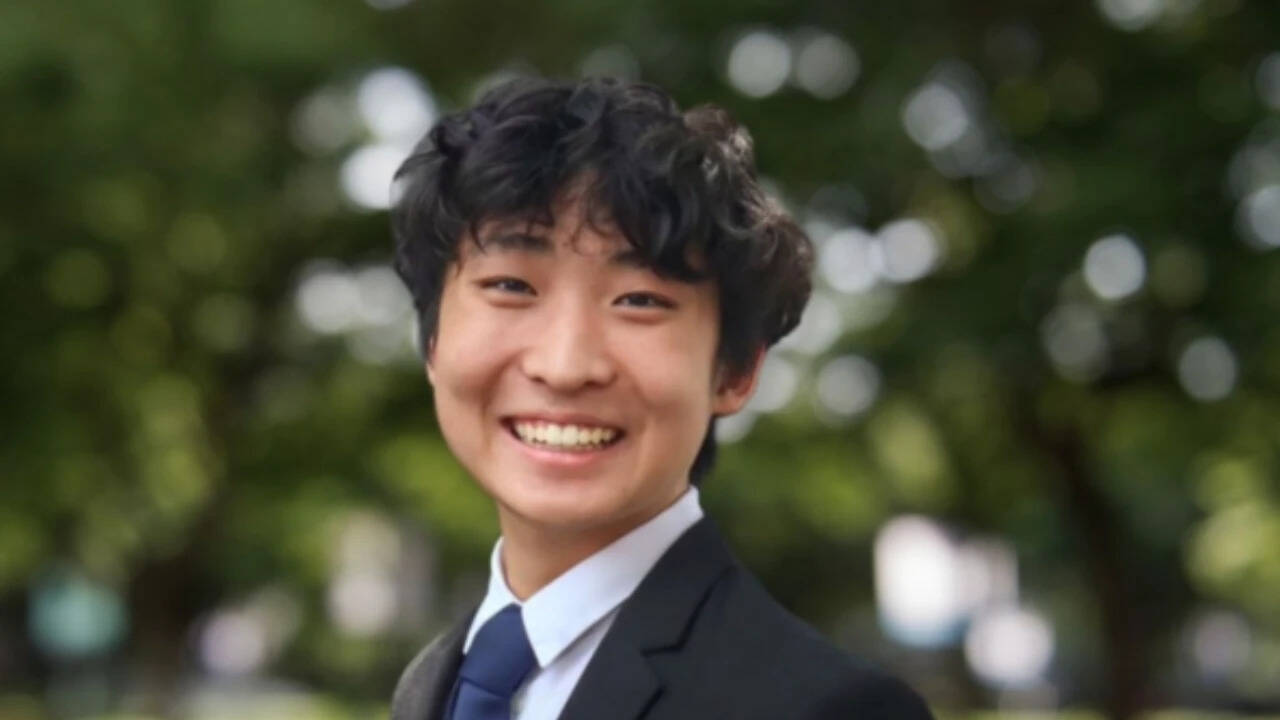
Photo via Times of India

After grandmother loses sight, teen builds $170 AI glasses

Read the original at Times of India ↗
Cite

TOI Science Desk. (2026, September 20). After grandmother loses sight, teen builds $170 AI glasses. Times of India. https://timesofindia.indiatimes.com/science/discovery/meet-alexander-du-the-17-year-old-sewickley-student-who-built-170-ai-powered-glasses-to-help-visually-impaired-users-navigate-after-his-grandmother-lost-her-sight/articleshow/134370937.cms

Dated when The Aporia collected the article, usually within hours of publication. Check the original for its exact date and byline.

Times of India · collected 2026-09-20 · by TOI Science Desk

Quick Summary

Alexander Du, a 17-year-old student from Sewickley, Pennsylvania, developed AI-powered glasses called IRIS after his grandmother lost her sight. The $170 device uses artificial intelligence to map its surroundings in real-time and guides users around obstacles through vibration feedback. Du’s invention reduces collision accidents by 80% compared to traditional white canes and operates offline without internet connection. Commercial alternatives typically cost over $6,000, making Du's innovation more accessible for many visually impaired people.
Written by AI on 2026-09-21, from this article's own text only (the story summary below draws on all the coverage).

AI analysis

Story summary

Alexander Du, a 17-year-old student from Sewickley, Pennsylvania, has been named a 2026 Presidential AI Challenge National Champion for inventing IRIS, an AI-powered wearable device designed to assist blind and visually impaired individuals in navigating their environment. Inspired by his grandmother's struggle with blindness, Du created the $170 system which functions as a virtual guide dog, using physical vibrations to alert users about obstacles. The lightweight, discreet glasses were developed after Du witnessed his grandmother's difficulty in moving around safely, holding onto family members for guidance and help with navigation details like curbs and sidewalk cracks. He stated that he wanted to give his grandmother her independence back by addressing the inefficiencies of existing aids.

Written for “AI Glasses For Blind Elderly” on 2026-11-04, grounded in this article and the 0 other(s) covering the same event.

Story

📰 AI Glasses For Blind Elderly
Technology · 1 article(s) covering the same event.

Compared with similar articles

Nothing to compare against. No article is close enough to this one for the pipeline to have linked or judged the pair.
How this article was measured signals, leaning charts, publisher record, byline, topics and claims

Signals How these are calculated →

Claims extracted
42
sentences that state something as happening or true
Uncertain
2%
1 of 42 hedged ("reportedly", "may", "according to")
Leaning
not political
takes no side on a contested political question
Publisher signals
59/100
Times of India's corrections and hedging, across everything collected from it. Not a measure of accuracy.
Outlets on this story
1
Technology
Same framing elsewhere
1
articles that frame the event the way this one does
Analyzed 2026-09-21 · how these are computed

How this is being covered How these are calculated →

Article leaning vs. publisher reliability
Source leaning vs. consistency

Publisher

Times of India · 4056 article(s) · 4 correction(s) detected
Running correction rate · 4 correction(s)

Who wrote this

TOI Science Desk
308 article(s) here · 1 carrying a prediction
🔮 Researchers are continuing to examine daily measurements to determine whether temperatures will climb further.
🔮 According to Reuters reporting by Will Dunham, a new study published in the journal Spixiana documents more than 90 Bangka slow lorises identified between 2015 and 2025.
🔮 “Normally, my job is quite monotonous, so I wanted to create something that would entertain people, turning my ‘serious’ job into something fun,” he said in a Guinness World Records news release.
🔮 The subsequent collision between the two galaxy clusters may then have compressed the cloud or re-energised its particles, causing it to shine more brightly in radio wavelengths once again.
🔮 The mathematicians at the University of California, Davis, argue that the answer may already lie within Einstein’s own equations and that an invisible form of energy may not be needed at all.
🔮 The work will be carried out by the West Tennessee River Basin Authority, which is preparing a plan to restore the river and the land around it.
🔮 Cornell University scientists have developed genetically engineered tomato plants that turn red-purple when nitrogen becomes scarce, giving farmers a visible warning that crops may need fertiliser.
🔮 By studying these crystals and other mineral grains, scientists could establish the meteorite's age and identify later changes caused by water.
🔮 Centuries later, bronze objects found in Scandinavia would preserve chemical signatures consistent with the metals produced at this Spanish site, offering evidence of connections that may have crossed much of Europe.
🔮 Deposited impurities and staining may also have contributed, while low temperatures and humidity could cause the fabric to crack.
Wire or desk byline, not an individual reporter.
Also by TOI Science Desk
Nothing else under this byline is closely related to this article, so these are simply their most recent.
All 308 articles by TOI Science Desk →

Topics

IRIS Intelligent Responsive Imaging System Pennsylvania Sewickley Trib Live

Subjects

Alexander Du PERSON · 2× Americans NORP · 1× Melania Trump PERSON · 1× Pennsylvania GPE · 1× Sewickley GPE · 1× Trib Live ORG · 1× the University of Pittsburgh ORG · 1× the White House ORG · 1×

Narrative

Alexander Du, a 17-year-old student from Sewickley, Pennsylvania, has been named a 2026 Presidential AI Challenge National Champion for inventing IRIS, an AI-powered wearable designed to help blind and visually impaired people navigate their surroundings.
framing: assertive · carried by 1 article(s) · first seen 2026-09-21
🔮 He became her guide, narrating curbs, sidewalk cracks, everything she could no longer see.
2026-09-21 · Times of India
After grandmother loses sight, teen builds $170 AI glasses · assertive framing

Claims (42 extracted, 1 hedged)

Alexander Du, a 17-year-old student from Sewickley, Pennsylvania, has been named a 2026 Presidential AI Challenge National Champion for inventing IRIS, an AI-powered wearable designed to help blind and visually impaired people navigate their surroundings. asserted
people → name → surroundings
The teen built the $170 system after watching his grandmother struggle to navigate the world differently after losing her sight. asserted
grandmother → build → sight
The lightweight, discreet glasses he developed act as a virtual guide dog, helping users detect obstacles and navigate around them using physical vibrations. asserted
users → develop → vibrations
An invention born out of pure necessity Alexander Du never planned to become an inventor. asserted
Du → bear → necessity
But then he saw his grandmother struggle after losing her sight. asserted
grandmother → see → sight
He saw the toll of blindness firsthand. asserted
He → see → blindness
She held his arm tightly as they crossed streets. asserted
they → hold → streets
He became her guide, narrating curbs, sidewalk cracks, everything she could no longer see. uncertain
she → become → curbs
“It can be detrimental to people’s lives,” Du told Trib Live. asserted
Du → tell → Live
“That inspired me. asserted
That → inspire → me
At home, I got more into it. asserted
I → get → it
I thought, ‘What if there’s a way to give my grandmother her independence back?’” asserted
I → think → independence
Du realised that all the help his grandmother got from the family was still inefficient. asserted
grandmother → realise → family
He wanted her to have her independence. asserted
her → want → independence
There were other technologies, such as smart glasses, but they were still expensive. asserted
they → be → glasses
So he decided to build one called IRIS (Intelligent Responsive Imaging System), a pair of lightweight glasses that cost $170 and work like a virtual guide dog. asserted
that → decide → dog
The device maps its surroundings in real-time 3D, guides users around obstacles through vibration feedback, and operates completely offline. asserted
device → map → feedback
How IRIS sees what others can't The glasses Du built use AI to create a three-dimensional map of the environment. asserted
Du → see → environment
They are constantly processing what is ahead and around the wearer. asserted
what → process → wearer
When an obstacle appears, the glasses don't just alert the user; they steer them through vibrations. asserted
they → appear → vibrations
The results speak for themselves. asserted
results → speak → themselves
The system reduces collision accidents by 80% compared with a traditional white cane. asserted
system → reduce → cane
This system comes paired with a mobile app that handles the navigation. asserted
that → pair → navigation
GPS guides users between destinations. asserted
GPS → guide → destinations
There is a built-in AI assistant that transcribes text and describes scenes on voice command. asserted
that → be → command
Everything runs on the device; there is no need for it to be connected to the cloud or internet. asserted
it → run → cloud
And for someone navigating the world independently, these simple things really matter. asserted
things → navigate → world
The price point of the glasses also matters. asserted
point → matter → glasses
Commercial alternatives cost upwards of $6,000 and are out of reach for many visually impaired people worldwide. asserted
alternatives → cost → people
Du has built something powerful for a fraction of that cost. asserted
Du → build → cost
He spent late nights teaching himself AI and building IRIS from scratch. asserted
He → spend → scratch
Over those months, he cold-emailed professors at the University of Pittsburgh. asserted
he → email → Pittsburgh
That was when they granted him access to loaner lab space. asserted
they → grant → space
He failed multiple times before finding success. asserted
He → fail → success
Unfortunately, Du’s grandmother passed away before he completed his work on IRIS. asserted
he → pass → IRIS
But he is committed to making the system accessible to millions of others. asserted
system → commit → others
“In developing IRIS, I learned that when the path doesn’t exist you make it yourself — one paper, one cold email, one failed solder joint at a time. asserted
you → develop → time
Meanwhile, Du’s efforts also grabbed the attention of First Lady Melania Trump. asserted
efforts → grab → Trump
The teen was recognised at the White House during the Presidential AI Challenge awards ceremony, an event that honoured young Americans using AI to develop technology. asserted
that → recognise → technology
I’m still trying to process it. asserted
I → try → it
…and 2 more, not listed.

💬Give feedback
🕘History 🎫Support