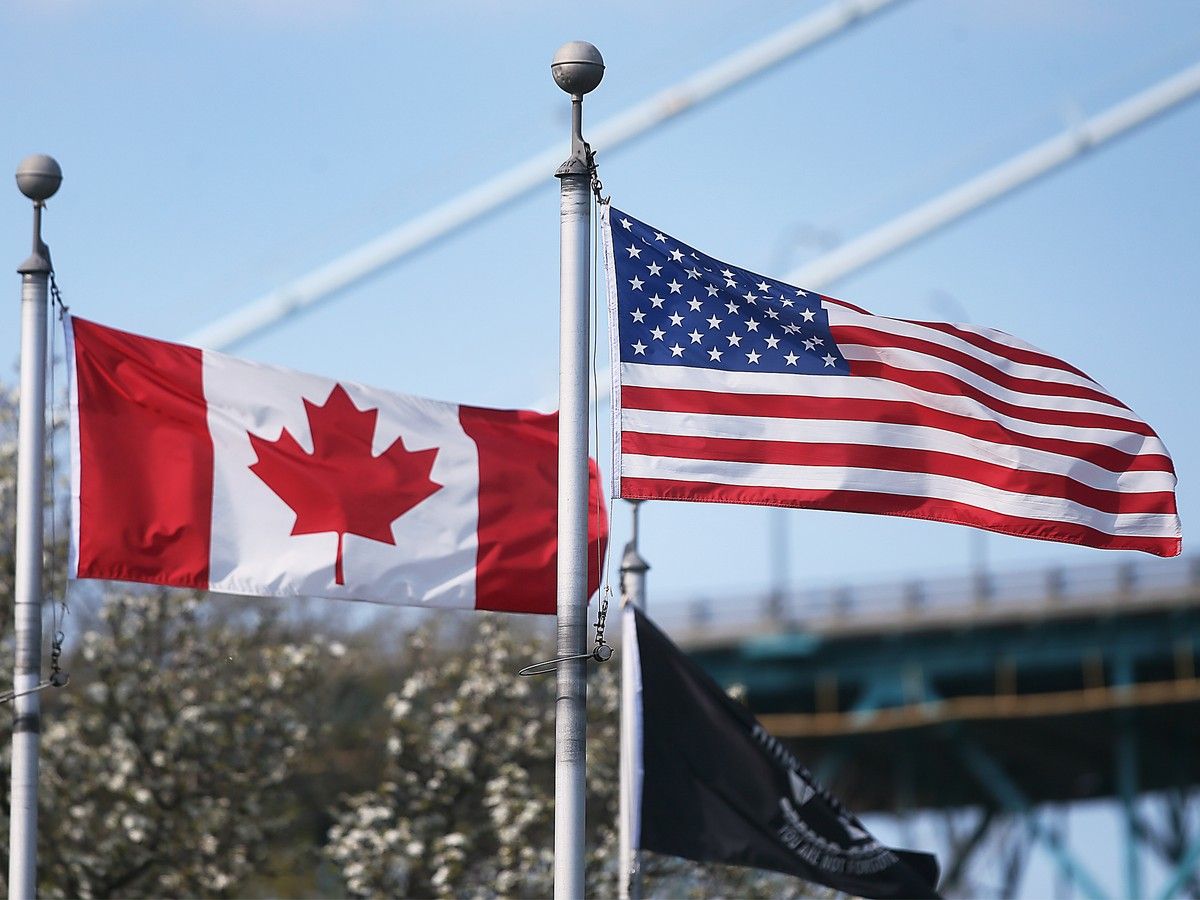
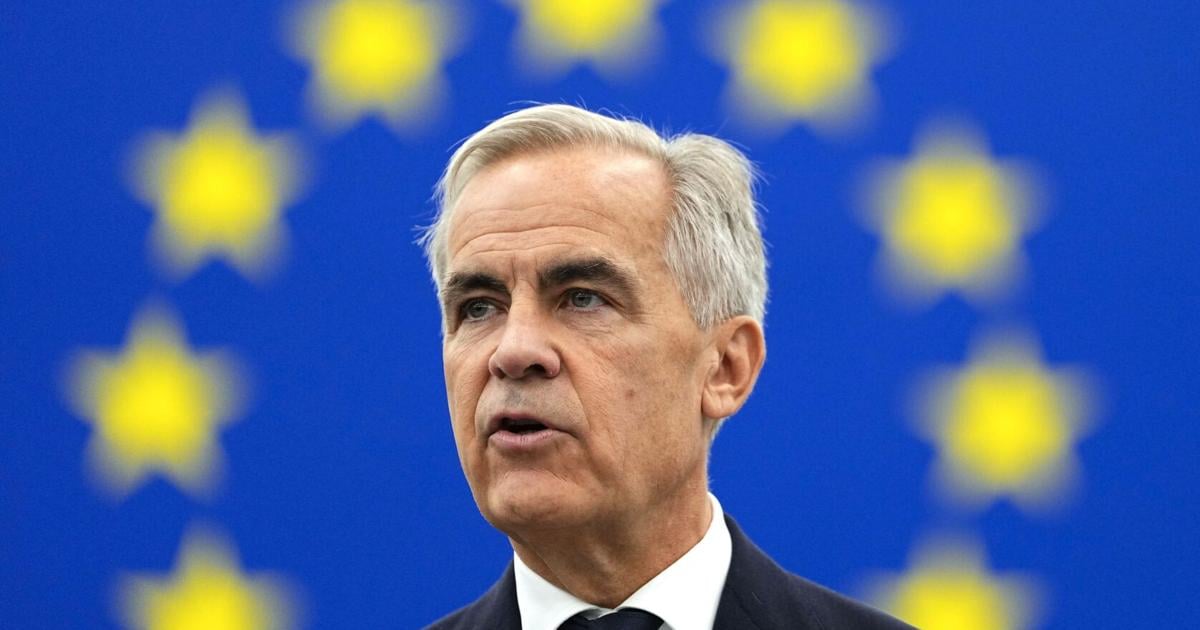
Photo via Toronto Star

Mark Carney is uniting the world's middle powers. Here's what comes next

Read the original at Toronto Star ↗
Cite

Shell, J. (2026, September 20). Mark Carney is uniting the world's middle powers. Here's what comes next. Toronto Star. https://www.thestar.com/opinion/contributors/mark-carney-is-uniting-the-world-s-middle-powers-here-s-what-comes-next/article_277d263f-849e-46a0-b0b0-c28a9e7df5ba.html

Dated when The Aporia collected the article, usually within hours of publication. Check the original for its exact date and byline.

Toronto Star · collected 2026-09-20 · by Jon Shell

Quick Summary

Mark Carney, the Governor of the Bank of Canada, advocates for deep cooperation between Canada and Europe in areas like critical minerals, defense capacity, artificial intelligence, energy security, space exploration, and financial payments to secure their strategic autonomy from U.S. and Chinese monopolies. This move aims to counteract economic coercion by these superpowers and preserve sovereignty for middle powers. Carney’s vision involves breaking free from dependencies on dominant players in key sectors that currently limit other nations' growth and innovation.
Written by AI on 2026-09-21, from this article's own text only (the story summary below draws on all the coverage).

AI analysis

Story summary

Mark Carney, the new Canadian Prime Minister, is working to unite middle powers like Canada and European nations against economic coercion from major countries such as the U.S. and China. In a speech to the European Parliament, Carney emphasized the need for strategic autonomy through cooperation in areas like critical minerals, defense industry capacity, artificial intelligence, energy security, space technology, and financial payments. This move follows Edward Fishman's warnings about nations weaponizing economic dependencies, particularly through monopolies on essential resources. By proposing deep cooperation, Canada aims to break free from these dependencies and build alternatives, even if it means incurring impractical costs. Carney’s initiative reflects a global push for middle powers to secure their sovereignty and strategic interests independently of dominant world players.

Written for “Carney Unites Middle Powers” on 2026-11-02, grounded in this article and the 0 other(s) covering the same event.

Story

📰 Carney Unites Middle Powers
Politics · 1 article(s) covering the same event.

Compared with similar articles

This article reads leans left and hedges 3% of its claims. Each row says how that neighbour differs.
CBC News
Hedges 0 of 3 claims Outlet record 74/100
“The articles discuss different aspects of Mark Carney's diplomatic efforts, but do not describe the same specific incident or speech.”
National Post
⚖️ Leans right further right than this Hedges 1 of 52 claims Outlet record 60/100
“The articles discuss different aspects of Canada's relations with the United States and its efforts to form agreements globally, without clearly reporting on the exact same incident or time.”
Toronto Star
Hedges 3 of 77 claims Outlet record 64/100
“The articles discuss different aspects of Canada's relationship with Europe and its sovereignty, rather than reporting on a single specific incident or speech.”
National Post
Hedges 1 of 52 claims Outlet record 60/100
“The articles discuss different aspects of Mark Carney's activities and reputation without describing the same specific incident or speech.”
Toronto Star
Hedges 0 of 14 claims Outlet record 64/100
“The articles discuss different aspects of Mark Carney's policies and actions without describing the same specific incident or speech.”
Toronto Star
Hedges 0 of 2 claims Outlet record 64/100
“Article A discusses Mark Carney's speech and travels focused on sovereignty agreements internationally, while Article B mentions a cartoon about Carney facing Canadians after success on the world stage.”
CBC News
Hedges 0 of 1 claims Outlet record 74/100
“The articles describe different events occurring on different dates and in different locations.”
Al Jazeera
⚖️ Leans strongly left further left than this Hedges 1 of 18 claims Outlet record 60/100
“Article A discusses Mark Carney's speech to the European Parliament about sovereignty and economic independence, while Article B reports on his pledge of aid for Palestine at the UNGA. These are different specific events.”
The Globe and Mail
Hedges 0 of 2 claims Outlet record 52/100
“The articles describe different events involving Mark Carney, one about a speech to the European Parliament and another about a pledge at the UN General Assembly.”
New York Post
Hedges 2 of 16 claims Outlet record 66/100
“The articles describe different events related to Mark Carney's actions and statements but refer to distinct occasions.”
How this article was measured signals, leaning charts, publisher record, byline, topics and claims

Signals How these are calculated →

Claims extracted
39
sentences that state something as happening or true
Uncertain
3%
1 of 39 hedged ("reportedly", "may", "according to")
Leaning
Leans left
of the writing, not the subject · beta estimate
Publisher signals
64/100
Toronto Star's corrections and hedging, across everything collected from it. Not a measure of accuracy.
Outlets on this story
1
Politics
Same framing elsewhere
1
articles that frame the event the way this one does
Analyzed 2026-09-21 · how these are computed

How this is being covered How these are calculated →

Article leaning vs. publisher reliability
Source leaning vs. consistency

Publisher

Toronto Star · 11143 article(s) · 28 correction(s) detected
Running correction rate · 28 correction(s)
2026-10-26
Correction
2026-10-24
Correction
2026-10-07
Correction
2026-09-24
Correction

Who wrote this

Jon Shell
2 article(s) here · 1 carrying a prediction
🔮 In this case, the cash flow is the $477M in ground rent currently paid to the government, and any additional revenue a private sector operator could get from running the airports in a different way.
🔮 He also issued a warning: overusing a chokepoint for leverage will lead countries to build alternatives, even at impractical cost.
Also by Jon Shell
Nothing else under this byline is closely related to this article, so these are simply their most recent.

Topics

American Canada China Chinese U.S.

Subjects

China GPE · 5× Canada GPE · 4× Carney PERSON · 4× American NORP · 3× Chinese NORP · 3× U.S. GPE · 3× Edward Fishman PERSON · 1× Mark Carney’s PERSON · 1× the European Parliament ORG · 1× the United States GPE · 1×

Narrative

Prime Minister Carney has quickly validated Fishman’s concerns by proposing that “Canada and Europe should secure our strategic autonomy through deep cooperation in — critical minerals, defence industrial capacity, AI and compute, energy security, space, and payments.”
framing: assertive · carried by 1 article(s) · first seen 2026-09-21
🔮 He also issued a warning: overusing a chokepoint for leverage will lead countries to build alternatives, even at impractical cost.
2026-09-21 · Toronto Star
Mark Carney is uniting the world's middle powers. Here's what comes next · assertive framing

Claims (39 extracted, 1 hedged)

It can be hard to see the through-line in the fury of Mark Carney’s travels. asserted
It → see → travels
To pull ourselves out of the orbit of the United States and to preserve our sovereignty, Canada is making agreements around the world. asserted
Canada → pull → world
Yet, each new agreement trades some amount of sovereignty to get something we want. asserted
we → trade → something
Things finally became clear this week with Mr. Carney’s speech to the European Parliament . asserted
Things → become → Parliament
For middle powers, achieving sovereignty means breaking free of monopolies. asserted
achieving → achieve → monopolies
That’s what the fight is really all about. asserted
fight → ’ → what
Earlier this year in an article titled ”How to Fight an Economic War,” Edward Fishman wrote that in economic warfare “states don’t weaponize interdependence — they weaponize dependence.” asserted
they → title → dependence
He laid out how countries — primarily the U.S. and China — build “chokepoints,” which are near-monopolies on resources that the world needs, and then use those monopolies to coerce others. asserted
world → lay → others
He also issued a warning: overusing a chokepoint for leverage will lead countries to build alternatives, even at impractical cost. asserted
overusing → issue → cost
Prime Minister Carney has quickly validated Fishman’s concerns by proposing that “Canada and Europe should secure our strategic autonomy through deep cooperation in — critical minerals, defence industrial capacity, AI and compute, energy security, space, and payments.” asserted
Canada → validate → minerals
That list has one thing in common: each is currently monopolized by either America, China or both. asserted
each → have → America
Mr. Carney is calling for no less than a coordinated revolt against the hegemons’ monopoly strategy. asserted
Carney → call → strategy
Those monopolies exert enormous pressure on other economies. asserted
monopolies → exert → economies
U.S. technology dominance pulls in more than half the world’s venture investment, attracting the best entrepreneurial talent and funding the acquisition of other countries’ most promising companies. asserted
dominance → pull → companies
This suppresses growth and creates a brain drain in Europe, Canada and other middle powers including Australia and South Korea. asserted
This → suppress → Australia
American companies’ control over digital infrastructure acts as an ever-increasing tax on everyone else. asserted
control → act → everyone
China uses its staggering control over critical mineral refining both to coerce other countries into accepting their terms and to defend their position as the world’s manufacturing superpower. asserted
China → use → superpower
As other countries struggle with fragile supply chains, China is dominating in high-tech industries such as electric vehicles. asserted
China → struggle → vehicles
China has been pursuing their critical minerals strategy for years. asserted
China → pursue → years
For their part, when a U.S. company achieves a monopoly position, they act aggressively to protect it against foreign regulation and competition. asserted
they → achieve → regulation
Both Mr. Carney and European Commission President Ursula von den Layen made it clear that enough is enough and they will act to recapture independence. asserted
they → make → independence
But what would that entail? asserted
that → entail → what
First, they need to build. asserted
they → need → ?
Talking about “building” is easy. asserted
Talking → talk → building
The hard part is for liberal democratic middle powers to build things that provide a strategic, and not an economic, return. asserted
that → build → return
The Chinese critical mineral monopoly arose because the West’s reliance on market forces resulted in no building at all. asserted
reliance → arise → building
Working together, Europe and Canada have the scale and resources to build the physical and digital infrastructure needed to reduce their dependence, even if each project is uneconomic on its own. asserted
project → work → own
Second, they have to say “no” a lot more often. asserted
they → have → ?
But for the strategy to work, monopolies must be prevented from extending their position, whether its further Chinese acquisitions of resource assets or American tech giants acquiring promising upstarts before they can compete. asserted
they → work → upstarts
Government procurement can attack monopoly market share directly, the way France, Germany and Spain are moving away from monopolist data-integrator Palantir. asserted
France → attack → Palantir
Using the full power of the state to target monopoly market share buys time for building to work. asserted
building → use → time
Finally, co-ordinating regulatory policy is key, especially for technology. asserted
ordinating → co → technology
A.I. presents a critical test case, as the U.S. is making it clear they oppose regulations that impede their growth, while China is equally intent on domination, while protecting their citizens through regulation at home. asserted
China → present → home
Collectively, Canada and the EU have the scale to put a drag on A.I. growth, giving space for domestic innovation while keeping their residents safe. asserted
Canada → have → residents
When monopoly is defeated, sovereignty, freedom and growth are a result. asserted
sovereignty → defeat → ?
Opportunity grows for middle power entrepreneurs to become global leaders, reversing the flow of capital and talent. asserted
entrepreneurs → grow → capital
Hope returns that young people can build exciting and successful lives at home. asserted
people → return → home
As these difficult actions face opposition both domestically and from the hegemons, it’s these outcomes that Mr. Carney and Ms. von der Layen will need to keep front and centre. asserted
Carney → face → that
After decades of ignoring the problem, the middle power revolt against the monopolies might finally begin. uncertain
revolt → ignore → monopolies

💬Give feedback
🕘History 🎫Support