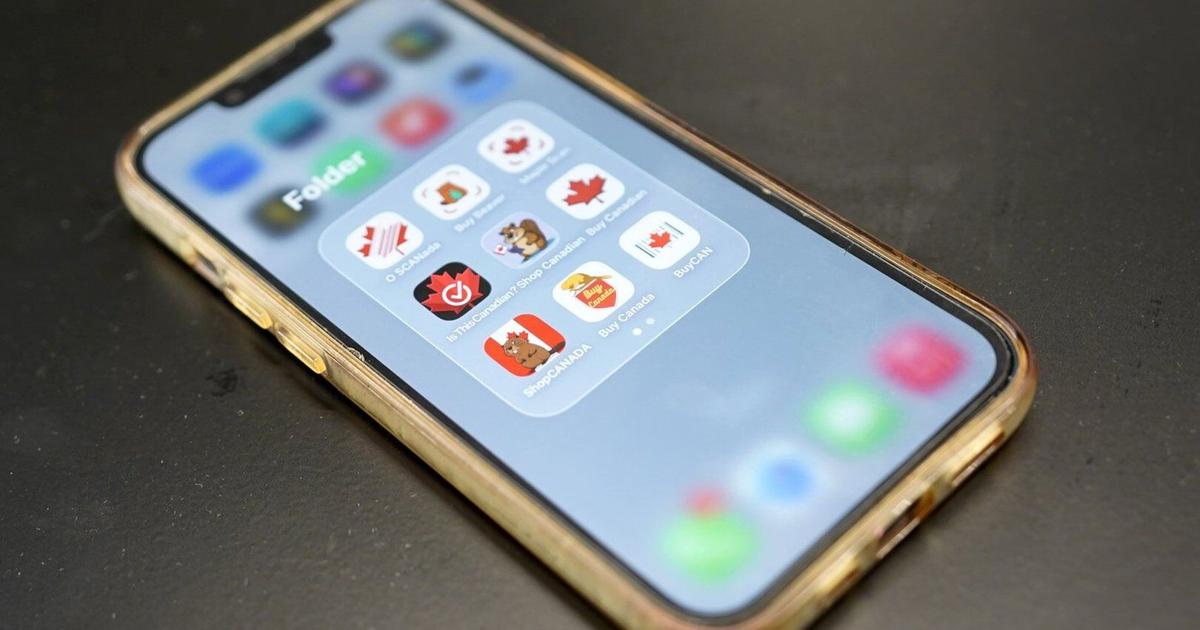
Smartphone apps promising to help shoppers identify Canadian groceries have popped up since the onset of trade tensions with the United States last year.
asserted
shoppers → promise → States
But how do these apps compare?
asserted
apps → compare → ?
After reviewing more than a dozen options, The Canadian Press chose three apps to use on a variety of common grocery items.
asserted
Press → review → items
Here are the results delivered by Buy Beaver, O SCANada and Maple Scan.
asserted
results → deliver → Beaver
The jam jar received a full score of 100 because it is manufactured in Quebec.
asserted
it → receive → Quebec
The app didn’t provide information about the parent company or source of ingredients.
asserted
app → provide → ingredients
Buy Beaver rates items on a scale of zero to 100, which it says is based on the company’s manufacturing location, ingredient sources and the location of its parent company.
asserted
it → rat → company
Dora was labelled as “Canadian-owned,” as it is a Canadian family-owned food manufacturer headquartered in Sainte-Anne-des-Plaines, Que.
asserted
it → label → Plaines
It didn’t specify the origin of ingredients used to make the jam, which it said was not publicly disclosed.
asserted
it → specify → jam
Pied-Mont Dora was identified as a Quebec-based company, labelling it as both made and packaged in Canada.
asserted
Dora → identify → Canada
It also offers the company’s history, highlighting its Canadian roots.
asserted
It → offer → roots
It scored zero because Kraft Heinz Co. is headquartered in the U.S.
asserted
Co. → score → U.S.
The app didn’t recognize its Canadian manufacturing location or source of ingredients.
asserted
app → recognize → ingredients
The app said the product is “not Canadian-owned,” but correctly identified its manufacturing location in Mont-Royal, Que.
asserted
product → say → Royal
Meanwhile, ingredient origins aren’t specified.
asserted
origins → specify → ?
“Origin of peanuts is not publicly disclosed,” the scan found.
asserted
scan → disclose → peanuts
The PB was labelled as both made and manufactured in Canada.
asserted
PB → label → Canada
The sugar scored 70 for being a subsidiary of American Sugar Refining Inc., which it has been since 2007.
asserted
it → score → 2007
The app said its manufacturing location is in Canada and that most of its ingredients are Canadian.
asserted
most → say → ingredients
Though refined and packaged by Redpath, the majority of sugar cane used in Canadian sugar production is imported in bulk from tropical regions in South and Central America, according to the Canadian Sugar Institute, since Canada’s climate is not suitable for growing sugar cane.
O SCANada:
uncertain
climate → refine → cane
The app called the product “not Canadian-owned,” correctly noting Redpath is a subsidiary of the U.S.-based company.
asserted
Redpath → call → company
The country of origin for sugar cane was not disclosed.
asserted
country → disclose → cane
It called the product “not Canadian-owned.”
asserted
It → call → product
The sugar was called a product of Canada, made in Canada and packaged domestically.
asserted
sugar → call → Canada
The app said the manufacturer is based in Ontario and identified American Sugar Refining as its parent company.
asserted
manufacturer → say → company
The ketchup earned a score of 70 out of 100, with the app identifying the U.S.-based McCormick & Co. as its owner (McCormick Canada brought its French’s ketchup production in-house in 2021).
asserted
Canada → earn → 2021
Manufacturing locations were listed as Canada and Baltimore, Md.
asserted
locations → list → Canada
It said the ingredients were “100 per cent Canadian.”
asserted
ingredients → say → ?
The product was labelled “not Canadian-owned,” but knew that its manufacturing plant is in London, Ont. and made with Canadian tomatoes sourced from Ontario growers.
asserted
plant → label → growers
The app said it is not a product of Canada, but is made in Canada with 100 per cent Canadian tomatoes, and is bottled in Canada.
asserted
it → say → Canada
This report by The Canadian Press was first published Sept. 21, 2026.
asserted
report → publish → Press
 The Aporia