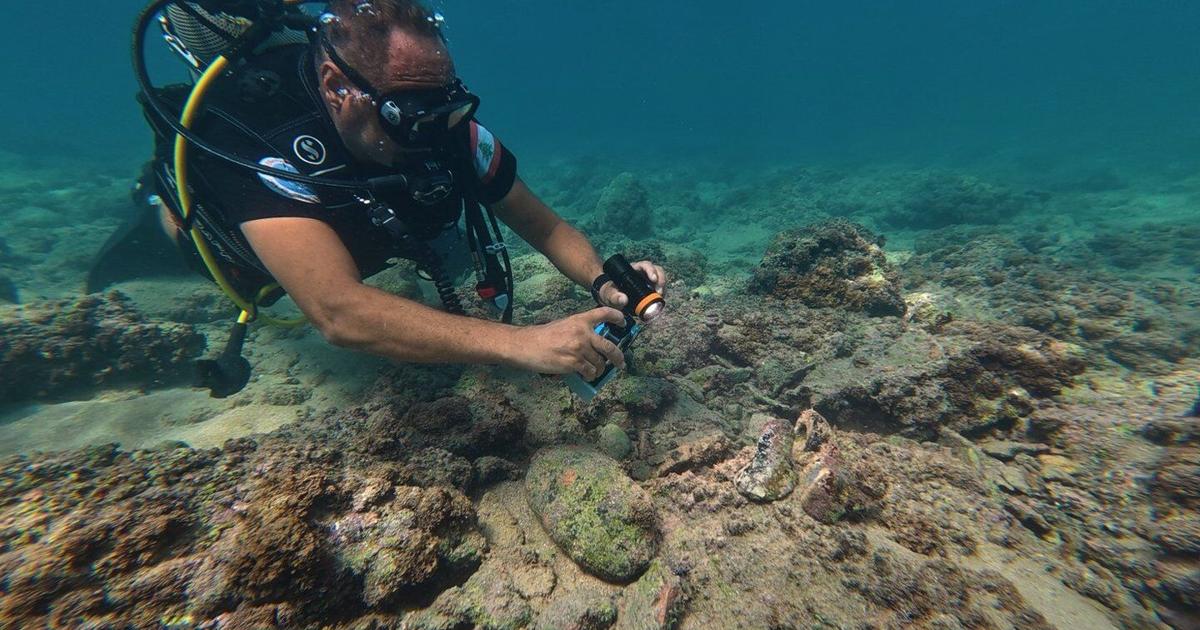
Photo via Toronto Star

Tyre’s ruins survived the strikes. Now divers are finding their way back underwater

Read the original at Toronto Star ↗
Cite

Harb, M. (2026, September 21). Tyre’s ruins survived the strikes. Now divers are finding their way back underwater. Toronto Star. https://www.thestar.com/news/world/middle-east/tyre-s-ruins-survived-the-strikes-now-divers-are-finding-their-way-back-underwater/article_51cea77c-83c0-5373-8316-a45d7d7dd6d5.html

Dated when The Aporia collected the article, usually within hours of publication. Check the original for its exact date and byline.

Toronto Star · collected 2026-09-21 · by Malak Harb

Quick Summary

Divers are exploring ancient submerged ruins off the coast of Tyre, Lebanon, which include stone walls, structures, and a road from the Roman and earlier Phoenician periods. After a ceasefire following recent conflicts between Israel and Hezbollah, interest in these underwater archaeological sites has risen, although fewer tourists visit compared to pre-war times.
Written by AI on 2026-09-21, from this article's own text only (the story summary below draws on all the coverage).

AI analysis

Story summary

Tyre, a southern Lebanese city known for its rich historical heritage including Roman and Phoenician ruins, has seen divers returning to explore underwater archaeological sites following a ceasefire in the recent conflict between Israel and Hezbollah. Beneath the Mediterranean waters off Tyre, stone walls, ancient structures, and even parts of an old submerged road are visible, remnants of the city that once stood above water. While interest in diving at these historical sites is increasing, the number of visitors remains below prewar levels due to lingering tensions from the recent war. Diving operators report a gradual return of tourists eager to see the well-preserved underwater ruins, which offer unique insights into Tyre’s ancient past.

Written for “Tyre Ancient Ruins Explorations” on 2026-10-31, grounded in this article and the 1 other(s) covering the same event.

Story

📰 Tyre Ancient Ruins Explorations
World · 2 article(s) covering the same event. See how they differ ↓

Compared with similar articles

This article reads unscored and hedges 0% of its claims. Each row says how that neighbour differs.
Toronto Star
Hedges 0 of 2 claims Outlet record 64/100
How this article was measured signals, leaning charts, publisher record, byline, topics and claims

Signals How these are calculated →

Claims extracted
3
sentences that state something as happening or true
Uncertain
0%
0 of 3 hedged ("reportedly", "may", "according to")
Leaning
not political
takes no side on a contested political question
Publisher signals
64/100
Toronto Star's corrections and hedging, across everything collected from it. Not a measure of accuracy.
Outlets on this story
2
World
Same framing elsewhere
1
articles that frame the event the way this one does
Analyzed 2026-09-21 · how these are computed

How this is being covered How these are calculated →

Article leaning vs. publisher reliability
Source leaning vs. consistency

Publisher

Toronto Star · 10694 article(s) · 27 correction(s) detected
Running correction rate · 27 correction(s)
2026-10-26
Correction
2026-10-24
Correction
2026-10-07
Correction
2026-09-24
Correction

Who wrote this

Malak Harb
1 article(s) here · 0 carrying a prediction
The only article under this byline in the corpus.

Topics

Israel Lebanese Lebanon Roman TYRE

Subjects

TYRE GPE · 3× Israel GPE · 1× Lebanese NORP · 1× Lebanon GPE · 1× Phoenician NORP · 1× Roman NORP · 1×

Narrative

Beneath the Mediterranean waters off the southern Lebanese city of Tyre, divers swim past stone walls, ancient structures and a submerged road — remnants of parts of a city that once stood above the water.
framing: assertive · carried by 1 article(s) · first seen 2026-09-21

Claims (3 extracted, 0 hedged)

Beneath the Mediterranean waters off the southern Lebanese city of Tyre, divers swim past stone walls, ancient structures and a submerged road — remnants of parts of a city that once stood above the water. asserted
that → swim → water
With a shaky ceasefire in place after the latest Israel-Hezbollah war, visitors are returning to Tyre, a city known for its Roman ruins and its much older Phoenician history. asserted
visitors → return → ruins
Diving operators say interest in the underwater archaeological sites is increasing, though the number of visitors remains below prewar levels. asserted
number → say → levels
💬Give feedback
🕘History 🎫Support