Photo via Semafor

The summit won’t break the US-China stalemate

Read the original at Semafor ↗
Cite

Browne, A. (2026, September 21). The summit won’t break the US-China stalemate. Semafor. https://www.semafor.com/article/09/21/2026/the-summit-wont-break-the-us-china-stalemate

Dated when The Aporia collected the article, usually within hours of publication. Check the original for its exact date and byline.

Semafor · collected 2026-09-21 · by Andy Browne

Quick Summary

Andy's view suggests that despite the upcoming leaders' summit between the US and China, tensions remain high with no significant breakthrough expected. The relationship is characterized as being in a "stalemate" phase, where both sides avoid confronting contentious issues such as trade disputes and technology restrictions by focusing on less sensitive topics. This perspective highlights the superficial nature of diplomatic efforts, noting that beneath the surface, hostilities persist due to fundamental disagreements over critical matters like Beijing’s support for Iran and Russia.
Written by AI on 2026-09-21, from this article's own text only (the story summary below draws on all the coverage).

AI analysis

Story summary

The summit between US President Donald Trump and Chinese President Xi Jinping on September 24 focused largely on AI regulation amid escalating tensions over advancements in artificial intelligence technology. The meeting aimed to address mutual concerns about the risks associated with rapid AI development but ended with both sides maintaining their positions, despite attempts by China's Foreign Minister Wang Yi to emphasize "equality" and "reciprocity." Chinese state media highlighted the high-level reception Xi received at the White House as a sign of equality between the two nations, while US officials viewed reciprocity more transactionally. This divergence in interpretation has led to skepticism about whether genuine progress was made regarding AI guardrails or broader diplomatic cooperation.

Written for “Xi-Trump Summit Out comes” on 2026-11-01, grounded in this article and the 282 other(s) covering the same event.

Story

📰 Xi-Trump Summit Out comes
Politics · 283 article(s) covering the same event. See how they differ ↓

Compared with similar articles

This article reads unscored and hedges 12% of its claims. Each row says how that neighbour differs.
The Straits Times
⚖️ Leans left Hedges 6 of 32 claims Outlet record 66/100
Semafor
⚖️ Leans right Hedges 1 of 5 claims Outlet record 60/100
South China Morning Post
Hedges 0 of 4 claims Outlet record 64/100
Deutsche Welle
Hedges 10 of 55 claims Outlet record 95/100
Semafor
⚖️ Leans left Hedges 4 of 4 claims Outlet record 60/100
South China Morning Post
Hedges 1 of 4 claims Outlet record 64/100
“The articles discuss different aspects of Sino-Taiwanese and US-China relations without describing the same specific incident.”
Fox News
⚖️ Leans strongly left Hedges 4 of 25 claims Outlet record 69/100
“The articles discuss different stages of planning and anticipation for a meeting between President Trump and Chinese President Xi Jinping, rather than describing the exact same occurrence.”
Al Jazeera
⚖️ Centre Hedges 0 of 3 claims Outlet record 60/100
“Article A describes Taiwan's military drills before the summit, while Article B discusses the broader context and expected outcomes of the US-China summit.”
South China Morning Post
⚖️ Leans left Hedges 0 of 6 claims Outlet record 64/100
“The articles discuss different aspects of US-China relations and do not describe the same specific incident or occurrence.”
South China Morning Post
⚖️ Leans left Hedges 2 of 4 claims Outlet record 64/100
How this article was measured signals, leaning charts, publisher record, byline, topics and claims

Signals How these are calculated →

Claims extracted
24
sentences that state something as happening or true
Uncertain
12%
3 of 24 hedged ("reportedly", "may", "according to")
Leaning
withheld
no quote in the article backed the model's score
Publisher signals
60/100
Semafor's corrections and hedging, across everything collected from it. Not a measure of accuracy.
Outlets on this story
283
Politics
Same framing elsewhere
1
articles that frame the event the way this one does
Analyzed 2026-09-21 · how these are computed

How this is being covered How these are calculated →

Article leaning vs. publisher reliability
Source leaning vs. consistency

Publisher

Semafor · 1393 article(s) · 1 correction(s) detected
Running correction rate · 1 correction(s)

Who wrote this

Andy Browne
6 article(s) here · 1 carrying a prediction
🔮 I think the European side will consider this as a down payment.
🔮 Doshi’s take on the arrival ceremony, which also included a 21-gun salute and a flyover by B-1B bombers — far exceeding courtesies extended to Trump in Beijing in May — has been that China believes “they’ve basically tamed the United States.”
2026-09-26 · assertive framing · The US-China tectonic plates have shifted
🔮 But Trump could just as easily flip, perhaps if Republicans are routed in November’s midterms, as he did at the end of his first term when he blamed China and COVID-19 — “kung-flu” — for his election defeat.
2026-09-21 · assertive framing · The summit won’t break the US-China stalemate
🔮 In Kyrgyzstan last month, Xi inked agreements to integrate the economy of western China more closely with Central Asia, advancing an inter-bank payment system, border-crossing infrastructure, and a freight railway link that will require the construction of 50 bridges and 29 tunnels.
2026-09-15 · assertive framing · Xi’s bid to remake global governance
🔮 The late Henry Kissinger initially made his name as an academic writing about nuclear arms control during the Cold War, and latterly forged his reputation as the architect of US-China detente. In his final years, however, Kissinger was fixated on what he believed to be an even greater danger: For the first time in human history, he observed, a technology — self-learning machines — could potentially target anything, anywhere, with any kind of destruction, making the world “100% vulnerable.” He had become an AI doomer.
🔮 Their backgrounds and personalities could hardly be more different: Wang is a self-described “tech supremacist”; Hui came up through gritty factory jobs.
2026-08-25 · assertive framing · A tale of two tycoons
Also by Andy Browne
Nothing else under this byline is closely related to this article, so these are simply their most recent.
All 6 articles by Andy Browne →

Topics

Beijing China Chinese Japanese Washington

Subjects

China GPE · 6× Trump PERSON · 5× Chinese NORP · 4× Beijing GPE · 2× Andy PERSON · 1× Japanese NORP · 1× Mao Zedong’s PERSON · 1× Taiwan GPE · 1× Washington GPE · 1× Xi Jinping PERSON · 1×

Narrative

On AI safety — arguably the most significant topic on the agenda, given the risks of an AI-induced blow-up (CNN reports a recent close call involving a Chinese ship in the Middle East, wrongly identified by a US chatbot to be carrying nuclear material) — it isn’t even clear the two sides are talking about the same thing.
framing: assertive · carried by 1 article(s) · first seen 2026-09-21
🔮 But Trump could just as easily flip, perhaps if Republicans are routed in November’s midterms, as he did at the end of his first term when he blamed China and COVID-19 — “kung-flu” — for his election defeat.
2026-09-21 · Semafor
The summit won’t break the US-China stalemate · assertive framing

Claims (24 extracted, 3 hedged)

In Mao Zedong’s 1938 essay On Protracted War, penned during the Japanese invasion of China, he divided conflict into three phases: strategic defense, strategic stalemate, and strategic counter-offensive. asserted
he → protract → phases
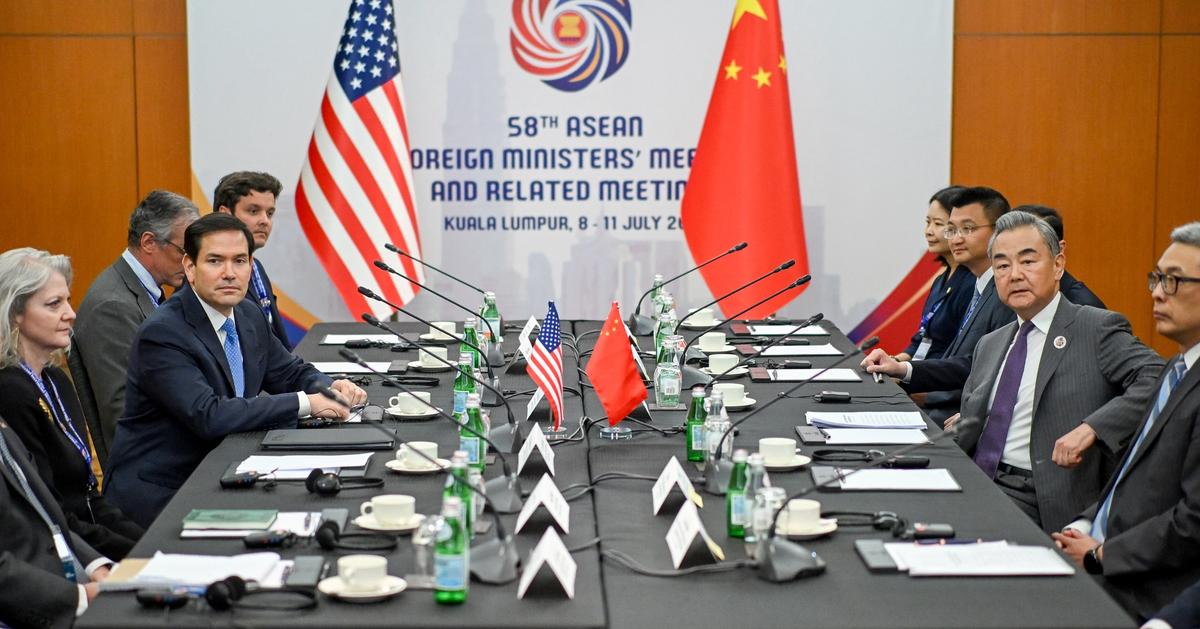
On the eve of a leaders’ summit this week in Washington, US-China ties are stuck in the stalemate stage, deadlocked on everything from trade and technology to Taiwan — and it’s only a matter of time before hostilities ramp back up. asserted
hostilities → stick → time
Of course, there’s the mercurial Trump factor, which throws off any tidy analysis. asserted
which → ’ → analysis
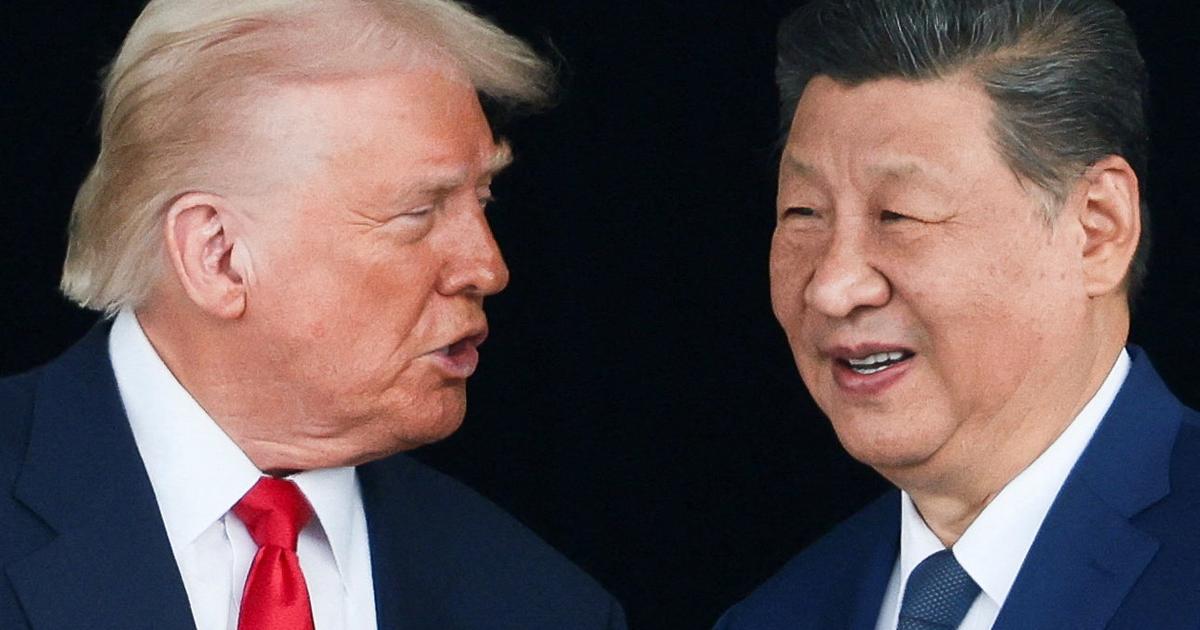
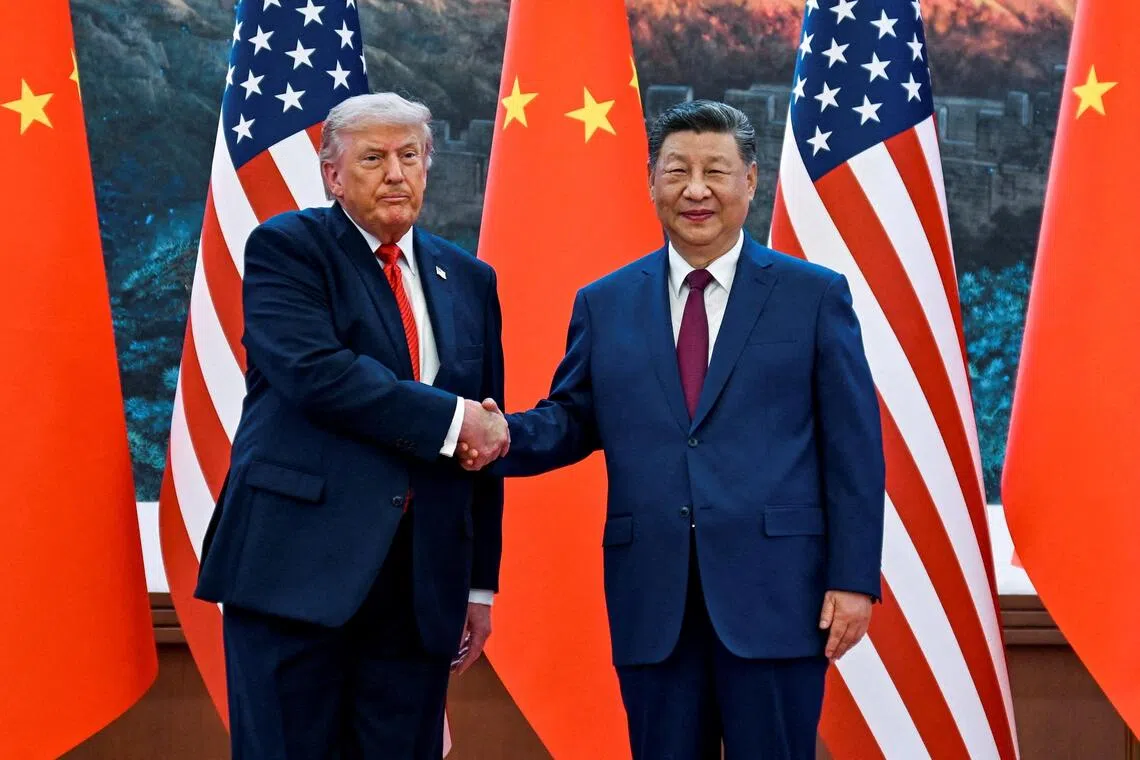
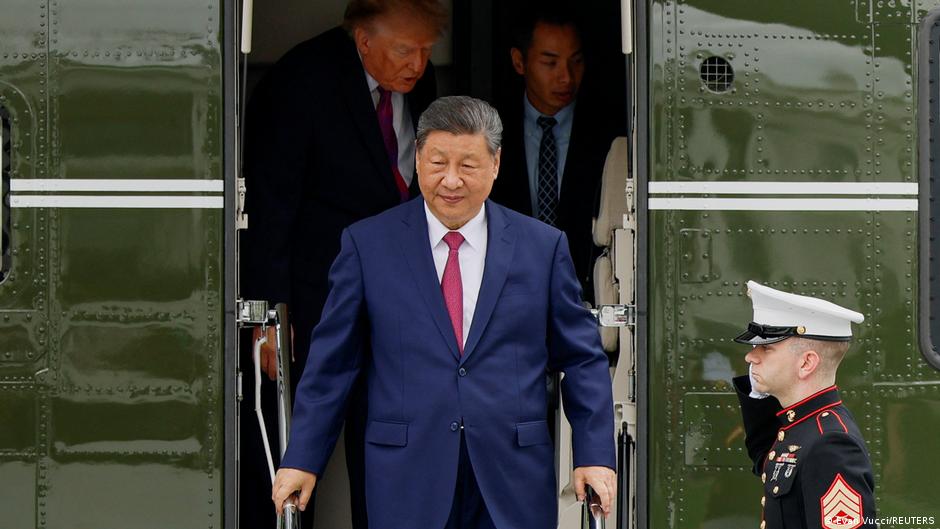
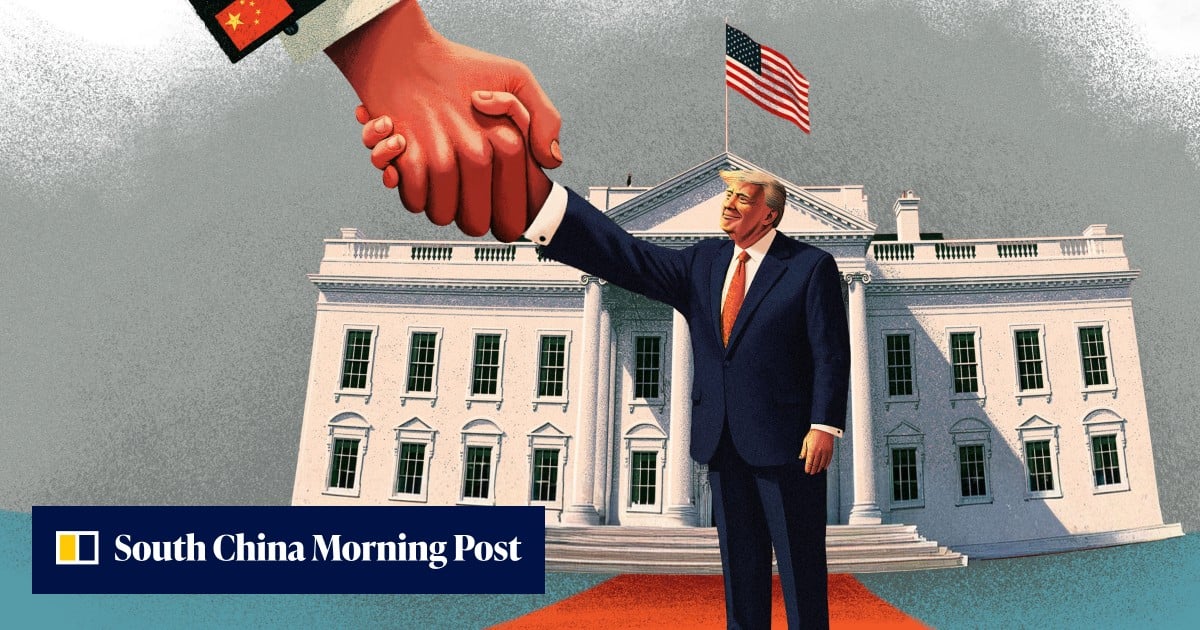
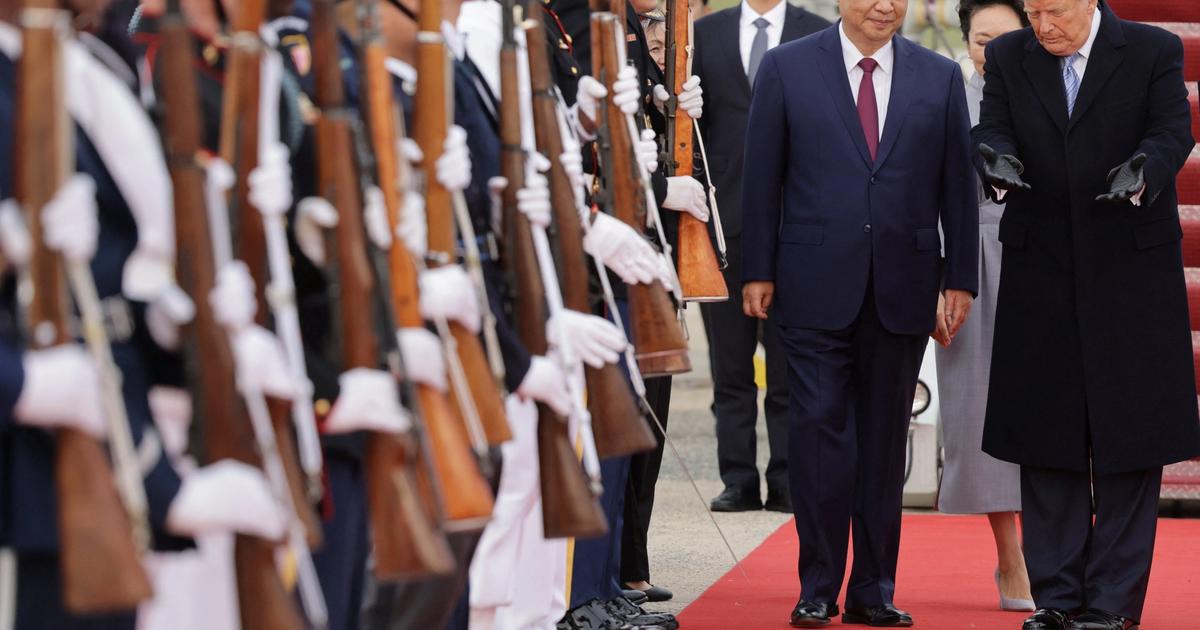
The US president plans to personally greet Chinese leader Xi Jinping on the tarmac at Andrews Air Base this week — an honor normally reserved for popes and close partners — and has been conciliatory to Beijing ahead of these talks. asserted
president → plan → talks
But Trump could just as easily flip, perhaps if Republicans are routed in November’s midterms, as he did at the end of his first term when he blamed China and COVID-19 — “kung-flu” — for his election defeat. uncertain
he → flip → defeat
Beneath the diplomatic surface, the two sides are radically at odds over just about everything: Beijing’s role in providing a financial (and, reportedly, tactical) lifeline for Iran as it lashes out at its Gulf neighbors and the US; keeping Russia’s economy afloat as it pummels Ukraine; tariffs, sanctions, currency levels, student visas, and much more. uncertain
it → provide → Ukraine
Scott Bessent, the US Treasury secretary running point on the summit, once likened the superpowers’ relationship to a game of water polo: Above the water, the two teams toss the ball back and forward; below, legs kick and flail. asserted
legs → liken → ball
But in a stalemate, the most awkward problems either get ignored or deferred. asserted
problems → ignore → stalemate
Trump’s extravagant welcome gesture will almost certainly be matched by prosaic summit outcomes. asserted
gesture → match → outcomes
A Financial Times headline summed up the low expectations: “The main Trump-Xi summit achievement will be it happening at all. asserted
it → sum → achievement
A case in point is the activation of the Board of Trade, an arrangement agreed upon at the leaders’ meeting in Busan, South Korea, that is explicitly designed to avoid the tough issues. asserted
that → agree → issues
China is demanding the US ease export bans on high-tech goods, like chipmaking gear; the US bitterly complains about Chinese overproduction and transhipment. asserted
US → demand → overproduction
The trade board, however, limits itself to “non-sensitive” consumer products — flip flops, toys, and kitchenware. asserted
board → limit → products
On AI safety — arguably the most significant topic on the agenda, given the risks of an AI-induced blow-up (CNN reports a recent close call involving a Chinese ship in the Middle East, wrongly identified by a US chatbot to be carrying nuclear material) — it isn’t even clear the two sides are talking about the same thing. asserted
sides → give → thing
In the US, AI safety refers to existential risk; in China, it means preserving regime stability. asserted
it → refer → stability
As always, Xi’s priority is saving the party that he leads — that’s why he was selected for the job — and a good summit outcome would be simply prolonging the superpower standoff, at least until a party gathering next year that’s expected to hand him a fourth five-year term in office. asserted
that → save → office
To borrow Mao’s parlance, Xi’s not ready yet for the strategic counter-offensive stage. asserted
Xi → borrow → stage
Among the proposals put forward by the Trump administration is a regular AI dialogue, alongside setting up something akin to an AI crisis hotline. asserted
dialogue → put → hotline
The offer is perhaps unintentionally symbolic of the countries’ stasis — limited in scope and ambition even as they grapple with huge geopolitical and societal instability. asserted
they → grapple → instability
It’s even unclear whether an AI hotline mechanism would work. uncertain
mechanism → ’ → ?
Decades ago, their militaries installed a telephone link to be used in the event of an emergency. asserted
militaries → instal → emergency
One arrived in 2001 when a US spy plane limped into Hainan Island with a 24-member crew after a collision with a Chinese fighter jet that killed its pilot. asserted
that → arrive → pilot
The American side made a frantic call: Nobody picked up. asserted
Nobody → make → call
Notable - China holds “escalation dominance” over the US when it comes to economic conflict, but that “would not spare its own economy pain if it were forced into a tit-for-tat conflict with Washington,” Adam Posen argued in Foreign Affairs. asserted
Posen → hold → Affairs

💬Give feedback
🕘History 🎫Support