Photo via NPR

Aviation regulators turn to AI to help manage the nation's airspace

Read the original at NPR ↗
Cite

Rose, J. (2026, September 21). Aviation regulators turn to AI to help manage the nation's airspace. NPR. https://www.npr.org/2026/09/21/nx-s1-5976816/faa-ai-manage-airspace

Dated when The Aporia collected the article, usually within hours of publication. Check the original for its exact date and byline.

NPR · collected 2026-09-21 · by Joel Rose

Quick Summary

The Federal Aviation Administration has launched a $875 million project called SMART (Strategic Management of Airspace, Routes and Trajectories) aimed at using artificial intelligence to manage the nation's airspace more efficiently. The system will be rolled out initially in three major airports around Washington D.C., with hopes that it will reduce flight delays and stress on air traffic controllers while also lowering travel costs. Despite these expectations, critics caution that SMART might not address larger issues such as staffing shortages within the FAA.
Written by AI on 2026-09-21, from this article's own text only (the story summary below draws on all the coverage).

AI analysis

Story summary

The Federal Aviation Administration (FAA) is launching an artificial intelligence-powered system called SMART, or Strategic Management of Airspace, Routes and Trajectories, in the Washington, D.C., area as early as Monday. Developed by Air Space Intelligence under a $875 million 12-year government contract, SMART aims to predict traffic flows and spot potential bottlenecks ahead of time by analyzing flight schedules, weather forecasts, airport runway capacity, and operational limits. Initially rolled out at three major airports serving Washington D.C., including Ronald Reagan Washington National Airport, the system will assist human air traffic controllers rather than replace them, according to Transportation Secretary Sean Duffy. Critics warn that SMART may not address bigger issues in the air traffic control system but FAA officials emphasize its role as a decision-support tool during disruptions to reduce delays and cancellations.

Written for “AI in Air Traffic Control” on 2026-11-03, grounded in this article and the 3 other(s) covering the same event.

Story

📰 AI in Air Traffic Control
Technology · 4 article(s) covering the same event. Compare every outlet's account →

Compared with similar articles

This article reads unscored and hedges 0% of its claims. Each row says how that neighbour differs.
The Independent
Hedges 0 of 17 claims Outlet record 59/100
The Independent
Hedges 0 of 7 claims Outlet record 59/100
“Article A discusses Trump's announcement of forming an 'AI Force', while Article B reports on aviation regulators using AI to manage airspace, which are different events.”
Daily Mail
⚖️ Leans right Hedges 2 of 25 claims Outlet record 69/100
“Article A discusses Trump's announcement of an 'AI Force' while Article B reports on aviation regulators using AI to manage airspace; they describe different events.”
Washington Examiner
Hedges 2 of 14 claims Outlet record 70/100
“The articles discuss different aspects of AI; one focuses on concerns about AI development and its implications for global competition, while the other covers the FAA's use of AI to manage airspace.”
Washington Examiner
Hedges 0 of 17 claims Outlet record 70/100
CBS News
Hedges 1 of 3 claims Outlet record 66/100
How this article was measured signals, leaning charts, publisher record, byline, topics and claims

Signals How these are calculated →

Claims extracted
27
sentences that state something as happening or true
Uncertain
0%
0 of 27 hedged ("reportedly", "may", "according to")
Leaning
not political
takes no side on a contested political question
Publisher signals
60/100
NPR's corrections and hedging, across everything collected from it. Not a measure of accuracy.
Outlets on this story
4
Technology
Same framing elsewhere
1
articles that frame the event the way this one does
Analyzed 2026-09-21 · how these are computed

How this is being covered How these are calculated →

Article leaning vs. publisher reliability
Source leaning vs. consistency

Publisher

NPR · 1038 article(s) · 3 correction(s) detected
Running correction rate · 3 correction(s)

Who wrote this

Joel Rose
5 article(s) here · 1 carrying a prediction
🔮 "In reality, if it stood long enough, it would probably collapse under its own weight.
🔮 The head of the company building the AI-assisted software for the federal agency emphasized that humans will still be making key air traffic control decisions.
🔮 The Federal Aviation Administration officially launched its ambitious $875-million-dollar software overhaul on Monday, announcing the rollout would begin at three major airports that serve the Washington, D.C. region.
🔮 "The main question would be," Aimer said, "why is it that a major company, a very rich company like Amazon Prime, is contracting their flying to several of what I would call fly by night operations like 21 Air?"
Also by Joel Rose
Nothing else under this byline is closely related to this article, so these are simply their most recent.

Topics

D.C. FAA SMART The Federal Aviation Administration WASHINGTON

Subjects

FAA ORG · 10× WASHINGTON GPE · 3× Riley PERSON · 2× Bryan Bedford PERSON · 1× D.C. GPE · 1× DOT ORG · 1× Sean Duffy PERSON · 1× Senate ORG · 1× The Federal Aviation Administration ORG · 1× Transportation ORG · 1×

Narrative

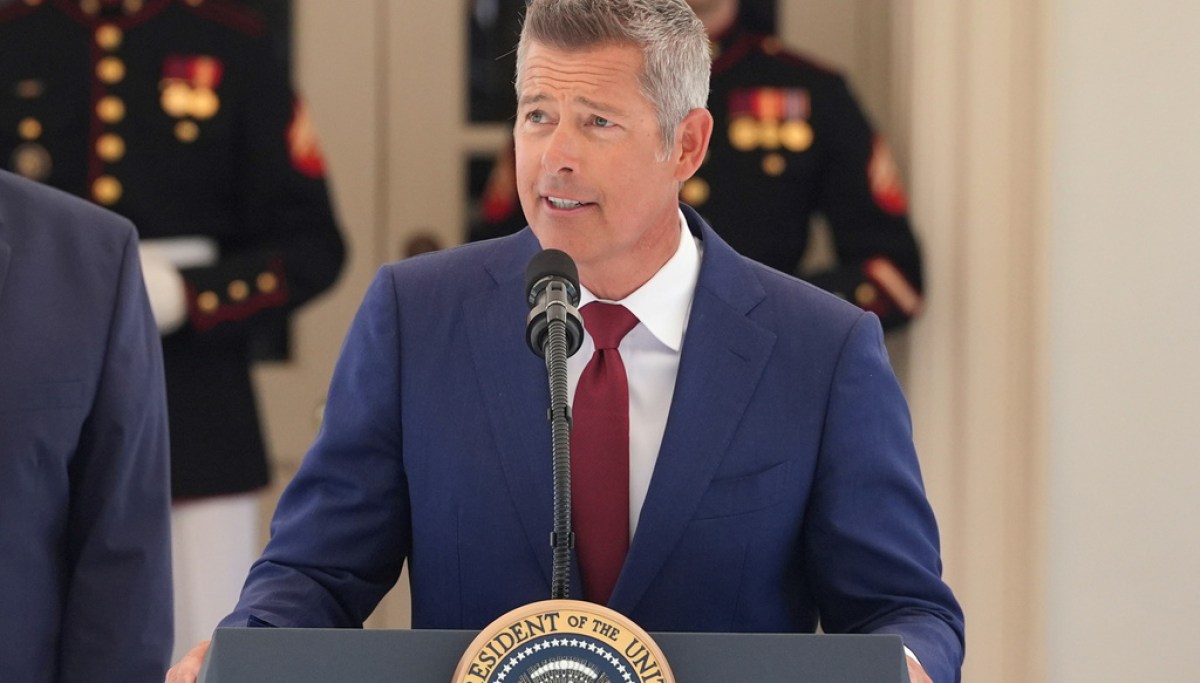
"By fundamentally reshaping how we manage our airspace and preventing problems before they happen, SMART will slash those frustrating delays, reduce stress on air traffic controllers, and lower travel prices," Transportation Secretary Sean Duffy said in a statement.
framing: assertive · carried by 1 article(s) · first seen 2026-09-21
🔮 The Federal Aviation Administration officially launched its ambitious $875-million-dollar software overhaul on Monday, announcing the rollout would begin at three major airports that serve the Washington, D.C. region.

Claims (27 extracted, 0 hedged)

Aviation regulators turn to AI to help manage the nation's airspace WASHINGTON — asserted
regulators → turn → airspace
The federal agency in charge of air traffic control is turning to artificial intelligence to help manage the nation's airspace. asserted
agency → turn → airspace
The Federal Aviation Administration officially launched its ambitious $875-million-dollar software overhaul on Monday, announcing the rollout would begin at three major airports that serve the Washington, D.C. region. asserted
that → launch → region
The new system is known as Strategic Management of Airspace, Routes and Trajectories, or SMART for short. asserted
system → know → Airspace
"By fundamentally reshaping how we manage our airspace and preventing problems before they happen, SMART will slash those frustrating delays, reduce stress on air traffic controllers, and lower travel prices," Transportation Secretary Sean Duffy said in a statement. asserted
Duffy → reshape → statement
Regulators and airlines hope the AI-enhanced tool will make flying more efficient, though critics warn that it won't solve bigger problems with the air traffic control system. asserted
it → hope → system
FAA and DOT leaders emphasize that the new technology is not intended as a replacement for human air traffic controllers. asserted
technology → emphasize → controllers
They describe it as a tool that's supposed to make controllers' jobs easier by reducing congestion and conflicts in the air before they happen. asserted
they → describe → air
"The way we manage traffic today is chaotic and we can do better," said FAA administrator Bryan Bedford during a Senate hearing earlier this year. asserted
Bedford → manage → hearing
"We need to manage that at the FAA, rather than rely on commercial airlines to simply schedule however they want." asserted
they → need → airlines
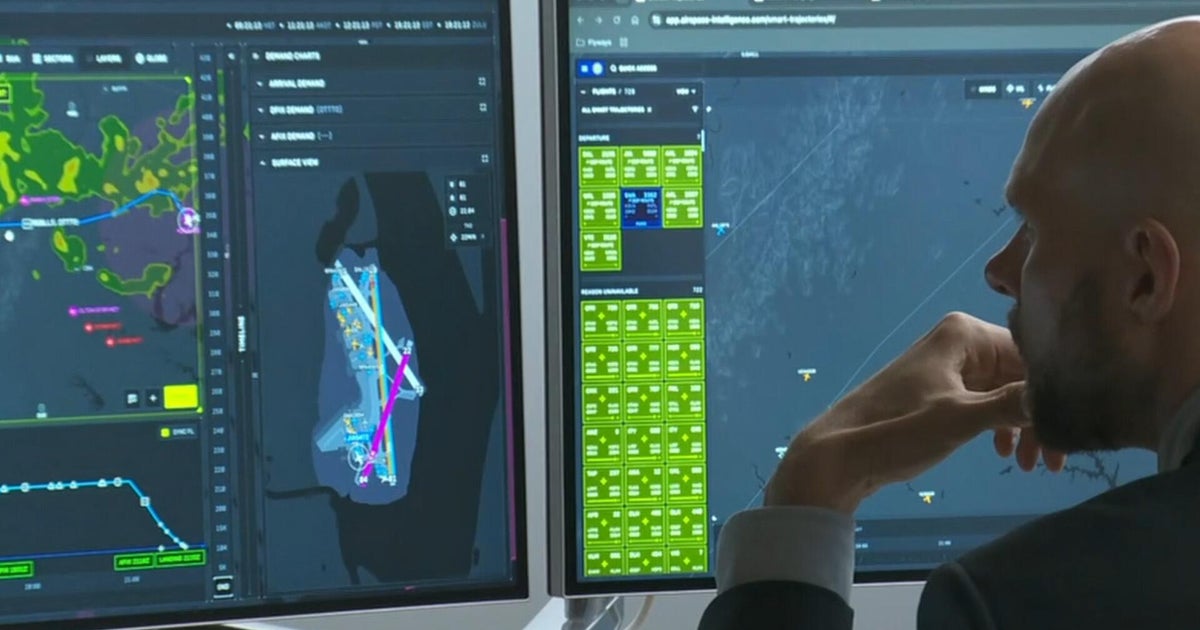
FAA leaders say the SMART system will help optimize the nation's airspace by considering all planned airline flights, as well as weather, wind, and other variables, and tweaking those flight schedules to reduce congestion. asserted
system → say → congestion
It's part of a broader $12.5 billion push to modernize the nation's air traffic control system. asserted
It → modernize → system
The FAA tapped a relatively small company called Air Space Intelligence to build the system. asserted
FAA → tap → system
The company has previously made AI-enhanced software for dispatchers at Alaska Airlines and other carriers, but this project presents a significantly bigger and higher-profile test. asserted
project → make → test
Skeptics question whether the SMART system will be the game-changer FAA leaders have promised. asserted
leaders → question → ?
"It won't replace humans. asserted
It → replace → humans
It'll be another tool in the toolbox," said Dave Riley, a former air traffic controller who retired in 2020 after more than 20 years at the FAA. asserted
who → say → FAA
"But of course, when you call it AI, it gets a lot of attention." asserted
it → call → attention
Riley downplayed concerns of the AI tool going rogue because human air traffic controllers will still be in charge of keeping planes safely separated. asserted
planes → downplay → charge
"The fears of AI killing us all in the next 10 years, I don't think this platform is going to be about that," he said. asserted
he → kill → that
But Riley doubts the tool will do much to solve the bigger problems in the air traffic control system — particularly the staffing shortage. asserted
tool → doubt → system
The FAA is still thousands of certified air traffic controllers short of full staffing, forcing many controllers to work mandatory overtime and grueling schedules. asserted
FAA → certify → overtime
The National Air Traffic Controllers Association, the union that represents controllers, distanced itself from the new system. asserted
that → represent → system
"NATCA has not been involved in the design, testing, or implementation of SMART and therefore cannot speak to its effect on the air traffic control workforce at this time," the union said in a statement. asserted
union → involve → statement
Airlines for America, the trade association that represents the major airlines in Washington, praised the FAA's push to modernize the nation's flight management tools. asserted
that → represent → tools
"Its potential to strengthen safety, increase capacity and improve efficiency will have a direct positive effect on American travelers," the group said in a statement. asserted
group → strengthen → statement
"We're just in the initial stages, but it's one of the most exciting and bold initiatives taken on by the FAA in decades." asserted
it → take → decades

💬Give feedback
🕘History 🎫Support