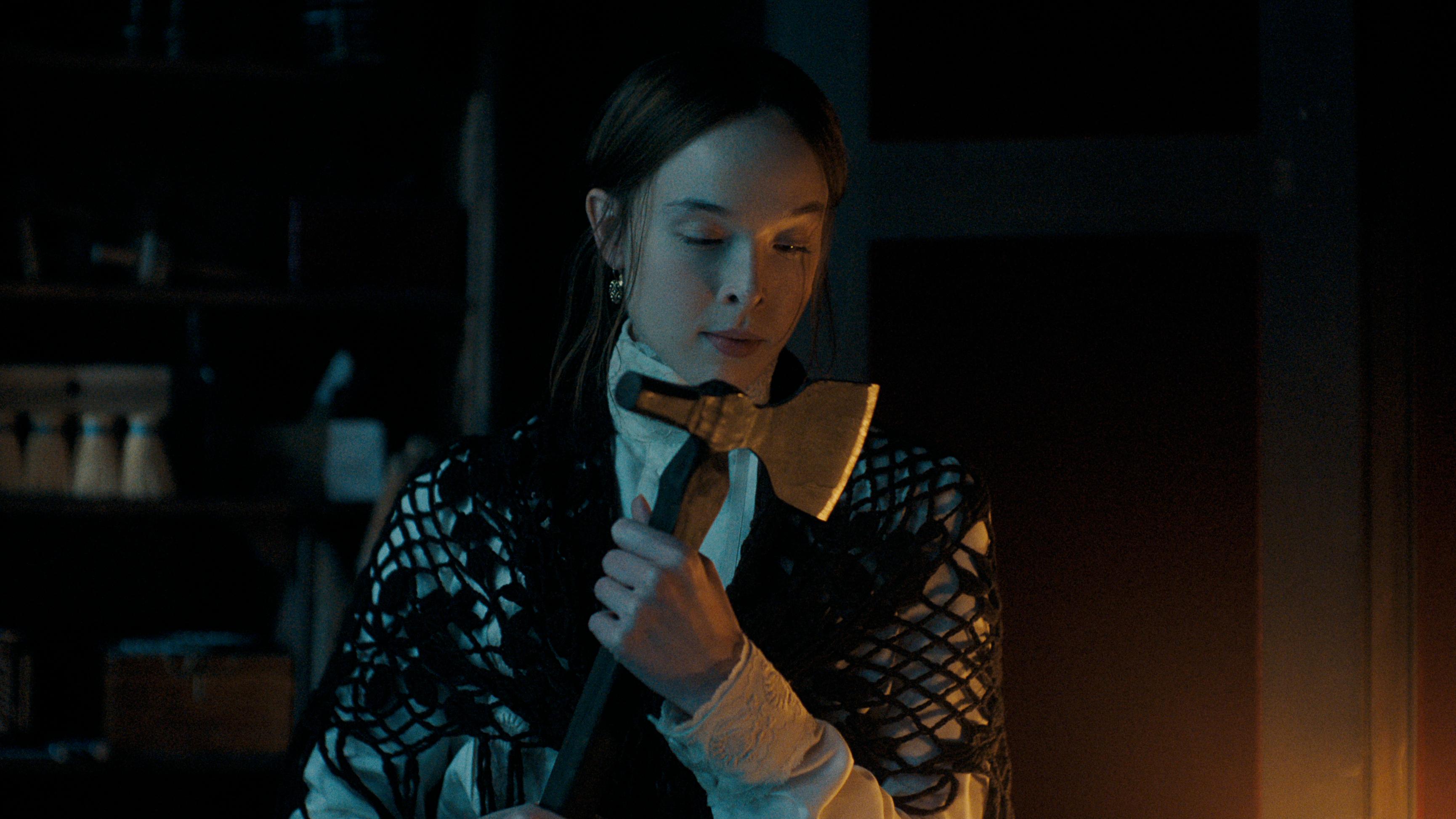
Photo via New York Post

‘Monster: The Lizzie Borden Story’ Episode 7 Recap: The Verdict

Read the original at New York Post ↗
Cite

‘Monster: The Lizzie Borden Story’ Episode 7 Recap: The Verdict. (2026, September 21). New York Post. https://decider.com/2026/09/21/monster-the-lizzie-borden-story-episode-7-the-trial-of-the-century-recap/

Dated when The Aporia collected the article, usually within hours of publication. Check the original for its exact date and byline.

New York Post · collected 2026-09-21 · by mliss1578

Quick Summary

Netflix's series "Monster: The Lizzie Borden Story" episode seven focuses on Lizzie Borden’s imprisonment, trial, and eventual acquittal for the murders of her parents. Nance O’Neill continues to aid Lizzie by providing acting lessons crucial to her courtroom performance. Despite Emma’s inconsistent testimony about the crime, she saves Lizzie with claims of an unknown “pale man” being the culprit. The all-male jury quickly reaches a not guilty verdict due to gender bias and disbelief that a woman could commit such violent acts. The episode concludes with Lizzie triumphantly announcing her plans for an animal sanctuary while Nance observes from afar, Bridget notably absent throughout these events.
Written by AI on 2026-09-21, from this article's own text only (the story summary below draws on all the coverage).

AI analysis

Story summary

In Netflix's Monster: The Lizzie Borden Story episode 7, the narrative focuses on Lizzie Borden's trial and imprisonment. After a genteel stay in jail, Lizzie is returned to house arrest under the watchful eye of her vengeful sister Emma, who has uprooted all of Lizzie’s cherry trees but preserves cuttings inside vases throughout their home. The trial proceedings are marred by inconsistencies in Emma's account of the day her parents were murdered, and Nance O’Neill gathers crucial details about Lizzie's disastrous inquest from a bailiff she sleeps with. Despite these challenges, Lizzie manages to avoid conviction as the episode concludes, set to the strains of the Andrew Oldham Orchestra’s version of "The Last Time."

Written for “Lizzie Borden Trial” on 2026-11-03, grounded in this article and the 0 other(s) covering the same event.

Story

📰 Lizzie Borden Trial
Entertainment · 1 article(s) covering the same event.

Compared with similar articles

This article reads unscored and hedges 7% of its claims. Each row says how that neighbour differs.
TIME
Hedges 3 of 35 claims Outlet record 59/100
“The articles discuss different aspects of Lizzie Borden's life and trial, not a single specific event.”
How this article was measured signals, leaning charts, publisher record, byline, topics and claims

Signals How these are calculated →

Claims extracted
28
sentences that state something as happening or true
Uncertain
7%
2 of 28 hedged ("reportedly", "may", "according to")
Leaning
not political
takes no side on a contested political question
Publisher signals
66/100
New York Post's corrections and hedging, across everything collected from it. Not a measure of accuracy.
Outlets on this story
1
Entertainment
Same framing elsewhere
1
articles that frame the event the way this one does
Analyzed 2026-09-21 · how these are computed

How this is being covered How these are calculated →

Article leaning vs. publisher reliability
Source leaning vs. consistency

Publisher

New York Post · 16396 article(s) · 35 correction(s) detected
Running correction rate · 35 correction(s)

Who wrote this

No reporter is named on this article, beyond the feed's “mliss1578”.

Topics

Netflix Portuguese Verve the Andrew Oldham Orchestra’s the Rolling Stones’

Subjects

Lizzie PERSON · 8× Nance PERSON · 5× Emma PERSON · 4× Lizzie Borden PERSON · 2× Bane PERSON · 1× Carole Baskin PERSON · 1× Nance O’Neill PERSON · 1× Netflix ORG · 1× Portuguese NORP · 1× the Andrew Oldham Orchestra’s ORG · 1×

Narrative

She marches out of the courtroom and travels in her carriage to the triumphant strains of the Andrew Oldham Orchestra’s version of the Rolling Stones’ “The Last Time,” familiar as the basis for the Verve’s hit “Bitter Sweet Symphony.”
framing: assertive · carried by 1 article(s) · first seen 2026-09-21
🔮 Emma actually winds up saving her bacon as much as Nance does, swearing her sister couldn’t have done it and casting suspicion on an illusory “pale man” allegedly seen skulking around the house.
2026-09-21 · New York Post
‘Monster: The Lizzie Borden Story’ Episode 7 Recap: The Verdict · assertive framing

Claims (28 extracted, 2 hedged)

As a wise man named Bane once said, theatricality and deception are powerful agents to the uninitiated. asserted
theatricality → name → uninitiated
But Nance O’Neill, star of the stage, is initiated, and she has come to make Lizzie Borden an initiate in time to save her neck from the gallows. asserted
Borden → initiate → gallows
This episode tells the relatively straightforward story of Lizzie’s imprisonment and trial, such as it is. asserted
it → tell → imprisonment
Jail is a genteel affair for the well-resourced heiress, who makes the most of her tiny little window’s view until such time as the prison staff takes pity on her and orchestrates her return to house arrest. asserted
staff → resource → arrest
By then her vengeful sister Emma has chopped down all of Lizzie’s cherry trees, but she places cuttings in vases all over the house. asserted
she → chop → house
She’s intent on seeing them blossom again. asserted
them → ’ → ?
Her own prospects look somewhat more grim, because her account of the events of that fateful day changes from one telling to the next. asserted
account → look → next
Nance receives an account of Lizzie’s disastrous inquest directly from the bailiff, whom she enthusiastically fucks to acquire the information. asserted
she → receive → information
(She’s a hoot, our Nance.) asserted
She → ’ → ?
With her story a shambles, it’ll all come down to how she comes across during the trial. asserted
she → come → trial
Nance coaches Lizzie on how to enter, how to sit, how to show a little ankle, how to faint on cue when her parents’ skulls are brought in as evidence, how to cry on cue when her sister Emma takes the stand. asserted
sister → coach → stand
Emma actually winds up saving her bacon as much as Nance does, swearing her sister couldn’t have done it and casting suspicion on an illusory “pale man” allegedly seen skulking around the house. uncertain
sister → wind → house
She’s making good on a vow she made to her dying mother to protect her baby sister…and, perhaps, making good on her guilt over how Lizzie was treated by the family over the years while Emma was free and clear. asserted
Emma → make → years
In the end, simple sexism saves Lizzie as much as a convincing courtroom performance or powerful sisterly testimony. asserted
sexism → save → performance
The jury just does not believe a woman could have committed such a crime. uncertain
woman → believe → crime
(As always, the Portuguese are blamed.) asserted
Portuguese → blame → ?
The jurors reach a not guilty verdict so fast they decide to sit around and play cards for an hour before announcing it, just for appearances’ sake. asserted
they → reach → sake
Lizzie enjoys her acquittal, of course. asserted
Lizzie → enjoy → course
She thanks the jurors individually per Nance’s advice, then stands before the unfamiliar flashbulbs of the press and announces her intention to create an animal sanctuary. asserted
She → thank → sanctuary
(Oh god, Lizzie Borden is going Carole Baskin.) asserted
Borden → go → ?
She marches out of the courtroom and travels in her carriage to the triumphant strains of the Andrew Oldham Orchestra’s version of the Rolling Stones’ “The Last Time,” familiar as the basis for the Verve’s hit “Bitter Sweet Symphony.” asserted
She → march → hit
She’s just vibing joyfully…but she’s doing it without Bridget, who disappears for the entire trial and is only glimpsed in hallucinations and wishful thinking. asserted
who → vibe → hallucinations
But then I think about the literal acting lessons Lizzie received to win a not guilty verdict. asserted
Lizzie → think → verdict
I think about the old-school cinematic irises that have transitioned us in and out of different scenes. asserted
that → think → scenes
I think of that curtain opening at the start of the show, revealing a toy piano played by unseen hands. asserted
I → think → hands
Sean T. Collins (@seantcollins.com on Bluesky and theseantcollins on Patreon) has written about television for The New York Times, Vulture, Rolling Stone, and elsewhere. asserted
Collins → write → Times
He is the author of Pain Don’t Hurt: Meditations on Road House. asserted
Pain → hurt → House
He lives with his family on Long Island. asserted
He → live → Island

💬Give feedback
🕘History 🎫Support