Photo via The Sydney Morning Herald

Climate change could push many Melbourne women out of work. This app aims to keep them in it

Read the original at The Sydney Morning Herald ↗
Cite

Morgan, C. (2026, September 21). Climate change could push many Melbourne women out of work. This app aims to keep them in it. The Sydney Morning Herald. https://www.smh.com.au/national/victoria/climate-change-could-push-many-melbourne-women-out-of-work-this-app-aims-to-keep-them-in-it-20260922-p60x6p.html?ref=rss&utm_medium=rss&utm_source=rss_feed

Dated when The Aporia collected the article, usually within hours of publication. Check the original for its exact date and byline.

The Sydney Morning Herald · collected 2026-09-21 · by Cassandra Morgan

Quick Summary

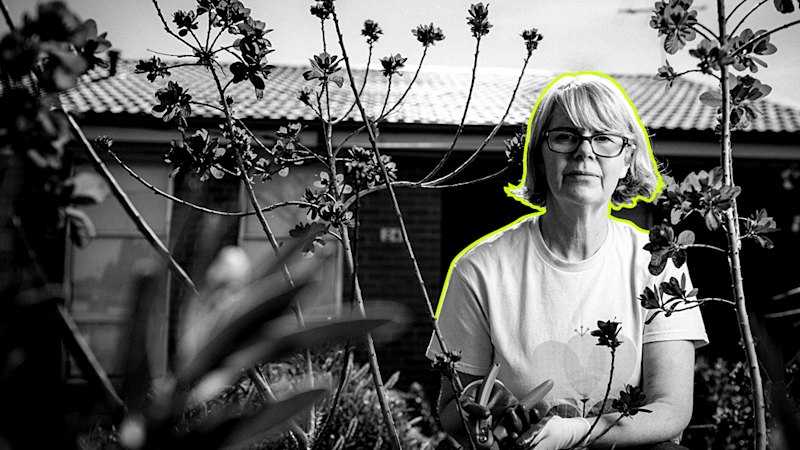
As Melbourne experiences rising temperatures due to climate change, women like Lisa Nicholson, who own gardening businesses, face challenges maintaining their work schedules in extreme heat. Urban design expert Nicole Kalms warns that a shift towards an after-dark economy could further exclude women who may not feel safe working or being outdoors at night. The article discusses the impact of urban planning decisions on green spaces and tree canopy coverage, which is crucial for public health but often compromised in densification projects aimed at increasing housing density around transport hubs.
Written by AI on 2026-09-21, from this article's own text only (the story summary below draws on all the coverage).

AI analysis

Story summary

Climate change impacts are pushing many women out of traditional daytime jobs in Melbourne, Australia. Lisa Nicholson, owner of gardening business Petite Gardens, describes how rising temperatures force her to work earlier in the morning to avoid afternoon heatwaves, which can be intolerable for physical labor like landscaping. Urban design expert Nicole Kalms argues that as cities get hotter, there will be a shift towards a nighttime economy to mitigate these effects. This includes prioritizing green spaces and urban planning that considers mental health alongside environmental sustainability. The city of Melbourne is exploring how to adapt its infrastructure to accommodate such changes, aiming for healthier urban environments.

Written for “Climate Change Impact On Jobs Melbour…” on 2026-11-04, grounded in this article and the 0 other(s) covering the same event.

Story

📰 Climate Change Impact On Jobs Melbour…
Environment · 1 article(s) covering the same event.

Compared with similar articles

Nothing to compare against. No article is close enough to this one for the pipeline to have linked or judged the pair.
How this article was measured signals, leaning charts, publisher record, byline, topics and claims

Signals How these are calculated →

Claims extracted
64
sentences that state something as happening or true
Uncertain
8%
5 of 64 hedged ("reportedly", "may", "according to")
Leaning
Leans left
of the writing, not the subject · beta estimate
Publisher signals
61/100
The Sydney Morning Herald's corrections and hedging, across everything collected from it. Not a measure of accuracy.
Outlets on this story
1
Environment
Same framing elsewhere
1
articles that frame the event the way this one does
Analyzed 2026-09-21 · how these are computed

How this is being covered How these are calculated →

Article leaning vs. publisher reliability
Source leaning vs. consistency

Publisher

The Sydney Morning Herald · 6074 article(s) · 15 correction(s) detected
Running correction rate · 15 correction(s)

Who wrote this

Cassandra Morgan
11 article(s) here · 1 carrying a prediction
🔮 “The Lighthouse Cafe has outgrown this space and will be relocating to a larger premises,” reads the glossy A4.
🔮 “Because a major data centre cluster exists in and around Truganina, having direct fibre run through to Werribee and East Werribee would eliminate long-distance routing,” the alliance of local public and private sector leaders said. “Local businesses would experience sub-millisecond round-trip response times – making local processing feel instantaneous compared to standard connections.
🔮 “It’s a decision that says this is so important that we’re willing to blow $70 million,” Miller told The Age’s Melbourne Assembly civic forum on Wednesday.
🔮 The coffee is good, but Federation Square needs to be fixed – those are the first takeaways from former New York mayor Bill de Blasio and world-leading city planner Carlos Moreno after hitting Melbourne’s sunny pavements.
🔮 The former VicRoads headquarters will make way for up to 630 homes in towers as tall as 16 storeys under a contentious plan by the state government that has been rebuked by the local council.
🔮 That’s all my money will buy me?”
🔮 “I would have tried a dozen places before, because Alexandra Gardens said ‘no’ to me for months,” says Sloan, elbows resting on a leather armchair in a Melbourne hotel lobby.
🔮 Workers were promised no frontline roles would be affected – but the definition of frontline was unclear, sparking concerns for jobs across administration, conservation and education.
🔮 Gender and urban design expert Nicole Kalms says that, as temperatures rise with climate change, cities including Melbourne will shift their work, commerce and recreation to the nighttime economy.
🔮 The light rail whirs past the deputy lord mayor of Sydney on George Street, its bell chiming beneath the gargantuan clocktower looming overhead.
2026-09-20 · assertive framing · What Melbourne could learn from this Sydney landmark
Also by Cassandra Morgan
Nothing else under this byline is closely related to this article, so these are simply their most recent.
All 11 articles by Cassandra Morgan →

Topics

Age Mazda 2 Melbourne Melbourne Assembly Petite Gardens

Subjects

Melbourne GPE · 6× Kalms PERSON · 2× Melbourne Assembly ORG · 2× Nicholson PERSON · 2× Age ORG · 1× Australian NORP · 1× Lisa Nicholson’s PERSON · 1× Nicole Kalms PERSON · 1× Petite Gardens ORG · 1× Stonnington ORG · 1×

Narrative

“Climate change is increasingly impacting not only our physical environment, but also our mental wellbeing,” Woods says. “As we plan the cities of the future, it is vital that we work together to create spaces that balance health, safety and equity alongside increased green spaces and healthier urban environments.
framing: assertive · carried by 1 article(s) · first seen 2026-09-21
🔮 Gender and urban design expert Nicole Kalms says that, as temperatures rise with climate change, cities including Melbourne will shift their work, commerce and recreation to the nighttime economy.
2026-09-21 · The Sydney Morning Herald
Climate change could push many Melbourne women out of work. This app aims to keep them in it · assertive framing

Claims (64 extracted, 5 hedged)

The morning has just turned light when Lisa Nicholson’s alarm sounds. asserted
alarm → turn → ?
She taps her phone screen to turn it off, before sitting up and stretching muscles still tired from the day before. asserted
She → tap → day
After saying good morning to her teenage son, she walks out to her carport, where she hauls a lawn mower, whipper snipper, leaf blower and hand tools into the back of her little green Mazda 2. asserted
she → say → Mazda
Peering above the pile of metal in her rearview mirror, she backs out of her driveway, and sets off to create lush sanctuaries in Melbourne’s neighbourhoods of concrete and brick. asserted
she → peer → concrete
Tomorrow, she’ll do it all again – but as the city heats up, her days are getting earlier. asserted
days → do → it
“I’ll try to get out and get all my work done in summer by midday,” says Nicholson, owner of gardening business Petite Gardens. asserted
Nicholson → try → Gardens
“It’s a killer in the afternoon. asserted
It → ’ → afternoon
“Once the weather starts to really crank up – sometimes it’s earlier in the year, sometimes it’s later – it does affect the business.” asserted
it → start → business
Gender and urban design expert Nicole Kalms says that, as temperatures rise with climate change, cities including Melbourne will shift their work, commerce and recreation to the nighttime economy. asserted
cities → say → economy
Prioritising green space is a focus for Kalms, but she knows the shift to an after-dark economy also comes with an unintended cost for women. asserted
shift → prioritise → women
If women don’t feel safe out at night and in unlit areas, will they be excluded? asserted
they → feel → areas
The topic of healthy places and people is one of the key pillars of Melbourne Assembly, a civic forum The Age is hosting in October, bringing together the world’s brightest minds, industry leaders, key decision-makers and the community to shape the city’s future. asserted
Age → host → future
Nicholson says that, if she didn’t have the agency to work around the heat, “I certainly wouldn’t do the work I’m doing”. asserted
I → say → work
“I’m not averse to being out there and working hard, and being sweaty and all the rest of it,” she says. asserted
she → ’m → it
“But I will also not work in really extreme conditions because honestly, my clients don’t expect me to either.” asserted
me → work → conditions
Escaping the heat isn’t just a matter of comfort. asserted
Escaping → escape → comfort
It’s a matter of health. asserted
It → ’ → health
And, as the city looks to its future ahead of Melbourne Assembly, tree canopy experts are keeping a dogged watch over the state government’s plan to densify suburban transport hubs through designated “activity centres”. asserted
experts → look → centres
Tree canopy has a direct correlation with all-cause mortality, cardiovascular disease mortality, and fatal or non-fatal heart attacks, an Australian study has found. asserted
study → have → mortality
The activity centres run vast lines through Melbourne, with one in four concentrated in the Stonnington council area, in the leafy east. asserted
four → run → east
But they also trace a path over sparse tree canopy hotspots, including West Footscray, Seddon, North Essendon, Brunswick, Thornbury and Preston. asserted
they → trace → Footscray
RMIT University urban planner Thami Croeser, who helped compile tree canopy data for The Age, says experts are waiting to see whether developers prioritise good tree cover across the suburbs. asserted
developers → compile → suburbs
Historically, they’ve taken up almost entire parcels of land with apartment buildings, leaving little space for gardens or trees. asserted
they → take → gardens
Suburbs earmarked for Suburban Rail Loop stations could also bring in tens of thousands of new homes in towers of up to 20 stories across Melbourne. uncertain
Suburbs → earmark → Melbourne
“There is a bit of concern in the tree canopy space that it’s all housing-focused, and not on the vital tree canopy that needs to make that housing liveable,” Croeser says. asserted
Croeser → be → canopy
“As we densify, we want to ensure we don’t crush every tree in the neighbourhood.” asserted
we → densify → neighbourhood
As Melbourne’s skyline pushes outward and upward, urban designers say the environment below has never been more crucial. asserted
environment → push → ?
Among them is Kalms, whose app is putting that premise into practice. asserted
app → put → practice
Walking comfortably and safely At the top of a tree-lined suburban street in Melbourne’s outer south-east stands an unassuming green metal fence. Taking a few steps beyond it reveals a ridge perched over a vast valley, where turtles crane their necks to break the surface of a lake cradled in its centre. asserted
turtles → walk → centre
Rabbits burrow near the banks of the lake. asserted
Rabbits → burrow → lake
And, up on the ridge at Wilson Botanic Park in Berwick, a kookaburra hops alongside the footpath, gobbling up a worm before it flies back to the oak tree from where it came. asserted
it → hop → where
This is a daytime route on the YourWalk app, created specifically with women and vulnerable people in mind. asserted
This → create → mind
Its walking routes prioritise tree cover, shade and accessible footpaths during the day, as well as adequate lighting at night – when many women don’t feel safe. asserted
women → prioritise → night
Rubina Nawabi is one of them – a 55-year-old mother of four living in the City of Casey, where the local council has partnered with Monash University XYX Lab and spatial data studio CrowdLab to pilot the YourWalk app. asserted
council → live → app
After dark, the Hallam-based social worker rarely goes out, unless she’s driving (not a given for women in Casey, where many families share a single car). asserted
families → base → car
She refuses to take her usual low-lit shortcut if she is out walking after sunset and fears for her teenage daughter, who recently walked home for three kilometres with friends from Westfield Fountain Gate at about 6pm. “If I knew, I would have really gone and picked them up,” Nawabi says. asserted
Nawabi → refuse → them
“It becomes really scary. asserted
It → become → ?
But as we come towards this way [Hallam], it becomes isolated with not many people on the roads, and there is not much light.” asserted
it → come → roads
Women consistently cite an absence of lighting (namely quality, warm lighting) as the biggest factor stopping them from going out at night, Kalms says. asserted
Kalms → cite → night
That’s alongside the unpredictable behaviour of violent men. asserted
That → ’ → men
…and 24 more, not listed.

💬Give feedback · no sign-in needed

No sign-in needed for now. Your note is sent without a name, so it cannot be answered.

🕘History 🎫Support