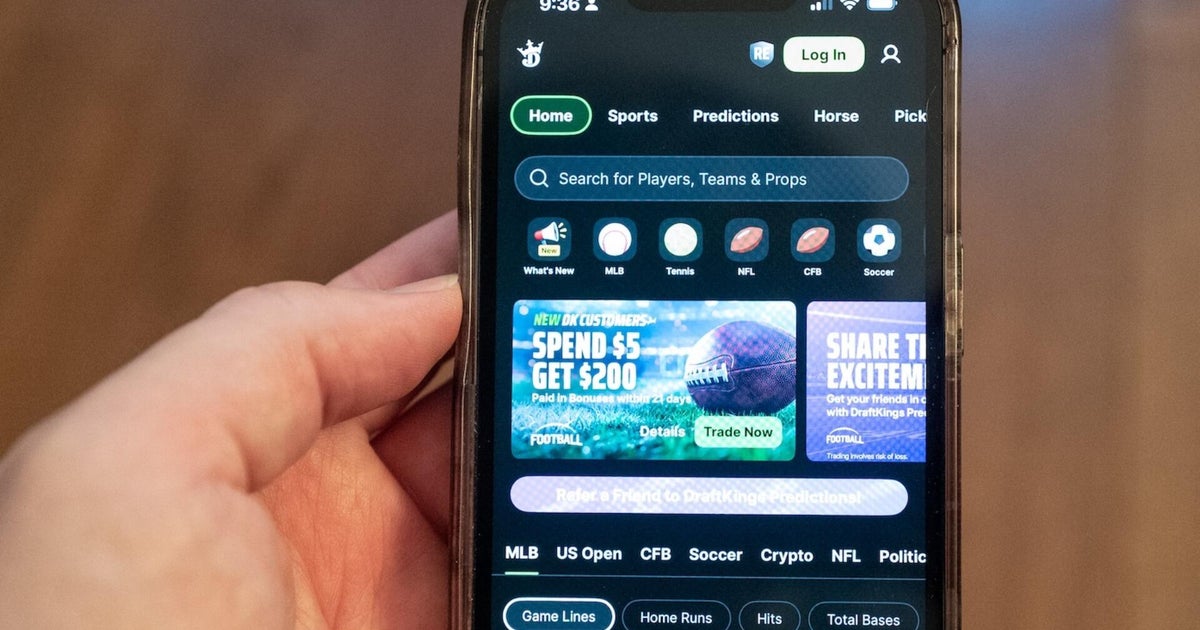
Photo via New York Post

DraftKings used AI to target losing bettors: ‘The best investment would be a problem gambler’

Read the original at New York Post ↗
Cite

Zilber, A. (2026, September 21). DraftKings used AI to target losing bettors: ‘The best investment would be a problem gambler’. New York Post. https://nypost.com/2026/09/21/business/draftkings-used-ai-to-target-losing-bettors-the-best-investment-would-be-a-problem-gambler/

Dated when The Aporia collected the article, usually within hours of publication. Check the original for its exact date and byline.

New York Post · collected 2026-09-21 · by Ariel Zilber

Quick Summary

DraftKings allegedly used AI to identify gamblers likely to incur heavy losses and targeted them with promotional offers, according to former employees cited by the New York Times. The company’s internal metric called “elasticity” estimated how much more a gambler would wager if given such promotions. One whistleblower stated that DraftKings considered targeting problematic gamblers as an advantageous strategy. However, the company denied these allegations, asserting its promotional practices are designed for customer engagement rather than exploiting at-risk individuals and highlighted its commitment to responsible gaming initiatives.
Written by AI on 2026-09-22, from this article's own text only (the story summary below draws on all the coverage).

AI analysis

Story summary

In February 2024, CBS News reported that betting apps like DraftKings are being accused of fueling addictive gambling behavior. According to an investigation by The New York Times, former DraftKings employees claim the platform targeted vulnerable gamblers with promotional offers aimed at increasing their spending. The company reportedly used AI and data science, including a measure called “elasticity,” to identify customers likely to increase their betting activity when given incentives. A former analyst quoted in the report said, "The best investment would be a problem gambler." However, DraftKings denied these claims, stating that its practices are routine across consumer industries and do not improperly target gamblers based on losses.

Written for “Gambling Addiction Risks” on 2026-10-31, grounded in this article and the 1 other(s) covering the same event.

Story

📰 Gambling Addiction Risks
Health · 2 article(s) covering the same event. See how they differ ↓

Compared with similar articles

This article reads unscored and hedges 18% of its claims. Each row says how that neighbour differs.
CBS News
⚖️ Leans left Hedges 1 of 3 claims Outlet record 66/100
ProPublica
⚖️ Leans strongly left Hedges 29 of 336 claims Outlet record 58/100
“Article A discusses DraftKings using AI to target likely losing bettors based on whistleblower reports, while Article B provides a personal account of someone's experience with DraftKings' promotional tactics and VIP treatment after problem gambling behavior.”
How this article was measured signals, leaning charts, publisher record, byline, topics and claims

Signals How these are calculated →

Claims extracted
34
sentences that state something as happening or true
Uncertain
18%
6 of 34 hedged ("reportedly", "may", "according to")
Leaning
withheld
no quote in the article backed the model's score
Publisher signals
66/100
New York Post's corrections and hedging, across everything collected from it. Not a measure of accuracy.
Outlets on this story
2
Health
Same framing elsewhere
1
articles that frame the event the way this one does
Analyzed 2026-09-22 · how these are computed

How this is being covered How these are calculated →

Article leaning vs. publisher reliability
Source leaning vs. consistency

Publisher

New York Post · 15592 article(s) · 35 correction(s) detected
Running correction rate · 35 correction(s)

Who wrote this

Ariel Zilber
80 article(s) here · 1 carrying a prediction
🔮 The cybersecurity firm said the volume and uniformity suggest artificial intelligence may have been used to generate the content, although that has not been established for sure.
🔮 ExxonMobil, Chevron, BP, Shell and TotalEnergies together posted $56.3 billion in adjusted third-quarter net income, with each company beating Wall Street forecasts, Bloomberg reported Friday. ExxonMobil’s refining business raked in a record $9.05 billion in third-quarter profits — nearly five times its year-earlier haul, according to Bloomberg.
🔮 The Cupertino, Calif.-based tech giant introduced the redesigned laptop Wednesday, touting a new OLED display, touchscreen controls and a thinner, lighter design. But getting all the bells and whistles on the widest model will cost customers more than four times its $3,399 starting price, as tech news site MacRumors pointed out.
🔮 The Times could not determine what information she passed along or how valuable it was to Chinese authorities.
🔮 Partners are expected to vote on the matter in the coming days.
🔮 Life, which has weathered decades of financial turmoil, is set to publish its first quarterly edition Nov. 23 — a 250-page issue marking its return to regular print publication for the first time since 2007.
🔮 The industry’s rapid growth has also raised concerns among lawmakers and advocacy groups that traders could exploit confidential information to profit from bets on real-world events.
🔮 Robert Zullo, 55, a former BofA senior vice president, alleges that his superior, AJ Venit, warned him he “would never work in the banking industry again” during an August 2025 confrontation over Zullo relocating from Charlotte, NC, to Albany, NY, to care for his parent.
🔮 A takeover could fetch roughly $16 billion to $17 billion if a buyer pays a 30% to 40% premium, an estimate based on recent public tech deals.
🔮 Another poster at the same location estimated the crowd at “maybe 130 people” and said store staff had warned shoppers there were “very few units” available.
Also by Ariel Zilber
Nothing else under this byline is closely related to this article, so these are simply their most recent.
All 80 articles by Ariel Zilber →

Topics

DraftKings The Post Times the Gray Lady the New York Times

Subjects

DraftKings ORG · 14× Times ORG · 8× Biehl PERSON · 3× Bryan Biehl PERSON · 1× Butts GPE · 1× Citizens Bank ORG · 1× Jayden Butts PERSON · 1× The Post ORG · 1× the Gray Lady ORG · 1× the New York Times ORG · 1×

Narrative

The company told the Times that promotions are “directed toward customers who demonstrate sustained, engaged use of our platform, not toward customers based on their losses,” and said it “rejects any implication that its marketing practices are unfair or improperly targets customers.”
framing: assertive · carried by 1 article(s) · first seen 2026-09-22
🔮 DraftKings internally used a measure it called “elasticity,” to estimate how much more a gambler might wager if offered the right promos.

Claims (34 extracted, 6 hedged)

Former DraftKings employees say the company sent promotional offers to the very gamblers who were most likely to rack up losses, according to a report. uncertain
who → say → report
The sports gambling giant used AI and data science to help determine which customers should receive promotional offers, the New York Times reported, citing whistleblowers. asserted
Times → use → whistleblowers
DraftKings internally used a measure it called “elasticity,” to estimate how much more a gambler might wager if offered the right promos. uncertain
gambler → use → promos
“The best investment would be a problem gambler,” former DraftKings data analyst Jayden Butts told the Gray Lady. asserted
Butts → tell → Lady
The company was trying to figure out if the money it spent on promos like free bets would pay off by getting gamblers to place more wagers, Butts explained. asserted
Butts → try → wagers
“And if the answer is yes, open the floodgates,” he told the newspaper. asserted
he → open → newspaper
“It is as predatory as it sounds,” one former DraftKings analyst told the Times. asserted
analyst → sound → Times
“If you lose more, we give you more, so you keep playing more.” asserted
you → lose → more
A DraftKings spokesperson rejected the report, saying it’s “built on a false premise.” asserted
it → reject → premise
The piece “portrays routine promotional reinvestment practices common across consumer-facing industries as scandalous,” the spokesperson told The Post. asserted
spokesperson → portray → Post
“And it asks readers to accept, on the word of a few former employees, that DraftKings should not have evolved our development efforts from an unvalidated, early-stage data model to a regulator-informed, evidence-based responsible engagement system.” asserted
DraftKings → ask → system
The company touted its naming of a “chief responsible gaming officer” who reports directly to the CEO, as well as a department of more than 50 full-time employees “focused on responsible engagement.” asserted
who → tout → engagement
“Responsible engagement is not a side initiative,” the company rep said. asserted
rep → say → ?
“It is embedded across our business and essential to DraftKings’ long-term sustainability.” asserted
It → embed → sustainability
The starkest example cited by the Times was that of Bryan Biehl, who told the Times he lost nearly $70,000 gambling online, more than half of it through DraftKings. asserted
he → cite → DraftKings
Biehl said that when he began therapy for gambling addiction in late 2024, promotional emails from DraftKings became a relapse risk. asserted
emails → say → DraftKings
“I would get flooded with bonuses and deposits,” he told the Times. asserted
he → flood → Times
“If you are in addiction, you are not going to say no.” asserted
you → go → no
Emails reviewed by the newspaper showed that Biehl received 40 DraftKings promotions during the first two weeks of December 2024. asserted
Biehl → review → December
He said he gave in to temptation one final time on Christmas Day, before placing himself on self-exclusion lists that blocked him from gambling apps. asserted
that → say → apps
DraftKings declined to comment to the Times on Biehl’s account, though it rejected the suggestion that its promotional practices improperly target customers. asserted
practices → decline → customers
The company told the Times that promotions are “directed toward customers who demonstrate sustained, engaged use of our platform, not toward customers based on their losses,” and said it “rejects any implication that its marketing practices are unfair or improperly targets customers.” asserted
practices → tell → customers
Promotions represent a major part of DraftKings’ business. asserted
Promotions → represent → business
The company generated around $8.7 billion in gross revenue from sports betting and online casino customers last year while handing out roughly $3 billion in promotions, according to Citizens Bank research cited by the Times. uncertain
company → generate → Times
DraftKings has also publicly touted its use of data science and AI in its promotional strategy. asserted
DraftKings → tout → strategy
An executive recently told investors that analytics helped improve margins on promotion-driven sports bets by 13% in 2025 and that the company used AI to personalize hundreds of millions of dollars in promo spending, according to the Times. uncertain
company → tell → Times
Meanwhile, employees working on responsible gambling developed separate predictive technology designed to identify customers who might be developing gambling problems. uncertain
who → work → problems
Former DraftKings data scientist Nestor Hernandez began developing a machine-learning model in mid-2024 that used customer behavior — including deposits, withdrawals and efforts to chase losses — along with age and gender to generate risk scores. asserted
that → begin → scores
“The idea of this model is to be more proactive instead of being reactive,” he told the Times. asserted
he → tell → Times
“You will basically predict that a user will be in trouble, let’s say, a few days or a few weeks in advance. asserted
’s → predict → advance
And you can act accordingly.” asserted
you → act → ?
The project was later shut down, according to former employees cited by the Times. uncertain
project → shut → Times
Lori Kalani, DraftKings’ chief responsible gaming officer, told the Times that company leaders made a “collective decision” not to use predictive technology for problem gambling because “we evaluated that it wasn’t evidence-based.” asserted
it → tell → gambling
She said DraftKings believed its existing system was a “better methodology.” asserted
system → say → ?

💬Give feedback
🕘History 🎫Support