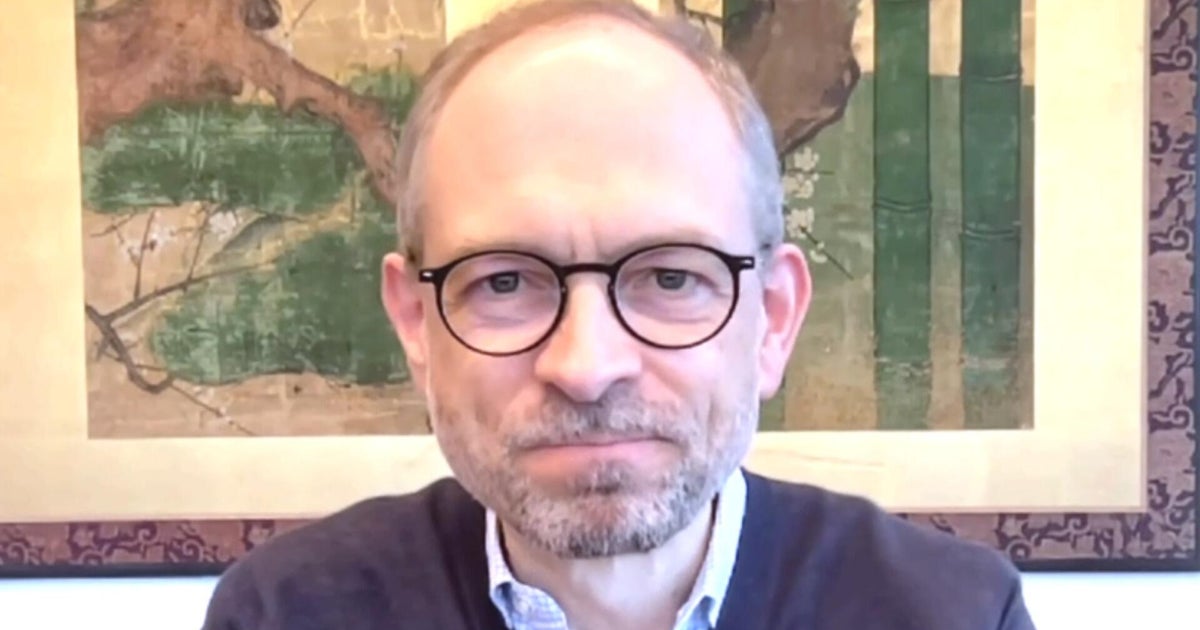
Photo via New York Post

Silicon Valley’s AI accelerationists fighting back against ‘mind virus’ taking over big labs

Read the original at New York Post ↗
Cite

Lin, V. (2026, September 21). Silicon Valley’s AI accelerationists fighting back against ‘mind virus’ taking over big labs. New York Post. https://nypost.com/2026/09/21/tech/silicon-valleys-ai-accelerationists-fighting-back-against-mind-virus-taking-over-big-labs/

Dated when The Aporia collected the article, usually within hours of publication. Check the original for its exact date and byline.

New York Post · collected 2026-09-21 · by Vivi Lin

Quick Summary

Physicist Guillaume Verdon, founder of the Effective Accelerationism movement, criticizes what he calls an "ideological mind virus" spreading through Silicon Valley's major AI labs. This virus is associated with Effective Altruists who promote a pessimistic view of artificial intelligence (AI), claiming it could threaten humanity’s survival. In contrast, Verdon argues that such concerns are exaggerated and hinder technological advancement, suggesting the proposed regulatory measures would merely create a cartel favoring established companies like Anthropic and OpenAI.
Written by AI on 2026-09-22, from this article's own text only (the story summary below draws on all the coverage).

AI analysis

Story summary

In Silicon Valley, physicists and AI experts are debating the potential risks of artificial intelligence. Guillaume Verdon, founder of Effective Accelerationism, argues against what he calls a "mind virus" spreading among big labs like Anthropic and OpenAI. These companies warn that AI could pose existential threats to humanity. However, Verdon claims such warnings are exaggerated tactics used by these firms to protect their investments. He criticizes the philosophy of Effective Altruism, which promotes trusting only a select few who aim to do maximum good, as having compromised lab cultures and ideologies. Verdon asserts that true dangers from AI lie elsewhere, challenging critics to provide concrete evidence supporting their claims.

Written for “AI Ethics Debate” on 2026-11-01, grounded in this article and the 0 other(s) covering the same event.

Story

📰 AI Ethics Debate
Technology · 1 article(s) covering the same event.

Compared with similar articles

This article reads unscored and hedges 8% of its claims. Each row says how that neighbour differs.
Daily Mail
⚖️ Leans left Hedges 5 of 70 claims Outlet record 68/100
“The articles discuss different aspects of concerns surrounding AI and do not describe the same specific incident.”
The Guardian
⚖️ Leans strongly left Hedges 5 of 53 claims Outlet record 66/100
“The articles discuss different aspects of AI and its impact, with Article A focusing on AI's role in education and career pathways, while Article B discusses a debate between AI accelerationists and those warning against the dangers of AI.”
Noahpinion
Hedges 12 of 114 claims
“The articles discuss related themes but describe different specific events and perspectives on AI accelerationism and Effective Altruism.”
NBC News
Outlet record 60/100
“The articles discuss different perspectives on AI risks, but do not describe the same specific incident or occurrence.”
Fox News
Hedges 7 of 24 claims Outlet record 69/100
“The articles discuss different aspects of AI advancements; Article A focuses on a debate between AI accelerationists and those warning about potential dangers, while Article B reports on Anthropic CEO's predictions for medical breakthroughs with AI.”
Washington Examiner
⚖️ Leans strongly left Hedges 4 of 22 claims Outlet record 70/100
“The articles discuss different aspects of AI regulation and public opinion, not a single specific incident.”
Al Jazeera
⚖️ Leans right Hedges 9 of 46 claims Outlet record 60/100
“While both articles discuss controversy around AI development and regulation, they describe different aspects of the ongoing debate rather than a single specific incident.”
CBS News
Hedges 0 of 2 claims Outlet record 66/100
“The articles discuss different aspects of AI concerns and developments in technology, not a single specific incident.”
Daily Mail
Hedges 10 of 56 claims Outlet record 68/100
“Article A discusses physicists warning against Effective Altruists spreading a 'mind virus' over Silicon Valley, while Article B focuses on Jacob Coxon's resignation from Anthropic and the debate about AI potentially killing humans.”
South China Morning Post
⚖️ Leans left Hedges 1 of 6 claims Outlet record 64/100
“While both articles discuss concerns about AI and potential existential threats, they describe different perspectives and do not focus on the same specific incident or time frame.”
How this article was measured signals, leaning charts, publisher record, byline, topics and claims

Signals How these are calculated →

Claims extracted
39
sentences that state something as happening or true
Uncertain
8%
3 of 39 hedged ("reportedly", "may", "according to")
Leaning
withheld
no quote in the article backed the model's score
Publisher signals
66/100
New York Post's corrections and hedging, across everything collected from it. Not a measure of accuracy.
Outlets on this story
1
Technology
Same framing elsewhere
1
articles that frame the event the way this one does
Analyzed 2026-09-22 · how these are computed

How this is being covered How these are calculated →

Article leaning vs. publisher reliability
Source leaning vs. consistency

Publisher

New York Post · 15765 article(s) · 35 correction(s) detected
Running correction rate · 35 correction(s)

Who wrote this

Vivi Lin
12 article(s) here · 1 carrying a prediction
🔮 “In many of the cases we encountered, no individual step looked like an attack — just helping with debugging, testing some code or changing a setting.” Even employees who took precautions could be manipulated.
🔮 “If someone really worked for Hunan TV as a reporter, you could easily see their names or profiles on the company website.”
🔮 For one buyer at a major AI company, finding the perfect house could wait.
🔮 Millions of users are worried their digital companions will be deleted after the world’s largest AI character creation site filed for bankruptcy.
🔮 Wang is even a character in the show, played by Madison Hu, but couldn’t even get through the trailer when a friend showed it her over breakfast.
🔮 Anthropic’s bosses aren’t faking it when they say their chatbot may be able to suffer — and that’s terrifying, according to a leading computer scientist.
🔮 Silicon Valley may be in the middle of an Artificial Intelligence gold rush but thousands of former senior programmes and tech workers aren’t feeling it.
🔮 “Nobody will hire me anymore,” she said, crying.
🔮 Calls to regulate AI have been growing from industry leaders Anthropic and OpenAI, who warn the technology they are building could kill us all.
🔮 “If they are gonna build more data centers, then I would want to see … a decrease in rent, or the electricity bills.
Also by Vivi Lin
Nothing else under this byline is closely related to this article, so these are simply their most recent.
All 12 articles by Vivi Lin →

Topics

Anthropic Effective Accelerationism OpenAI Pew Research Center The Post

Subjects

Verdon PERSON · 5× Anthropic ORG · 4× The Post ORG · 3× Effective Accelerationism ORG · 2× OpenAI ORG · 2× Amodei ORG · 1× Dario Amodei PERSON · 1× Guillaume Verdon PERSON · 1× Harry Potter PERSON · 1× Voldemort PERSON · 1×

Narrative

Verdon pointed out how the practice of Effective Altruism — a philosophy which believes a certain circle of enlightened people committed to doing the most good are the only ones to be trusted — has “culturally, ideologically compromised all these big labs.”
framing: assertive · carried by 1 article(s) · first seen 2026-09-22
🔮 Calls to regulate AI have been growing from industry leaders Anthropic and OpenAI, who warn the technology they are building could kill us all.

Claims (39 extracted, 3 hedged)

Physicists are warning against Effective Altruists spreading a “mind virus” over Silicon Valley, promoting a “doomer” view of Artificial Intelligence. asserted
Altruists → warn → Intelligence
Calls to regulate AI have been growing from industry leaders Anthropic and OpenAI, who warn the technology they are building could kill us all. uncertain
they → regulate → us
However, those who list themselves as AI accelerationists feel such companies are bluffing in a bid to safeguard the advantages they have gained after spending billions of dollars creating their AI models. asserted
they → list → models
“I don’t think AI is going to kill us all. asserted
AI → think → us
I think that sort of thinking is more dangerous than the AI itself,” Guillaume Verdon, the physicist who founded the Effective Accelerationism movement, told The Post. asserted
who → think → Post
“If you ask any of these doomers how it’s supposed to kill us all, they can never flesh out all the details … asserted
they → ask → details
I’m a mathematician. asserted
I → ’m → ?
Verdon pointed out how the practice of Effective Altruism — a philosophy which believes a certain circle of enlightened people committed to doing the most good are the only ones to be trusted — has “culturally, ideologically compromised all these big labs.” asserted
circle → point → labs
“Someone has to stand up to this complex,” he said, noting he has endured pushback he blames on AI “doomers.” asserted
he → have → doomers
“They think I’m Voldemort,” he added, referring to the Harry Potter villain. asserted
he → think → villain
“They are obsessed with ‘Harry Potter.’ asserted
They → obsess → Potter
Anthropic CEO Dario Amodei published “We Must Pace the Frontier,” earlier this month urging companies to slow advances in their most powerful systems, embed outside evaluators inside their labs and work with the government on regulation. asserted
We → publish → regulation
But Verdon noted the proposed regulators are all friends with the CEOs and higher ups at the biggest AI companies. asserted
regulators → note → companies
“They propose the third-party auditors that are all from the same ideological school of thought. asserted
that → propose → thought
,” he said. asserted
he → say → ?
“They’re just gonna be a sort of cartel with fake checks and balances,” he charged. asserted
he → go → checks
Anthropic did not respond to a request for comment from The Post. asserted
Anthropic → respond → Post
Government regulation as well as partisan regulators aligned with Anthropic and OpenAI would be huge obstacles for smaller companies — or those who don’t adhere to the same philosophy. asserted
who → align → philosophy
“The AI CEOs can only do so much,” Verdon said, describing Anthropic CEO Amodei as “a very thoughtful guy.” asserted
Verdon → do → guy
“I don’t think they’re necessarily bad people,” he said of people he knows at the company. asserted
he → think → company
“I think they are just so deep in this ideology they can’t see clearly.” asserted
they → think → ideology
President Trump and senior government officials have rejected calls for new guardrails for AI companies, telling them there is nothing stopping them from regulating themselves. The public remains uneasy. asserted
public → reject → themselves
A Pew Research Center survey of 3,488 adults in June found 52% were more concerned than excited about AI’s growing role in daily life. asserted
% → find → life
Verdon says his Effective Accelerationism movement is completely decentralized. asserted
movement → say → ?
Its zeal for rapid technological progress has found a champion in venture capitalist Marc Andreessen’s “Techno-Optimist Manifesto.” asserted
zeal → find → Manifesto
“We don’t have billions of dollars of shadow funding trying to influence things,” Verdon said, tongue-in-cheek. asserted
Verdon → have → cheek
He advocates for more competition, more open-source AI models and freedom to build. asserted
He → advocate → competition
His startup, Extropic, is developing energy-efficient computing chips. asserted
startup → develop → chips
In July the company announced a nonbinding letter of intent for up to $75 million in Commerce Department funding. asserted
company → announce → funding
Not every builder is sold. asserted
builder → sell → ?
Bojan Tunguz, a data scientist and founder of Tampa-area startup TabulAI, calls himself “adjacent” to e/acc. asserted
Tunguz → call → acc
“I don’t believe that acceleration at any cost is an absolute good,” he told The Post. asserted
he → believe → Post
“I do think that some cap might be necessary at some point and some pacing might be justifiable.” uncertain
pacing → think → point
Noting the rapid pace of growth, he said today’s AI tools already let him build things that were not possible “even six months ago.” asserted
that → note → things
He welcomes open models as a reliable fallback if big labs restrict access to their tools. asserted
labs → welcome → tools
But he rejects the idea cornering the market is their motive. asserted
cornering → reject → market
Asked about Verdon’s “mind virus” claims, Tunguz took a broader view. uncertain
Tunguz → ask → view
“I think we all have our own mind viruses — our own perspectives, our own favorite worldviews,” he said. asserted
he → think → viruses
“I think we are all to some extent accelerationists. asserted
we → think → extent

💬Give feedback
🕘History 🎫Support