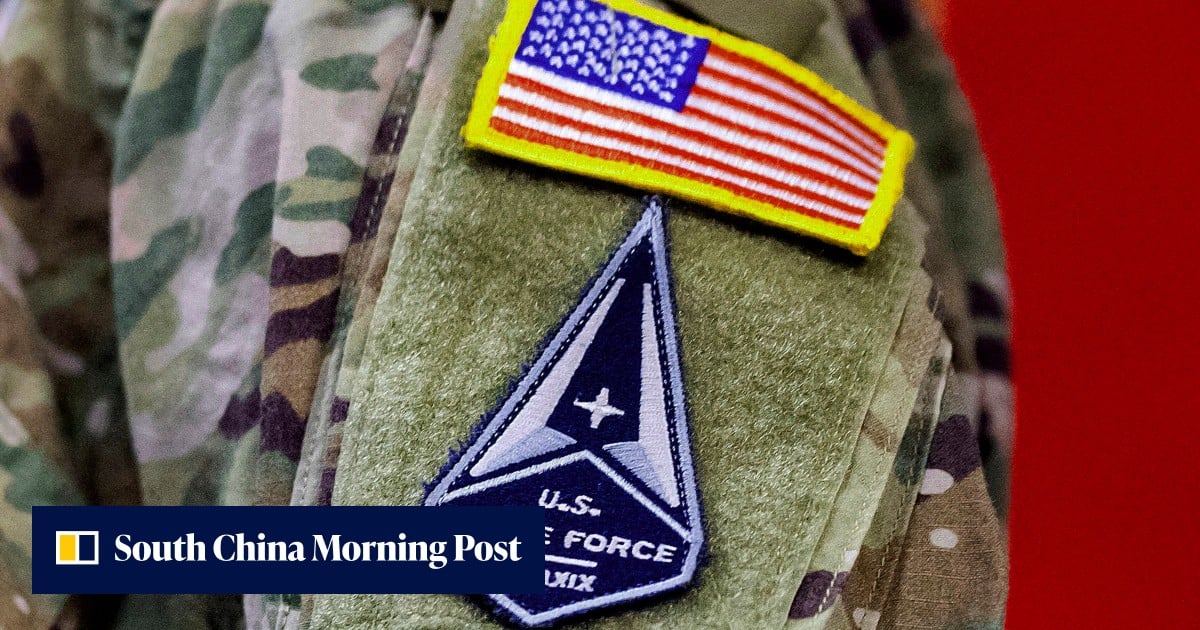
Photo via The Hindu

Unsafe space: On the U.S. and ‘on-orbit space control weapons‘

Read the original at The Hindu ↗
Cite

Contributors, A. (2026, September 21). Unsafe space: On the U.S. and ‘on-orbit space control weapons‘. The Hindu. https://www.thehindu.com/opinion/editorial/unsafe-space-on-the-us-and-on-orbit-space-control-weapons/article71476527.ece

Dated when The Aporia collected the article, usually within hours of publication. Check the original for its exact date and byline.

The Hindu · collected 2026-09-21 · by Authors; Contributors

Quick Summary

On September 14, 2026, U.S. Air Force Secretary Troy Meink announced the deployment of "on-orbit space control weapons" aimed at defending against hostile actions, a move confirmed by Space Force chief Gen. Douglas Schiess. This admission raises concerns as it aligns with military doctrines that consider both offensive and defensive operations for space control, complicating international rules governing orbital activities. The article discusses the ambiguity surrounding what constitutes "hostile action," the potential for destabilization due to unclear weapon capabilities, and the need for clearer policy guidelines to address these emerging threats in space.
Written by AI on 2026-09-22, from this article's own text only (the story summary below draws on all the coverage).

AI analysis

Story summary

On September 14, 2026, the United States Space Force confirmed it had deployed weapons into Earth's orbit for the first time. A spokesperson stated that these "on-orbit space control weapons" are designed to defend against hostile actions from adversaries but did not specify the nature of these capabilities. Both China and Russia have been developing their own space and counterspace technologies, posing threats to US interests in space.

In response, China's Foreign Ministry urged the US to halt its military buildup in orbit, warning against an arms race and weaponizing outer space. The Kremlin similarly called for space to remain free of weapons. These developments signal a growing militarization trend in Earth’s orbit, potentially leading to increased tensions between major powers.

The US move comes amid efforts by China and Russia to modernize their militaries with advanced space technologies, viewing space supremacy as crucial for future conflicts. Analysts fear this confirmation will accelerate the arms race in space among these nations.

Written for “US Deploys Space Weapons” on 2026-10-31, grounded in this article and the 23 other(s) covering the same event.

Story

📰 US Deploys Space Weapons
Politics · 24 article(s) covering the same event. Compare every outlet's account →

Compared with similar articles

This article reads leans left and hedges 8% of its claims. Each row says how that neighbour differs.
The Hindu
Hedges 5 of 37 claims Outlet record 60/100
The Hindu
Hedges 2 of 32 claims Outlet record 60/100
The Hindu
Hedges 2 of 32 claims Outlet record 60/100
Washington Examiner
⚖️ Leans left Hedges 5 of 52 claims Outlet record 70/100
The Guardian
⚖️ Leans left Hedges 7 of 47 claims Outlet record 66/100
Daily Mail
Hedges 4 of 37 claims Outlet record 68/100
“The articles discuss different perspectives on space weaponization, with Article A focusing on U.S. admission of deploying weapons and Article B warning about Russian aggression affecting satellite systems.”
South China Morning Post
Hedges 2 of 4 claims Outlet record 64/100
“Article A reports on a warning given at Beijing's Xiangshan Forum about the US deployment of space weapons potentially sparking an arms race, while Article B discusses the actual confirmation by U.S. officials that 'on-orbit space control weapons' have been deployed.”
The Hindu
Hedges 2 of 14 claims Outlet record 60/100
“The articles discuss related topics about US space weapons deployment but reference different officials and dates for key announcements.”
How this article was measured signals, leaning charts, publisher record, byline, topics and claims

Signals How these are calculated →

Claims extracted
13
sentences that state something as happening or true
Uncertain
8%
1 of 13 hedged ("reportedly", "may", "according to")
Leaning
Leans left
of the writing, not the subject · beta estimate
Publisher signals
60/100
The Hindu's corrections and hedging, across everything collected from it. Not a measure of accuracy.
Outlets on this story
24
Politics
Same framing elsewhere
1
articles that frame the event the way this one does
Analyzed 2026-09-22 · how these are computed

How this is being covered How these are calculated →

Article leaning vs. publisher reliability
Source leaning vs. consistency

Publisher

The Hindu · 907 article(s) · 2 correction(s) detected
Running correction rate · 2 correction(s)

Who wrote this

Authors; Contributors
177 article(s) here · 0 carrying a prediction
🔮 Ms. Zacharia said Ms. Guilfoyle "has been a wonderful asset to the team, and we wish her well." Ms Guilfoyle's departure comes after the possibility was previewed to the AP over the weekend, and Mr. Trump registered his unhappiness on Monday (October 12) in response to reports of her alleged conduct.
🔮 The Vatican said the surgery would be performed by a team led by Gemelli's chief thoracic surgeon, Dr. Stefano Margaritora.
🔮 U.S. intervention could prompt the Houthis to halt shipping through the Bab el-Mandeb Strait at the southern end of the Red Sea off Yemen and further restrict the flow of oil out of the Persian Gulf.
🔮 “Out of respect for the victims and the families, I will not discuss the details of what our officers encountered inside that home,” the chief said at a news conference.
🔮 He said Ukraine would halt strikes on Russian oil refineries if Moscow stopped hitting Ukraine's energy grid, after U.S. President Donald Trump blamed him for high diesel prices and said it was time for Ukraine to get a new leader.
🔮 Authorities will instead concentrate on recovery, including the restoration of roads and bridges cut off by floods, particularly in remote areas where damaged infrastructure has made aid deliveries difficult.
🔮 President Donald Trump said on Saturday (October 10, 2026) it was time for Ukraine to get a new president, suggesting Volodymyr Zelenskyy has not done enough to end his country's war with Russia and blaming him for high diesel prices in the U.S. “I suggest they get a new leader who can make a deal because he could have made many deals and for some reason he never does,” Mr. Trump said.
🔮 Claude filled out a form on the police site PhillyUnsolvedMurders.com, indicating it might have information regarding an unsolved murder listed on the site.
🔮 Fuel prices are a particularly sensitive issue for voters, who will decide on October 25 whether to elect Sen. Flavio Bolsonaro, the son of former President Jair Bolsonaro, or grant Mr. Lula a fourth, nonconsecutive term.
🔮 Vice-President J.D. Vance cast doubt on Friday (October 20, 2026) on whether the Pentagon will livestream the execution of Fort Hood shooter Nidal Malik Hasan in December but told reporters that if it is livestreamed, “I'm not going to be watching it.”
Also by Authors; Contributors
Nothing else under this byline is closely related to this article, so these are simply their most recent.
All 177 articles by Authors; Contributors →

Topics

China Russia Space Force U.S. U.S. Air Force

Subjects

U.S. GPE · 4× China GPE · 1× Douglas Schiess PERSON · 1× India GPE · 1× Meink PERSON · 1× Russia GPE · 1× Space Force ORG · 1× The U.N. Open-Ended Working Group on the ‘Prevention of an Arms Race in Outer Space’ ORG · 1× Troy Meink PERSON · 1× U.S. Air Force ORG · 1×

Narrative

While the Outer Space Treaty does not ban weapons in orbit per se, Article IV prohibits nuclear weapons or other weapons of mass destruction in orbit — a fluid line considering the centrality of satellite-based networks for contemporary society and the ability of conventional weapons to render damage en masse; its Article III also requires space activities to comply with international law.
framing: assertive · carried by 1 article(s) · first seen 2026-09-22
2026-09-22 · The Hindu
Unsafe space: On the U.S. and ‘on-orbit space control weapons‘ · assertive framing

Claims (13 extracted, 1 hedged)

Although the U.S. military doctrine was openly considering offensive and defensive space control by 2025, the admission on September 14 by U.S. Air Force Secretary Troy Meink, and confirmed by Space Force chief Gen. Douglas Schiess, that the country has deployed “on-orbit space control weapons” to “defend against hostile adversary action” is cause for concern. asserted
country → consider → concern
Satellite systems increasingly underpin communications, energy, and financial networks and many commercial systems serve civilian and military users. asserted
systems → underpin → users
To that end, the U.S., Russia, China, and India, among others, have been developing counter-space capabilities while contributing to the technological and strategic environment rendering earth orbit the next major battlefield. asserted
orbit → develop → environment
The increasing military use of commercial satellites can endanger the protections they enjoy under international humanitarian law even as this law is underprepared for satellites being highly interconnected and often dual-use. asserted
satellites → increase → law
That said, the details that justify the need for orbital defence systems also make poorly specified weapons a potential cause of instability. asserted
weapons → say → instability
Mr. Meink described the weapon as defensive, but U.S. military doctrine defines “space control” as encompassing both offensive and defensive operations. asserted
doctrine → describe → operations
Compounding the consequences of confusion when two steerable satellites approach each other without understanding the other’s intentions — including due to future autonomous satellites running artificial intelligence models onboard — is the lack of policy details. asserted
lack → compound → details
What constitutes “hostile action” and what the weapon can do remain unclear. uncertain
weapon → constitute → what
While the Outer Space Treaty does not ban weapons in orbit per se, Article IV prohibits nuclear weapons or other weapons of mass destruction in orbit — a fluid line considering the centrality of satellite-based networks for contemporary society and the ability of conventional weapons to render damage en masse; its Article III also requires space activities to comply with international law. asserted
Article → ban → law
But when an autonomous, dual-use orbital asset operated by a commercial entity initiates an unwanted defensive strike, the existing rules, including the Liability Convention, cannot be applied straightforwardly to determine accountability. asserted
rules → operate → accountability
The rules have become too coarse for what contemporary technologies, and the declining esteem for a rules-based world order, warrant. asserted
technologies → become → order
The U.N. Open-Ended Working Group on the ‘Prevention of an Arms Race in Outer Space’ should offer governments an opportunity to address the disclosure. asserted
Group → offer → disclosure
The U.S. government should also reveal the particulars of the weapons it has deployed, and enter into a multilateral governance arrangement that defines exact thresholds of action and escalation. asserted
that → reveal → action
💬Give feedback
🕘History 🎫Support