Photo via TIME

Trump and Iran Exchange Threats as Leaders Converge for Key U.N. Gathering. Can the Meeting Cool Rising Tensions?

Read the original at TIME ↗
Cite

Greene, C. (2026, September 21). Trump and Iran Exchange Threats as Leaders Converge for Key U.N. Gathering. Can the Meeting Cool Rising Tensions? TIME. https://time.com/article/2026/09/21/trump-iran-war-united-nations-general-assembly/

Dated when The Aporia collected the article, usually within hours of publication. Check the original for its exact date and byline.

TIME · collected 2026-09-21 · by Connor Greene

Quick Summary

Ahead of the United Nations General Assembly (UNGA), U.S. President Donald Trump and Iranian officials are exchanging threats amid rising tensions over Iran's war nearly seven months in. In a recent interview, Trump warned Iran about potential severe consequences if it does not "behave," while an IRGC spokesperson threatened new weapons and capabilities against the U.S. if further aggression occurs. The meeting this week offers a critical chance for mediating countries to prevent escalation and revive peace efforts, though progress may be difficult given the current strained relations and recent hostilities involving Yemen’s Houthi rebels.
Written by AI on 2026-09-22, from this article's own text only (the story summary below draws on all the coverage).

AI analysis

Story summary

As of September 2026, President Donald Trump told reporters that the U.S. is "hopefully toward the end" of its ongoing war with Iran, which began on February 28 and has lasted for seven months. Despite this hopeful statement, there are no clear timelines or significant de-escalation efforts in sight. The conflict continues to disrupt global oil supplies through the Strait of Hormuz, pushing up oil prices to over $108 per barrel. Additionally, Iran's foreign minister is under pressure from China and international concerns to reopen the strait and return to a previous interim peace deal with the U.S.

Meanwhile, tensions have escalated beyond Iran into Yemen, where Houthi rebels, aligned with Iran, pose significant threats near the Red Sea, complicating efforts at regional stability. The conflict has also drawn in other nations such as Saudi Arabia, which is offering extra crude oil through Oman to ease supply disruptions and stabilize oil prices.

At the United Nations General Assembly, Trump further alarmed global leaders by threatening to "annihilate" Iran if necessary, raising concerns about the potential for catastrophic outcomes involving nuclear weapons. This rhetoric contrasts sharply with past U.S. presidents who emphasized caution regarding such extreme measures. Despite these challenges, there is an urgent need for multilateral solutions and effective engagement through international bodies like the UN to address ongoing conflicts and crises around the world.

Written for “Trump's UN Speech Controversies” on 2026-10-31, grounded in this article and the 206 other(s) covering the same event.

Story

📰 Trump's UN Speech Controversies
Politics · 207 article(s) covering the same event. See how they differ ↓

Compared with similar articles

This article reads unscored and hedges 25% of its claims. Each row says how that neighbour differs.
ABC News (US)
⚖️ Centre Hedges 4 of 41 claims Outlet record 70/100
Euronews
Hedges 1 of 31 claims Outlet record 60/100
BBC News
Hedges 0 of 2 claims Outlet record 68/100
The Straits Times
Hedges 2 of 28 claims Outlet record 66/100
“The articles describe different phases of diplomatic interactions between the U.S. and Iran at the UN General Assembly: one covers threats exchanged before the assembly, while the other reports on shuttle talks that happened later.”
Dawn
Hedges 1 of 25 claims Outlet record 72/100
“The articles describe different aspects of the UNGA happening but do not refer to the same specific incident or outcome. Article A discusses tensions and threats between the US and Iran, while Article B focuses on Netanyahu's security concerns during his visit.”
The Straits Times
⚖️ Leans strongly left Hedges 2 of 14 claims Outlet record 66/100
“While both articles discuss Trump's involvement at the UN General Assembly and mention tensions with Iran, they describe different aspects of the event and do not focus on a single specific incident.”
Al Jazeera
Hedges 0 of 2 claims Outlet record 60/100
“Article A describes threats and tensions leading up to the UNGA meeting, while Article B reports on a positive outcome of an actual meeting between US and Iranian officials at the UNGA.”
The Straits Times
Hedges 1 of 14 claims Outlet record 66/100
“While both articles discuss Iranian leaders attending the UN General Assembly in New York, they describe different stages of this event: Article A is about the decision to allow attendance, while Article B covers threats and tensions during the actual gathering.”
New York Post
⚖️ Leans right Hedges 0 of 18 claims Outlet record 66/100
“While both articles discuss the UN General Assembly in New York, Article A focuses on security measures and gridlock issues for the assembly, while Article B covers tensions between the U.S. and Iran leading up to the event.”
How this article was measured signals, leaning charts, publisher record, byline, topics and claims

Signals How these are calculated →

Claims extracted
44
sentences that state something as happening or true
Uncertain
25%
11 of 44 hedged ("reportedly", "may", "according to")
Leaning
withheld
no quote in the article backed the model's score
Publisher signals
59/100
TIME's corrections and hedging, across everything collected from it. Not a measure of accuracy.
Outlets on this story
207
Politics
Same framing elsewhere
1
articles that frame the event the way this one does
Analyzed 2026-09-22 · how these are computed

How this is being covered How these are calculated →

Article leaning vs. publisher reliability
Source leaning vs. consistency

Publisher

TIME · 779 article(s) · 2 correction(s) detected
Running correction rate · 2 correction(s)

Who wrote this

Connor Greene
24 article(s) here · 1 carrying a prediction
🔮 The fate of Congress hangs in the balance as the outcome of a few key races will determine which party controls the House and Senate for the remainder of Donald Trump's presidency.
2026-10-30 · assertive framing · The Key Congressional Races to Watch on Election Night
🔮 “His sonorous voice and singular talent will forever be synonymous with indelible performances in every genre,” the statement read.
🔮 He would read through the credits of movies, looking for names like “Garcia,” “Hernandez,” and “Rodriguez,” or scan the library for books by Latino authors.
🔮 But with early voting for the midterms underway in nearly every state, tens of millions of Americans have already cast their ballots, offering an initial glimpse into how the pivotal elections may play out.
🔮 Trump said that the decision was ultimately hers, and that he would speak with Zacharia following a trip to Georgia.
🔮 “A lot of times people don’t know what they’re looking for, they can’t describe it, and so perhaps we offer you a journey that will resonate,” she said.
🔮 Griffiths acknowledged the uncertainty that comes with rapidly developing tech, but he said that human decision-making will determine the impact of that advancement—for good or ill.
🔮 “A lot of times people don’t know what they’re looking for, they can’t describe it, and so perhaps we offer you a journey that will resonate,” she said.
🔮 Then, between three and five people with high-powered rifles will fire at the target.
🔮 Zacharia would replace Karoline Leavitt, who stepped down in August, in the position.
Also by Connor Greene
Nothing else under this byline is closely related to this article, so these are simply their most recent.
All 24 articles by Connor Greene →

Topics

Iran Iranian New York U.N. General Assembly U.S.

Subjects

Iran GPE · 12× U.S. GPE · 8× Trump PERSON · 5× Iranian NORP · 3× Saudi Arabia GPE · 3× New York GPE · 2× Oman GPE · 2× U.N. ORG · 2× U.N. General Assembly ORG · 2× Vaez PERSON · 2×

Narrative

“This week in New York, there is an opportunity, especially for the mediating countries, to try to prevent tensions from once again spiraling, and potentially this time spiraling out of control,” says Ali Vaez, the deputy program director for the Middle East and North Africa at the International Crisis Group.
framing: mixed · carried by 1 article(s) · first seen 2026-09-22
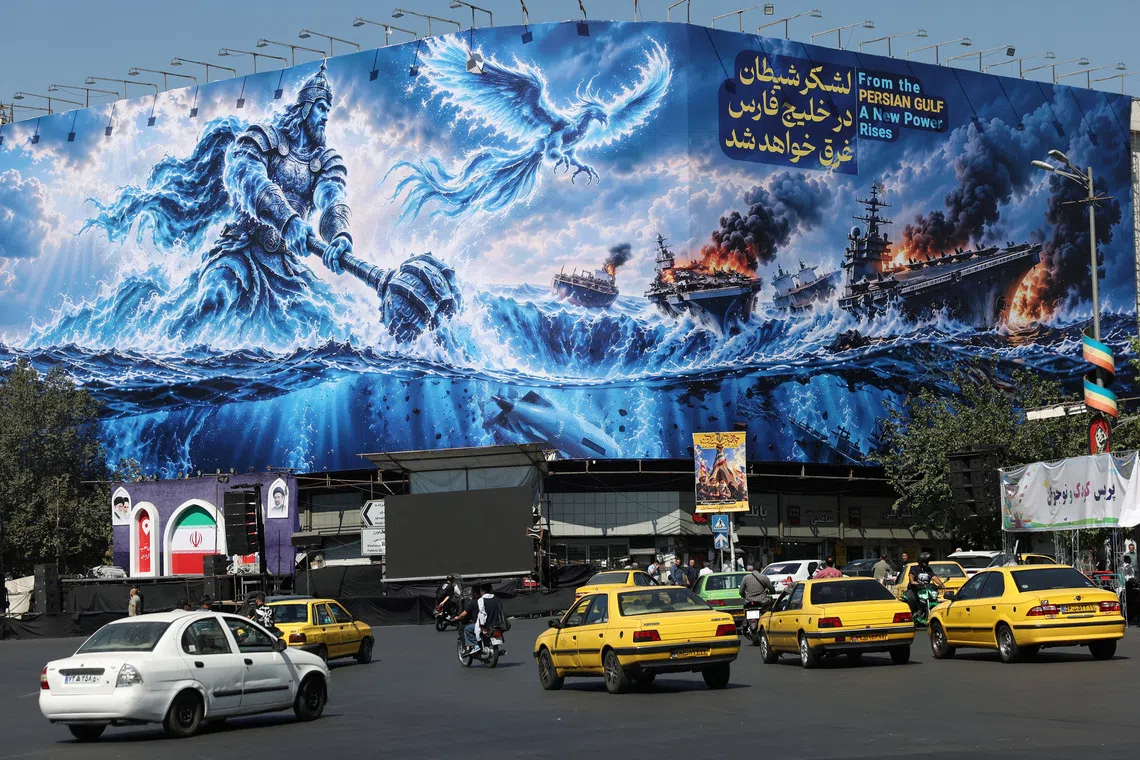
🔮 Delegations from the U.S. and Iran are traveling to New York for the world’s largest diplomatic gathering this week in what experts say could be a key moment for determining the direction of the Iran war nearly seven months in.

Claims (44 extracted, 11 hedged)

Delegations from the U.S. and Iran are traveling to New York for the world’s largest diplomatic gathering this week in what experts say could be a key moment for determining the direction of the Iran war nearly seven months in. uncertain
experts → travel → war
Tensions between the warring countries are mounting ahead of the United Nations General Assembly (UNGA), with Iranian leaders and President Donald Trump exchanging a fresh round of threats. asserted
leaders → war → threats
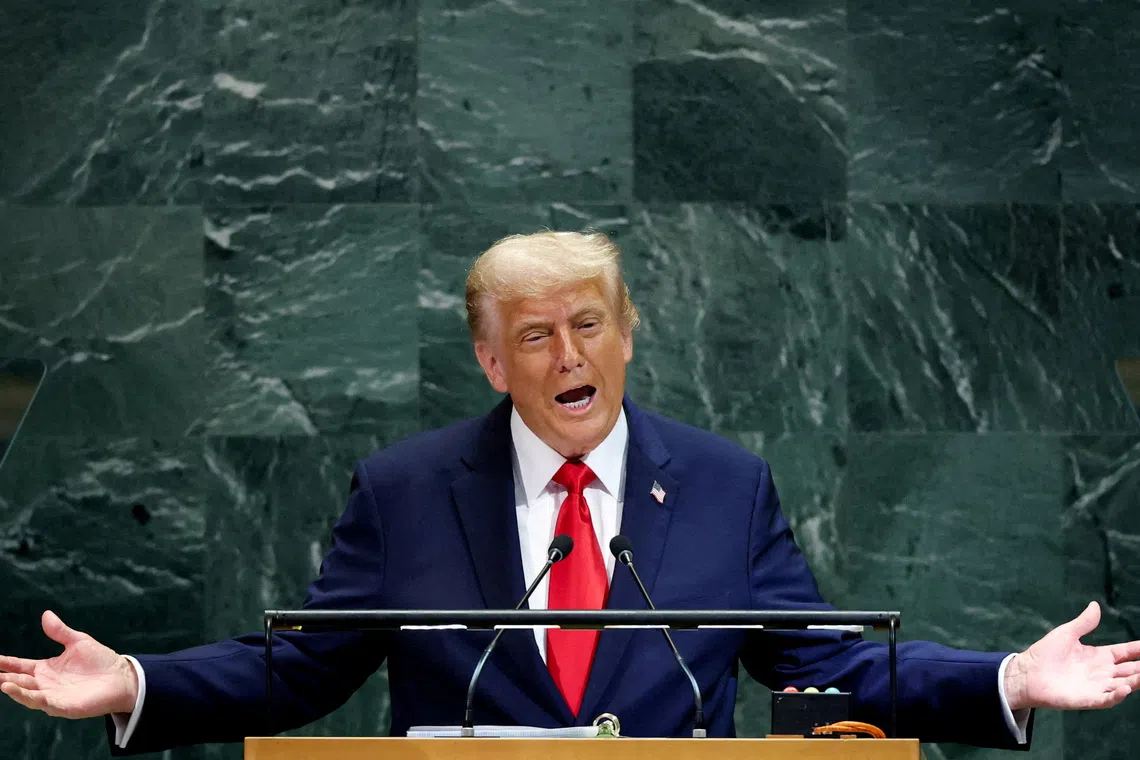
Trump on Sunday weighed whether he should “blow the entire nation up” in an interview with Fox News, warning that Iran “better behave” and saying that “very big things” would happen in the war, without offering more detail. asserted
things → weigh → detail
According to the outlet, Trump described his options as “wiping Iran out, letting them rot economically, or making a deal.” uncertain
them → accord → deal
A spokesperson for Iran’s Islamic Revolutionary Guard Corps (IRGC), Hossein Mohebbi, responded with a warning that if the U.S. were to launch fresh attacks against Iran, Tehran would use “new weapons and capabilities,” according to Iran's Fars news agency. uncertain
Tehran → respond → agency
“If a new aggression takes place, we will definitely change the weapons and geography of the war,” Mohebbi said. asserted
Mohebbi → take → war
The threats come after active hostilities in the conflict resumed in the last month when the U.S. and Iran traded fresh strikes amid tensions over the Strait of Hormuz, a key waterway in the global oil market. asserted
U.S. → come → market
Meaningful negotiations between the two countries have meanwhile been stalled for weeks following the breakdown of a memorandum of understanding leaders signed in June. asserted
leaders → stall → June
And Yemen’s Iranian-backed Houthi rebels have further shaken the Gulf region by launching attacks against Saudi Arabia and capturing Perim Island, a strategic foothold in the Bab El-Mandeb Strait, another vital maritime trade route in the region. asserted
rebels → back → region
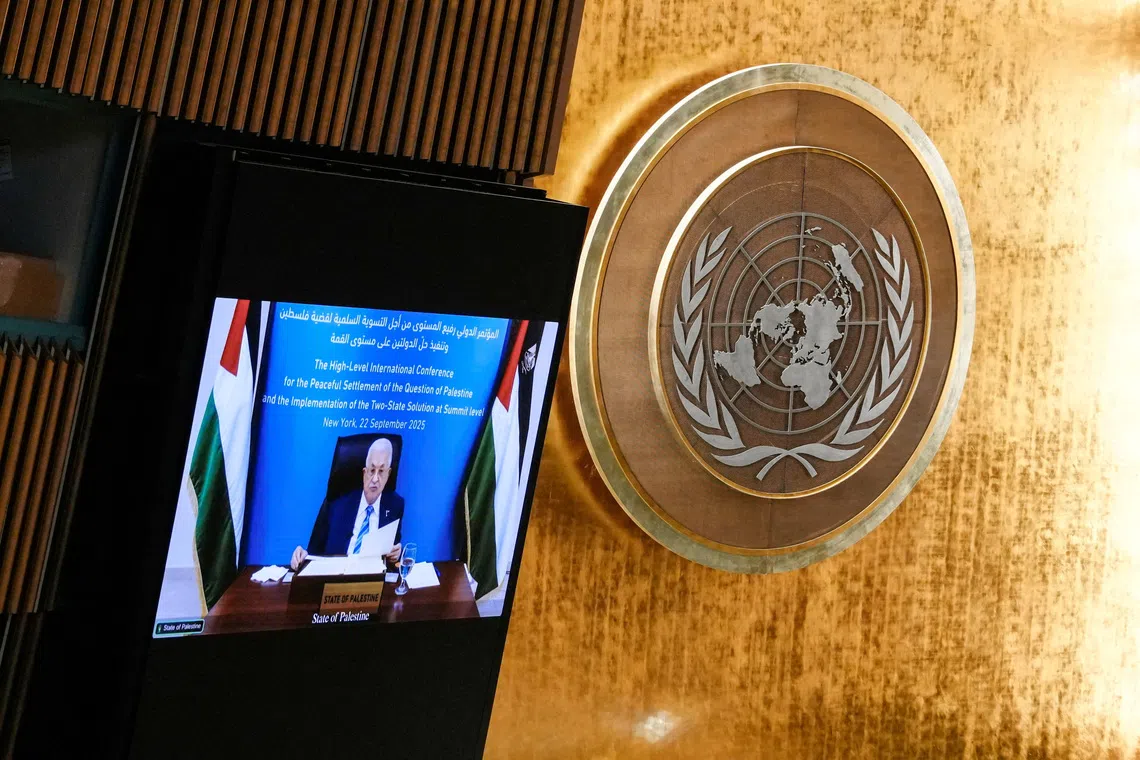
Experts tell TIME that the U.N. General Assembly gathering, where delegations from Iran, the U.S., and key Gulf states will be in attendance, could offer a critical chance to deescalate the situation and attempt to revive peace efforts—although making progress in negotiations could be an uphill battle. uncertain
making → tell → negotiations
“This week in New York, there is an opportunity, especially for the mediating countries, to try to prevent tensions from once again spiraling, and potentially this time spiraling out of control,” says Ali Vaez, the deputy program director for the Middle East and North Africa at the International Crisis Group. asserted
Vaez → be → Group
“It's the last best opportunity to try to prevent an escalation either in October or in November. asserted
It → try → November
What to expect at this week’s U.N. General Assembly Top officials from the U.S. and Iran will be present at the U.N. meeting this week, including Trump, Secretary of State Marco Rubio, and U.S. ambassador to the U.N. Mike Waltz. asserted
officials → expect → U.N.
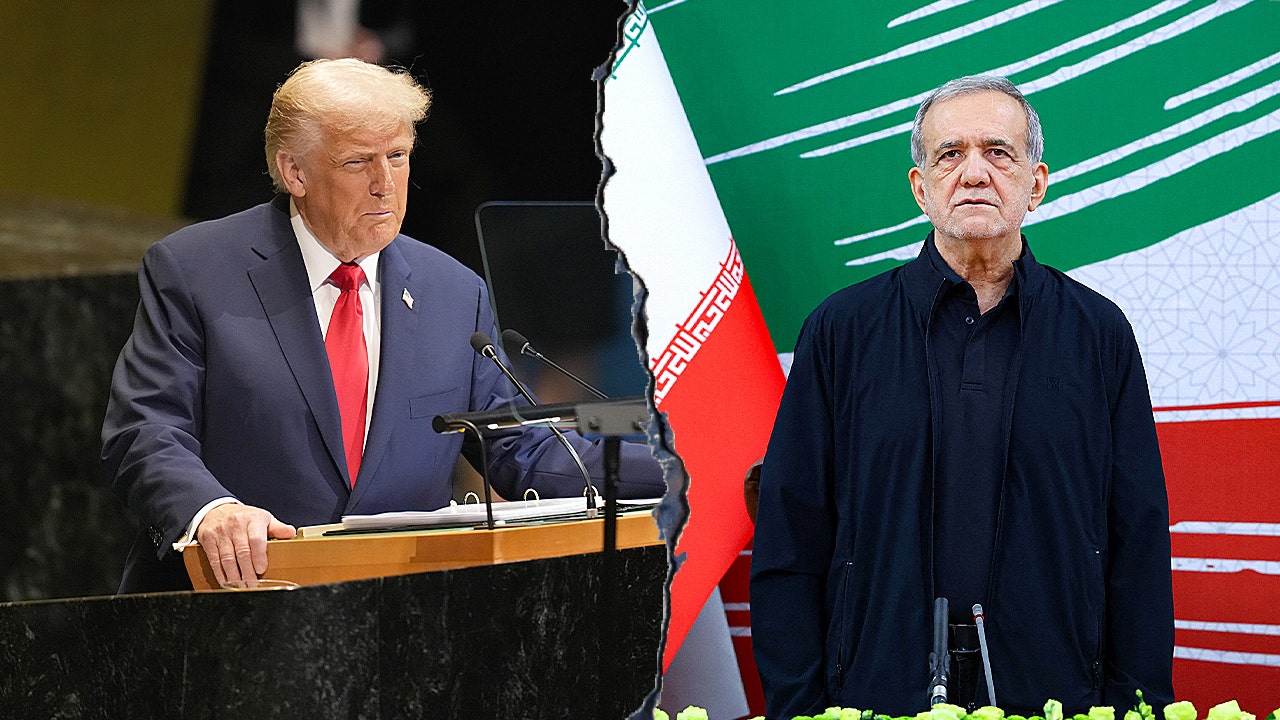
Iranian President Masoud Pezeshkian and Foreign Minister Abbas Araghchi will be in attendance as part of a slimmed-down delegation from the country. asserted
Pezeshkian → slimme → country
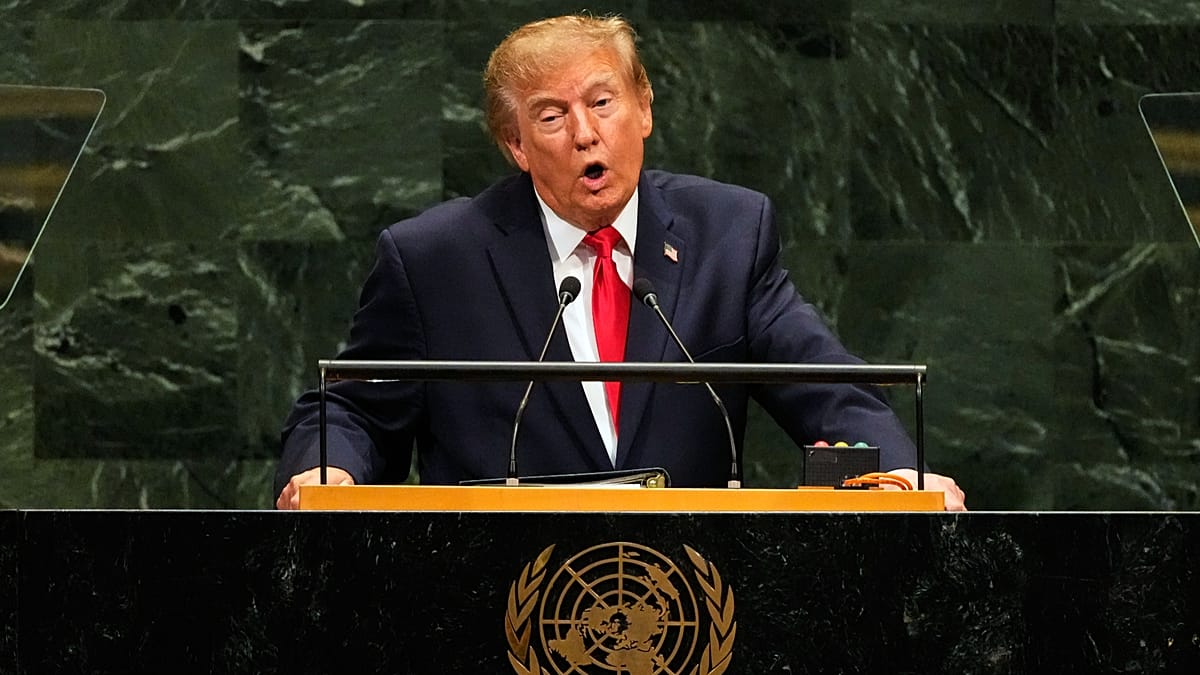
Both Trump and Pezeshkian are set to deliver addresses to the assembly. asserted
Trump → set → assembly
Vaez says, however, that any effort to revive peace talks between the two countries during the event will largely rely on mediation by Gulf states. asserted
effort → say → states
Trump is set to hold talks with leaders from the Gulf Cooperation Council—a regional alliance including Saudi Arabia, the United Arab Emirates, Qatar, Kuwait, Oman, and Bahrain—on the sidelines of the gathering in the coming days. asserted
Trump → set → days
Sources with knowledge of the anticipated meeting told Axios, which first reported the news, that discussions are expected to concern next steps in the war with Iran, with a focus on U.S. ideas for a strategy after the conflict concludes. asserted
conflict → anticipate → strategy
Vaez believes that the Qataris could play a leading role in mediation efforts, with the support of countries such as Saudi Arabia, Oman, Turkey, Pakistan, and Egypt. uncertain
Qataris → believe → Arabia
“It all depends on whether the mediating countries would be able to find a mutually acceptable formula,” he says of the possibility of the U.S. and Iran coming to some kind of agreement. asserted
U.S. → depend → agreement
“Because at this moment, both sides are in a zero-sum situation in which there is literally no overlap between what the Iranians demand and what the U.S. is seeking to achieve. asserted
U.S. → be → what
Given what he characterized as maximalist demands from both the U.S. and Iran, Vaez contends that “some sort of a sweetener,” or incentive, must be given to each side for a deal to be reached, which he says may come in the form of revisions to the now-expired memorandum of understanding. uncertain
he → give → understanding
Sanam Valki, director of the Middle East and North Africa Programme at the policy institute Chatham House, agrees that it is far more likely that Gulf states mediate between Iran and the U.S. asserted
states → agree → Iran
But, she adds, a direct exchange between U.S. and Iranian delegations is also a possibility—albeit a very slim one. asserted
exchange → add → one
“The big question out there is: Will there be some sort of surprise encounter between the Iranians and the U.S.?” Valki says. asserted
Valki → say → Iranians
Trump told Fox News’ Trey Yingst on Sunday that he would be willing to meet with Pezeshkian during the U.N. gathering. asserted
he → tell → gathering
Beyond either mediated or direct discussions during the event, another potential outcome of this week’s General Assembly meeting is a United Nations Security Council Resolution regarding the Iran conflict, Vaez says. asserted
Vaez → mediate → conflict
Unlike a memorandum of understanding like the one the U.S. and Iran previously reached, a security resolution would be legally binding by international law and would compel both parties to abide by certain conditions in the war. asserted
resolution → reach → war
Adopting a resolution would require the votes of at least nine out of the 15 members of the security council. asserted
Adopting → adopt → council
And as a complicating factor, the U.S.—as well as the other four permanent members—would have the ability to defeat any such measure by casting a veto. asserted
U.S.—as → complicate → veto
How could the U.N. meeting impact the Iran war moving forward? uncertain
meeting → impact → war
“This is a very important week at UNGA for regional states, as well as the Iranians themselves, to try and roll back or manage how things evolve,” Valki tells TIME. asserted
Valki → try → TIME
“The President is very clearly weighing and considering the military options that are on his desk, which include not just responding to the Houthis, but another round of serious and severe strikes against the Islamic Republic. asserted
which → weigh → Republic
If a direct exchange between the U.S. and Iranian delegations does unexpectedly occur during the gathering, she says, “it's a big deal. asserted
it → occur → gathering
It means that the Iranian president is willing to risk his standing at home, attacks at home, in order to stave off a serious military attack and build a direct lifeline to the Trump team. asserted
president → mean → team
Up until now, both sides have sought “maximalist outcomes with minimal concessions,” Valki says. asserted
Valki → seek → concessions
But Iran, through direct conversation with the U.S. delegation, could “signal a more transformational type of policy outreach, rather than the defensive reaction of traditional hardliners in the country.” uncertain
Iran → signal → country
On Trump’s end, Vaez says the President could potentially make concessions to Iran by removing naval blockades on Iranian ports, rolling back sanctions against Tehran, or returning access to certain frozen assets. uncertain
President → say → assets
“That's what the President can put on the table … asserted
President → put → table
The most important thing for Iranians is economic reprieve and that's precisely where President Trump has tremendous leverage.” asserted
Trump → have → leverage
…and 4 more, not listed.

💬Give feedback
🕘History 🎫Support