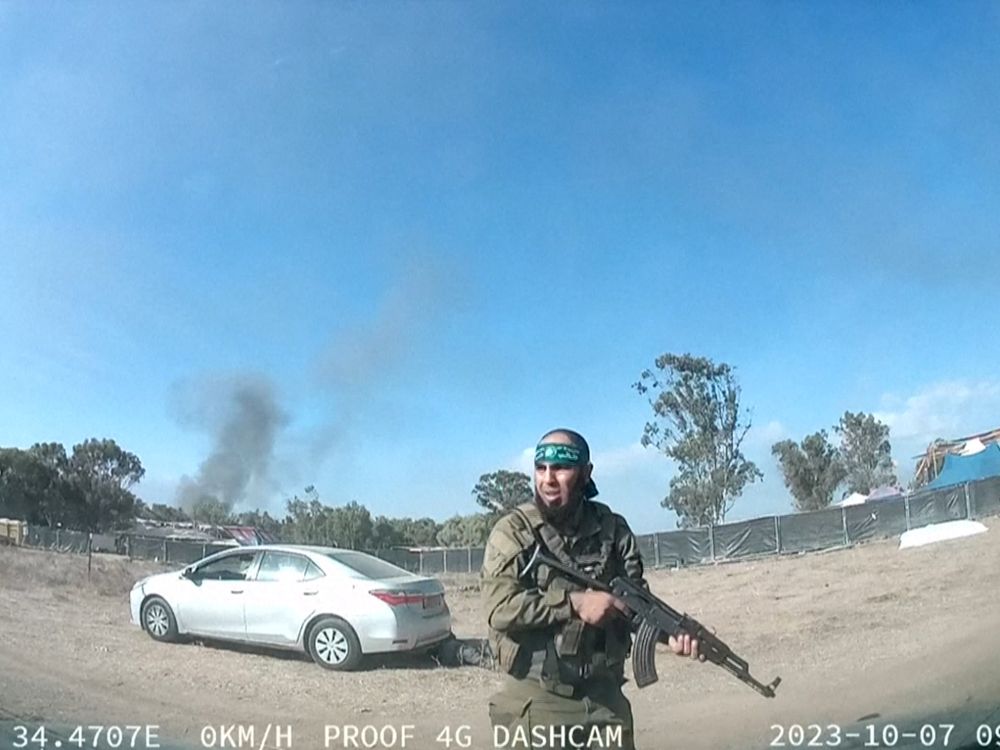
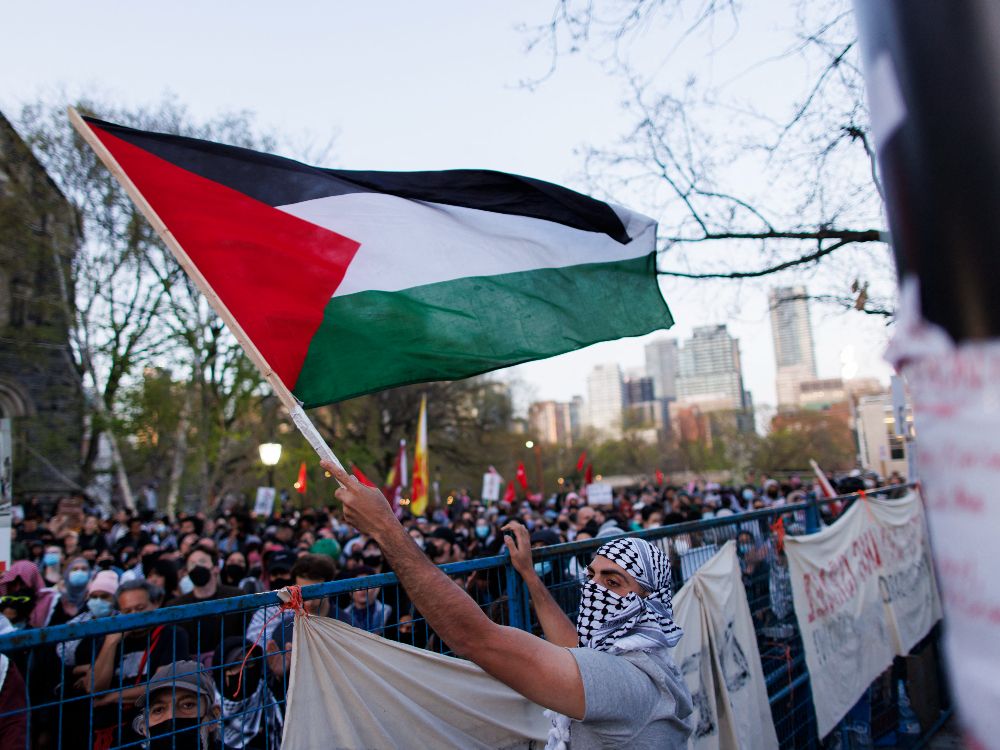
Photo via New York Post

Journalist admits: Anti-Israel narrative driving protests is based on Hamas lies

Read the original at New York Post ↗
Cite

Sharawi, A. (2026, September 22). Journalist admits: Anti-Israel narrative driving protests is based on Hamas lies. New York Post. https://nypost.com/2026/09/21/opinion/journalist-admits-anti-israel-narrative-driving-protests-is-based-on-hamas-lies/

Dated when The Aporia collected the article, usually within hours of publication. Check the original for its exact date and byline.

New York Post · collected 2026-09-22 · by Ahmad Sharawi

Quick Summary

Motaz Azaiza, an ex-Gaza journalist, reveals that SMART, a Hamas-controlled network, has manipulated media coverage in Gaza for nearly two decades. Journalists were forced into self-censorship under threats from Hamas if they deviated from the group's narrative. This led to false claims about Israel being widely accepted as truth in Western media and on college campuses. Azaiza highlights how Hamas trained journalists to promote its agenda while punishing those who criticized it, such as arresting Mohammed Othman for exposing medical errors. The article emphasizes how this control over information has shaped global perceptions of the conflict.
Written by AI on 2026-09-22, from this article's own text only (the story summary below draws on all the coverage).

AI analysis

Story summary

Motaz Azaiza, an acclaimed Palestinian journalist who has received honors like being named to the Time 100 list and GQ’s Middle East Man of the Year, admitted in a podcast interview that he suppressed footage showing Israeli hostages beaten by Palestinians during Hamas's control over Gaza on October 7, 2023. Azaiza explained that he chose not to publish the videos out of fear for the lives of those captured on film, believing Israel might target them. He also revealed that all media in Gaza is controlled through a single WhatsApp group run by Hamas, and journalists face severe repercussions if they defy the terror group’s directives. This admission highlights how reports from Gaza may have been influenced or censored to align with Hamas's narrative over nearly two decades.

Written for “Gaza Reporting Bias” on 2026-11-05, grounded in this article and the 3 other(s) covering the same event.

Story

📰 Gaza Reporting Bias
Politics · 4 article(s) covering the same event. See how they differ ↓

Compared with similar articles

This article reads leans strongly right and hedges 10% of its claims. Each row says how that neighbour differs.
New York Post
⚖️ Leans strongly right Hedges 2 of 26 claims Outlet record 66/100
National Post
Hedges 4 of 25 claims Outlet record 60/100
“The articles discuss different aspects of media reporting related to the Israel-Hamas conflict but describe distinct events and sources.”
National Post
Hedges 0 of 18 claims Outlet record 60/100
“The articles discuss different topics within the broader context of anti-Israel sentiment: one focuses on a research group at the University of Toronto, while the other discusses media manipulation by Hamas.”
Al Jazeera
⚖️ Leans strongly left further left than this Hedges 6 of 72 claims Outlet record 60/100
“The articles discuss different aspects of media coverage in Gaza with distinct narratives, one focusing on Palestinian journalists and their challenges during an intense period, while the other focuses on revelations about Hamas-controlled reporting over nearly two decades.”
The Hindu
⚖️ Leans right further left than this Hedges 1 of 48 claims Outlet record 60/100
“The articles discuss different aspects and speakers related to the conflict in Gaza, but they describe separate events: one focuses on a journalist's admission about Hamas media control and the other on Netanyahu’s speech at the UN denying genocide accusations.”
Al Jazeera
⚖️ Leans strongly left further left than this Hedges 1 of 17 claims Outlet record 60/100
“The articles describe different events: one is about a journalist revealing Hamas's control over media narratives, while the other reports on Al Jazeera rejecting Netanyahu's criticism during his UN speech.”
Al Jazeera
Hedges 0 of 3 claims Outlet record 60/100
“The articles discuss different topics: one focuses on a journalist exposing Hamas-controlled media narratives, while the other is about Netanyahu's criticism of Al Jazeera.”
Al Jazeera
⚖️ Leans strongly left further left than this Hedges 3 of 51 claims Outlet record 60/100
“The articles discuss different narratives surrounding Israel and Palestine but do not describe the same specific incident.”
The Dispatch
Hedges 0 of 4 claims Outlet record 61/100
“The articles discuss different topics related to media coverage of Israel but do not describe the same specific incident.”
New York Post
⚖️ Leans strongly right Hedges 0 of 28 claims Outlet record 66/100
“Article A describes a journalist admitting to burying footage of Israeli hostages being beaten, while Article B discusses broader revelations about Hamas controlling media narratives over nearly two decades.”
How this article was measured signals, leaning charts, publisher record, byline, topics and claims

Signals How these are calculated →

Claims extracted
30
sentences that state something as happening or true
Uncertain
10%
3 of 30 hedged ("reportedly", "may", "according to")
Leaning
Leans strongly right
of the writing, not the subject · beta estimate
Publisher signals
66/100
New York Post's corrections and hedging, across everything collected from it. Not a measure of accuracy.
Outlets on this story
4
Politics
Same framing elsewhere
1
articles that frame the event the way this one does
Analyzed 2026-09-22 · how these are computed

How this is being covered How these are calculated →

Article leaning vs. publisher reliability
Source leaning vs. consistency

Publisher

New York Post · 17225 article(s) · 36 correction(s) detected
Running correction rate · 36 correction(s)

Who wrote this

Ahmad Sharawi
2 article(s) here · 1 carrying a prediction
🔮 In May, Treasury Secretary Scott Bessent said Washington would move to deny Iran’s main carriers’ landing rights.
🔮 But the message was not only one of encouragement: The terror group made it clear that reporters would pay a steep price if they did not adhere to the Hamas line.
Also by Ahmad Sharawi
Nothing else under this byline is closely related to this article, so these are simply their most recent.

Topics

Gaza Gazan Hamas Israel SMART

Subjects

Hamas ORG · 22× Gaza GPE · 11× Gazan NORP · 4× Israel GPE · 4× Al Jazeera ORG · 3× Azaiza PERSON · 2× Abu Ubayda PERSON · 1× Interior Ministry ORG · 1× Motaz Azaiza PERSON · 1× SMART ORG · 1×

Narrative

By the time their material reached international newsrooms, the intimidation and coercion that shaped the information-gathering the information had all but vanished. And the self-censorship hasn’t been limited to Gazan journalists: Regional Arabic outlets have done the same.
framing: assertive · carried by 1 article(s) · first seen 2026-09-22
🔮 But the message was not only one of encouragement: The terror group made it clear that reporters would pay a steep price if they did not adhere to the Hamas line.

Claims (30 extracted, 3 hedged)

Journalist Motaz Azaiza’s new revelations exposing “SMART,” a Hamas-controlled group of reporters used to manage the media narrative about Gaza, reveal uncomfortable but important truths about nearly two decades of journalism. asserted
revelations → expose → journalism
The world has relied on a media ecosystem that forced journalists to operate within red lines set by Hamas — under threat of punishment if their coverage ever crossed the terror group. asserted
coverage → rely → group
That reality was too often lost by the time Gaza’s stories reached Western TV screens and newspaper pages — and it drove college-campus protests and breathless claims by so-called activists, as false allegations emerging from the coastal enclave were repeated as unquestioned facts. uncertain
allegations → lose → facts
But Azaiza’s revelation should come as no surprise: Ever since its violent takeover after Gaza’s 2007 civil war, Hamas has tightly controlled the narrative to influence the story that reaches the outside world. asserted
that → come → world
Its goal has been to shape positive coverage of its iron-fisted rule and to legitimize its narrative of “resistance” — that is, violence against Israel. asserted
that → shape → Israel
In 2013, Hamas’ Interior Ministry brought Gazan journalists and social-media activists together for a workshop, coaching them on how to report news in Gaza. asserted
Ministry → bring → Gaza
Among the attendees was Abu Ubayda, Hamas’ infamous military spokesman and one of its most prominent propagandists, who was eliminated by Israel in 2025. asserted
who → eliminate → 2025
Hamas made it clear during the session that the press’ role is “no less important than that of the resistance on the ground.” asserted
is → make → ground
But the message was not only one of encouragement: The terror group made it clear that reporters would pay a steep price if they did not adhere to the Hamas line. asserted
they → make → line
In 2016, Hamas arrested Mohammed Othman, a journalist working for al-Monitor, for exposing medical errors occurring in Gaza’s hospitals. asserted
Hamas → arrest → hospitals
Hamas later barred him from entering those facilities. asserted
Hamas → bar → facilities
In 2019, Hamas detained 12 journalists for covering protests against Hamas’ rule and the economic situation in Gaza. asserted
Hamas → detain → Gaza
The repression of reporters hasn’t eased after Oct. 7, 2023, or during the war that followed. asserted
that → ease → war
In at least three cases during the war, Gazan journalists said Hamas fighters beat them or threatened them after they reported on locals who blamed the terror group for bringing destruction to Gaza. asserted
who → say → Gaza
The journalists said Hamas explicitly ordered them to stop reporting on local discontent. asserted
Hamas → say → discontent
It was intended to keep those voices from reaching international audiences, to preserve Hamas’ narrative that Israel alone was to blame for all Gaza’s problems, and to silence any Gazan saying otherwise. asserted
Israel → intend → Gazan
That is what makes Azaiza’s account significant. asserted
account → make → ?
Beyond shaping the media reality in Gaza, reporters’ self-censorship distorted the picture the outside world saw. asserted
world → shape → picture
Western media outlets relied heavily on local journalists for on-the-ground reporting, while often missing a crucial reality: Any criticism of Hamas was unlikely to make it on camera, and who feared crossing the terror group meant basic facts became hard to document. asserted
facts → rely → group
By the time their material reached international newsrooms, the intimidation and coercion that shaped the information-gathering the information had all but vanished. And the self-censorship hasn’t been limited to Gazan journalists: Regional Arabic outlets have done the same. asserted
outlets → reach → same
Al Jazeera has repeatedly cut off Gazans who criticized Hamas on air — hardly a surprise, given that Qatar, a financial sponsor of Hamas, owns Al Jazeera. asserted
Qatar → cut → Jazeera
Israel has since revealed that several Al-Jazeera employees in Gaza were Hamas fighters masquerading as journalists. asserted
employees → reveal → journalists
The Qatari-funded network has long taken guidance from Hamas on how to cover Gaza. asserted
network → fund → Gaza
A 2022 document showed how Hamas instructed Al Jazeera to lie about a failed rocket launch that killed Palestinian civilians, telling the network to avoid the word “massacre” and steer clear of criticism of Hamas. asserted
that → show → Hamas
A 2023 document further showed that Hamas moved to create a secure line for classified communications between the network and the terror group. asserted
Hamas → show → network
For nearly two decades, Hamas has operated a media ecosystem based on fear. asserted
Hamas → operate → fear
Journalists learned what they could say and what they could film. uncertain
they → learn → what
Western audiences rarely saw those constraints, and some ended up absorbing Hamas’ preferred narrative. asserted
some → see → narrative
That should force a reckoning among the activists and celebrities who swallowed claims out of Gaza whole, without asking who controlled what could be reported. uncertain
what → force → Gaza
And a looming question remains: How many US and international media outlets rely on SMART “fixers” — locals who arrange for meetings and translate Arabic to English — in their reporting? asserted
who → loom → reporting

💬Give feedback · no sign-in needed

No sign-in needed for now. Your note is sent without a name, so it cannot be answered.

🕘History 🎫Support