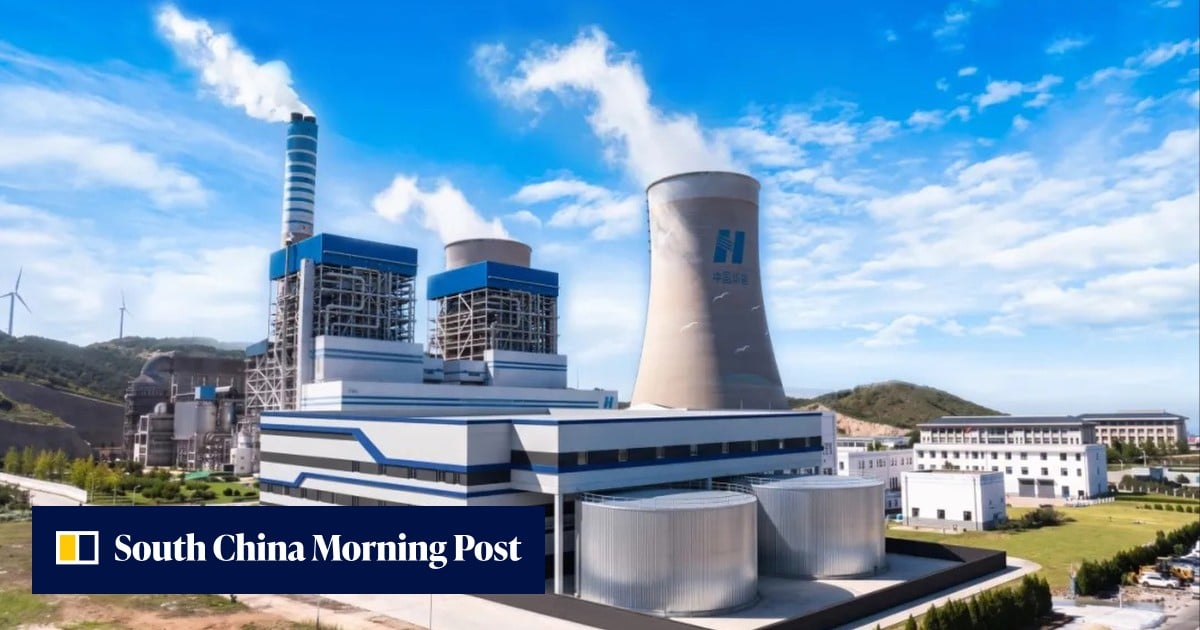
Photo via South China Morning Post

China breaks ground on the world’s first supercritical CO2 and molten salt energy plant

Read the original at South China Morning Post ↗
Cite

Bela, V. (2026, September 22). China breaks ground on the world’s first supercritical CO2 and molten salt energy plant. South China Morning Post. https://www.scmp.com/news/china/science/article/3368337/china-breaks-ground-worlds-first-supercritical-co2-and-molten-salt-energy-plant?utm_source=rss_feed

Dated when The Aporia collected the article, usually within hours of publication. Check the original for its exact date and byline.

South China Morning Post · collected 2026-09-22 · by Victoria Bela

Quick Summary

China has started construction on the world’s first utility-scale power plant that combines supercritical CO2 technology with molten salt energy storage in Shandong province. The Ruitan demonstration project broke ground at China Huaneng’s Bajiao power station on September 16 and is set to begin operations next year. This facility aims to reduce waste by using excess electricity from coal units to heat molten salt, which then powers a supercritical CO2 unit during peak demand periods. The first phase will include a 50-megawatt supercritical CO2 unit and a 100-megawatt (400 megawatt-hours) molten salt storage system.
Written by AI on 2026-09-22, from this article's own text only (the story summary below draws on all the coverage).

AI analysis

Story summary

On September 16, China broke ground on the world’s first utility-scale combined supercritical carbon dioxide power generation and molten salt energy storage project at China Huaneng’s Bajiao power station in Yantai, Shandong province. The project aims to reduce energy waste and improve grid stability by utilizing surplus electricity generated during low-demand periods to heat up molten salt, which is then used to produce electricity when demand peaks. The first phase of the Ruitan demonstration project includes a 50-megawatt supercritical unit and a 100-megawatt (or 400-megawatt-hour) molten salt energy storage system. According to state news agency Xinhua, the project is expected to go into operation next year.
Written for “Chinese Supercritical Energy Plant Co…” on 2026-11-03, grounded in this article and the 0 other(s) covering the same event.

Story

📰 Chinese Supercritical Energy Plant Co…
Environment · 1 article(s) covering the same event.

Compared with similar articles

Nothing to compare against. No article is close enough to this one for the pipeline to have linked or judged the pair.
How this article was measured signals, leaning charts, publisher record, byline, topics and claims

Signals How these are calculated →

Claims extracted
6
sentences that state something as happening or true
Uncertain
33%
2 of 6 hedged ("reportedly", "may", "according to")
Leaning
not political
takes no side on a contested political question
Publisher signals
62/100
South China Morning Post's corrections and hedging, across everything collected from it. Not a measure of accuracy.
Outlets on this story
1
Environment
Same framing elsewhere
1
articles that frame the event the way this one does
Analyzed 2026-09-22 · how these are computed

How this is being covered How these are calculated →

Article leaning vs. publisher reliability
Source leaning vs. consistency

Publisher

South China Morning Post · 3690 article(s) · 8 correction(s) detected
Running correction rate · 8 correction(s)

Who wrote this

Victoria Bela
15 article(s) here · 1 carrying a prediction
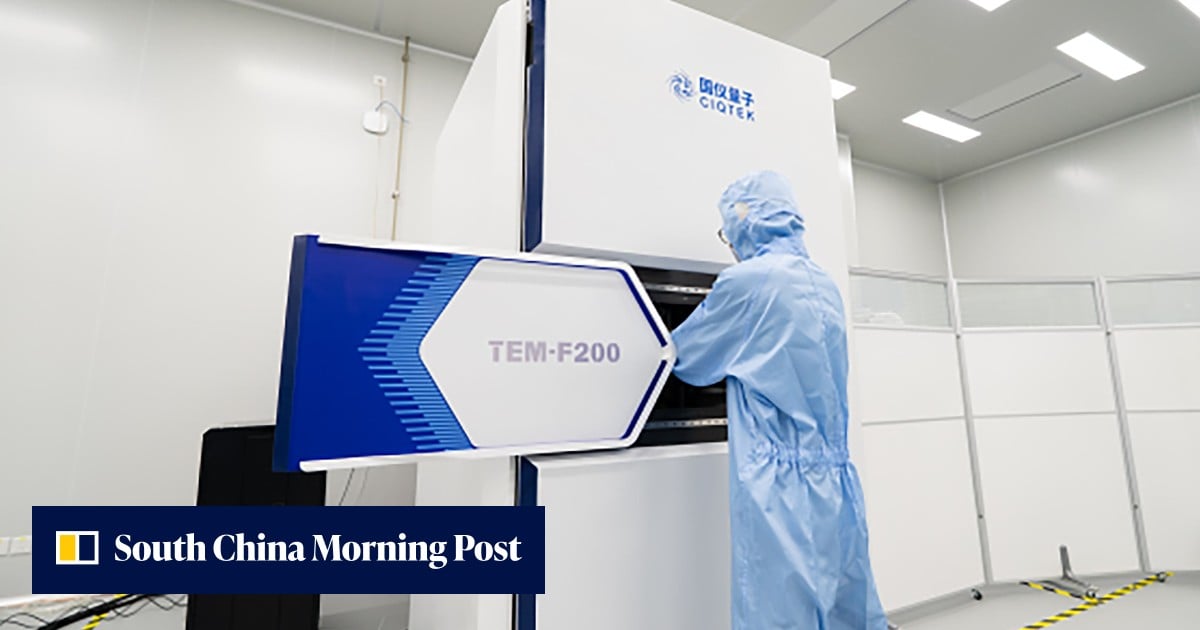
🔮 marks shift from R&D to commercialisation and aligns with country’s effort to cut reliance on imported tech China is ready to commercialise a 200-kilovolt transmission electron microscope with an information resolution down to 0.1 nanometres that could introduce a new challenger into a market long dominated by the US and Japan.
🔮 China’s Dune-like sand crawler could turn the whole Taklamakan Desert into an iron mine Device based on rare earth magnets traverses the sands to extract a precious resource in real-world echo of Frank Herbert’s sci-fi classic In Frank Herbert’s classic science fiction novel Dune, mobile factories traverse the sands of the fictional planet Arrakis to extract the drug melange, also known as “spice”.
🔮 China breaks ground on the world’s first supercritical CO2 and molten salt energy plant Ruitan demonstration project in Shandong aims to reduce energy waste and stabilise grid electricity supply China has broken ground on the world’s first utility-scale combined supercritical carbon dioxide power generation and molten salt energy storage project, which could help reduce energy waste and improve grid stability.
🔮 Chinese researchers simulated attacks on a typical suspension bridge and found a precisely targeted small strike could trigger collapse “These events starkly reveal the extreme vulnerability of modern bridges to unconventional explosive attacks,” the team wrote in a paper published in the September issue of the Chinese-language Journal of Railway Science and Engineering.
🔮 Iranian Foreign Minister Abbas Araghchi will meet with his Chinese counterpart Wang Yi in China on Wednesday, amid stalled diplomatic efforts to de-escalate conflicts in the Middle East.
🔮 Study that argued China’s solar policy hurt birds may have miscounted 2 billion egrets
Also by Victoria Bela
Nothing else under this byline is closely related to this article, so these are simply their most recent.
All 15 articles by Victoria Bela →

Topics

China China Huaneng’s Shandong Xinhua Yantai

Subjects

China GPE · 3× Shandong GPE · 2× China Huaneng’s ORG · 1× Xinhua ORG · 1× Yantai GPE · 1×

Narrative

The first phase of the project will feature a 50-megawatt supercritical unit and a 100-megawatt, or 400-megawatt-hour, molten salt energy storage system.
framing: mixed · carried by 1 article(s) · first seen 2026-09-22
🔮 China breaks ground on the world’s first supercritical CO2 and molten salt energy plant Ruitan demonstration project in Shandong aims to reduce energy waste and stabilise grid electricity supply China has broken ground on the world’s first utility-scale combined supercritical carbon dioxide power generation and molten salt energy storage project, which could help reduce energy waste and improve grid stability.

Claims (6 extracted, 2 hedged)

China breaks ground on the world’s first supercritical CO2 and molten salt energy plant Ruitan demonstration project in Shandong aims to reduce energy waste and stabilise grid electricity supply China has broken ground on the world’s first utility-scale combined supercritical carbon dioxide power generation and molten salt energy storage project, which could help reduce energy waste and improve grid stability. uncertain
which → break → stability
On September 16, construction began on the Ruitan demonstration project at China Huaneng’s Bajiao power station in Yantai. asserted
construction → begin → Yantai
The project in Shandong province, eastern China, is expected to go into operation next year. asserted

project → expect → operation
During periods when energy demand is low, surplus electricity generated by the plant’s existing coal power units will be used to heat up molten salt, according to a report by state news agency Xinhua on September 16. uncertain
electricity → generate → September
During hours of peak energy demand, the stored heat will power a supercritical unit that uses carbon dioxide rather than steam to produce electricity. asserted
that → store → electricity
The first phase of the project will feature a 50-megawatt supercritical unit and a 100-megawatt, or 400-megawatt-hour, molten salt energy storage system. asserted
phase → feature → unit
💬Give feedback
🕘History 🎫Support