Photo via Washington Examiner

We have the energy, we have the demand. Now we just need permission to build

Read the original at Washington Examiner ↗
Cite

Douglas, P. (2026, September 22). We have the energy, we have the demand. Now we just need permission to build. Washington Examiner. https://www.washingtonexaminer.com/op-eds/4735943/america-energy-infrastructure-permitting-delays/

Dated when The Aporia collected the article, usually within hours of publication. Check the original for its exact date and byline.

Washington Examiner · collected 2026-09-22 · by Patrice Douglas

Quick Summary

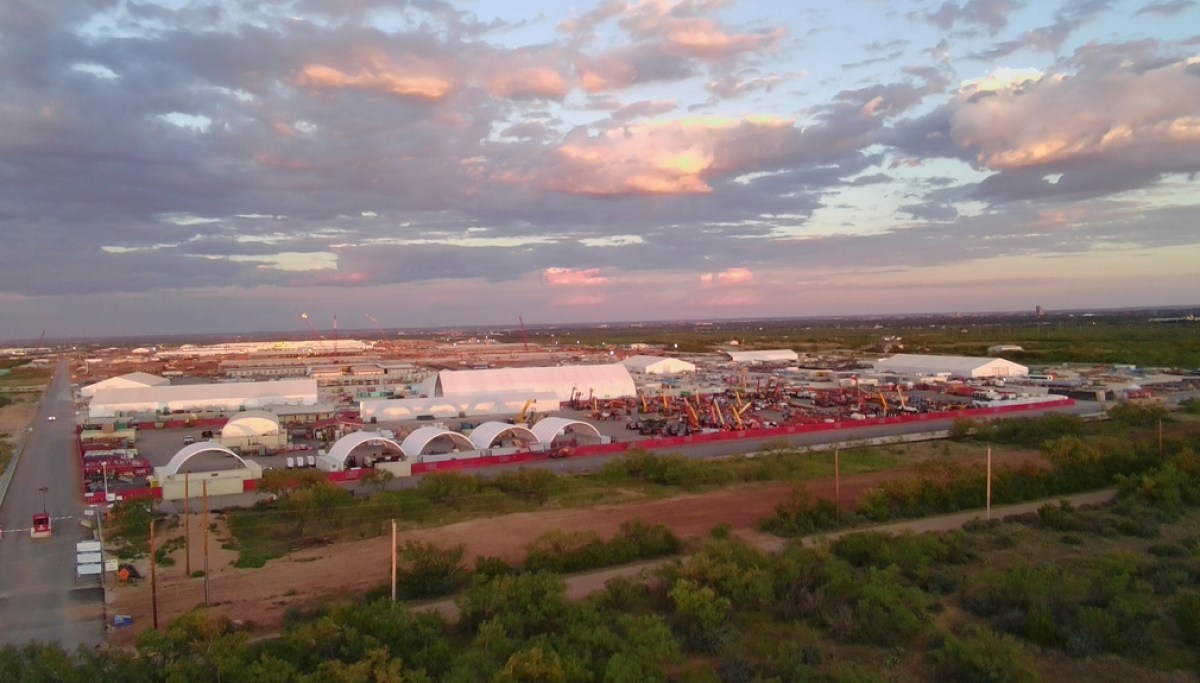
America has abundant energy resources but faces challenges in building necessary infrastructure due to complex and unpredictable regulatory processes. To meet rising global demand, particularly from growing populations and increased manufacturing needs, the article calls for streamlined public-private partnerships to facilitate private investment in pipelines, LNG facilities, and other critical energy projects. The Desert Southwest Pipeline expansion by Energy Transfer exemplifies such a project; it aims to invest over $5 billion in Arizona and New Mexico's infrastructure but encounters significant permitting hurdles that delay construction and deter investment.
Written by AI on 2026-09-22, from this article's own text only (the story summary below draws on all the coverage).

AI analysis

Story summary

America has the energy resources to meet rising demand but faces challenges in building necessary infrastructure due to government constraints. The Department of Energy reports that significant investment is required for new energy production facilities like pipelines, transmission lines, storage units, and LNG plants. Private sector involvement is crucial as public funding alone cannot support this growth. With the global population set to increase by 69 million people next year, demand for energy will surge. This increased need impacts industries such as AI data centers and manufacturing, making reliable and affordable energy a competitive advantage in attracting investment. However, bureaucratic hurdles create uncertainty and limit capacity to meet growing needs efficiently.

Written for “Energy Infrastructure Approval” on 2026-11-04, grounded in this article and the 0 other(s) covering the same event.

Story

📰 Energy Infrastructure Approval
Economy/Business · 1 article(s) covering the same event.

Compared with similar articles

This article reads leans right and hedges 3% of its claims. Each row says how that neighbour differs.
Washington Examiner
⚖️ Leans strongly right further right than this Hedges 1 of 39 claims Outlet record 69/100
“The articles discuss similar themes around infrastructure and energy demand but do not describe the same specific incident or occurrence.”
Washington Examiner
Hedges 4 of 39 claims Outlet record 69/100
“The articles discuss different aspects of energy and oil production in America, but do not describe the same specific incident.”
Washington Examiner
⚖️ Leans right Hedges 0 of 34 claims Outlet record 69/100
“The articles discuss different aspects of energy infrastructure and public opinion towards nuclear power rather than reporting on a single incident.”
How this article was measured signals, leaning charts, publisher record, byline, topics and claims

Signals How these are calculated →

Claims extracted
29
sentences that state something as happening or true
Uncertain
3%
1 of 29 hedged ("reportedly", "may", "according to")
Leaning
Leans right
of the writing, not the subject · beta estimate
Publisher signals
69/100
Washington Examiner's corrections and hedging, across everything collected from it. Not a measure of accuracy.
Outlets on this story
1
Economy/Business
Same framing elsewhere
1
articles that frame the event the way this one does
Analyzed 2026-09-22 · how these are computed

How this is being covered How these are calculated →

Article leaning vs. publisher reliability
Source leaning vs. consistency

Publisher

Washington Examiner · 4155 article(s) · 8 correction(s) detected
Running correction rate · 8 correction(s)

Who wrote this

Patrice Douglas
1 article(s) here · 1 carrying a prediction
🔮 A commonsense energy approach should make it easier to invest in and build the infrastructure that will keep pace with a growing economy.
The only article under this byline in the corpus.

Topics

America American U.S. the Department of Energy the United States

Subjects

America GPE · 3× American NORP · 2× Arizona GPE · 1× Energy Transfer’s ORG · 1× Mackenzie PERSON · 1× New Mexico GPE · 1× Reuters ORG · 1× U.S. GPE · 1× the Department of Energy ORG · 1× the United States GPE · 1×

Narrative

Affordable, reliable energy is becoming a competitive advantage as manufacturers, data centers, and emerging industries choose where to invest. Unwieldy government constraints create uncertainty and limit our capacity to meet growing demand while keeping energy affordable.
framing: assertive · carried by 1 article(s) · first seen 2026-09-22
🔮 A commonsense energy approach should make it easier to invest in and build the infrastructure that will keep pace with a growing economy.
2026-09-22 · Washington Examiner
We have the energy, we have the demand. Now we just need permission to build · assertive framing

Claims (29 extracted, 1 hedged)

America has the energy resources to meet rising demand. asserted
America → have → demand
The challenge now is building the infrastructure needed to deliver that energy. asserted
challenge → build → energy
A commonsense energy approach should make it easier to invest in and build the infrastructure that will keep pace with a growing economy. asserted
that → make → economy
Every day, we read about the transformation we are facing: the rise of artificial intelligence and the data centers needed to support it, a growing world population, and expanding manufacturing needs here in the United States. asserted
we → read → States
The global population alone is expected to increase by approximately 69 million people next year. asserted
population → expect → people
These forces are driving significant growth in energy demand. asserted
forces → drive → demand
Meeting that growth will require significant investment in new energy production and the pipelines, transmission, storage, liquefied natural gas facilities, and other infrastructure needed to support it. asserted
Meeting → meet → it
The public sector cannot support this incredible growth alone. asserted
sector → support → growth
For decades, municipalities have utilized public-private partnerships to bring critical infrastructure projects to fruition. asserted
municipalities → utilize → fruition
Roads supporting new commercial development, water systems serving new housing, and other major projects have often depended on private investment alongside public resources. asserted
Roads → support → resources
These partnerships work because investors have some confidence in the rules governing them. asserted
investors → work → them
Projects that take years to permit and billions of dollars to build require approval processes that are steady, transparent, and predictable. asserted
that → take → processes
The same principle applies to the energy infrastructure America needs today. asserted
America → apply → infrastructure
The U.S. is already one of the world’s largest energy producers, but building the infrastructure needed to move that energy remains unnecessarily difficult. asserted
building → build → energy
Pipelines, LNG facilities, and other major projects can face cumbersome and duplicative permitting processes that add years of uncertainty before construction can begin. asserted
construction → face → uncertainty
As the Department of Energy has warned, “a burdensome federal permitting process undermines America’s competitiveness and national security.” asserted
process → warn → competitiveness
The department has pledged to “prioritize more efficient permitting to enable private sector investments” in energy infrastructure. asserted
department → pledge → infrastructure
Following through would help move private capital into the projects needed to strengthen reliability and keep American energy affordable. asserted
Following → follow → energy
The project would increase pipeline capacity from 1.5 billion cubic feet per day to 2.3 billion cubic feet per day, helping growing population centers and commercial and industrial customers secure additional natural gas. asserted
project → increase → gas
It would also put American-made steel to work building infrastructure designed to serve the region for decades. asserted
It → put → decades
That kind of long-term capital commitment requires a permitting process that is predictable enough to make investment possible. asserted
investment → require → process
The consequences of permitting uncertainty extend across all aspects of the energy sector. asserted
consequences → extend → sector
A Wood Mackenzie analysis reported by Reuters found that delays affecting large wind and solar projects could put $121 billion in private investment and 92 gigawatts of planned generation at risk. uncertain
delays → report → risk
Whatever the energy source, capital-intensive projects become harder to finance when investors cannot predict whether or when they will be allowed to build. asserted
they → become → ?
For decades, the private sector has financed, built, maintained, and operated much of our energy infrastructure. asserted
sector → finance → infrastructure
Projects such as the Desert Southwest Pipeline, Mountain Valley Pipeline, and Western Gateway Pipeline are expanding capacity and strengthening reliability in fast-growing regions. asserted
Projects → expand → regions
Affordable, reliable energy is becoming a competitive advantage as manufacturers, data centers, and emerging industries choose where to invest. Unwieldy government constraints create uncertainty and limit our capacity to meet growing demand while keeping energy affordable. asserted
constraints → become → energy
Energy infrastructure can drive economic growth in the regions that need it most. asserted
that → drive → it
Cities and states that invest in this infrastructure will attract new companies, and those that pair that investment with reasonable, predictable regulatory requirements will be best positioned to succeed. asserted
that → invest → requirements

💬Give feedback · no sign-in needed

No sign-in needed for now. Your note is sent without a name, so it cannot be answered.

🕘History 🎫Support