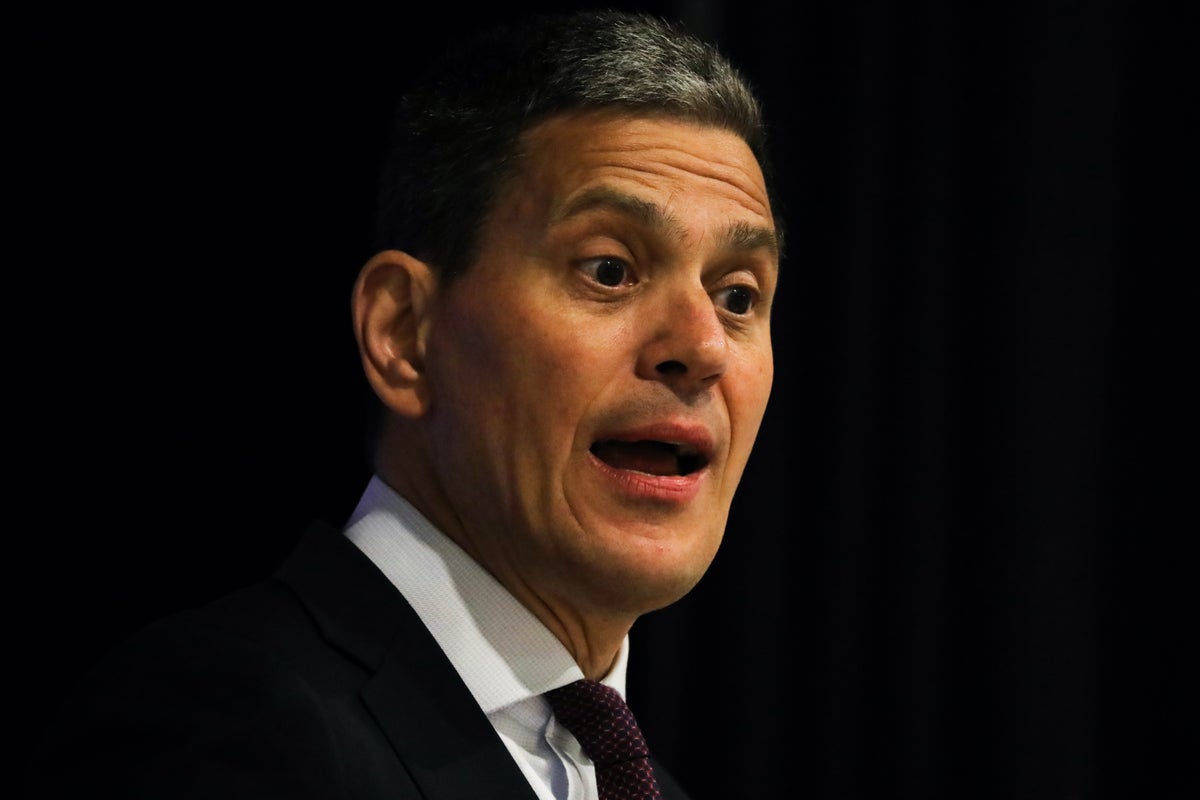
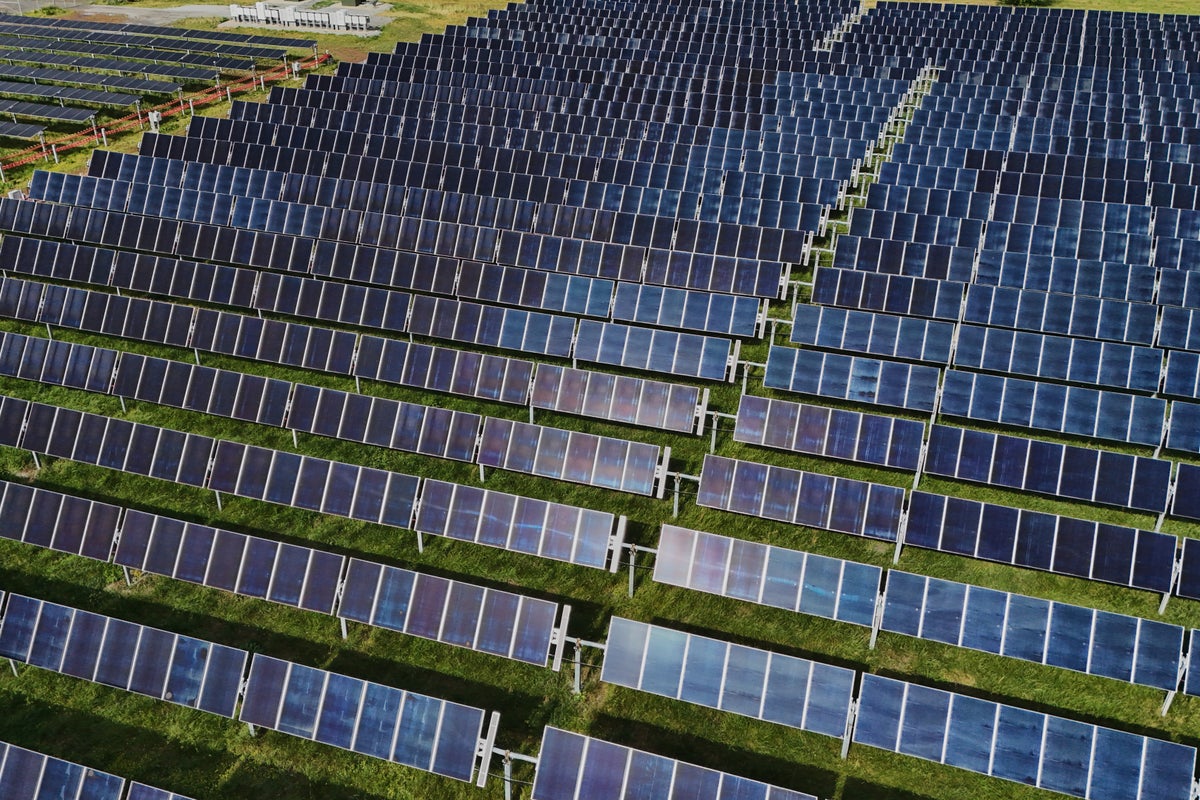
Photo via The Independent

Voices: The world is burning – more air conditioning is not the answer to the climate crisis

Read the original at The Independent ↗
Cite

Miliband, D. (2026, September 22). Voices: The world is burning – more air conditioning is not the answer to the climate crisis. The Independent. https://www.independent.co.uk/climate-change/climate-100/david-miliband-climate-crisis-speech-new-york-b3054318.html

Dated when The Aporia collected the article, usually within hours of publication. Check the original for its exact date and byline.

The Independent · collected 2026-09-22 · by David Miliband

Quick Summary

A former UK environment minister discusses the failure of global leadership during the UN General Assembly's ministerial week, highlighting the disconnect between addressing climate change and actual humanitarian needs. The article argues that while Europe focuses on air conditioning due to extreme heat, areas like Afghanistan, Somalia, and the Sahel face severe drought, desertification, and food insecurity with minimal attention or resources. It emphasizes the need for urgent adaptation strategies alongside mitigation efforts, particularly in conflict-affected regions most vulnerable to climate change but least supported financially.
Written by AI on 2026-09-22, from this article's own text only (the story summary below draws on all the coverage).

AI analysis

Story summary

David Miliband, in an article for The Independent World, discusses the current state of global leadership during the United Nations General Assembly (UNGA) ministerial week. He highlights the increasing fractures and silos between countries despite shared goals, exacerbated by issues like war and climate change. In 2024, pre-arranged finance aimed at fragile states was only 7% of total crisis finance, with funding for anticipatory action registering just over 2% of international pre-arranged finance. Miliband argues that while there is more potential capital available now than ever before, the world lacks the necessary political will and financial investment to address these challenges effectively. He also notes that efforts should not only focus on preventing climate change but must urgently include measures for adaptation as well.

Written for “Climate Crisis And Cooling Solutions” on 2026-10-31, grounded in this article and the 0 other(s) covering the same event.

Story

📰 Climate Crisis And Cooling Solutions
Politics · 1 article(s) covering the same event.

Compared with similar articles

This article reads leans strongly left and hedges 3% of its claims. Each row says how that neighbour differs.
The Straits Times
Hedges 5 of 26 claims Outlet record 66/100
“The articles discuss different aspects of the UN General Assembly: Article A covers world leaders gathering and discussing conflicts, while Article B focuses on the theme of global leadership failure during the UNGA.”
Al Jazeera
⚖️ Leans strongly left Hedges 4 of 35 claims Outlet record 60/100
“The articles discuss different aspects of the United Nations General Assembly and do not describe the same specific incident or occurrence.”
BBC News
Hedges 0 of 2 claims Outlet record 68/100
Toronto Star
Hedges 1 of 3 claims Outlet record 64/100
“The articles cover the overall atmosphere and different voices at the UN General Assembly but do not describe the same specific incident or moment.”
Toronto Star
Hedges 1 of 3 claims Outlet record 64/100
“The articles discuss the UNGA but describe different aspects: Article A focuses on a critical perspective of global leadership and climate crisis, while Article B highlights lesser-known voices of leaders during the UN General Debate.”
Toronto Star
Hedges 1 of 3 claims Outlet record 64/100
“The articles describe different aspects of the UNGA week and do not focus on the same specific incident or time.”
The Straits Times
Hedges 0 of 24 claims Outlet record 66/100
“The articles discuss different parts of the UN General Assembly week; Article A focuses on the general atmosphere of division during UNGA, while Article B reports on Antonio Guterres's final climate push speech.”
The Independent
⚖️ Leans left further right than this Hedges 2 of 44 claims Outlet record 59/100
“Both articles discuss the United Nations General Assembly, but they are not describing the same specific incident or occurrence. ARTICLE A provides an overview of the issues discussed during the assembly, while ARTICLE B focuses on a commentary about global leadership and interconnected risks.”
The Independent
⚖️ Leans strongly left Hedges 1 of 41 claims Outlet record 59/100
“The articles discuss similar themes but do not describe the same specific incident or meeting. ARTICLE A focuses on world leaders grappling with climate issues in New York, while ARTICLE B critiques the fragmentation and lack of effective leadership during UNGA.”
Toronto Star
Hedges 0 of 8 claims Outlet record 64/100
“While both articles refer to the U.N. General Assembly, Article A describes world leaders addressing various crises, whereas Article B critiques the lack of global leadership and shared goals during the same event.”
How this article was measured signals, leaning charts, publisher record, byline, topics and claims

Signals How these are calculated →

Claims extracted
149
sentences that state something as happening or true
Uncertain
3%
4 of 149 hedged ("reportedly", "may", "according to")
Leaning
Leans strongly left
of the writing, not the subject · beta estimate
Publisher signals
59/100
The Independent's corrections and hedging, across everything collected from it. Not a measure of accuracy.
Outlets on this story
1
Politics
Same framing elsewhere
1
articles that frame the event the way this one does
Analyzed 2026-09-22 · how these are computed

How this is being covered How these are calculated →

Article leaning vs. publisher reliability
Source leaning vs. consistency

Publisher

The Independent · 3448 article(s) · 7 correction(s) detected
Running correction rate · 7 correction(s)

Who wrote this

David Miliband
1 article(s) here · 1 carrying a prediction
🔮 Yet political will, financial investment, and media attention have vanished.
The only article under this byline in the corpus.

Topics

Afghanistan Somalia UNGA the United Nations General Assembly

Subjects

Afghanistan GPE · 1× Somalia GPE · 1× UNGA ORG · 1× the United Nations General Assembly ORG · 1×

Narrative

In Chad, we combined flood forecasting with cholera monitoring to trigger earlier water, sanitation, and public-health interventions. Yet pre-arranged finance is only 1.2 per cent of total crisis finance; fragile states got only 7 per cent of total pre-arranged finance in 2024; and funding for anticipatory action, which is pre-arranged and pays out before the worst impacts of a climate shock is even lower, registering only just over 2 per cent of international pre-arranged finance in 2024.
framing: assertive · carried by 1 article(s) · first seen 2026-09-22
🔮 Yet political will, financial investment, and media attention have vanished.

Claims (149 extracted, 4 hedged)

The ministerial week of the United Nations General Assembly (UNGA) is meant to be the moment when the world comes together. asserted
world → mean → Assembly
Bad faith drives out good ideas. asserted
faith → drive → ideas
Hard power makes a mockery of international law. asserted
power → make → law
Even those with shared goals too often operate in silos. asserted
those → share → silos
And it is more egregious when the world has more resources than ever before. asserted
world → have → resources
We are witnessing a catastrophic collapse of global leadership at the exact moment humanity has all the risks of hyper-connectivity and all the potential of untold capital. asserted
humanity → witness → capital
My topic today addresses this dynamic. asserted
topic → address → dynamic
The twin and overlapping perils of war and climate change are breaking records. asserted
perils → break → records
Yet political will, financial investment, and media attention have vanished. asserted
will → vanish → ?
When I was environment secretary in the UK twenty years ago, there was a fear that discussion of managing the effects of climate change (adaptation) meant going soft on preventing climate change (mitigation). asserted
discussion → be → change
But today, the failures and limits of mitigation mean we have no choice but to seek urgent mitigation and adaptation at the same time. asserted
we → mean → time
Adaptation means different things in different places. asserted
Adaptation → mean → places
For the next 25 minutes, I will turn the tables. asserted
I → turn → tables
More air conditioning is not the answer for the people who I want to place centre stage today. asserted
I → want → who
For these hundreds of millions of people, the question is not whether a house is comfortable, but whether a family has safe shelter. asserted
family → have → shelter
Not whether the train runs on time, but whether the harvest comes at all. asserted
harvest → run → time
Not whether water use is restricted, but whether there is any safe water to drink. asserted
use → restrict → ?
And not simply whether temperatures rise, but how rising temperatures interact with conflict, poverty, and political fragility in ways that destroy the mechanisms people once relied upon to survive. asserted
people → rise → mechanisms
Overlapping crises of conflict and climate The threat of extreme heat in Europe is real and has its own death toll. asserted
threat → overlap → toll
But the facts are that the places most vulnerable to climate change are increasingly the same places afflicted by conflict and extreme fragility. asserted
places → afflict → conflict
The people living there have contributed the least to climate change. asserted
people → live → change
They didn't burn the fossil fuels, but their farms and herds live or die by rainfall in a way that a diesel-and-concrete economy does not. asserted
economy → burn → way
Yet these are the people who get the least when it comes to funds for climate adaptation. asserted
it → get → adaptation
That is what we have to put right. asserted
we → have → what
Today, 860 million people, nearly everyone living in a conflict-affected state, also lives in a country ranked in the top quartile of countries affected by climate vulnerability. asserted
people → live → vulnerability
By 2030, climate shocks are predicted to plunge more than 130 million people into extreme poverty; by the same year, 60 per cent of the world’s extreme poor will be trapped in fragile states and war zones. asserted
cent → predict → states
These are countries where climate exposure meets the consequences of conflict: weakened institutions, divided land, poverty and massive displacement of people. asserted
exposure → meet → people
In many, agriculture accounts for close to a quarter of economic output, while only a tiny proportion of cultivated land is irrigated. asserted
proportion → account → land
Higher temperatures increase evaporation and dry soil. asserted
temperatures → increase → evaporation
Rainfall becomes more erratic. asserted
Rainfall → become → ?
Crop yields decline. asserted
yields → decline → ?
Livestock suffers heat stress. asserted
Livestock → suffer → stress
Household incomes fall. asserted
incomes → fall → ?
Then food prices rise. asserted
prices → rise → ?
Assets are sold. asserted
Assets → sell → ?
Children are taken out of school. asserted
Children → take → school
Water points and wells dry up. asserted
points → dry → ?
Malnutrition, unsafe water, and food insecurity hit together. asserted
Malnutrition → hit → ?
So people move. asserted
people → move → ?
And the coping mechanisms for the next shock become weaker. asserted
mechanisms → cop → shock
…and 109 more, not listed.

💬Give feedback
🕘History 🎫Support