
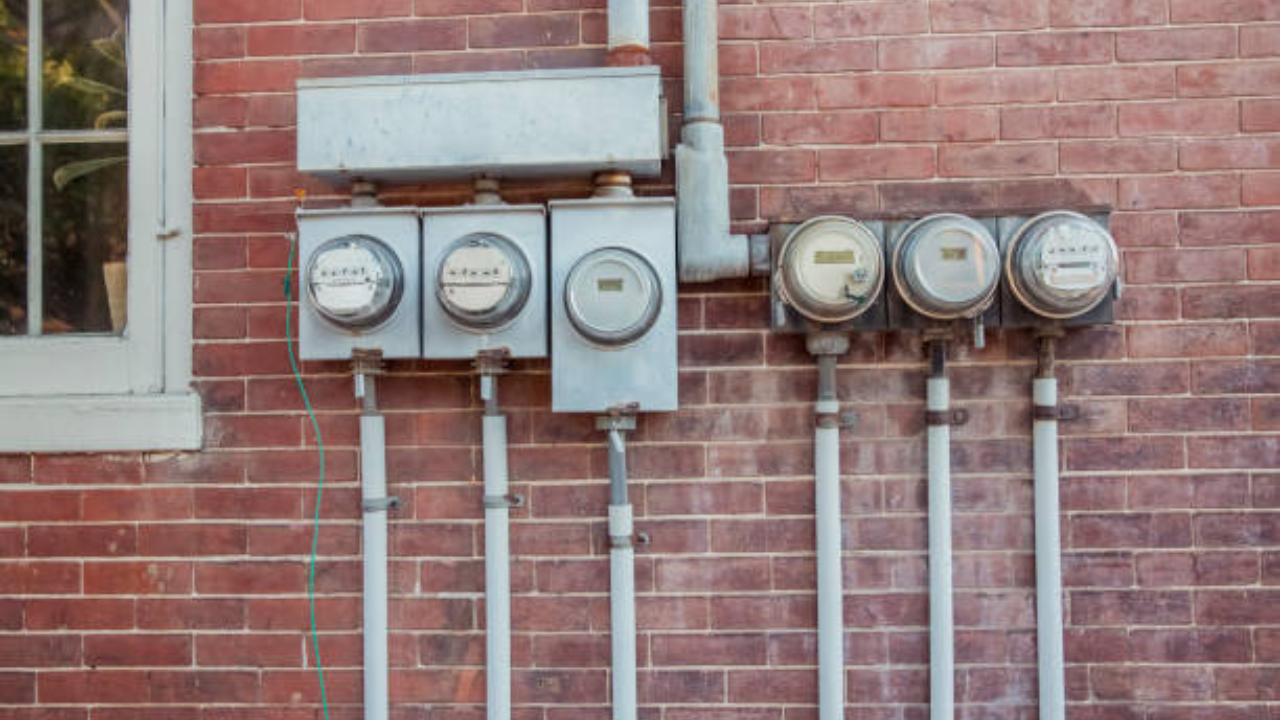
Photo via New York Post

California households to get utility bill relief amid soaring costs — here’s how it works

Read the original at New York Post ↗
Cite

Edwards, C. (2026, September 22). California households to get utility bill relief amid soaring costs — here’s how it works. New York Post. https://nypost.com/2026/09/22/lifestyle/california-households-to-get-utility-bill-relief-amid-soaring-costs-heres-how-it-works/

Dated when The Aporia collected the article, usually within hours of publication. Check the original for its exact date and byline.

New York Post · collected 2026-09-22 · by Christopher Edwards

Quick Summary

California households are set to receive automatic $75 discounts on their utility bills for August and September, covering customers of PG&E, Southern California Edison, and San Diego Gas & Electric. This relief is part of Sacramento’s Cap-and-Invest Program managed by the California Air Resources Board, which will distribute an estimated $886 million back to taxpayers to ease the burden of high utility costs during summer months. Governor Newsom highlighted that this initiative makes polluters pay while delivering financial assistance directly to households facing soaring electricity prices, currently the highest in the U.S., at 27.63 cents per kilowatt-hour.
Written by AI on 2026-09-23, from this article's own text only (the story summary below draws on all the coverage).

AI analysis

Story summary

In 2025, California households received a significant relief from soaring utility bills through automatic discounts on their statements during August and September. The relief is part of Governor Gavin Newsom's California Climate Credits initiative, which covers eligible residential customers of PG&E, Southern California Edison, and San Diego Gas & Electric, saving subscribers an estimated $886 million collectively. This program is funded by the Cap-and-Invest Program managed by the California Air Resources Board, requiring companies emitting large amounts of pollution to purchase allowances for their emissions. Some proceeds from these penalties are then returned to taxpayers in the form of utility bill credits. Notably, the average price for electricity in California was 27.63 cents per kilowatt-hour (kWh), a 103% increase over the national average of 13.63 cents per kWh. Despite this relief, critics argue that California families still pay more for energy compared to other states, with the average household spending $160.86 monthly on electricity versus the national average of $142.26.
Written for “California Utility Bill Relief” on 2026-11-04, grounded in this article and the 2 other(s) covering the same event.

Story

📰 California Utility Bill Relief
Economy/Business · 3 article(s) covering the same event. Compare every outlet's account →

Compared with similar articles

This article reads leans left and hedges 12% of its claims. Each row says how that neighbour differs.
Times of India
Hedges 1 of 25 claims Outlet record 59/100
Washington Examiner
⚖️ Leans strongly right further right than this Hedges 0 of 28 claims Outlet record 69/100
How this article was measured signals, leaning charts, publisher record, byline, topics and claims

Signals How these are calculated →

Claims extracted
8
sentences that state something as happening or true
Uncertain
12%
1 of 8 hedged ("reportedly", "may", "according to")
Leaning
Leans left
of the writing, not the subject · beta estimate
Publisher signals
66/100
New York Post's corrections and hedging, across everything collected from it. Not a measure of accuracy.
Outlets on this story
3
Economy/Business
Same framing elsewhere
1
articles that frame the event the way this one does
Analyzed 2026-09-23 · how these are computed

How this is being covered How these are calculated →

Article leaning vs. publisher reliability
Source leaning vs. consistency

Publisher

New York Post · 16821 article(s) · 36 correction(s) detected
Running correction rate · 36 correction(s)

Who wrote this

Christopher Edwards
61 article(s) here · 1 carrying a prediction
🔮 “It will be electric, but not the conventional idea of a battery in a car,” Disney legend Bob Gurr, who designed the ride, revealed to the New York Times in a new interview.
🔮 Documents revealed the operating hours for the business would be from 10:30 a.m. to 1 a.m. Sunday through Thursday, and from 10:30 a.m. to 1:30 a.m. on Friday and Saturday.
🔮 “This is where we started, where we are and where we will always be
🔮 Los Angeles, Ventura and Santa Barbara counties are currently under a coastal flood advisory, also expected to last until Thursday afternoon.
🔮 The high prices may even go against regulations, some watchers said amid the social media chatter.
🔮 “On December 20th, ERB will be ending its magical run,” the bar stated on Instagram. “To our staff, please know that everything you’ve done while here at ERB is so much more than what anyone else would have done,” the sad announcement continued.
🔮 “Initially, I assumed we were getting pulled over for a missing headlight or maybe an issue with our tags.
🔮 Disney has quietly filed two patents to develop AI-powered characters that could make interacting with their park’s animatronics feel realer than ever.
🔮 If you’re further away, you may need to get an outdoor antenna.
🔮 “This new designation will shine a national spotlight on one of Arizona’s hidden gems, creating opportunities to welcome more visitors, strengthen local economies and share this incredible landscape with more Americans.”
Also by Christopher Edwards
Nothing else under this byline is closely related to this article, so these are simply their most recent.
All 61 articles by Christopher Edwards →

Topics

California PG&E Sacramento San Diego Gas & Electric Southern California Edison

Subjects

California GPE · 4× Always on Energy Research ORG · 1× Californians NORP · 1× Newsom PERSON · 1× PG&E ORG · 1× Sacramento GPE · 1× San Diego Gas & Electric ORG · 1× Southern California Edison ORG · 1× The Institute for Energy Research ORG · 1× the California Air Resources Board ORG · 1×

Narrative

In 2025, California’s average price for electricity was 27.63 cents per kilowatt-hours (kWh), a whopping 103% higher than the national average of 13.63 cents. “The state’s trajectory is alarming: since 2018, the average retail price of electricity rose 11.05 cents per kWh, the largest absolute increase of any state, and California collapsed from 7th to 2nd-most expensive,” the report read.
framing: assertive · carried by 1 article(s) · first seen 2026-09-23
🔮 The relief covers eligible residential customers of PG&E, Southern California Edison, and San Diego Gas & Electric, and will reportedly save subscribers an estimated $886 million.

Claims (8 extracted, 1 hedged)

Households across the struggling Golden State are receiving some relief from their sky-high utility bills — with reams of tapped-out ratepayers seeing automatic $75 discounts on their statements during the months of August and September. asserted
reams → struggle → August
The relief covers eligible residential customers of PG&E, Southern California Edison, and San Diego Gas & Electric, and will reportedly save subscribers an estimated $886 million. uncertain
relief → cover → million
Managed by the California Air Resources Board, the program requires companies that emit large amounts of pollution to purchase allowances for their emissions. asserted
that → manage → emissions
Some of the proceeds from the penalties are then handed back to taxpayers. asserted
Some → hand → taxpayers
“California is making polluters pay and delivering that money back to millions of households when summer utility bills are at their highest,” Governor Newsom said in a statement. asserted
Newsom → make → statement
The credit does not require an application, and will simply appear on bills. asserted
credit → require → bills
New analysis from The Institute for Energy Research and Always on Energy Research found that Californians pay the highest electricity prices of any U.S. state. asserted
Californians → find → state
In 2025, California’s average price for electricity was 27.63 cents per kilowatt-hours (kWh), a whopping 103% higher than the national average of 13.63 cents. “The state’s trajectory is alarming: since 2018, the average retail price of electricity rose 11.05 cents per kWh, the largest absolute increase of any state, and California collapsed from 7th to 2nd-most expensive,” the report read. asserted
report → rise → 2nd
💬Give feedback · no sign-in needed

No sign-in needed for now. Your note is sent without a name, so it cannot be answered.

🕘History 🎫Support