Photo via Fox News

Popular weight-loss drugs face numerous lawsuits over rare ‘eye stroke’ linked to vision loss

Read the original at Fox News ↗
Cite

Stabile, A., & Rudy, M. (2026, September 22). Popular weight-loss drugs face numerous lawsuits over rare ‘eye stroke’ linked to vision loss. Fox News. https://www.foxnews.com/health/popular-weight-loss-drugs-face-lawsuits-rare-eye-stroke-linked-vision-loss

Dated when The Aporia collected the article, usually within hours of publication. Check the original for its exact date and byline.

Fox News · collected 2026-09-22 · by Angelica Stabile, Melissa Rudy

Quick Summary

Hundreds of consumers are suing Novo Nordisk and Eli Lilly over their weight-loss drugs, alleging that medications like Ozempic, Wegovy, Mounjaro, and Zepbound may increase the risk of nonarteritic anterior ischemic optic neuropathy (NAION), a rare condition causing sudden vision loss. According to recent studies in JAMA Ophthalmology, patients using semaglutide experienced approximately four times higher relative risk of NAION compared to those taking SGLT2 inhibitors, though absolute risk remains low. Both drug manufacturers have contested these claims, citing their own research findings that do not support an increased risk from their medications.
Written by AI on 2026-09-23, from this article's own text only (the story summary below draws on all the coverage).

AI analysis

Story summary

Dozens of people in the United States have filed lawsuits against GLP-1 drug companies like Novo Nordisk (makers of Ozempic and Wegovy) and Eli Lilly (makers of Mounjaro and Zepbound), claiming that their weight-loss drugs caused a rare condition called nonarteritic anterior ischemic optic neuropathy (NAION), which can lead to permanent vision loss. The lawsuits, supported by claims from hundreds of consumers, assert that these popular medications may increase the risk of NAION. Although Novo Nordisk has stated that its products are safe and lacks merit in the accusations, they face a significant challenge given analysts’ projections that this industry could generate about $100 billion annually over the next decade due to widespread use among millions of Americans combating obesity. The American Academy of Ophthalmology and North American Neuro-Ophthalmology Society note that while there are reports suggesting an increased risk, studies also indicate no correlation with NAION, emphasizing that the overall magnitude of this risk remains low.

Written for “GLP-1 Drug Lawsuits Vision Loss” on 2026-11-04, grounded in this article and the 1 other(s) covering the same event.

Story

📰 GLP-1 Drug Lawsuits Vision Loss
Health · 2 article(s) covering the same event. See how they differ ↓

Compared with similar articles

This article reads unscored and hedges 30% of its claims. Each row says how that neighbour differs.
Al Jazeera
Hedges 4 of 23 claims Outlet record 60/100
Daily Mail
Hedges 7 of 45 claims Outlet record 69/100
“Article A describes a specific lawsuit by Ed Gillen claiming blindness due to Ozempic, while Article B discusses broader lawsuits over rare eye conditions linked to GLP-1 receptor agonists like Ozempic.”
How this article was measured signals, leaning charts, publisher record, byline, topics and claims

Signals How these are calculated →

Claims extracted
33
sentences that state something as happening or true
Uncertain
30%
10 of 33 hedged ("reportedly", "may", "according to")
Leaning
not political
takes no side on a contested political question
Publisher signals
68/100
Fox News's corrections and hedging, across everything collected from it. Not a measure of accuracy.
Outlets on this story
2
Health
Same framing elsewhere
1
articles that frame the event the way this one does
Analyzed 2026-09-23 · how these are computed

How this is being covered How these are calculated →

Article leaning vs. publisher reliability
Source leaning vs. consistency

Publisher

Fox News · 6525 article(s) · 12 correction(s) detected
Running correction rate · 12 correction(s)

Who wrote this

Angelica Stabile
15 article(s) here · 1 carrying a prediction
🔮 The National Museum of Railroad History & Innovation will reportedly mark the 200-year anniversary with a $38 million upgrade.
🔮 The difference between a good relationship and a great relationship could boil down to one formula.
🔮 In that case, he said, taking a magnesium supplement could help to balance out levels.
🔮 "I'm hoping that within four or five years, a screening CT scan will only be confirmatory after they have a positive blood test done at your doctor's office," he added.
🔮 In most cases, early-stage lung cancer will not come with any symptoms, according to Robinson.
🔮 The statement continued that recovery will "take time," but the young athlete acknowledged that she’s "incredibly fortunate to be surrounded by amazing people who continue to lift me up, encourage me, and remind me that every challenge is an opportunity to grow.
🔮 As Americans live longer, experts say everyday habits may be taking a toll on eye health earlier than expected.
🔮 Functional medicine expert Dr. Will Cole told Fox News Digital that peptides are "intimately connected" with longevity, cellular healing and metabolic health.
🔮 He couldn’t explain what made him do that, but he did," he said.
🔮 Hundreds of consumers are suing the manufacturers of GLP-1 receptor agonists, alleging the medications may increase the risk of a rare form of vision loss.
Also by Angelica Stabile
Nothing else under this byline is closely related to this article, so these are simply their most recent.
All 15 articles by Angelica Stabile →
Melissa Rudy
34 article(s) here · 1 carrying a prediction
🔮 Three in four Americans aged 50 and older would like to remain in their homes as they age, according to the AARP — and preserving that independence starts with daily habits.
🔮 "A more planned-out training protocol will get you to that point where you really start seeing the arms develop and change in shape."
🔮 "We encourage anyone who may have been exposed and is experiencing symptoms consistent with E. coli infection to seek immediate medical attention."
🔮 While some research has suggested that the fall time change could have some cardiovascular benefits, the abrupt loss of evening sunlight can suppress serotonin and melatonin production, which can lead to a depressed mood, according to Dr. John La Puma, a California physician and expert in nature-based medicine.
🔮 "If marijuana use is a regular part of life at home, children may start to see it as something that's normal and relatively harmless," he said, pointing to studies that show children whose parents use marijuana are more likely to use it themselves as they get older.
🔮 " What the research shows Polling and research in recent years suggests that traditional dating rules around age may be loosening.
🔮 "Maybe you're losing structure in your day-to-day eating … moving a lot less, taking fewer steps per day," he said of potential causes.
🔮 In most cases, early-stage lung cancer will not come with any symptoms, according to Robinson.
🔮 I was very, very upset that I couldn't see."
🔮 Certain medical conditions may signal early-onset Alzheimer’s disease several years before diagnosis, a new Finnish study suggests.
Also by Melissa Rudy
Nothing else under this byline is closely related to this article, so these are simply their most recent.
All 34 articles by Melissa Rudy →

Topics

Eli Lilly Fox News Digital Novo Nordisk The Wall Street Journal the American Academy of Ophthalmology

Subjects

Eli Lilly ORG · 2× Fox News Digital ORG · 2× Novo Nordisk ORG · 2× Douglas Lazzaro PERSON · 1× JAMA Ophthalmology ORG · 1× NYU Langone Health ORG · 1× The Wall Street Journal ORG · 1× WSJ ORG · 1× the American Academy of Ophthalmology ORG · 1× the National Eye Institute ORG · 1×

Narrative

When discussing NAION, one important factor is what doctors call a "disc at risk," referring to certain characteristics of the optic disc, or optic nerve. "So if I had a patient who had what I would see on exam is a disk at risk, a very compact optic nerve where everything's crowded, I would tell that patient probably to not go on a semaglutide," Lazzaro advised.
framing: mixed · carried by 1 article(s) · first seen 2026-09-23
🔮 Hundreds of consumers are suing the manufacturers of GLP-1 receptor agonists, alleging the medications may increase the risk of a rare form of vision loss.

Claims (33 extracted, 10 hedged)

Hundreds of consumers are suing the manufacturers of GLP-1 receptor agonists, alleging the medications may increase the risk of a rare form of vision loss. uncertain
medications → sue → loss
The patients behind the lawsuits allege that the medications caused NAION (nonarteritic anterior ischemic optic neuropathy), according to The Wall Street Journal. uncertain
medications → allege → Journal
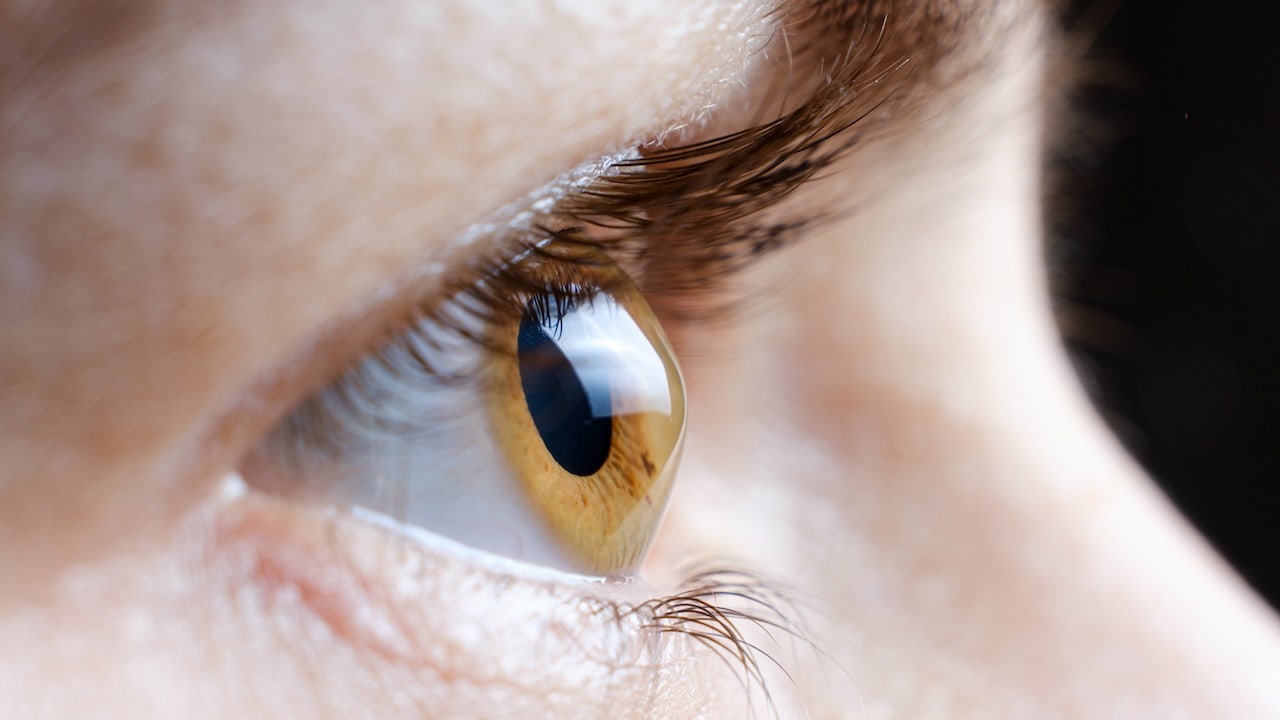
NAION is a rare eye condition in which blood flow to the optic nerve is suddenly reduced, leading to sudden vision loss. asserted
flow → reduce → loss
It is the most common cause of acute optic nerve injury in adults over age 50, according to the American Academy of Ophthalmology and the National Eye Institute, which describes it as an "eye stroke." uncertain
which → accord → stroke
"The problem with NAION is there's no treatment," Dr. Douglas Lazzaro, an ophthalmologist at NYU Langone Health, told Fox News Digital. asserted
Lazzaro → be → Digital
"So it can cause some very profound vision loss." asserted
it → cause → loss
The companies in question, Novo Nordisk (maker of Ozempic and Wegovy) and Eli Lilly (maker of Mounjaro and Zepbound), have disputed the allegations, according to the WSJ report. uncertain
companies → dispute → report
Novo Nordisk called the lawsuits meritless and pointed to company-funded research finding no increased risk of NAION with its drugs. asserted
Nordisk → call → drugs
Eli Lilly said it continues to monitor safety data and maintained that current studies do not prove GLP-1 medications cause the condition. asserted
medications → say → condition
Fox News Digital reached out to the companies requesting comment. asserted
Digital → reach → comment
What the research suggests Most of the published research to date has examined semaglutide, rather than tirzepatide. uncertain
Most → suggest → semaglutide
In a data analysis of 37 million adults published in JAMA Ophthalmology in 2025, researchers found that people using semaglutide experienced a modest increase in NAION risk compared to people taking SGLT2 inhibitors, another class of diabetes medication. asserted
people → publish → medication
A 2024 Harvard Medical School study, published in the same journal, found that patients with type 2 diabetes who were prescribed semaglutide had approximately a fourfold higher relative risk of developing NAION. asserted
who → publish → NAION
The absolute risk remained very low. asserted
risk → remain → ?
The authors of both studies noted that the research was observational and could not prove that the medication caused NAION. uncertain
medication → note → NAION
They emphasized that more evidence is needed. asserted
evidence → emphasize → ?
The FDA has said it is reviewing available evidence regarding a possible association between semaglutide and NAION. asserted
it → say → semaglutide
The agency has not concluded that semaglutide causes NAION and has not issued a safety warning for semaglutide medications. asserted
semaglutide → conclude → medications
The European Medicines Agency concluded there is sufficient evidence of a possible association to recommend adding NAION as a "very rare" adverse reaction to semaglutide product information in Europe. asserted
Agency → conclude → Europe
Lazzaro agreed that "whether or not that's statistically significant is hard to assess, because there were so many variables in this and it's hard to exactly match patients." asserted
it → agree → patients
"But when they removed all of what they felt were confounding variables … how obese were the patients, male versus female, age, hypertension, level of obesity … they did find that there was a higher risk of NAION." What to know about NAION NAION typically causes sudden, painless vision loss in one eye, per the AAO. asserted
NAION → remove → AAO
Other symptoms may include blurred or dim vision, loss of peripheral vision, or decreased color vision. uncertain
symptoms → include → vision
Symptoms tend to develop first thing in the morning after waking up. asserted
Symptoms → tend → morning
The biggest risk factors for the condition include age, diabetes, high blood pressure, high cholesterol, obstructive sleep apnea and smoking. asserted
factors → include → age
As many people taking GLP-1 drugs have diabetes or obesity, some of these underlying risk factors could be factors in vision issues, experts note. uncertain
experts → take → issues
Diabetes itself is a well-established risk factor for NAION, making it difficult for observational studies to separate the effects of the disease from those of the medication, experts have noted. asserted
experts → establish → medication
While some patients may regain partial vision over time, there is no proven treatment that can reverse the optic nerve damage. uncertain
that → regain → damage
The condition is rare, with roughly two to 10 cases per 100,000 people each year, depending on the population studied. asserted
condition → depend → population
Experts emphasize that patients should not stop taking a prescribed GLP-1 medication without first speaking with their healthcare provider. asserted
patients → emphasize → provider
For many people with diabetes or obesity, the medications' proven benefits may outweigh any potential vision risk. uncertain
benefits → prove → risk
When discussing NAION, one important factor is what doctors call a "disc at risk," referring to certain characteristics of the optic disc, or optic nerve. "So if I had a patient who had what I would see on exam is a disk at risk, a very compact optic nerve where everything's crowded, I would tell that patient probably to not go on a semaglutide," Lazzaro advised. asserted
Lazzaro → discuss → semaglutide
"My overall take on the matter is there's probably a slightly increased risk of NAION when using the semaglutides, but I think the health benefits outweigh the risks," he went on. asserted
he → be → risks
"And unless I have a patient with a disk at risk, I would probably tell them to go on them if they're going to be a lot healthier from an overall standpoint." asserted
they → have → standpoint

💬Give feedback · no sign-in needed

No sign-in needed for now. Your note is sent without a name, so it cannot be answered.

🕘History 🎫Support