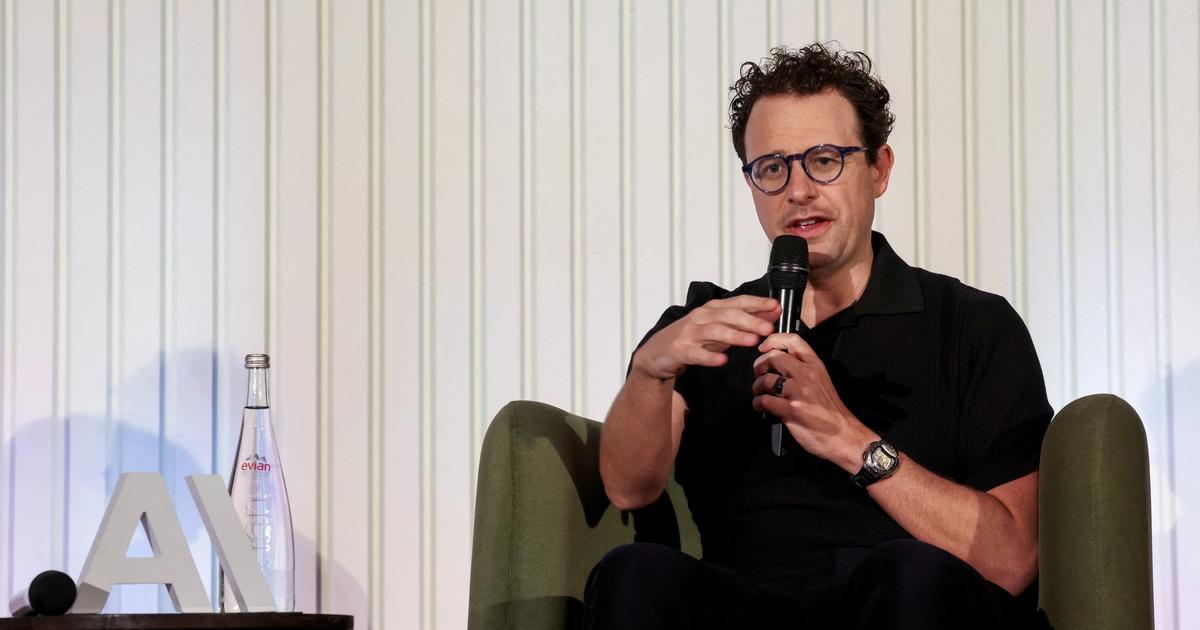
Photo via Semafor

Global South more optimistic about AI than the US, Google exec says

Read the original at Semafor ↗
Cite

Capelouto, J. (2026, September 22). Global South more optimistic about AI than the US, Google exec says. Semafor. https://www.semafor.com/article/09/22/2026/global-south-more-optimistic-about-ai-than-the-us-google-exec-says

Dated when The Aporia collected the article, usually within hours of publication. Check the original for its exact date and byline.

Semafor · collected 2026-09-22 · by J.D. Capelouto

Quick Summary

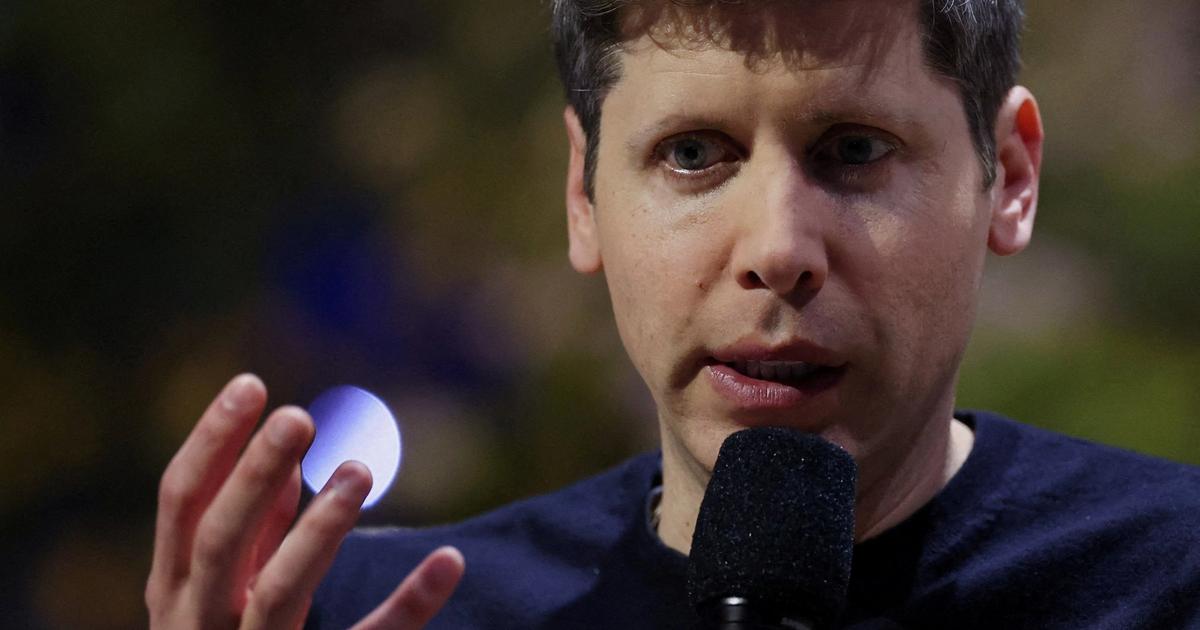
James Manyika, a senior vice president at Google-Alphabet, stated that people in the Global South are more optimistic about AI's potential benefits compared to Western attitudes during an event hosted by Semafor’s Next 3 billion conference on Tuesday. He highlighted examples such as Google Translate supporting 300 languages and AI tools used for diagnosing tuberculosis and predicting Ebola outbreaks with high accuracy, emphasizing tangible current impacts rather than distant possibilities.
Written by AI on 2026-09-23, from this article's own text only (the story summary below draws on all the coverage).

AI analysis

Story summary

A top Google-Alphabet executive, James Manyika, stated at the Semafor's Next 3 Billion event on Tuesday that people in the Global South view AI more positively than those in the West. According to Manyika, this optimism stems from a perception of greater potential benefits for society. While challenges such as infrastructure and data access persist, he highlighted advancements like Google Translate now supporting 300 languages, with an ambitious goal of reaching 1,000 languages. Additionally, Manyika discussed how AI has been used to diagnose tuberculosis more accurately in countries like Zambia and India, where nearly 40% of cases go undiagnosed, emphasizing the real-world impact rather than future possibilities.

Written for “AI Optimism Gap” on 2026-11-01, grounded in this article and the 0 other(s) covering the same event.

Story

📰 AI Optimism Gap
Technology · 1 article(s) covering the same event.

Compared with similar articles

This article reads leans right and hedges 0% of its claims. Each row says how that neighbour differs.
The Guardian
⚖️ Leans strongly left further left than this Hedges 3 of 36 claims Outlet record 66/100
“The articles discuss different perspectives on AI from Europe and the Global South but do not describe the same specific incident or occurrence.”
CBC News
⚖️ Leans left further left than this Hedges 3 of 57 claims Outlet record 74/100
“The articles discuss different aspects of AI perceptions and regulation globally versus a focus on Western concerns.”
Semafor
Hedges 0 of 4 claims Outlet record 60/100
“The articles discuss different aspects of AI discourse and opinions from various stakeholders but do not describe the same specific incident.”
Evening Standard
Hedges 1 of 33 claims Outlet record 65/100
“The articles describe different events and perspectives on AI, one from a Google executive and another from Andy Burnham at the UN General Assembly.”
The Straits Times
Hedges 3 of 23 claims Outlet record 66/100
“The articles discuss different sources and contexts for optimism about AI: one from a Google executive's statement at an industry event, the other from a Gallup poll across multiple countries.”
404 Media
Hedges 6 of 41 claims Outlet record 95/100
“The articles discuss different aspects and findings related to public attitudes towards AI in various regions but do not describe the same specific incident or occurrence.”
The Straits Times
⚖️ Leans left further left than this Hedges 3 of 20 claims Outlet record 66/100
“The articles discuss different events: one is about Google's executive speaking on AI optimism in the Global South, while the other is about AI leaders briefing the UN Security Council.”
How this article was measured signals, leaning charts, publisher record, byline, topics and claims

Signals How these are calculated →

Claims extracted
8
sentences that state something as happening or true
Uncertain
0%
0 of 8 hedged ("reportedly", "may", "according to")
Leaning
Leans right
of the writing, not the subject · beta estimate
Publisher signals
60/100
Semafor's corrections and hedging, across everything collected from it. Not a measure of accuracy.
Outlets on this story
1
Technology
Same framing elsewhere
1
articles that frame the event the way this one does
Analyzed 2026-09-23 · how these are computed

How this is being covered How these are calculated →

Article leaning vs. publisher reliability
Source leaning vs. consistency

Publisher

Semafor · 1393 article(s) · 1 correction(s) detected
Running correction rate · 1 correction(s)

Who wrote this

J.D. Capelouto
24 article(s) here · 0 carrying a prediction
🔮 Anthropic advertises a salary floor of $265,000 for charmers willing to spend half their time on the road in increasingly hostile territory.
2026-10-30 · assertive framing · The AI boom spawns job market for data-center liaisons
🔮 The company reported an 85% gross profit margin on the core work of running its existing AI models — as The Information wrote, it’s “a reality check” for skeptics who thought the consumption-based, pay-as-you-go pricing wouldn’t be profitable.
2026-10-28 · assertive framing · Anthropic’s key number is its 85% gross margin
🔮 If even they’ve given up on “SI,” there may be little hope for it catching on among the general public.
🔮 Another feature lets users build a 3D map of their house, then pull in Ring cameras to monitor people and cars moving around outside — the kind of spatial data home robots will eventually need, too.
2026-10-28 · mixed framing · Tech companies lean into AI at home
🔮 Proof-of-human technology, which can let a person vouch for the AI agents acting on their behalf, could keep bad bots off of websites without forcing platforms to block all of them.
2026-10-23 · mixed framing · The race to tell humans from AI agents
🔮 The New York City chapter of the Democratic Socialists of America is divided over whether the AI industry is a destructive capitalist force that could kill everyone, or merely an overhyped capitalist hustle.
🔮 Eventually, Perla said he wants to launch the “New York Token Exchange,” a marketplace for AI models in which thousands of models from thousands of hosting providers — any data center willing to run an open model — would compete to serve each request, turning AI tokens into a commodity that could be traded with futures, hedges, and price indices, like oil or electricity.
2026-10-16 · mixed framing · OpenRouter challenger closes seed round
🔮 More than half of the references to data centers on Fox News over the last two years would have left viewers with a favorable impression, compared to less than 10% on CNN and 5% on MS NOW, according to a new Semafor analysis of mentions of data centers on each network.
🔮 The AI bill is coming for governments and businesses, and no one knows whether the money will be there to pay it.
2026-10-02 · assertive framing · AI costs are rising for organizations, reports warn
🔮 Some analysts predict it could be the catalyst for agentic AI to leap from business to consumer applications.
2026-09-25 · assertive framing · Meta’s Muse taps into 'kidult' market
Also by J.D. Capelouto
Nothing else under this byline is closely related to this article, so these are simply their most recent.
All 24 articles by J.D. Capelouto →

Topics

Google Translate Google-Alphabet India Semafor Zambia

Subjects

Manyika PERSON · 2× Google ORG · 1× Google Translate ORG · 1× Google-Alphabet ORG · 1× India GPE · 1× James Manyika PERSON · 1× Semafor ORG · 1× Zambia GPE · 1× the Democratic Republic of the Congo GPE · 1×

Narrative

The Global South is “a little bit more optimistic” about AI compared to the West thanks to differing perceptions about how the technology can benefit society, a top Google-Alphabet executive said Tuesday.
framing: assertive · carried by 1 article(s) · first seen 2026-09-23
2026-09-23 · Semafor
Global South more optimistic about AI than the US, Google exec says · assertive framing

Claims (8 extracted, 0 hedged)

The Global South is “a little bit more optimistic” about AI compared to the West thanks to differing perceptions about how the technology can benefit society, a top Google-Alphabet executive said Tuesday. asserted
executive → compare → society
“The attitudes to AI have always been a little different,” James Manyika, the company’s senior vice president of research, labs, technology and society said at Semafor’s Next 3 Billion event. asserted
Manyika → say → event
“In terms of the potential to make a difference, I think there’s always been more possibilities.” asserted
I → make → difference
His comments came as pushback on AI is growing in the US, particularly against data centers. asserted
pushback → come → centers
While Manyika noted challenges like infrastructure and access, he pointed to Google Translate now being able to work in 300 languages — a new milestone — with “a moonshot of 1,000 languages.” asserted
Translate → note → languages
He also mentioned health breakthroughs in diagnostics: Nearly 40% of people go undiagnosed for tuberculosis — that gap is particularly concentrated in the Global South. asserted
gap → mention → South
“So we spent a long year in Zambia and India, for example, working and showcasing that we can actually use AI to do that,” Manyika said. asserted
Manyika → spend → that
Not in some far future, but now.” And Google’s Planetary Prediction Engine, he said, was used to predict Ebola outbreaks in the Democratic Republic of the Congo with 83% accuracy. asserted
he → say → accuracy
💬Give feedback
🕘History 🎫Support