Photo via Global News

Why a plan to end strikes impacting ‘national interest’ is drawing criticism

Read the original at Global News ↗
Cite

Boutilier, A. (2026, September 22). Why a plan to end strikes impacting ‘national interest’ is drawing criticism. Global News. https://globalnews.ca/news/12068844/liberal-labour-law-anti-democratic-labour-leaders/

Dated when The Aporia collected the article, usually within hours of publication. Check the original for its exact date and byline.

Global News · collected 2026-09-22 · by Alex Boutilier

Quick Summary

Prime Minister Mark Carney’s government has proposed Bill C-39, the Building Canada Strong Act, which aims to change the Canada Labour Code by allowing the federal labour minister to end strikes deemed against the national interest. Critics argue this is undemocratic and overly broad in definition, as it grants significant power to the government over workers' rights. The bill would amend Section 107 of the Canada Labour Code, currently under legal challenge for its use in ending strikes, to give ministers more authority in resolving industrial disputes. Labour Minister Patty Hajdu claims this measure is a tool of last resort and aims to raise accountability for both parties involved in labour disputes.
Written by AI on 2026-09-22, from this article's own text only (the story summary below draws on all the coverage).

AI analysis

Story summary

Patty Hajdu, Canada’s Jobs Minister, stated that the federal government will not interfere with workers’ right to strike despite considering legal changes to improve labour relations. The minister emphasized that upcoming legislation aims to reduce the number of times the government has to intervene in strikes under Section 107 of the Canada Labour Code. This section allows Ottawa to refer disputes to the Canada Industrial Relations Board, a measure employers and unions have differing views on. While most employers advocate for greater federal power to intervene during labour disruptions that could harm national interests, unions argue against any measures that might compromise their right to strike. Hajdu added that government intervention is a last resort and encouraged parties to resolve issues themselves at the negotiating table. The proposed amendments include introducing a special mediator role who will document arguments in acrimonious negotiations and publish reports identifying sticking points.

Written for “Canada Labour Law Changes” on 2026-10-31, grounded in this article and the 23 other(s) covering the same event.

Story

📰 Canada Labour Law Changes
Politics · 24 article(s) covering the same event. Compare every outlet's account →

Compared with similar articles

This article reads leans left and hedges 8% of its claims. Each row says how that neighbour differs.
Toronto Star
⚖️ Centre further right than this Hedges 1 of 7 claims Outlet record 64/100
Toronto Star
Hedges 0 of 19 claims Outlet record 64/100
Toronto Star
⚖️ Leans right further right than this Hedges 4 of 37 claims Outlet record 64/100
Global News
Hedges 2 of 14 claims Outlet record 63/100
“The articles discuss different aspects of labor relations in Ontario and Canada, with Article A focusing on union actions related to strike votes and Article B addressing federal legislation to end strikes impacting national interest.”
Global News
⚖️ Leans left Hedges 1 of 6 claims Outlet record 63/100
Toronto Star
⚖️ Leans strongly right further right than this Hedges 0 of 28 claims Outlet record 64/100
“Article A discusses the general tabling of legislation to overhaul environmental and labour rules, while Article B focuses specifically on the proposed legislation's impact on strikes in national interest, indicating a more specific aspect of the broader event.”
Toronto Star
⚖️ Leans right further right than this Hedges 0 of 5 claims Outlet record 64/100
“While both articles discuss Bill C-39, Article A reports on criticisms following its proposal, while Article B presents FETCO's statement acknowledging the bill's introduction and its implications.”
Toronto Star
⚖️ Leans right further right than this Hedges 6 of 40 claims Outlet record 64/100
“The articles discuss related legislative proposals but describe different stages or reactions to them, not the same specific incident.”
CBC News
⚖️ Leans left Hedges 1 of 21 claims Outlet record 74/100
“The articles discuss related legislative actions but describe different stages and perspectives on the proposed changes to the Labour Code, not a single identical incident.”
The Globe and Mail
Hedges 2 of 42 claims Outlet record 52/100
“While both articles discuss proposed legislation to address strikes, Article A describes the announcement and intention behind the upcoming bill, while Article B discusses criticism of the actual introduced bill (Bill C-39) a few days later.”
How this article was measured signals, leaning charts, publisher record, byline, topics and claims

Signals How these are calculated →

Claims extracted
36
sentences that state something as happening or true
Uncertain
8%
3 of 36 hedged ("reportedly", "may", "according to")
Leaning
Leans left
of the writing, not the subject · beta estimate
Publisher signals
63/100
Global News's corrections and hedging, across everything collected from it. Not a measure of accuracy.
Outlets on this story
24
Politics
Same framing elsewhere
1
articles that frame the event the way this one does
Analyzed 2026-09-22 · how these are computed

How this is being covered How these are calculated →

Article leaning vs. publisher reliability
Source leaning vs. consistency

Publisher

Global News · 2610 article(s) · 11 correction(s) detected
Running correction rate · 11 correction(s)

Who wrote this

Alex Boutilier
17 article(s) here · 1 carrying a prediction
🔮 A recent analysis by the Parliamentary Budget Office suggested reaching that target would require “core” defence spending to increase from $95.7 billion in 2030 to $163.7 billion in 2035-36.
🔮 America’s top diplomat in Ottawa appears to be conflating public diplomacy with “foreign interference” as the Republicans brace for what polls suggest could be a bruising in the U.S. midterms.
🔮 While court documents revealed that the RCMP believed Wallin had broken the law and were trying to gather proof of criminal wrongdoing, the police force announced in 2016 that Wallin would not be charged.
🔮 Researchers are McGill’s Media Ecosystem Observatory (MEO) have been keeping tabs on the online discourse around the province’s referendum which will ask, among other questions, if Albertans want a binding provincial vote on independence from Canada.
🔮 The increasing availability of sophisticated drone technology has led the Department of National Defence (DND) to move to take “critical” steps to counter “unauthorized drone activity” that could threaten Canadian military installations.
🔮 Champagne appeared non-committal when asked if Ottawa would extend the ban, which banned foreign investors from buying Canadian residential property and was first enacted in 2022.
🔮 That’s a far cry from the roughly 2,422 foreign agents Public Safety Canada has estimated are active in Canada, raising questions from opposition MPs about how effective the Liberals’ registration scheme will be.
🔮 Few are willing to be more public about it, and that’s their decision.”
🔮 “I would say that the use of counter-drone technology around critical infrastructure is becoming the norm,” Carvin said.
🔮 Anand, who formerly served as minister of national defence under former prime minister Justin Trudeau, pointed to Prime Minister Mark Carney’s decision to ramp up defence spending and the impact that money will have on northern security.
Also by Alex Boutilier
Nothing else under this byline is closely related to this article, so these are simply their most recent.
All 17 articles by Alex Boutilier →

Topics

Bill C-39, Labour Liberals Section 107 the Canada Labour Code

Subjects

Labour ORG · 2× Air Canada ORG · 1× Canada Post ORG · 1× Carney PERSON · 1× Donald Trump PERSON · 1× Liberal NORP · 1× Liberals NORP · 1× Mark Carney PERSON · 1× U.S. GPE · 1× the Canada Labour Congress ORG · 1×

Narrative

It’s a central pillar of Carney’s political agenda against the backdrop of the ongoing trade war with U.S. President Donald Trump’s administration, and comes after multiple high-profile strikes and lockouts over recent years including the Air Canada flight attendants strike and lockout in 2025, the Canada Post labour dispute over the course of 2024 and 2025, and the federal public servants’ strike in 2023.
framing: assertive · carried by 1 article(s) · first seen 2026-09-22
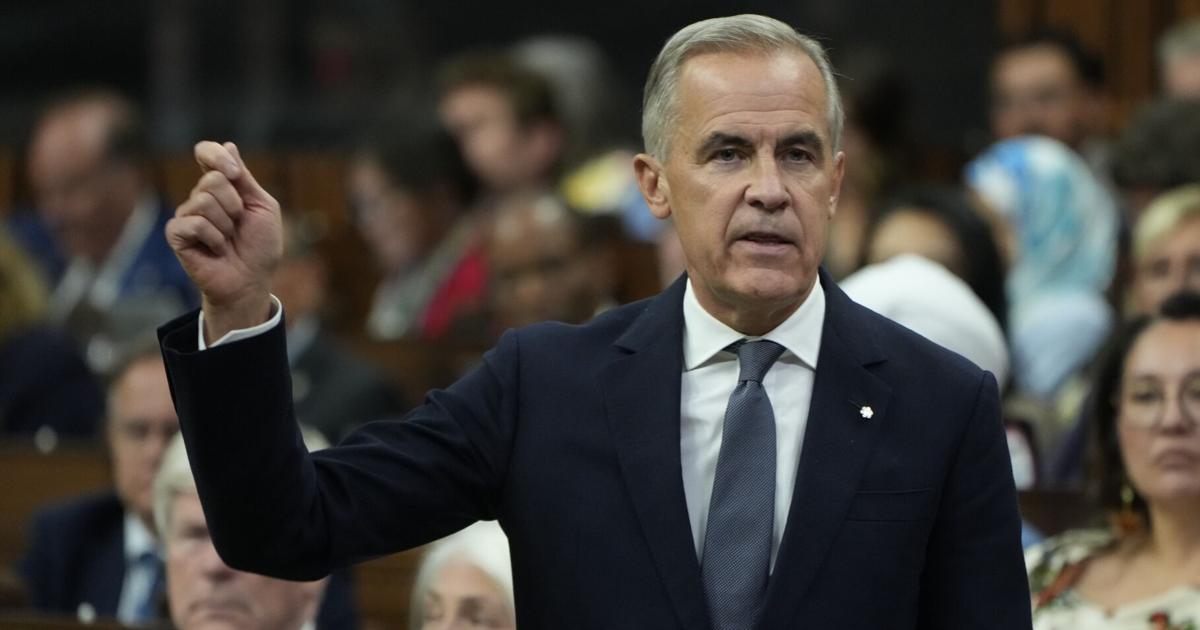
🔮 One day after the federal Liberals proposed new legislation with the power to end strikes impacting the “national interest,” concerns are being raised that the bill is “anti-democratic” and would let the government decide who can exercise the right to strike.

Claims (36 extracted, 3 hedged)

One day after the federal Liberals proposed new legislation with the power to end strikes impacting the “national interest,” concerns are being raised that the bill is “anti-democratic” and would let the government decide who can exercise the right to strike. asserted
who → propose → right
Bill C-39, officially titled as the Building Canada Strong Act, is being framed by Prime Minister Mark Carney’s government as simplifying the country’s regulatory regime and making it easier for businesses to get projects greenlit, as well as changing the Canada Labour Code. asserted
projects → title → Code
It’s a central pillar of Carney’s political agenda against the backdrop of the ongoing trade war with U.S. President Donald Trump’s administration, and comes after multiple high-profile strikes and lockouts over recent years including the Air Canada flight attendants strike and lockout in 2025, the Canada Post labour dispute over the course of 2024 and 2025, and the federal public servants’ strike in 2023. asserted
It → ’ → 2023
But union leaders warn that the legislation would also allow the government the power to end a legal strike if the federal labour minister decides it goes against the “national interest,” a criteria critics say is broadly defined. asserted
critics → warn → interest
At issue is a section of the Canada Labour Code known as Section 107, a vaguely-written provision that allows the minister of labour to take measures to “promote conditions favourable to the settlement of industrial disputes. asserted
minister → know → disputes
Section 107, as its currently written, allows the federal labour minister to “do such things” that “seem likely to maintain or secure industrial peace and to promote conditions favourable to the settlement of industrial disputes.” asserted
that → write → disputes
The Liberal government has controversially used Section 107 to end legal strikes in recent years – an issue the Canada Labour Congress noted is currently being litigated before the courts. asserted
Congress → use → courts
Labour leaders wanted the section repealed or its use restricted, while employers favour stronger government intervention – at least when it comes to ending strikes. asserted
it → want → strikes
Get breaking National news Bill C-39 would amend the current law to give the minister the power to end a strike and order a binding resolution if the minister believes it “adversely affect the national interest.” asserted
it → get → interest
Labour Minister Patty Hajdu told reporters Monday afternoon that Section 107 is a “tool of last resort.” asserted
Section → tell → resort
“Ultimately, the government does not want to resolve the dispute for parties,” Hajdu said. asserted
Hajdu → want → parties
“So we’re putting into place new tools that will raise the bar around accountability for both of the parties to get that deal.” asserted
both → put → deal
The minister also would have to consider a report from a new special mediator role being introduced under the legislation. asserted
minister → have → legislation
That mediator would be tasked with setting out the parties’ positions and could offer recommendations on a new collective agreement. uncertain
mediator → task → agreement
But Mark Rowlinson, a lawyer with Goldblatt Partners LLP, told reporters Tuesday that the government’s claim that the legislation creates “guardrails” around the use of Section 107 is “nonsense.” uncertain
legislation → tell → Section
“It provides the complete and unlimited discretion to the federal minister to decide who gets to go on strike and who does not,” Rowlinson said. asserted
Rowlinson → provide → strike
Bill C-39 lays out broad “relevant considerations” for the labour minister to take before deciding whether a strike is against the national interest. asserted
strike → lay → interest
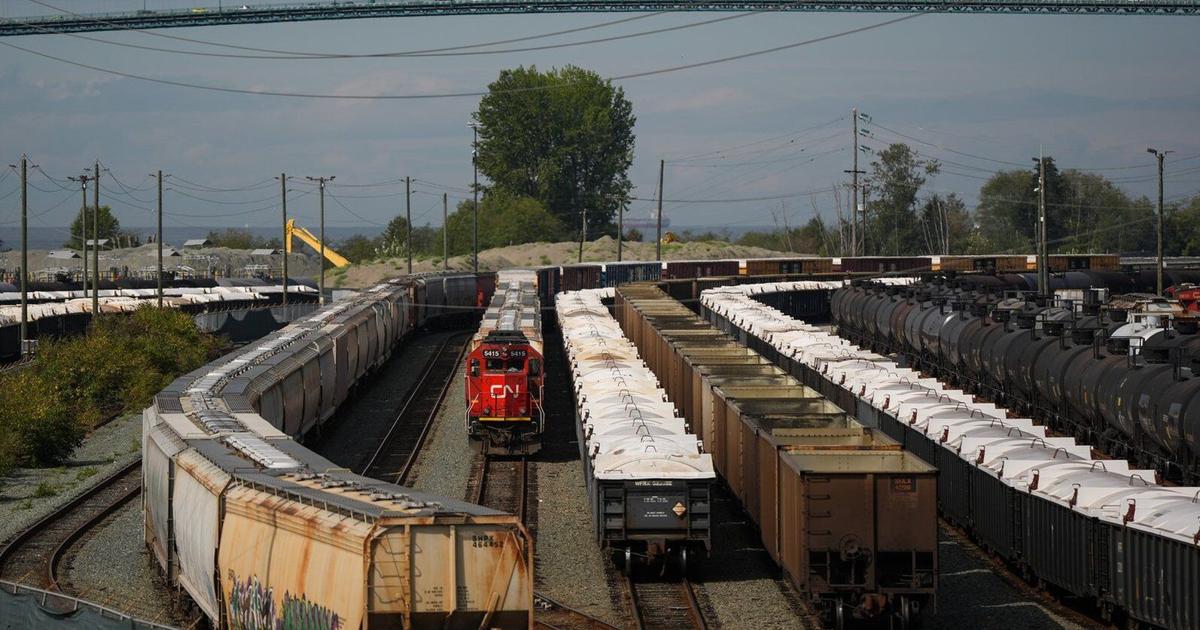
That includes whether a strike or lockout is having, or could have, a “significant” impact on the country’s economy – such as in the case of a rail or port strike – or whether it is creating a significant “social disruption.” What constitutes a “social disruption” is not defined in the legislation. uncertain
constitutes → include → legislation
The minister must also consider whether referring the matter to the Canada Industrial Relations Board for binding arbitration “has any impact on the freedom of association.” asserted
referring → consider → association
“Of course we’re concerned about economic harm. asserted
we → ’re → harm
Employers and unions should be concerned about economic harm as well, by the way,” Hajdu said Monday. asserted
Hajdu → concern → way
“But the national interest, the consideration of the national interest will also include people’s Charter rights to strike, and the minister will have to balance all of that.” asserted
minister → include → that
What critics are saying Bea Bruske, the president of the Canadian Labour Congress (CLC), said in Ottawa on Tuesday that “strong collective bargaining, including the ability to withdraw your labour and to go on strike, is in Canada’s national interest.” asserted
bargaining → say → interest
“It gives workers the power to bargain for better wages, safer workplaces and greater job security,” Bruske said. asserted
Bruske → give → wages
“I want to be clear that workers are on Team Canada. asserted
workers → want → Canada
We are ready to defend Canadian jobs, to build Canada’s needs, to build our infrastructure, to attract investment and to make this country much more resilient in the face of the Trump trade war. asserted
country → defend → war
But we cannot have our elbows up against Trump with our hands tied behind our backs at the bargaining table.” asserted
hands → have → table
Rowlinson said he’s never seen the term “national interest” used in labour law in Canada. asserted
term → say → Canada
“The purpose of strike action, the reason why workers go out on strike is to have economic impact. asserted
workers → go → impact
To say to workers that you cannot go on strike if you’re going to have an economic impact is to say to the workers you cannot go out on strike,” Rowlinson said. asserted
Rowlinson → say → strike
NDP Leader Avi Lewis accused Carney of using the ongoing trade war with the U.S. to push through changes to the labour code. asserted
Lewis → accuse → code
“We’re under economic attack from the United States and we need a crisis response. asserted
we → ’re → response
But Prime Minister Carney is using our fear and disorientation around the trade war to push through a series of unpopular measures that he did not run on, has no mandate for and would never get away with under normal circumstances,” Lewis said. asserted
Lewis → use → circumstances
Conservative Leader Pierre Poilievre issued a statement on X after the bill was tabled, but did not address the labour code changes proposed in the legislation. asserted
bill → issue → legislation
Poilievre questioned whether Bill C-39 will actually result in getting projects built. asserted
projects → question → C-39
The Canadian Chamber of Commerce, meanwhile, was supportive of the legislation. “The business community has repeatedly backed proposals for additional dispute-resolution tools, including special mediation, alongside a continued ability for government to act when bargaining has failed and the wider economy is at risk,” said Pascal Chan, a vice president with the business group. asserted
Chan → back → group

💬Give feedback
🕘History 🎫Support