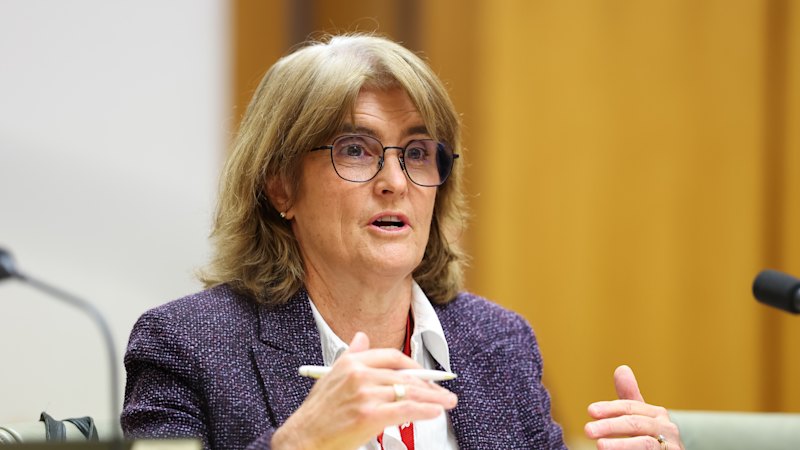
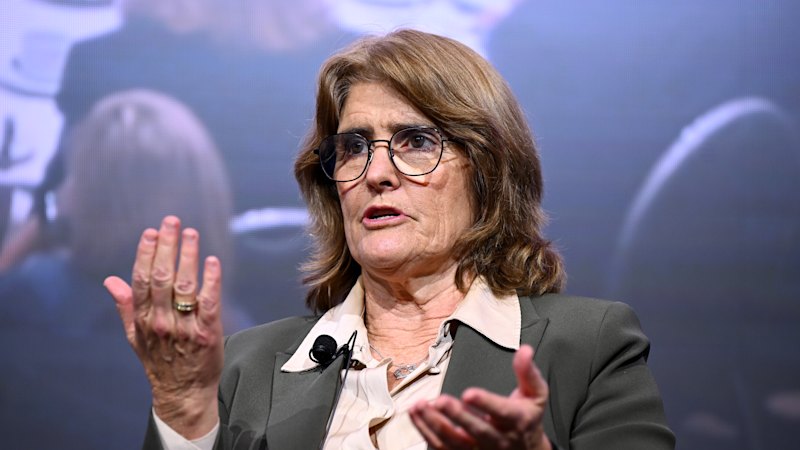
Photo via ABC News (AU)

No evidence of a 'wage-price spiral' in Australia

Read the original at ABC News (AU) ↗
Cite

Hutchens, G. (2026, September 22). No evidence of a 'wage-price spiral' in Australia. ABC News (AU). https://www.abc.net.au/news/2026-09-23/no-evidence-of-a-wage-price-spiral-in-australia-rba-iain-ross/107180770

Dated when The Aporia collected the article, usually within hours of publication. Check the original for its exact date and byline.

ABC News (AU) · collected 2026-09-22 · by Gareth Hutchens

Quick Summary

Iain Ross, a member of the Reserve Bank of Australia’s monetary policy board and former Fair Work Commission president, recently dismissed concerns about a "wage-price spiral" in Australia. He argues there is no evidence to support the idea that rising wages have contributed to inflation, pointing out significant differences between today's labor market framework and those of the 1970s and 1980s, which included less restrictive wage-setting institutions and stronger unions. Ross emphasizes modern economic structures and regulations have reduced the likelihood of workers' wage demands spiraling into higher prices and inflation.
Written by AI on 2026-09-22, from this article's own text only (the story summary below draws on all the coverage).

AI analysis

Story summary

In a speech last night, Iain Ross, a member of the Reserve Bank of Australia’s (RBA) monetary policy board, dismissed claims that Australia is facing runaway wage growth leading to inflation. Ross pointed out that unlike the 1970s when oil price shocks combined with large pay raises contributed to high inflation, today's labor market framework differs significantly. He argued there is no evidence suggesting a current "wage-price spiral," where rising wages drive up prices and vice versa. Ross’s background includes roles as Fair Work Commission President, Federal Court judge, and ACTU assistant secretary, giving him extensive practical experience in wage dynamics. This perspective challenges media narratives warning about imminent inflationary pressures due to wage increases.

Written for “Australian Wage Price Stability” on 2026-11-01, grounded in this article and the 0 other(s) covering the same event.

Story

📰 Australian Wage Price Stability
Economy/Business · 1 article(s) covering the same event.

Compared with similar articles

This article reads unscored and hedges 19% of its claims. Each row says how that neighbour differs.
The Sydney Morning Herald
Hedges 2 of 31 claims Outlet record 61/100
“The articles discuss different speeches by Reserve Bank officials addressing distinct aspects of inflation concerns in Australia.”
The Sydney Morning Herald
⚖️ Leans left Hedges 1 of 24 claims Outlet record 61/100
“The articles describe different speeches given by members of the Reserve Bank on separate occasions, not a single incident.”
How this article was measured signals, leaning charts, publisher record, byline, topics and claims

Signals How these are calculated →

Claims extracted
32
sentences that state something as happening or true
Uncertain
19%
6 of 32 hedged ("reportedly", "may", "according to")
Leaning
withheld
no quote in the article backed the model's score
Publisher signals
68/100
ABC News (AU)'s corrections and hedging, across everything collected from it. Not a measure of accuracy.
Outlets on this story
1
Economy/Business
Same framing elsewhere
1
articles that frame the event the way this one does
Analyzed 2026-09-22 · how these are computed

How this is being covered How these are calculated →

Article leaning vs. publisher reliability
Source leaning vs. consistency

Publisher

ABC News (AU) · 4529 article(s) · 10 correction(s) detected
Running correction rate · 10 correction(s)

Who wrote this

Gareth Hutchens
10 article(s) here · 1 carrying a prediction
🔮 It asks three questions about Australia's resource tax regime: - Is the system designed to collect more when prices and profits surge? - What level of revenue does the public actually collect? - Does stronger public capture automatically drive investment away? It says if Australia's system had better boom sensitivity, it would collect around $45 billion more every year across state and Commonwealth revenue streams, as it rode the global commodity price cycle.
🔮 The latest data show Australia's unemployment rate is 4.7 per cent, but economists say the RBA may not have finished lifting rates.
🔮 The "whole show" was built on housing, Schroder said, and it couldn't continue this way.
🔮 In February, Will Hetherton, the Future Fund's chief corporate affairs officer, defended the fund's investments in Palantir.
🔮 The Bureau of Statistics will release its September inflation data tomorrow.
2026-09-29 · assertive framing · Breaking: RBA lifts rates to highest level in 15 years
🔮 He rejected the idea that Australia has almost experienced runaway wage growth in recent years that could have fed into damaging inflation.
2026-09-22 · assertive framing · No evidence of a 'wage-price spiral' in Australia
🔮 The RBA's Monetary Policy Board will meet on September 28-29 to determine the next move in the cash rate target.
🔮 But farmers and the hospitality and tourism industries say the government's crackdown on working holiday visas will hit the economy and make labour shortages worse.
🔮 He is famous for his adage, called Goodhart's Law, that an observed statistical relationship will tend to collapse once you try to target it for policy purposes.
Also by Gareth Hutchens
Nothing else under this byline is closely related to this article, so these are simply their most recent.
All 10 articles by Gareth Hutchens →

Topics

Australia RBA the Fair Work Commission the Federal Court the Reserve Bank's

Subjects

Australia GPE · 7× Ross PERSON · 3× RBA ORG · 2× ACTU ORG · 1× Iain Ross PERSON · 1× Supreme Court of Victoria ORG · 1× the Australian Council of Trade Unions ORG · 1× the Fair Work Commission ORG · 1× the Federal Court ORG · 1× the Reserve Bank's ORG · 1×

Narrative

A 'substantially different' wage bargaining environment today It's worth reading his entire speech, if you're interested in learning more about the big differences between the 1970s and today. He talked about the old concept of "comparative wage justice," which held that employees doing the same work for different employers or in different industries should receive the same amount of pay, irrespective of the capacity of their employers or industry.
framing: assertive · carried by 1 article(s) · first seen 2026-09-22
🔮 He rejected the idea that Australia has almost experienced runaway wage growth in recent years that could have fed into damaging inflation.
2026-09-22 · ABC News (AU)
No evidence of a 'wage-price spiral' in Australia · assertive framing

Claims (32 extracted, 6 hedged)

Iain Ross, a member of the Reserve Bank's monetary policy board, gave a very interesting speech last night. asserted
Ross → give → speech
He rejected the idea that Australia has almost experienced runaway wage growth in recent years that could have fed into damaging inflation. uncertain
that → reject → inflation
"I want to talk about wage-price spirals," he said. asserted
he → want → spirals
"The 'threat' of rising wages has been a persistent theme in the financial press since inflation began rising sharply from mid-2021. " asserted
inflation → rise → mid-2021
A number of media commentators have raised the risk of a wage-price spiral — pointing to the 1970s when the oil price shock collided with large pay rises flowing through the economy. asserted
shock → raise → economy
"There is no evidence of the emergence of a wage-price spiral in the present circumstances and recent data suggest such an outcome is unlikely," he argued. asserted
he → be → circumstances
Nobody on the RBA's nine-person monetary policy board has had as much practical experience with Australia's labour market and wage-setting institutions. asserted
Nobody → have → institutions
It was rare to hear a speech from an RBA board member (these days) that focused so heavily on the reality of Australia's modern wage-setting institutions, and the decline in workers' power, to challenge the idea that our economy could experience a "wage explosion" any time soon. uncertain
economy → hear → explosion
According to the idea, Ross explained, following an increase in aggregate demand or an external cost shock, businesses raise their prices, which pushes up inflation. uncertain
which → accord → inflation
Workers then want higher wages to maintain their real wages, and if they think inflation will remain high, they may push for particularly large wage increases (so 'expectations' play an important role in the process). uncertain
expectations → want → process
Those higher wages then feed into higher costs, and prices, and so on, which amplifies the inflationary effects of the original shock, and round and round we go: Australia's economy experienced episodes of rapidly rising prices and wages in the 1970s and 1980s. But Ross explained that those events occurred in a very different Australia. asserted
events → feed → Australia
He said our modern labour and wage-setting institutions, our modern financial system, our extremely diminished union movement and much tougher sanctions for unlawful industrial action, and the broader industrial structure of our economy, were significantly different from 50 years ago. asserted
institutions → say → economy
He said our modern industrial relations system limited how frequently workers could revise their wage claims, and how easily higher wage claims could spread through the economy these days. uncertain
claims → say → economy
"These changes in Australia's wage-setting mechanisms have made the wage-price dynamics of the 1970s much less likely to recur," he said. asserted
he → set → 1970s
A 'substantially different' wage bargaining environment today It's worth reading his entire speech, if you're interested in learning more about the big differences between the 1970s and today. He talked about the old concept of "comparative wage justice," which held that employees doing the same work for different employers or in different industries should receive the same amount of pay, irrespective of the capacity of their employers or industry. asserted
employees → read → employers
He said that concept helped to spread large wage rises through Australia's economy 50 years ago. asserted
concept → say → economy
And he discussed the old practice of indexing wages to the consumer price index every three months, which tied rising wages with rising prices in a rapid inflationary feedback loop in the 1970s. asserted
which → discuss → 1970s
"The situation is very different today," he said. asserted
he → say → ?
"Comparative wage justice no longer plays the pervasive role it once did, and quarterly indexation is not a feature of the current system. asserted
indexation → play → system
The current enterprise bargaining arrangements, in particular, effectively operate as a shock absorber by constraining the bargaining capacity of those who are the subject of enterprise agreements. asserted
who → operate → agreements
"Such employees are unable to pursue claims for increased wages until the enterprise agreement to which they are subject has passed its nominal expiry date," he said. uncertain
he → pursue → date
Does the RBA think the unemployment rate is still too low? asserted
rate → think → ?
His speech was delivered at a fascinating time. asserted
speech → deliver → time
The RBA board will hold a highly-anticipated meeting on Monday and Tuesday next week to discuss what to do with interest rates. asserted
board → hold → rates
All four major banks and the bulk of money market traders expect the RBA to raise rates next week, given inflation and economic activity have been stronger than anticipated in Australia recently. asserted
inflation → expect → Australia
Inflation is still a global problem, and central banks in comparable countries have been lifting rates again. asserted
banks → lift → rates
RBA governor Michele Bullock also made a public appearance yesterday (a few hours before Dr Ross delivered his speech). And she warned that Australia's jobs market was probably still a bit too tight at the moment and putting upwards pressure on wages, business costs, and inflation more generally. asserted
market → make → wages
"I think between 4.5 and 5 [per cent unemployment] will probably take enough heat out of the labour market that it'll ease pressure on inflation," Bullock said. asserted
Bullock → think → inflation
Will the RBA board members vote as one next week? asserted
members → vote → one
Whatever the RBA board does with interest rates next week, it will be interesting to see if its decision will be unanimous. asserted
decision → do → rates
Under the board's new voting regime, which began in early 2025, there have been 12 meetings. asserted
which → begin → 2025
Of the 10 meetings where unattributed votes have been published, there have been split votes 30 per cent of the time: And two of the three meetings in which the board's nine members have failed to vote as one have occurred this year. Will next week's meeting record another split decision? asserted
meeting → publish → decision

💬Give feedback
🕘History 🎫Support