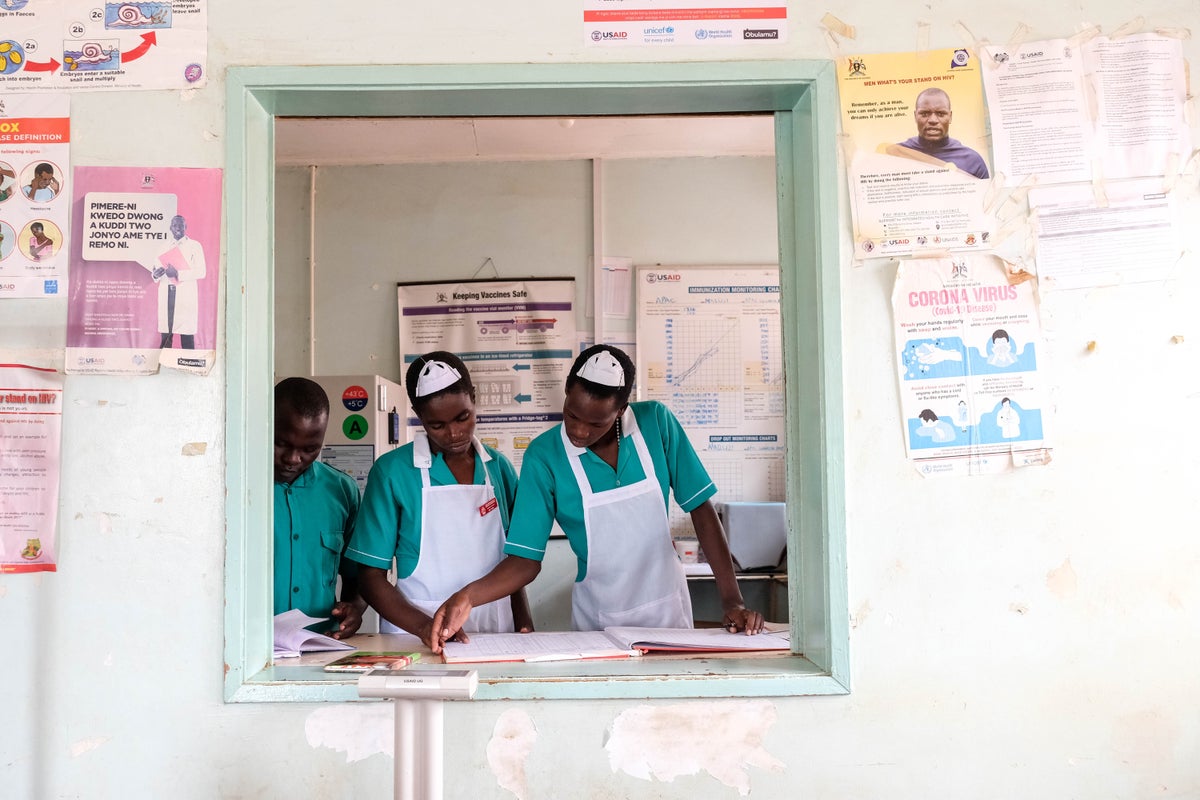
Photo via The Independent

‘Almost unprecedented’ cuts in malaria funding will hurt UK pandemic planning, leading scientists say

Read the original at The Independent ↗
Cite

Lay, K. (2026, September 22). ‘Almost unprecedented’ cuts in malaria funding will hurt UK pandemic planning, leading scientists say. The Independent. https://www.independent.co.uk/news/health/malaria-uk-pandemic-aid-cuts-science-b3054460.html

Dated when The Aporia collected the article, usually within hours of publication. Check the original for its exact date and byline.

The Independent · collected 2026-09-22 · by Kat Lay

Quick Summary

Leading UK scientists warn that significant reductions in funding for malaria research will weaken the country’s pandemic preparedness. An 80% majority of researchers polled believe that malaria science offers substantial health benefits to the UK public and enhances its safety. Public funding for malaria R&D dropped from $432 million in 2021 to $351 million in 2024, marking a “near unprecedented” decline according to experts. This reduction threatens research progress and scaling up of tools needed against malaria, which has spillover effects on other health issues like pandemics.
Written by AI on 2026-09-23, from this article's own text only (the story summary below draws on all the coverage).

AI analysis

Story summary

Leading UK scientists warn that "almost unprecedented" cuts to malaria research funding will weaken the country's readiness for future pandemics. According to the Malaria Science Index, a new report surveying top British researchers, 80% of respondents believe that malaria science benefits public health and enhances safety in the UK. Professor Heather Ferguson from the University of Glasgow emphasizes that environmental changes are bringing mosquito-borne diseases closer to home and stresses the importance of training and technological advancements developed through international collaboration. The report was released ahead of a high-level meeting on pandemic preparedness at the United Nations General Assembly in New York.

Written for “Malaria Funding Cuts” on 2026-11-01, grounded in this article and the 0 other(s) covering the same event.

Story

📰 Malaria Funding Cuts
Health · 1 article(s) covering the same event.

Compared with similar articles

Nothing to compare against. No article is close enough to this one for the pipeline to have linked or judged the pair.
How this article was measured signals, leaning charts, publisher record, byline, topics and claims

Signals How these are calculated →

Claims extracted
24
sentences that state something as happening or true
Uncertain
17%
4 of 24 hedged ("reportedly", "may", "according to")
Leaning
Leans left
of the writing, not the subject · beta estimate
Publisher signals
59/100
The Independent's corrections and hedging, across everything collected from it. Not a measure of accuracy.
Outlets on this story
1
Health
Same framing elsewhere
1
articles that frame the event the way this one does
Analyzed 2026-09-23 · how these are computed

How this is being covered How these are calculated →

Article leaning vs. publisher reliability
Source leaning vs. consistency

Publisher

The Independent · 3464 article(s) · 8 correction(s) detected
Running correction rate · 8 correction(s)

Who wrote this

Kat Lay
4 article(s) here · 1 carrying a prediction
🔮 READ MORE: How to spot if someone you love has warning signs of dementia Gene therapy could be the next breakthrough in preventing and treating Alzheimer's disease in those at risk.
2026-10-27 · assertive framing · Gene switch therapy could prevent AND treat Alzheimer's
🔮 The public has embraced them too, with millions of people taking the medicines in the UK. But amid the enthusiasm for those medications, known as GLP-1s, an older, cheaper anti-obesity drug that might be a better choice for some patients is being ‘overlooked’, a leading expert says.
🔮 An “almost unprecedented” scaling back of funding for malaria science will harm the UK’s preparedness for future pandemics, leading scientists say.
🔮 Researchers said the differences, first detected at the age of one, could lead to cognitive problems when children started school.
Also by Kat Lay
Nothing else under this byline is closely related to this article, so these are simply their most recent.

Topics

British New York Oxford the United Nations General Assembly the University of Glasgow

Subjects

British NORP · 1× Ferguson PERSON · 1× Heather Ferguson PERSON · 1× Impact Global Health ORG · 1× Malaria No More UK ORG · 1× New York GPE · 1× Oxford GPE · 1× YouGov ORG · 1× the United Nations General Assembly ORG · 1× the University of Glasgow ORG · 1×

Narrative

Heather Ferguson, professor of infectious disease ecology at the University of Glasgow, surveyed for the report, said: “Environmental changes are bringing mosquito-borne diseases much closer to home, and our ability to respond to these risks in the UK is strengthened by the training British scientists have from working shoulder-to-shoulder with experts in endemic countries. “The technologies and tools we have developed together are not only protecting children’s lives in Africa, but will help us protect and respond to similar risks in the UK,” she added.
framing: assertive · carried by 1 article(s) · first seen 2026-09-23
🔮 An “almost unprecedented” scaling back of funding for malaria science will harm the UK’s preparedness for future pandemics, leading scientists say.

Claims (24 extracted, 4 hedged)

An “almost unprecedented” scaling back of funding for malaria science will harm the UK’s preparedness for future pandemics, leading scientists say. asserted
scientists → harm → pandemics
Research targeting malaria has “spillover” effects that improve responses to wider health threats, according to experts polled for the first report of its kind. uncertain
that → target → kind
The Malaria Science Index, a survey of the UK’s top researchers in the field, is published as world leaders meet in New York for a high-level meeting on pandemic preparedness alongside the United Nations General Assembly on Friday. asserted
leaders → publish → Friday
Some 80 per cent of respondents said they believed malaria science provided health benefits to the UK public, with the same proportion saying they thought it made the UK safer. asserted
UK → say → public
Heather Ferguson, professor of infectious disease ecology at the University of Glasgow, surveyed for the report, said: “Environmental changes are bringing mosquito-borne diseases much closer to home, and our ability to respond to these risks in the UK is strengthened by the training British scientists have from working shoulder-to-shoulder with experts in endemic countries. “The technologies and tools we have developed together are not only protecting children’s lives in Africa, but will help us protect and respond to similar risks in the UK,” she added. asserted
she → survey → UK
Professor Ferguson said that the obvious way to protect people in the UK from malaria was to eliminate it from Africa: “If we can control and eliminate malaria from its heartland, everyone benefits.” asserted
everyone → say → heartland
The Oxford/AstraZeneca Covid-19 vaccine had its roots in research towards a malaria vaccine, and early results suggest antimalarial drug Atovaquone could help in treating some types of cancer. uncertain
Atovaquone → have → cancer
Malaria is a life-threatening disease that is caused by a parasite and spread to humans by some types of mosquito. asserted
that → threaten → mosquito
In 2024, there were an estimated 282 million malaria cases and 610,000 deaths, the majority of whom were children aged under five in Africa. asserted
majority → be → Africa
Almost all of the scientists polled saw funding shortfalls as a threat to the success of research, development and approval of future tools against malaria. asserted
all → poll → malaria
They also identified them as the primary threat to implementing and scaling up those tools, beyond even climate change and extreme weather events “ asserted
They → identify → change
Funding for global health has always been limited,” said one expert, “but the huge scale back of investment in support for this type of research in the last couple of years is almost unprecedented.” asserted
scale → say → years
Public funding for malaria research and development fell from $432m (£324m) in 2021 to $351m in 2024, according to figures from Impact Global Health. uncertain
funding → fall → Health
In the past two years, countries including the US and UK, both historically major donors in the fight against malaria, have announced widespread aid cuts. asserted
countries → include → cuts
Another scientist warned that continued research was vital to keep pace with a disease that is changing fast. asserted
that → warn → disease
The malaria parasite is evolving resistance to many antimalarial drugs, while mosquitoes are becoming resistant to existing insecticides, and new types of malaria-carrying mosquitoes are spreading across Africa. asserted
types → evolve → Africa
“As governments and other agencies look to cut funding…there may be a temptation to cut funding to grassroots research and development to help support deployment of existing tools… uncertain
governments → look → tools
This would be a huge mistake as innovation and discovery are absolutely critical to maintain the momentum in the fight against malaria,” they said. asserted
they → maintain → malaria
The poll involved 35 of the UK’s top malaria scientists in both academia and industry. asserted
poll → involve → academia
It was carried out by YouGov and led by Malaria No More UK, in partnership with Imperial College London, The Liverpool School of Tropical Medicine and The Innovative Vector Control Consortium. asserted
It → carry → Medicine
Because of the small size, they said the findings should only be treated as “indicative”. asserted
findings → say → size
Asked to point out the most promising tools in development involving UK scientists, 71 per cent highlighted drugs such as single-dose cures, and 69 per cent vaccines. asserted
cent → ask → cures
“With a new prime minister and cabinet in place, we hope the UK’s critical role as a malaria science superpower is maintained, primarily to end the disease for good but also to help protect the British public against threats to their health,” said Gareth Jenkins, managing director of Malaria No More UK. asserted
Jenkins → hope → UK
This article has been produced as part of The Independent’s Rethinking Global Aid project asserted
article → produce → project

💬Give feedback
🕘History 🎫Support