Perth life sciences player Syngenis Labs has joined forces with the renowned Perron Institute and the scientists behind Gene S to form a new precision-medicine company aimed at scaling an Australian-developed pharmacogenomics platform.
asserted
Labs → join → platform
Pharmacogenomics uses a patient’s genetic make-up to help determine which medicines and doses may work best for them.
uncertain
medicines → use → them
Syngenis, through its wholly owned Syngenis Ventures arm, will own one-third of the new Gene S Dx venture, alongside the Perron Institute and Gene S founders Dr Svetlana Baltic and Dr Suzanna Lindsey-Temple, who will collectively hold the remaining third.
asserted
who → own → third
Gene S Dx has acquired the Gene S business, its Rosa pharmacogenomics platform and the development intellectual property behind it.
asserted
Dx → acquire → it
For Syngenis, the deal looks like a neat real-world example of the integrated biotechnology model it has been pursuing, combining equity ownership with its DNA and RNA expertise, laboratory infrastructure and manufacturing muscle.
asserted
it → look → expertise
The Perth group is building an Australian end-to-end genetic medicine platform spanning AI-assisted discovery, laboratory development and ultimately, good manufacturing practice, otherwise coined GMP-regulated manufacturing.
asserted
group → build → discovery
‘We have not bought a test.
asserted
We → buy → test
We have bought the science and the interpretation layer that sits between a patient’s genome and their prescription.
asserted
that → buy → genome
At its heart are oligonucleotides – short, purpose-built strands of DNA or RNA used in everything from genetic testing to medicines designed to target or silence disease-related genetic instructions.
asserted
oligonucleotides → build → instructions
Syngenis can use its Discovery AI platform to identify and design prospective candidates, then synthesise and test them in its own laboratories.
asserted
Syngenis → use → laboratories
With Gene S now under the Gene S Dx umbrella, the company can now bring its nucleic-acid chemistry and laboratory expertise to Rosa and manufacture the oligonucleotide components of its DNA test kits in Australia, another step towards keeping more of the genetic-medicine value chain on home soil.
asserted
company → bring → soil
Adding to the momentum, the brains behind Rosa are staying on.
asserted
brains → add → Rosa
Baltic continues as chief executive and Lindsey-Temple as chief medical officer, while the technical, software, quality and regulatory team transfers into Gene S Dx.
Syngenis brings some financial muscle to the table, having recently banked $4 million through a pre-IPO raise ahead of a proposed ASX listing as it targets growth across precision medicine, RNA therapeutics and oligonucleotide synthesis.
asserted
it → continue → medicine
Syngenis’ research-grade manufacturing operation at Bentley Technology Park in Perth is already generating revenue, while clinical-grade GMP manufacturing is targeted for 2027.
asserted
manufacturing → manufacture → 2027
Just weeks after outlining its ambition to stretch that model across the genetic-medicine pathway, the company’s latest investment in Gene S Dx provides a tangible example of that strategy in action.
Syngenis labs managing director Thomas Hanly said: “Rosa is a genuinely good piece of Australian science that was built on very little.
asserted
that → outline → little
bring to it is the chemistry and the capacity to make it: we design and manufacture nucleic acids for a living, so we can sit alongside Svetlana’s team on panel design for the next indications and then produce the kits at volume, here, rather than watching the supply chain run offshore.
asserted
chain → bring → volume
As Hanly neatly puts it: “We have not bought a test.”
What Syngenis has effectively acquired is the science, and, just as importantly, the interpretation layer sitting between a patient’s genome and their doctor’s prescription, allowing the company to not only design new genetic test panels but also manufacture the resulting kits at volume.
asserted
company → put → volume
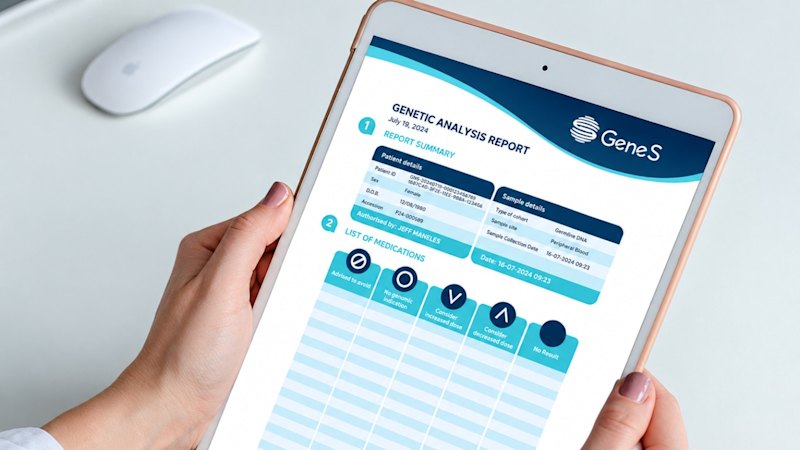
Rosa, named after DNA pioneer Rosalind Franklin, combines next-generation genetic sequencing with its proprietary RosaAnalyser software, which analyses the resulting genetic data and turns it into a clinician-ready report.
asserted
which → name → report
Although the laboratory generates a patient’s genetic data, it’s the Rosa software that does the heavy lifting, interpreting clinically relevant variants and translating them into a pre-prepared analysis showing how the patient may metabolise or respond to particular medicines and doses.
uncertain
patient → generate → medicines
Doctors can then use the report -usually ready within two to three days from a single blood, buccal, or saliva sample - alongside a patient’s clinical history and other medical considerations when choosing a medicine and dose, adding patient-specific genetic evidence to the decision-making process.
asserted
Doctors → use → process
Genetic variations can affect how quickly or slowly a person metabolises a drug, whether it is likely to work and the risk of unwanted side effects.
asserted
it → affect → effects
Two patients can have the same condition and receive the same medicine at the same dose yet produce completely different results.
asserted
patients → have → results
Focused on mental health, it reads eight genes and provides prescribing guidance across more than 20 medicines used for depression, anxiety, post-traumatic stress disorder, psychosis and attention-deficit/hyperactivity disorder (ADHD).
asserted
it → focus → depression
Because the underlying genetic information does not change, the result can potentially help inform future prescribing decisions involving medicines affected by the same genetic pathways, not just the prescription pushed by big pharma in front of the doctor that day.
asserted
result → change → doctor
The size of the problem RosaMind is targeting is hard to ignore.
asserted
RosaMind → target → problem
The landmark STAR*D study found only about one in three patients achieved remission after their first antidepressant treatment, while doctors can be left waiting six to eight weeks to see whether a particular treatment is doing the job.
asserted
treatment → find → job
For someone battling severe depression, getting that first prescription wrong can kick off months of trial and error – take the medication, wait for a response, deal with potential side effects and, if it falls short, start the process again with another drug or dose.
asserted
it → battle → drug
Now, with this new technology, doctors have another card to play before that cycle begins.
asserted
cycle → have → card
While RosaMind may be the opening act, Gene S Dx believes the underlying Rosa platform may have a bigger role to play.
uncertain
platform → open → role
The newly formed biotech says pain management is next, followed by cardiac prescribing, with a gut-health kit also under development.
asserted
kit → form → development
Each represents another test kit built on the same Rosa foundations rather than another platform started from scratch.
asserted
Each → represent → scratch
And that is where the commercial gears begin to mesh for Syngenis.
asserted
gears → begin → Syngenis
Notably, Rosa can run on sequencing equipment already used by pathology laboratories, allowing the labs to adopt the new platform without shelling out for entirely new hardware.
asserted
labs → run → hardware
Its proprietary software is provided to participating laboratories free of charge, with Gene S Dx instead generating recurring revenue from the specialised reagents and consumables required every time a patient test is run.
asserted
test → provide → reagents
The game changer for Syngenis is that as more laboratories adopt Rosa and testing volumes build, the more manufacturing work it is likely to pick up.
asserted
it → adopt → Rosa
Add new Rosa applications to a growing pool of patient tests and the opportunity gets bigger again, with Syngenis potentially developing and manufacturing an expanding suite of genetic testing panels.
asserted
Syngenis → add → panels
Meanwhile, fellow one-third owner, the Perron Institute, brings some serious scientific horsepower to Gene S Dx.
asserted
owner → bring → Dx
Founded in 1982, it is Western Australia’s longest-established medical research institute and a significant Australian nucleic-acid research centre, with programs spanning motor neurone disease, Parkinson’s disease, other rare diseases and youth mental health.
asserted
it → found → disease
Perron has already worked with the Gene S team on a study dubbed GENE-YD, which focused specifically on the prescription of pharmacogenetics-guided antidepressants in young people.
asserted
which → work → people
The institute’s credentials dovetail neatly with Syngenis.
asserted
credentials → dovetail → Syngenis
…and 8 more, not listed.
 The Aporia