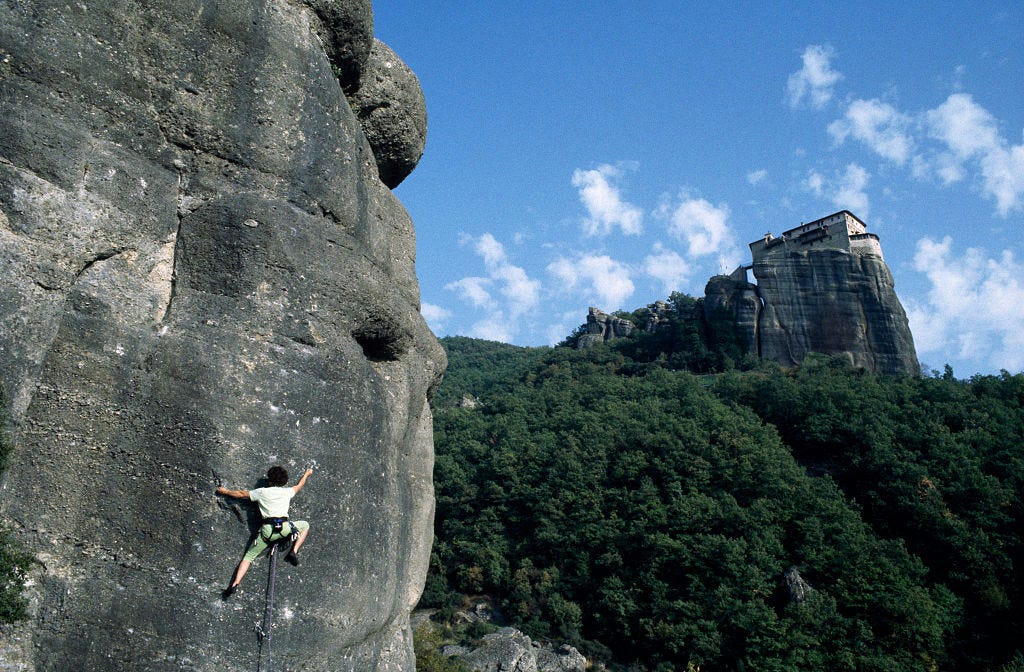
Photo via The Free Press

Whatever Happened to America’s Frontier Spirit?

Read the original at The Free Press ↗
Cite

Schrager, A. (2026, September 23). Whatever Happened to America’s Frontier Spirit? The Free Press. https://www.thefp.com/p/whatever-happened-americas-frontier-culture-risk-gen-z

Dated when The Aporia collected the article, usually within hours of publication. Check the original for its exact date and byline.

The Free Press · collected 2026-09-23 · by Allison Schrager

Quick Summary

The article discusses Kenneth Deardorff, who received the last Homestead Act patent in 1988 at age 70 for a plot of land in McGrath, Alaska, marking the end of the American frontier era. This shift reflects a change from an earlier period when Americans were encouraged to take significant risks to claim and settle new lands, rewarded by the government with property rights. The piece contrasts this adventurous spirit with current trends where young people seeking experiences or jobs in remote areas like Alaska now participate in structured programs rather than embarking on spontaneous adventures.
Written by AI on 2026-09-23, from this article's own text only (the story summary below draws on all the coverage).

AI analysis

Story summary

Kenneth Deardorff, living in a cabin in McGrath, Alaska, received the last Homestead Act patent in 1988 after nearly a decade of paperwork. This marked the official end of the American frontier era and a shift in Americans' relationship with risk. The Homesteading Act was an experiment that rewarded settlers willing to risk their lives and resources for land. Deardorff, representing the closing chapter of this era, moved from Southern California to Alaska at around age 80, though by then homesteading had become a rare and eccentric choice rather than a common aspiration.

Written for “American Frontier Spirit Debate” on 2026-10-31, grounded in this article and the 0 other(s) covering the same event.

Story

📰 American Frontier Spirit Debate
Other · 1 article(s) covering the same event.

Compared with similar articles

Nothing to compare against. No article is close enough to this one for the pipeline to have linked or judged the pair.
How this article was measured signals, leaning charts, publisher record, byline, topics and claims

Signals How these are calculated →

Claims extracted
16
sentences that state something as happening or true
Uncertain
0%
0 of 16 hedged ("reportedly", "may", "according to")
Leaning
Leans right
of the writing, not the subject · beta estimate
Publisher signals
96/100
The Free Press's corrections and hedging, across everything collected from it. Not a measure of accuracy.
Outlets on this story
1
Other
Same framing elsewhere
1
articles that frame the event the way this one does
Analyzed 2026-09-23 · how these are computed

How this is being covered How these are calculated →

Article leaning vs. publisher reliability
Source leaning vs. consistency

Publisher

The Free Press · 406 article(s) · 0 correction(s) detected
No corrections detected for this publisher. That may mean careful reporting, or simply that nothing has been checked.

Who wrote this

Allison Schrager
1 article(s) here · 1 carrying a prediction
🔮 If you were willing to risk your life, your family’s life, and your limited means, not to mention bears, moose, and disease, the government rewarded you with the most meaningful asset of the 19th century and most of the 20th: land to call your own.
2026-09-23 · assertive framing · Whatever Happened to America’s Frontier Spirit?
The only article under this byline in the corpus.

Topics

Alaska American Homestead Act McGrath

Subjects

Alaska GPE · 4× American NORP · 3× Deardorff PERSON · 3× Kenneth Deardorff PERSON · 1× McGrath PERSON · 1×

Narrative

If you were willing to risk your life, your family’s life, and your limited means, not to mention bears, moose, and disease, the government rewarded you with the most meaningful asset of the 19th century and most of the 20th: land to call your own.
framing: assertive · carried by 1 article(s) · first seen 2026-09-23
🔮 If you were willing to risk your life, your family’s life, and your limited means, not to mention bears, moose, and disease, the government rewarded you with the most meaningful asset of the 19th century and most of the 20th: land to call your own.
2026-09-23 · The Free Press
Whatever Happened to America’s Frontier Spirit? · assertive framing

Claims (16 extracted, 0 hedged)

Kenneth Deardorff lives in a cabin in McGrath, Alaska, where he day-trades put options. asserted
he → live → options
Around 80, he has a special place in American history because he represents the end of one era and the start of a new one. asserted
he → have → one
Deardorff was awarded the last Homestead Act patent, granting him what was once called frontier land. asserted
what → award → patent
He got it in 1988, after nearly a decade of paperwork. asserted
He → get → paperwork
His patent marked not only the official closing of the American frontier but a radical shift in our relationship with risk. asserted
patent → mark → risk
If you were willing to risk your life, your family’s life, and your limited means, not to mention bears, moose, and disease, the government rewarded you with the most meaningful asset of the 19th century and most of the 20th: land to call your own. asserted
government → risk → 20th
Giving people the chance to take a risk and be rewarded for it was the role of government back then. asserted
Giving → give → government
Risk-taking was something people once aspired to, but don’t seem to anymore. asserted
people → aspire → ?
By the time Deardorff, a boomer from Southern California, sought to homestead in Alaska, it was considered an eccentric choice. asserted
it → seek → Alaska
I was introduced to Deardorff through people I know from my own time in Alaska. asserted
I → introduce → Alaska
More than 25 years ago, I spent a summer in a small fishing village where I sold incense and worked on a food truck grilling halibut. asserted
I → spend → halibut
In the 1990s, college-age students often went to Alaska seeking a summer of adventure. asserted
students → go → adventure
Carrying a tattered copy of Into the Wild, we arrived with no plan, and worked all sorts of odd jobs, usually in the fishing industry. asserted
we → carry → industry
The frontier was gone by then, but we at least got to experience this frontier-like adventure for a summer before most of us pursued more conventional and safer lives. asserted
most → go → lives
I am told even this is rare now. asserted
this → tell → ?
Migrants work the fish canneries, and if young adults do come to Alaska, it is part of an organized program where everything is prearranged and they get college credit. asserted
they → work → credit

💬Give feedback
🕘History 🎫Support