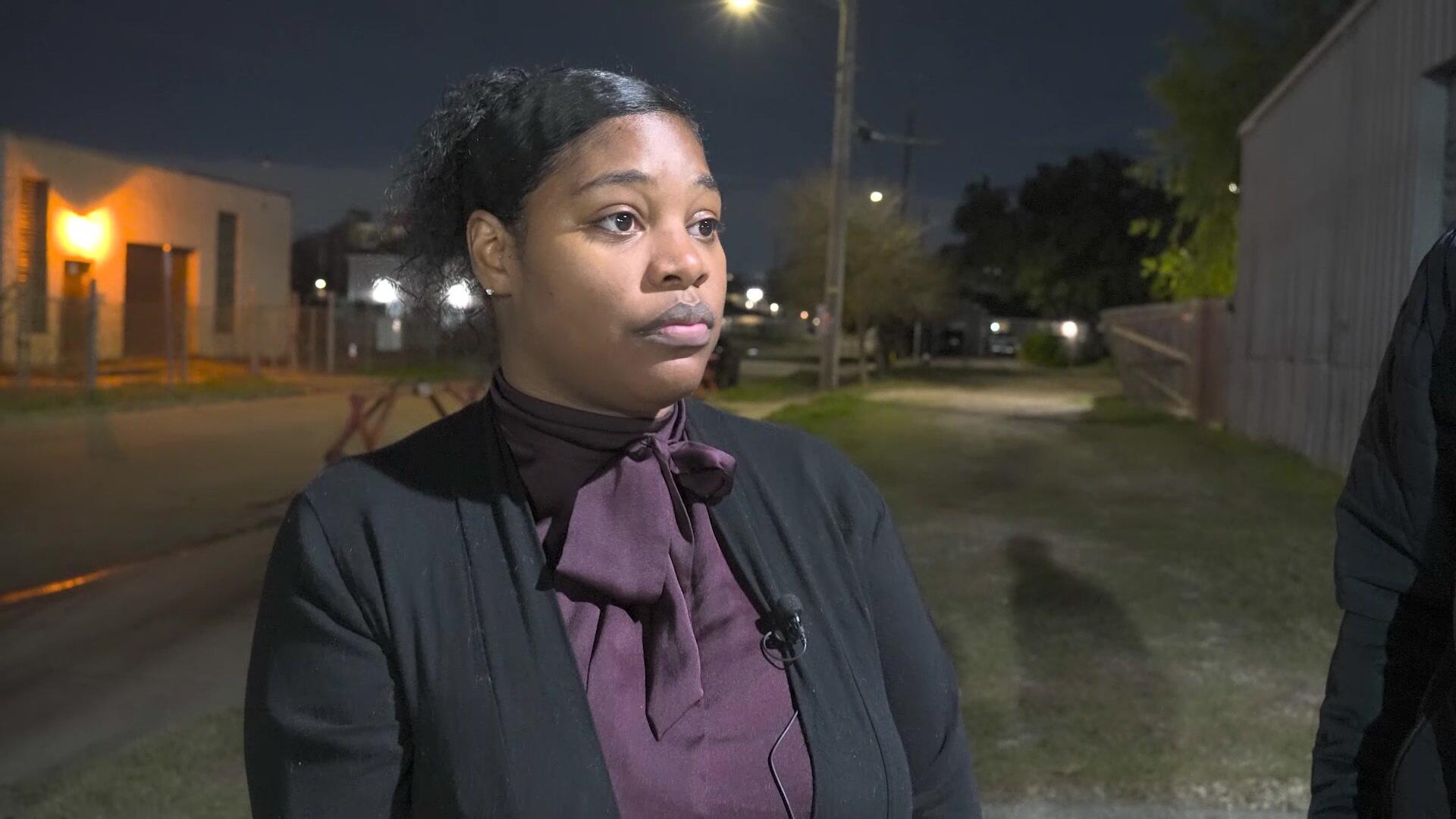
HOUSTON — Shanita Terrell believes someone spiked her drink the night she stopped by a Houston bar in 2020.
asserted
she → believe → 2020
Intoxicated and disoriented, she remembers little of what happened after that.
asserted
what → disorient → that
A married mother of two who had recently moved to the city, Terrell did not know the Harris County Sheriff’s Office deputy who approached her in full uniform.
asserted
who → move → uniform
Deputy Mark Cannon, working off-duty as a security guard at the bar, handed her a bottle of water before escorting her outside and encouraging her to go home with another law enforcement officer – a man she did not know.
asserted
she → work → officer
Hours later, Terrell woke up in pain.
asserted
Terrell → wake → pain
What happened in between — reconstructed through the plaintiff’s allegations in court records and disciplinary rulings in police internal affairs files — raises questions about the supervision of law enforcement officers in off-duty environments and what recourse citizens have when something goes wrong.
asserted
something → happen → recourse
After Terrell had become visibly disoriented, her cousin, a waitress at the bar, texted Deputy Cannon, asking that he "take care of her."
asserted
he → become → her
Police records show Cannon did not call a ride-share vehicle, did not ask for medical help and did not keep her in public view.
asserted
Cannon → show → view
Instead, he walked her outside, failed to activate his body camera as required by department policy, and pulled out his personal cellphone to record while he directed her into the front seat of the other off-duty deputy’s patrol car.
asserted
he → walk → car
"You’re getting a free ride," Cannon told her.
asserted
Cannon → get → ride
"No, I’m not," she responded.
asserted
she → ’m → ?
Internal Affairs investigators reviewing the cellphone video later noted Cannon laughed and added the parting words, "See you in the morning."
asserted
Cannon → review → morning
Terrell woke up the next morning with pain in her vaginal area.
asserted
Terrell → wake → area
She went to a local hospital for a rape kit, which revealed Hines’ DNA was present on her underwear.
asserted
DNA → go → underwear
Hines was charged with sexual assault and later pleaded guilty to attempted sexual assault.
asserted
Hines → charge → assault
Terrell said she believes Hines should have gone to jail, but instead he was sentenced to six years of probation.
asserted
he → say → probation
Terrell also sought to hold both the bar and Deputy Cannon accountable.
asserted
bar → seek → ?
She sued The Address bar in state court and, according to her attorney, reached a confidential settlement.
uncertain
She → sue → settlement
When Terrell sued Cannon for his role in the incident, her lawsuit was dismissed.
asserted
lawsuit → sue → incident
The reason: Cannon’s job as a law enforcement officer provided protection from civil lawsuits that normal civilian employees do not receive.
asserted
employees → provide → that
In Texas, even while working in an off-duty capacity, officers can claim the legal doctrine of "qualified immunity."
uncertain
officers → work → immunity
While some states’ legislatures have banned qualified immunity for officers, even for actions taken while working their regular police jobs, a joint investigation from the Howard Center for Investigative Journalism at Arizona State University and CBS News found the nation’s courts are split on what to do when officers go to work for private businesses to earn extra money.
asserted
officers → ban → money
As a result, in many states, if an officer violates the law while "moonlighting," there is an increased chance they – and even the business – can limit or entirely avoid civil penalties when something goes wrong.
asserted
something → violate → penalties
In the Texas case involving Terrell, an internal affairs investigation concluded Deputy Cannon violated multiple department policies, including failing to activate his body camera, allowing a civilian to sit in the front of a patrol vehicle, and using personal equipment instead of department-issued tools to record the interaction.
asserted
civilian → involve → interaction
He was handed a 10-day unpaid suspension, a 180-day disciplinary probation, and a temporary 90-day ban on off-duty work.
asserted
He → hand → work
It was Cannon’s third suspension in a year, all for violations of policy while working different off-duty jobs, prompting superiors to write that he demonstrated "an inability or unwillingness to comply with the rules and regulations that govern this agency."
asserted
that → work → agency
CBS News reached out multiple times over the past four months to phone numbers and email addresses listed for Cannon but received no response.
asserted
News → reach → response
CBS News also contacted the Harris County attorneys who represented Cannon in the civil case; they have not responded either.
asserted
they → contact → case
After the court’s dismissal of the civil case against Cannon, Terrell appealed.
asserted
Terrell → appeal → Cannon
But the United States Court of Appeals for the Fifth Circuit, which oversees federal lawsuits in Texas, Louisiana and Mississippi, agreed Cannon was entitled to qualified immunity.
asserted
Cannon → oversee → immunity
"I felt like nobody was going to protect me," Terrell said, after appealing the case and losing again.
asserted
Terrell → feel → case
An investigation by the Howard Center for Investigative Journalism at Arizona State University, and CBS News identified more than 40 cases filed over the past decade in which moonlighting police officers — often working private security jobs — invoked the legal doctrine of qualified immunity to insulate them from accusations of misconduct.
asserted
officers → identify → misconduct
The investigation found that in most of the cases reviewed, courts — initially or on appeal — granted full or partial immunity when officers were working off duty.
asserted
officers → find → duty
The doctrine applied when allegations included wrongful arrest, excessive force, sexual assault, and even death.
asserted
allegations → apply → arrest
And even when lower courts denied immunity, many officers prevailed on appeal.
asserted
officers → deny → appeal
The protections of qualified immunity persisted even when the officer’s police supervisors provided little oversight over off-duty work.
asserted
supervisors → persist → work
A CBS News-Howard Center survey of 130 law enforcement agencies found that most departments don’t track officers’ off-duty work — and many don’t apply the same accountability standards when officers are working for private employers.
asserted
officers → find → employers
The investigation also found that immunity for off duty officers depends heavily on where they work.
asserted
they → find → officers
Judges in some parts of the country have begun to crack down on the immunity defense, while in other areas, police enjoy broad immunity.
asserted
police → begin → immunity
Robin Foster, attorney for Harris County Deputies’ Organization, said qualified immunity protects police officers from personal liability in civil lawsuits, allowing them to perform their duties without fear of legal repercussions in high-pressure situations.
asserted
them → say → situations
…and 81 more, not listed.
 The Aporia