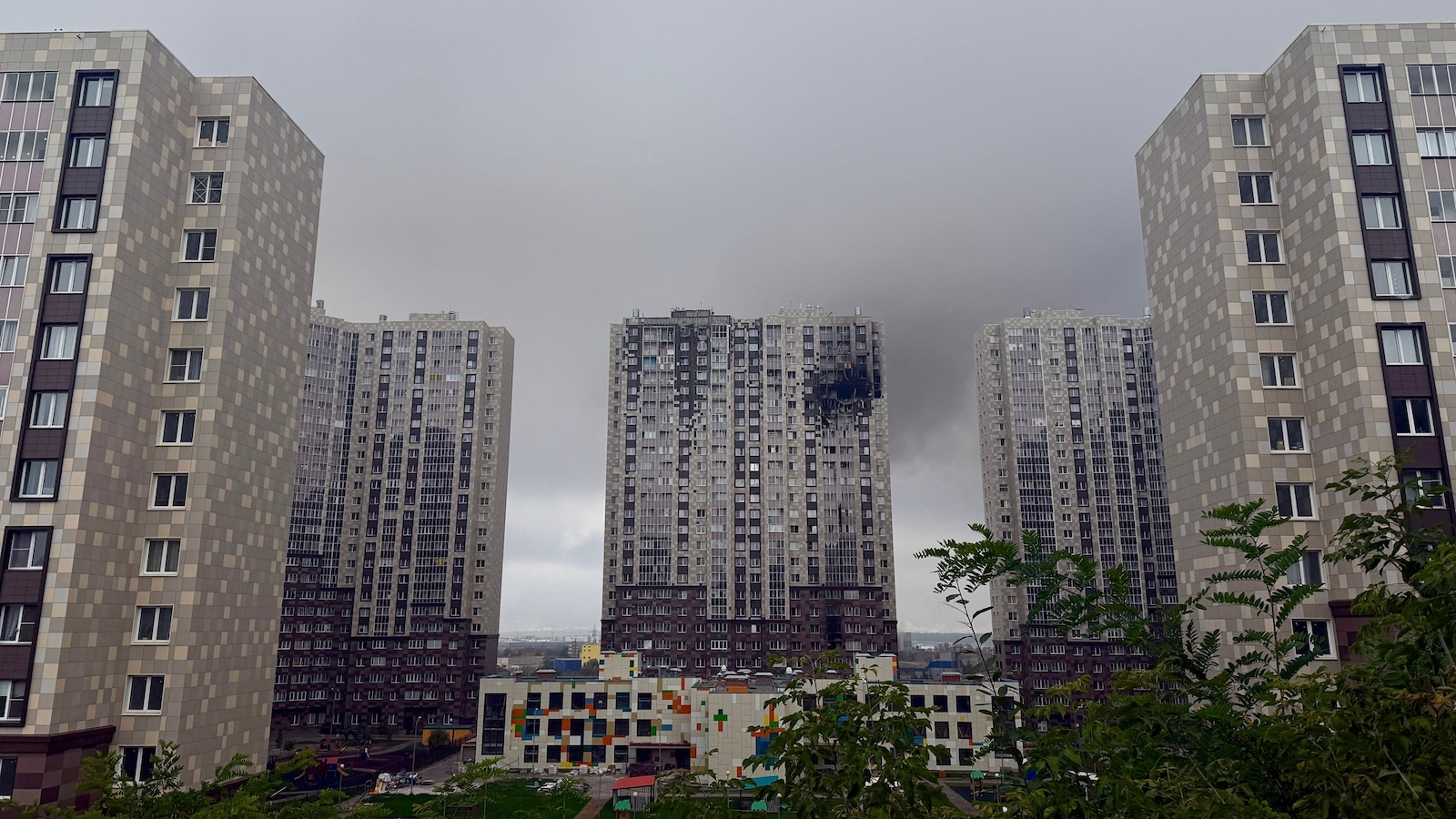
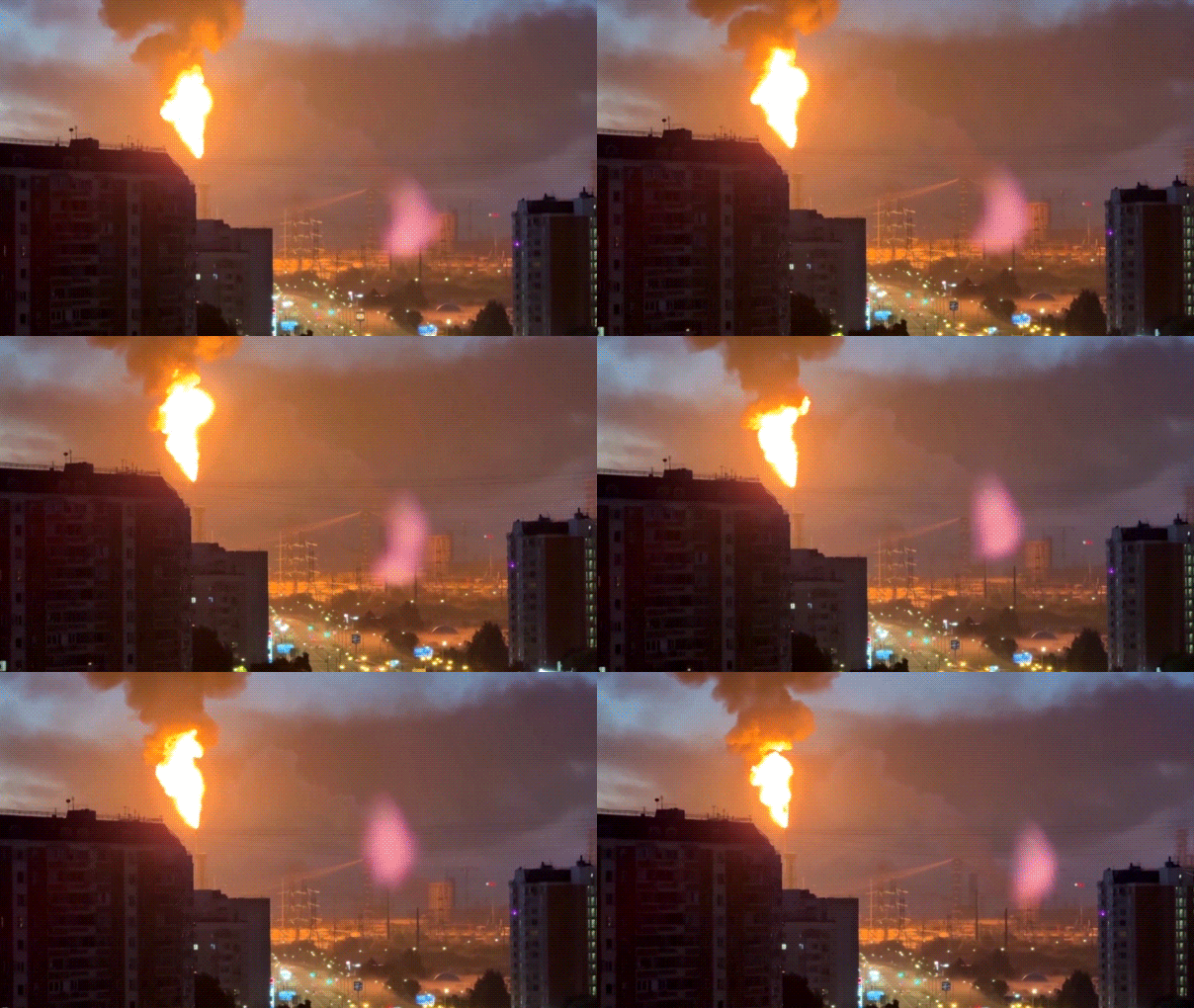
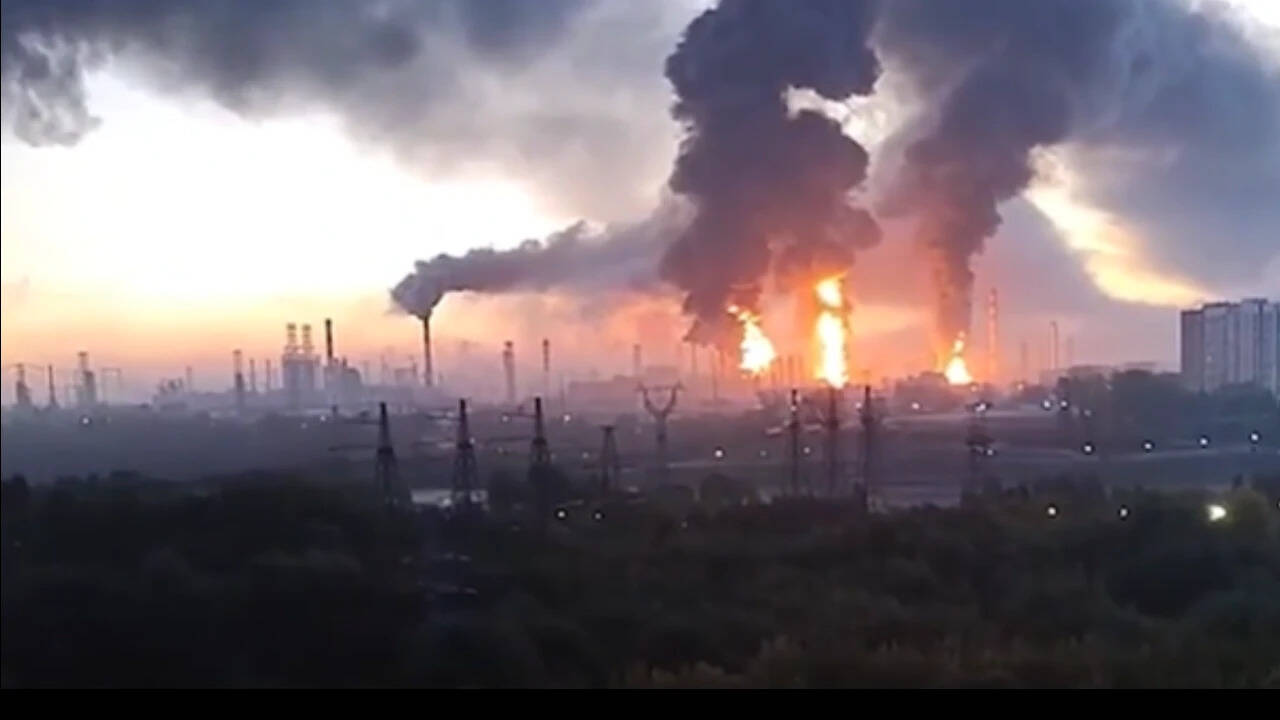
Photo via The Independent

How Ukraine’s devastating attacks on Putin’s oil refineries brought the war to Russia’s doorstep

Read the original at The Independent ↗
Cite

Butt, M. (2026, September 23). How Ukraine’s devastating attacks on Putin’s oil refineries brought the war to Russia’s doorstep. The Independent. https://www.independent.co.uk/news/world/europe/ukraine-drone-attacks-russia-oil-refineries-putin-b3054686.html

Dated when The Aporia collected the article, usually within hours of publication. Check the original for its exact date and byline.

The Independent · collected 2026-09-23 · by Maira Butt

Quick Summary

On Sunday, Ukraine launched a significant drone attack on Moscow's oil refineries during Russia’s parliamentary elections. Over 450 drones were shot down in what was described as one of the most massive attacks by Russian officials. The International Energy Agency reports that this strategy has led to a 30% drop in diesel production and a 20% reduction in gasoline output compared to 2024, with fuel shortages now affecting 92% of Russia’s regions. Ukraine’s military claims that Russia’s oil refining capacity is down by 45%, demonstrating the effectiveness of their attacks on specific refinery units.
Written by AI on 2026-09-23, from this article's own text only (the story summary below draws on all the coverage).

AI analysis

Story summary

On September 20, 2026, Ukraine launched what was described as the largest drone attack ever against the Russian capital, Moscow, during the final day of Russia's parliamentary elections. More than 1,600 drones were intercepted and shot down across Russia, with 450 targeting Moscow specifically. Two people were killed in the attacks: a 44-year-old woman and an elderly man, both in separate incidents in the Moscow region. Additionally, a major oil refinery near Moscow was damaged by one of the drones.

Moscow Mayor Sergei Sobyanin accused Ukraine of attempting to disrupt the tightly controlled elections, which were held from September 18-20. President Vladimir Putin's ruling party is expected to maintain its dominance in the vote, reflecting his ongoing control over Russian politics since New Year’s Eve 1999.

Ukraine has been stepping up attacks on Russian energy infrastructure recently, targeting critical revenue sources for Russia's war effort in Ukraine, which entered its fifth year. The timing of these drone strikes coincided with Putin’s framing of the election as a referendum on support for his military actions.

Written for “Ukraine Drone Attacks Moscow” on 2026-11-04, grounded in this article and the 28 other(s) covering the same event.

Story

📰 Ukraine Drone Attacks Moscow
Politics · 29 article(s) covering the same event. Compare every outlet's account →

Compared with similar articles

This article reads leans left and hedges 14% of its claims. Each row says how that neighbour differs.
Al Jazeera
⚖️ Leans right further right than this Hedges 2 of 16 claims Outlet record 60/100
South China Morning Post
Hedges 0 of 4 claims Outlet record 62/100
South China Morning Post
⚖️ Leans left Hedges 0 of 9 claims Outlet record 62/100
The Independent
⚖️ Leans left Hedges 5 of 62 claims Outlet record 59/100
The Hindu
⚖️ Leans left Hedges 3 of 32 claims Outlet record 60/100
“The articles describe different incidents - one discusses the context of various ongoing wars and conflicts, while the other reports on a specific drone strike against Russian oil refineries.”
Al Jazeera
⚖️ Leans left Hedges 0 of 21 claims Outlet record 60/100
ABC News (US)
Hedges 3 of 19 claims Outlet record 67/100
Fox News
Hedges 3 of 29 claims Outlet record 68/100
Times of India
⚖️ Leans left Hedges 2 of 20 claims Outlet record 59/100
How this article was measured signals, leaning charts, publisher record, byline, topics and claims

Signals How these are calculated →

Claims extracted
35
sentences that state something as happening or true
Uncertain
14%
5 of 35 hedged ("reportedly", "may", "according to")
Leaning
Leans left
of the writing, not the subject · beta estimate
Publisher signals
59/100
The Independent's corrections and hedging, across everything collected from it. Not a measure of accuracy.
Outlets on this story
29
Politics
Same framing elsewhere
1
articles that frame the event the way this one does
Analyzed 2026-09-23 · how these are computed

How this is being covered How these are calculated →

Article leaning vs. publisher reliability
Source leaning vs. consistency

Publisher

The Independent · 3719 article(s) · 10 correction(s) detected
Running correction rate · 10 correction(s)

Who wrote this

Maira Butt
64 article(s) here · 1 carrying a prediction
🔮 When authorities received “more precise” information about acts of sabotage including a potential incursion into Poland by “armed people” in the first half of November, additional police and troops were deployed as part of a special operation along the border regions on Tuesday, Tusk said. “We have been receiving information for some time from our services and from allies' services that ... acts of diversion or more serious provocations on the border with Russia, or even sabotage acts orchestrated by hostile services, could occur,” he explained.
🔮 Recent briefings from the Pentagon had suggested that the attacks could continue after the voting had taken place.
🔮 On Sunday night, millions of Ukrainians were sent an alert to their phones that would usually spark panic and fear.
🔮 Togloatti mayor Ilya Sukhikh said several industrial facilities were damaged in the attack.
🔮 The localised ceasefire is set to begin on 29 October.
🔮 But president Emmanuel Macron said that this weekend’s demonstrations will be strictly limited to those organised by authorised unions.
🔮 According to the publication, Musk capped the speeds at which Ukrainian hardware could stay connected to the network, according to the sources, which rendered its offensive and interceptor drones ineffective.
🔮 Ukrainians fear the growing rift between Washington and Kyiv could have severe consequences on the battlefield, where the Ukrainian military still depends on technology provided by the US.
Also by Maira Butt
Nothing else under this byline is closely related to this article, so these are simply their most recent.
All 64 articles by Maira Butt →

Topics

IEA Independent Russia Russian Ukraine

Subjects

Russia GPE · 8× Ukraine GPE · 5× IEA ORG · 3× Russian NORP · 3× Moscow GPE · 2× Omsk GPE · 2× Donald Trump PERSON · 1× Independent ORG · 1× Independent Membership ORG · 1× Sergei Sobyanin PERSON · 1×

Narrative

But Lough says that “its main value is psychological since it has brought the war home to Russians who were previously insulated from it and made them think about why the country is so poorly defended when the war was supposed to improve Russia’s security.”
framing: assertive · carried by 1 article(s) · first seen 2026-09-23
🔮 Over 450 drones were shot down in what the region’s mayor Sergei Sobyanin called “the most massive” attack it had seen.

Claims (35 extracted, 5 hedged)

On Sunday, just as polling closed in Russia’s parliamentary elections, Ukraine launched one of its biggest drone strikes on Moscow since the war broke out over four years ago. asserted
war → close → Moscow
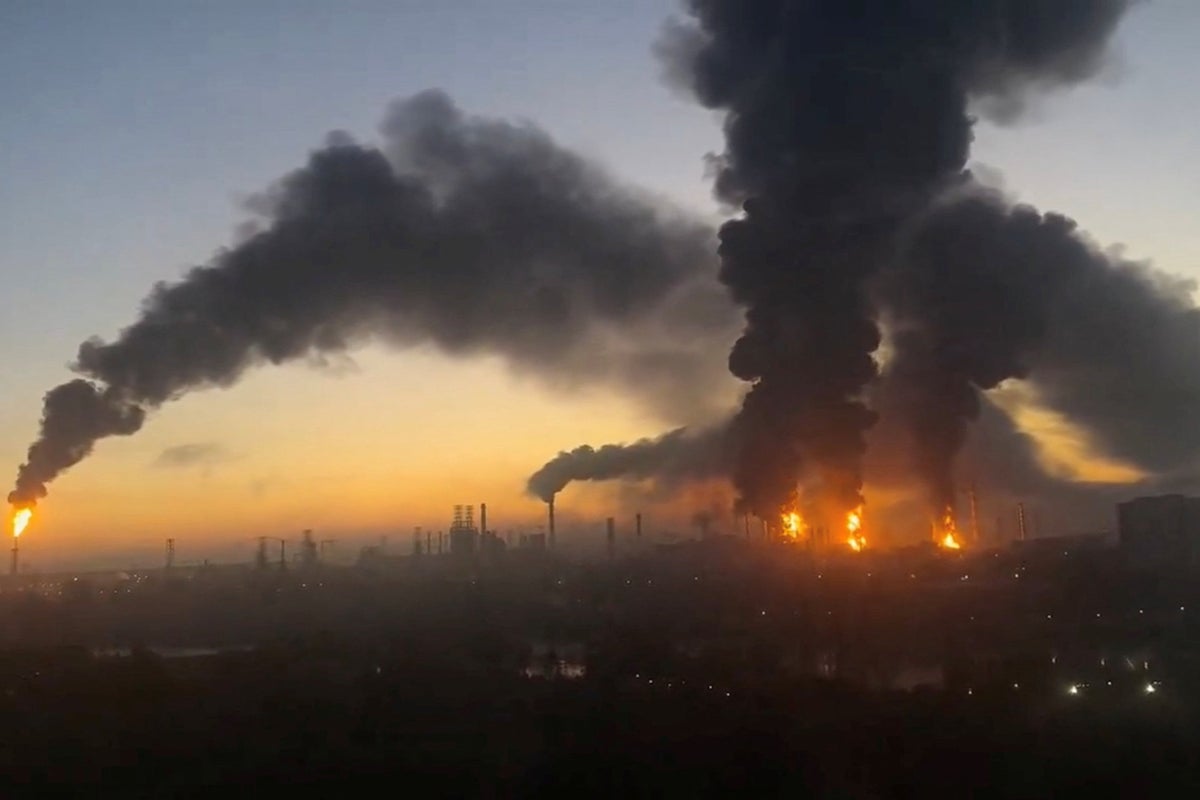
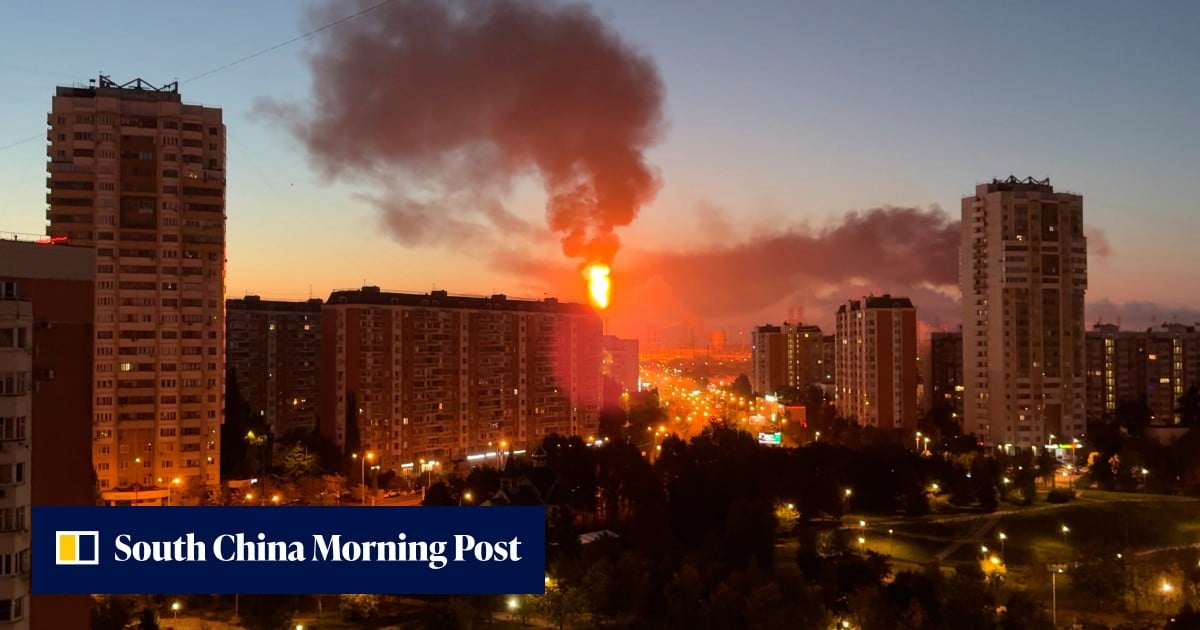
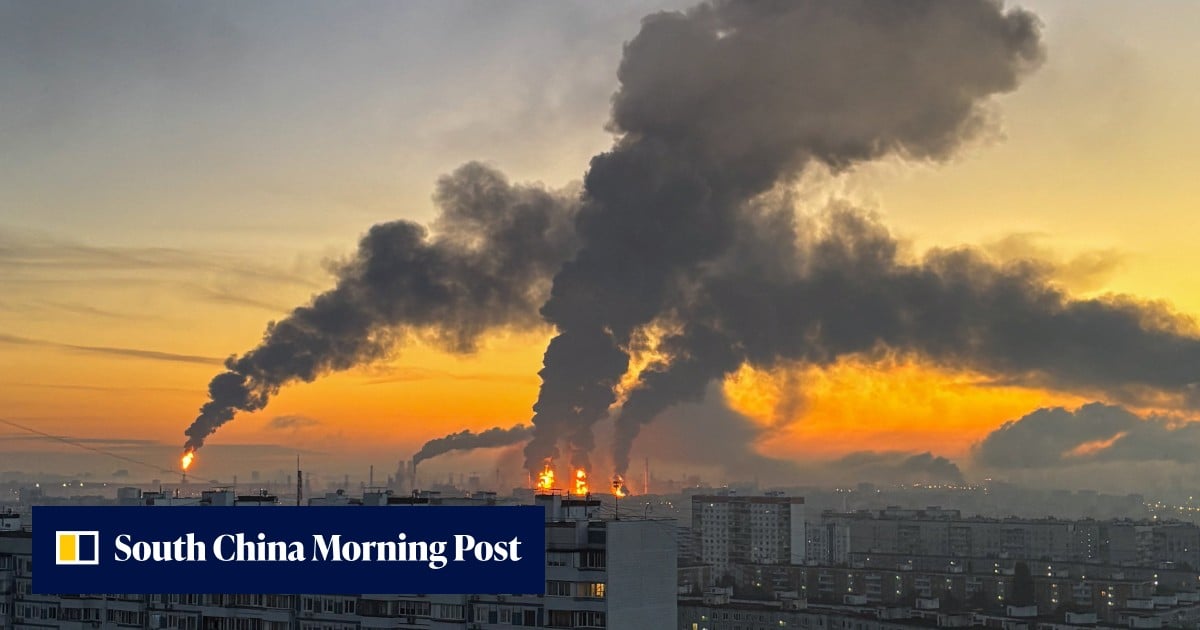
Striking images from the city showed a large refinery in flames and vast plumes of smoke billowing from chimneys. asserted
images → show → chimneys
Over 450 drones were shot down in what the region’s mayor Sergei Sobyanin called “the most massive” attack it had seen. asserted
it → shoot → what
The attacks came shortly after US president Donald Trump had ordered both sides to quit their attacks on energy infrastructure. asserted
Trump → come → infrastructure
But both countries have continued to attack each other despite the pleas. asserted
countries → continue → pleas
According to a report by the International Energy Association, all but five of Russia’s 32 major oil refineries have escaped attack since war broke out, while some have been hit up to 15 times. uncertain
some → accord → times
Those unaffected currently lie outside of the reach of Ukraine’s most advanced drones, between 3,500km and 6,500km from the border in eastern Siberia or the far east of the country. asserted
Those → lie → country
The IEA has said that this strategy has intensified significantly over the past 18 months so that by June, throughput fell to its lowest level in more than 20 years and 30 per cent blow a year earlier. asserted
throughput → say → years
Gasoline output has dropped by 20 per cent compared to 2024, while diesel production has fallen by nearly 30 per cent. asserted
production → drop → cent
The attacks have led to images being released from Russia that will be unnerving for Russian leader Vladimir Putin: huge queues at fuelling stations (lasting up to 40 hours, according to some motorists), and rising oil and gas prices. uncertain
that → lead → motorists
Fuel shortages have been reported across 92 per cent of Russia’s regions with around two-third introducing fuel-rationing measures. asserted
third → report → measures
The crisis has forced the Russian government to restrict oil exports to protect domestic supplies. asserted
crisis → force → supplies
Ukraine’s military suggests that Russia’s total oil refining capacity is down by 45 per cent, according to a report by the General Staff released on Monday. uncertain
capacity → suggest → Monday
“Ukraine is increasingly using multiple waves of drones against individual refineries, seeking to overwhelm protective netting and other largely passive drone defence measures,” wrote the IEA. asserted
IEA → use → netting
“Its long-range capabilities and targeting have also advanced rapidly, particularly during the first half of 2026. asserted
capabilities → advance → 2026
This expanded reach enabled the 7 July strike on Gazprom Neft’s 450 thousand barrels per day (kb/d) Omsk refinery, Russia’s largest, roughly 2,500 kilometres from the Ukrainian border.” asserted
reach → expand → border
The IEA says that there has not been “significant damage” reported to both primary and secondary crude oil processing units across the country. asserted
IEA → say → country
As Ukraine becomes effective at striking the refineries it is “increasingly targeting specific refinery units to maximise the impact of each strike”. asserted
it → become → strike
It explained that Kyiv targets crude distillation units (CDUs), where the crude is initially processed, as well as secondary units such as fluid catalytic crackers (FCCs), hydrocrackers, reformers and hydrotreaters. asserted
crude → explain → crackers
While damage to CDUs can typically be repaired within a week or two, damage to the more complex secondary units can take six to eight months to fix on average. asserted
damage → repair → months
Russia has been forced to deal with the crisis by rationing fuel and also allowing the production of lower quality energy, allowing higher-sulphur grades of gasoline to be produced for the first time since 2016. asserted
grades → force → 2016
In May, the Washington Post reported that more than 20 strikes on Russian oil infrastructure in 2026 had cost Moscow over $7bn. uncertain
strikes → report → 7bn
The Ukrainians have hit almost all the major refineries in European Russia and the Urals at least once. asserted
Ukrainians → hit → Russia
They have also damaged the country’s largest refinery located in Omsk (Siberia),” says John Lough, head of foreign policy at the New Eurasian Strategies Centre (NEST). asserted
Lough → damage → Centre
“It’s very difficult to put a figure on the total losses incurred through damage to refineries, lost production and overall disruption. asserted
It → ’ → refineries
It’s probably around $20 billion. asserted
It → ’ → ?
But the picture is more complex as analysis by Reuters in July found that Russia’s oil and gas revenue had increased 60 per cent compared to the year before due to the increase in global oil prices. asserted
revenue → find → prices
The loss of oil prices is also putting further pressure on global oil supplies already squeezed due to the ongoing war in Iran, which has seen the Strait of Hormuz largely shut since March. asserted
Strait → put → March
Whether the strategy has been effective in the long-run therefore may depend on multiple factors. uncertain
been → depend → factors
But Lough says that “its main value is psychological since it has brought the war home to Russians who were previously insulated from it and made them think about why the country is so poorly defended when the war was supposed to improve Russia’s security.” asserted
war → say → security
“It’s hardly a coincidence that the authorities had to remove the Yabloko party from last weekend’s Duma elections. asserted
authorities → ’ → elections
It was the only party campaigning for ending the war against Ukraine,” he added. asserted
he → campaign → Ukraine
“It was supposed to receive only a tiny proportion of the vote, but the authorities concluded that its message risked resonating among the electorate. asserted
message → suppose → electorate
Russia has stepped up its own air campaign and has stopped the operation of the Black Sea ports – a lifeline for the Ukrainian economy. asserted
Russia → step → economy
It has also intensified its attacks on other economic assets across the country.” asserted
It → intensify → country

💬Give feedback · no sign-in needed

No sign-in needed for now. Your note is sent without a name, so it cannot be answered.

🕘History 🎫Support