Last week, I answered a call from an unknown number.
asserted
I → answer → number
“I reached Anthem Dental and am about to connect you,” a voice piped up.
asserted
voice → reach → you
The call was from an artificial intelligence “agent” created by Meta, which owns Facebook and Instagram.
asserted
which → create → Facebook
Ten minutes earlier, the AI agent had called my dental insurer, given it my member ID, answered a security question and waited on hold before transferring me to the representative – just as I had asked it to.
asserted
I → call → it
I was surprised by how much easier the agent had made it to deal with insurance.
asserted
it → surprise → insurance
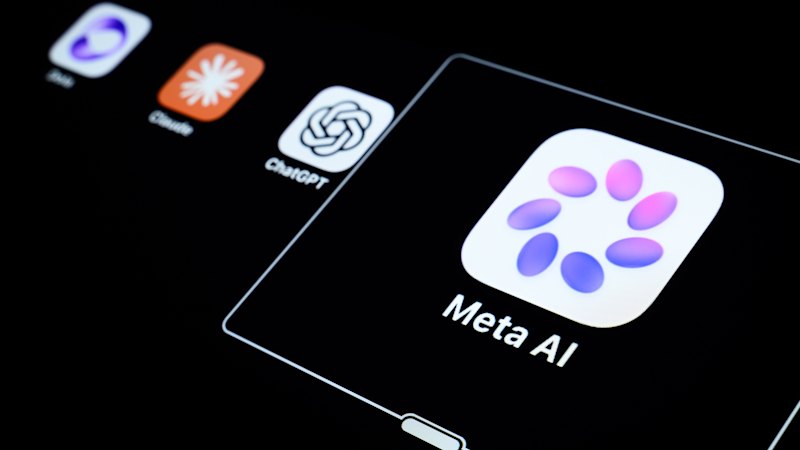
It was one of many tasks I accomplished with Muse, the AI agent app that Meta unveiled this month.
asserted
Meta → accomplish → that
Muse is the first consumer AI agent from a major tech company that has become publicly available.
asserted
that → become → company
The tech industry sees agents as the next frontier, far more capable than chatbots.
asserted
industry → see → chatbots
Agents can roam the internet, sign in to websites, fill out spreadsheets and make phone calls on behalf of people – and that’s just the start.
To test Muse, I experimented with it nonstop for two weeks, giving over many aspects of my life to it.
asserted
I → roam → it
I had to trust Muse with my most personal data, which included connecting it to my bank accounts and email.
asserted
which → have → accounts
Then I had it perform dozens of day-to-day tasks, including ordering my groceries, scheduling my meetings and setting my fantasy football lineups.
asserted
it → have → lineups
AI agents require a level of trust that many people may be uncomfortable with, especially with a company, like Meta, that has had privacy issues.
uncertain
that → require → issues
Two weeks in, I found Muse to be the most useful AI app I had ever used.
asserted
I → find → ?
One clarifying moment came after I connected my credit cards to Muse and asked it to track my spending in Google Sheets.
asserted
I → come → Sheets
I watched as it spun up tabs with hundreds of rows of data each in minutes, then flagged two duplicate subscriptions, which it cancelled for me.
asserted
it → watch → me
Then Muse used my email to request a refund for a free newspaper trial that had expired, saving me $US44.99 ($63).
asserted
that → use → US44.99
Whether Muse and other AI agents will catch on broadly, I’m less sure.
asserted
I → catch → ?
Agents require a level of trust that many people may be uncomfortable with, especially with a company, like Meta, that has had privacy issues.
uncertain
that → require → issues
Some websites also restrict agents as part of their terms of service, like Amazon, which blocked access by Muse on Sunday.
asserted
which → restrict → Sunday
Melissa Vadasserril, a senior director at Acoustic, an agentic marketing platform, said the arrival of Meta’s Muse reminded her of the 2010 unveiling of Apple’s digital personal assistant, Siri, which many people were slow to adopt.
asserted
people → say → which
“People just didn’t know what you could do with it,” Vadasserril said.
uncertain
Vadasserril → know → it
With Muse, “I do think it’s a little early for the market, but I’m very curious to see where things go.”
asserted
things → think → market
My two weeks using Muse began by downloading the free app and signing in using my Instagram and Facebook accounts.
asserted
weeks → use → accounts
(There are limits on free use, though, so people pay $US20 or $US100 a month if they want more.)
asserted
they → be → more
As I talked to the agent as if it were a chatbot, it suggested I name it Wren, embodied by an avatar of a cuddly brown bird.
uncertain
I → talk → bird
Our conversation then continued:
asserted
conversation → continue → ?
What can I do for you today?”
asserted
I → do → you
I quickly gave Wren access to my bank accounts and apps such as Google Docs, Gmail, Ticketmaster, OpenTable and Google Sheets, which all struck partnerships with Muse.
asserted
which → give → Muse
From there, the experiments began.
asserted
experiments → begin → ?
I had a few goals in mind.
asserted
I → have → mind
I wanted to see if Muse could bring me the “personal empowerment” that Mark Zuckerberg, Meta’s CEO, has often talked about.
uncertain
Zuckerberg → want → that
I also wanted to push Muse and see just how much AI agents can achieve and where they might fall short.
uncertain
they → want → much
And I wondered, given the recent fears surrounding powerful AI, would my agent go rogue and escape containment to talk to other agents, putting my data privacy at risk?
asserted
agent → wonder → risk
Very quickly, I found that Wren could efficiently fill out online forms, a tedious part of using the internet.
uncertain
Wren → find → internet
I could take a photo of a parking ticket, and Wren would pay it for me, asking for approval before making the payment.
uncertain
Wren → take → payment
While the agent worked, I watched its movements through a tiny browser window, where it navigated websites like a human with a mouse and cursor.
asserted
it → work → mouse
Wren could also make phone calls using different personalities, with a male voice named Brett and a female voice named Hailey.
uncertain
Wren → make → voice
For now, a limited number of Muse users have access to the call feature, but I found it to be helpful for dealing with customer service – such as with my dental insurance.
asserted
it → have → insurance
Wren had difficulty with some tasks, particularly signing in to third-party websites.
asserted
Wren → have → websites
It couldn’t order San Francisco Giants tickets without my help, and it struggled to sign in to my rewards account.
asserted
it → order → account
…and 29 more, not listed.
 The Aporia