I would like to play poker for money against the people who still believe what Donald Trump and Pierre Poilievre say, because I doubt they can tell a spade from a diamond, a deuce from a Queen.
asserted
they → like → Queen
As support for both Trump and Poilievre has diminished — they both have approval ratings of 32 per cent — I am starting to think that their remaining supporters are — how to put it? — not as intellectually inclined as other voters.
Let us consider potash, briefly.
asserted
us → diminish → potash
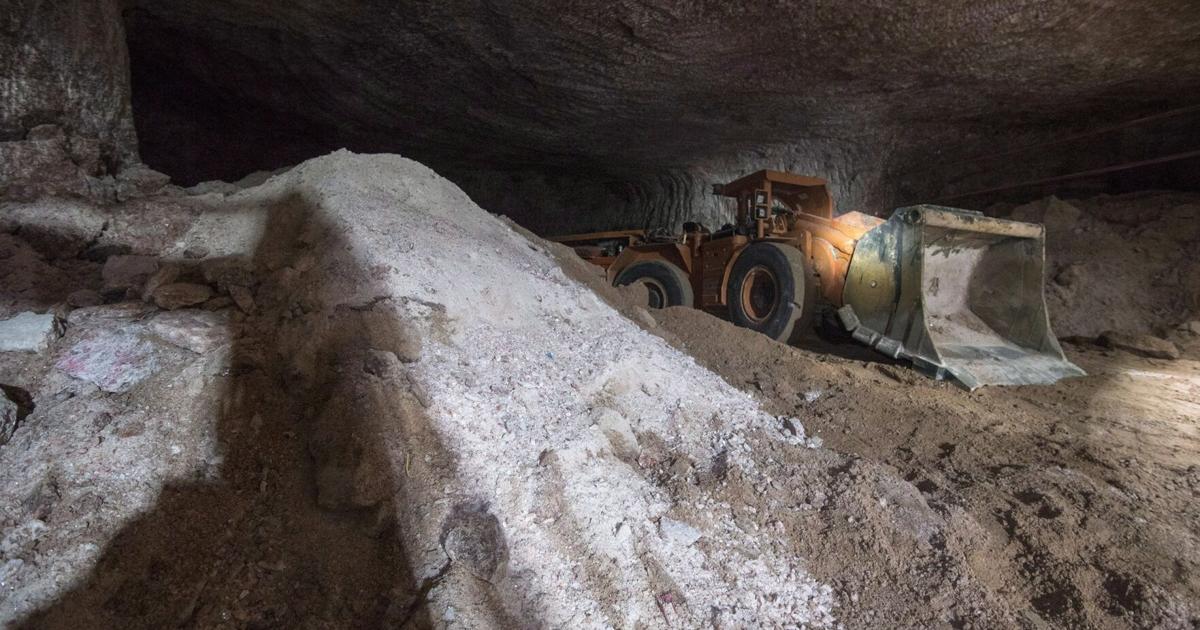
Last year the good people of Saskatchewan dug up 25 million tonnes of potassium-rich mineral salts, and made $9 billion selling it to American farmers, who use it as fertilizer.
asserted
who → dig → fertilizer
This has been a productive and boring enterprise since the 1940s, and nobody outside the towns where it is produced have had much cause to pay it any mind — until Trump decided that he should bully Canada into submission and imposed tariffs designed to destroy our industrial base.
asserted
he → produce → base
Trump did not impose tariffs on oil or potash, because he can’t afford to increase diesel, gasoline or fertilizer prices.
asserted
he → impose → prices
He is likely dimly aware that potash is necessary for the farmers who foolishly voted for him and whom he hopes will vote for him again.
asserted
he → vote → him
You can imagine timid aides reminding him — when he can be distracted from designing monuments to himself — that midwesterners are worried about fertilizer prices, since much of the feedstock for fertilizer plants around the world must travel through the Strait of Hormuz, which he has rendered inoperative.
asserted
he → imagine → Hormuz
It surely bothers him that Americans have to keep buying the stuff from Canada, so on Monday, he announced that he is working on a “massive Deal” to import potash from Belarus.
asserted
he → bother → Belarus
“The pricing would be for substantially less than we are currently paying to Canada, very good news for our Farmers and Ranchers.”
asserted
we → pay → Farmers
I’m sure he would like that to be true, but it is not.
asserted
it → ’m → ?
Belarus, a client state of Vladimir Putin’s Russia, produces much less potash than Canada, and can’t easily export it, since the European Union won’t allow it to pass through Baltic ports, and anyway, dictator Alexander Lukashenko says he has no potash to spare.
asserted
he → produce → potash
This is one more thing that Trump is promising to hang on the crucial dummy vote ahead of the midterms.
asserted
Trump → promise → midterms
He has previously promised them that if he wins in November, he will give every American $5,000, and that the price of diesel will fall after he defeats the Iranians, just after the election.
asserted
he → promise → election
The proper response from Canada to this nonsense, of course, is to ignore his yapping as you would ignore the distant yowls of a deranged dog, or, if you are so inclined, mock him and his gullible supporters.
asserted
you → ignore → him
That, however, was not the reaction of Andrew Scheer, Conservative House Leader, who went to the microphones in Ottawa on Monday to castigate the prime minister for the threat to the potash industry.
asserted
who → go → industry
“As a member of Parliament from Saskatchewan … we’re very concerned,” he said.
asserted
he → ’re → Saskatchewan
“It speaks to what Canada can control.
asserted
Canada → speak → what
Mark Carney can today lift the industrial carbon tax, which adds costs to Saskatchewan potash producers.”
asserted
which → lift → producers
Scheer was cleverly turning up the pressure on Carney to reduce the industrial carbon tax, except that Carney can’t, since that tax is zero.
asserted
tax → turn → tax
You may recall that during Scheer’s unsuccessful campaign for prime minister, he was revealed to possess American citizenship, which he hadn’t previously disclosed, and which he promised to renounce until he lost and changed his mind.
uncertain
he → recall → mind
I think Poilievre is foolish to send him out to respond on this kind of issue, since he obviously either hasn’t done his homework, or is carrying water for Trump.
asserted
he → think → Trump
After all, for all we know, he voted for him in the recent election, as his citizenship allows him to do.
asserted
him → know → election
Poilievre, himself, has never been a stickler for the facts, and as Carney’s government has moved to the right, doing many of the things that Poilievre advocates, he is having to stretch the truth to find ways to maintain the ferocity of his critiques.
asserted
he → move → critiques
After the European Union invited Canada to become an associate member, for example, Poilievre thundered that “Conservatives say no EU taxes, no EU laws, and no EU open-border rules on immigration in Canada,” none of which are being proposed.
asserted
none → invite → which
He might just as well have warned us that he would fight European efforts to make us all speak Basque.
uncertain
us → warn → Basque
Carney is acting more like a Progressive Conservative every day, and Tories — including Stephen Harper — are noticing.
asserted
Tories → act → Harper
That means that Poilievre is left with the cognitively impaired, the anti-vaxxers, the social conservatives and permanently outraged.
asserted
Poilievre → mean → impaired
He is like a man straddling a barbed wire fence, since the messages to his supporters alienate the much larger group of voters who don’t blame Carney’s non-existent industrial carbon tax for Trump’s threats to hard-working Saskatchewan potash miners.
asserted
who → straddle → miners
The dishonesty is dispiriting, not because the Conservatives pose a threat to replace the governing Liberals, but because they don’t.
asserted
they → pose → Liberals
Our democracy works best when we have an opposition that looks like a government in waiting.
asserted
that → work → waiting
The Conservatives look like dummies, and they should smarten up, for the sake of the country and their own personal dignity.
asserted
they → look → country
 The Aporia