While Ottawa’s new legislation overhauling labour law includes worker-friendly tweaks, unions across the country say it will make strikes in federally regulated sectors all but impossible.
asserted
strikes → overhaul → sectors
The Building Canada Strong Act introduced Monday reinforces the authority of the labour minister to order the Canada Industrial Relations Board to end a strike or lockout with binding arbitration if it has potential to harm the national interest.
asserted
it → introduce → interest
The minister already had that power under Section 107 of the Canada Labour Code, but the changes make it more likely to be used pre-emptively, says the head of the Canadian Labour Congress.
asserted
head → have → Congress
“There’s a real potential for those workers that they’ll have the right to strike, but they won’t ever be able to exercise it,” CLC president Bea Bruske said.
asserted
Bruske → ’ → it
And Bruske warns the act will backfire on Ottawa by leading to more labour disruptions such as the August 2025 strike by Air Canada flight attendants.
asserted
act → warn → attendants
“I think the Air Canada flight attendants were round one of what we’re going to see,” Bruske said.
asserted
Bruske → think → what
“Workers are going to be so frustrated by this.
asserted
Workers → go → this
We’re definitely going to see an increase in wildcat strikes and work slowdowns.”
asserted
We → go → strikes
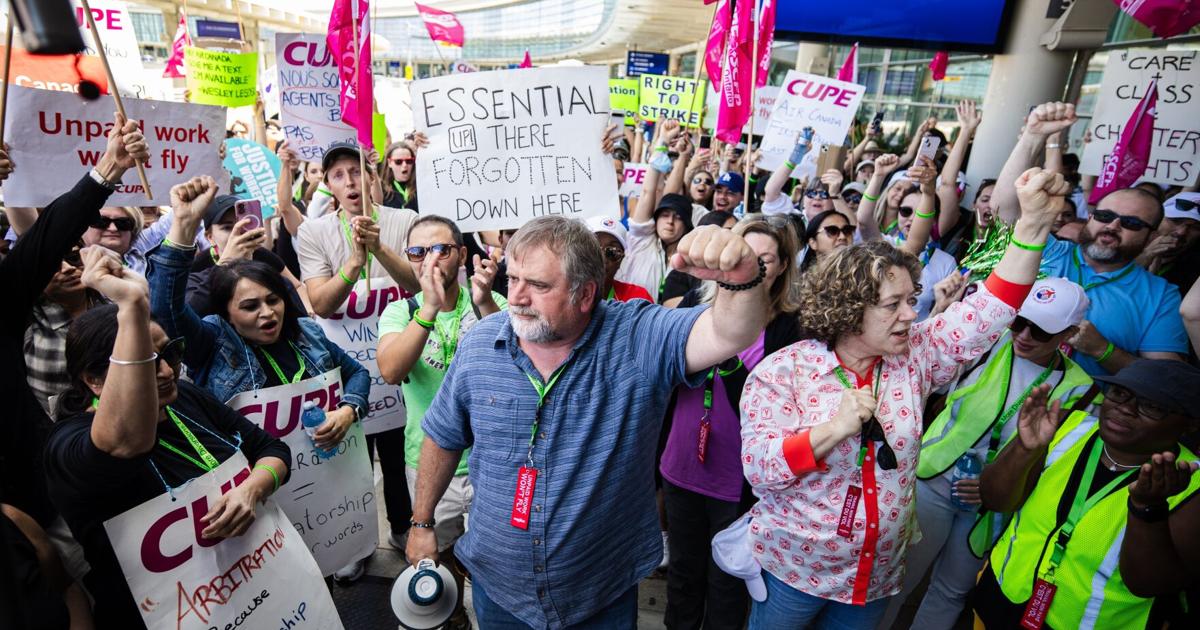
Air Canada flight attendants ignored back-to-work order
Last summer, Air Canada flight attendants represented by the Canadian Union of Public Employees ignored a federal back-to-work order and a directive from the Canada Industrial Relations Board, before returning to the bargaining table.
asserted
attendants → ignore → table
Patty Hajdu, the federal minister for jobs and families, said the changes protect workers’ right to strike, and includes several steps the minister needs to take before using Section 107, including the appointment of a special mediator who will evaluate negotiations and provide a public report which the minister must consider.
asserted
minister → say → which
“The changes will strengthen good-faith bargaining, protect the right to strike, and deliver better outcomes for workers, businesses, and the economy,” said Hajdu in a written statement.
asserted
Hajdu → strengthen → statement
Hajdu also noted that the bill says the minister must consider how a strike or lockout would affect the “national interest.”
asserted
strike → note → interest
“Protecting workers’ rights and strengthening our labour relations go hand–in-hand and it is central to building a strong labour framework,” Hajdu said.
asserted
Hajdu → protect → framework
“Together, these changes will help build a modern, resilient, and fair labour relations system that supports good jobs, stable workplaces, and a stronger Canada.”
asserted
that → help → jobs
The minister still holds all the power
But the Section 107 “guardrails” in the new legislation still leave ultimate power in the minister’s hands, said York University labour law professor David J. Doorey.
asserted
Doorey → hold → hands
“The Minister’s power remains unchecked,” Doorey wrote in a blog post.
asserted
Doorey → remain → post
“All they need to do is demonstrate that they ‘considered’ the criteria.”
asserted
they → need → criteria
Roughly 10 per cent of Canadian workers are in federally regulated sectors including transportation, docks, telecommunications and banking.
asserted
cent → regulate → transportation
The bill also says that companies who take over a contract at a federally-regulated workplace such as an airport must respect any collective bargaining agreements already in place, including keeping unionized workers at the same wage.
asserted
who → say → wage
The head of the union representing B.C. dock workers said the bill gives the federal labour minister such broad powers that it makes a legal strike by his members effectively impossible.
asserted
strike → represent → members
“The bill would grant the minister the authority to order workers back to work by ‘forming an opinion’ that a stoppage affects ‘the national interest,’ said Tom Doran, president of the Canadian section of the International Longshore and Warehouse Union.
asserted
Doran → grant → Union
“The first factor the bill lists is significant impact on the Canadian economy.
asserted
bill → list → economy
Every port dispute in this country affects the economy; as such, writing this test into law effectively legislates away ILWU members’ right to strike.”
asserted
writing → affect → right
The head of Canada’s biggest private sector union acknowledged that there were some positive changes in the bill, but warned that it undercuts the right of federally-regulated workers to strike.
asserted
it → acknowledge → workers
“At a time when we should be standing together as a country to fend off attacks from the Trump trade war, workers and their unions must now also defend the right to fair and free collective bargaining,” Unifor national president Lana Payne said.
asserted
Payne → stand → bargaining
“These proposed amendments to the Canada Labour Code give special authority to the Minister of Labour to override the ability of workers to exercise their right to strike.”
asserted
amendments → propose → right
Among the positives Payne pointed to are changes in “contract flipping” at airports, as well as a new requirement for binding arbitration in a newly-unionized workplace’s first contract.
asserted
changes → point → contract
How the law removes workers’ bargaining power
While the act officially preserves the right to strike, it removes much of the leverage federally regulated workers gain from walking the picket lines, said McMaster University labour studies professor Stephanie Ross.
asserted
Ross → remove → lines
The act, says Ross, seems designed to avert things like a flight attendants’ strike or a walkout by workers at the Port of Vancouver.
asserted
Ross → say → Vancouver
“Will airline workers or port workers ever be able to go on strike again?
asserted
workers → go → strike
Those industries, when you interrupt them, they have a significant impact.
asserted
they → interrupt → impact
That’s the whole point,” said Ross.
asserted
Ross → ’ → ?
“Workers can’t have any leverage in collective bargaining if they don’t have the impact.
asserted
they → have → impact
The act gives the minister of labour — and the government — broad powers to block strikes if they see fit, said Brock University labour studies professor Larry Savage.
asserted
Savage → give → strikes
“This bill neuters the right to strike,” said Savage.
asserted
Savage → neuter → right
“A right that’s suspended when it becomes effective isn’t much of a right at all.
asserted
it → suspend → right
It can effectively extinguish the right to strike.”
asserted
It → extinguish → right
Savage said that employers will assume they can ignore pressure to bargain merely by citing potential financial harm.
asserted
they → say → harm
“In practice what this will mean is that the minister will face incredible pressure to use this power far more frequently,” Savage said.
asserted
Savage → mean → power
“Employers will draw the conclusion that holding out long enough and citing financial disruption will mean that they don’t have to give up as much at the table.”
asserted
they → draw → table
 The Aporia