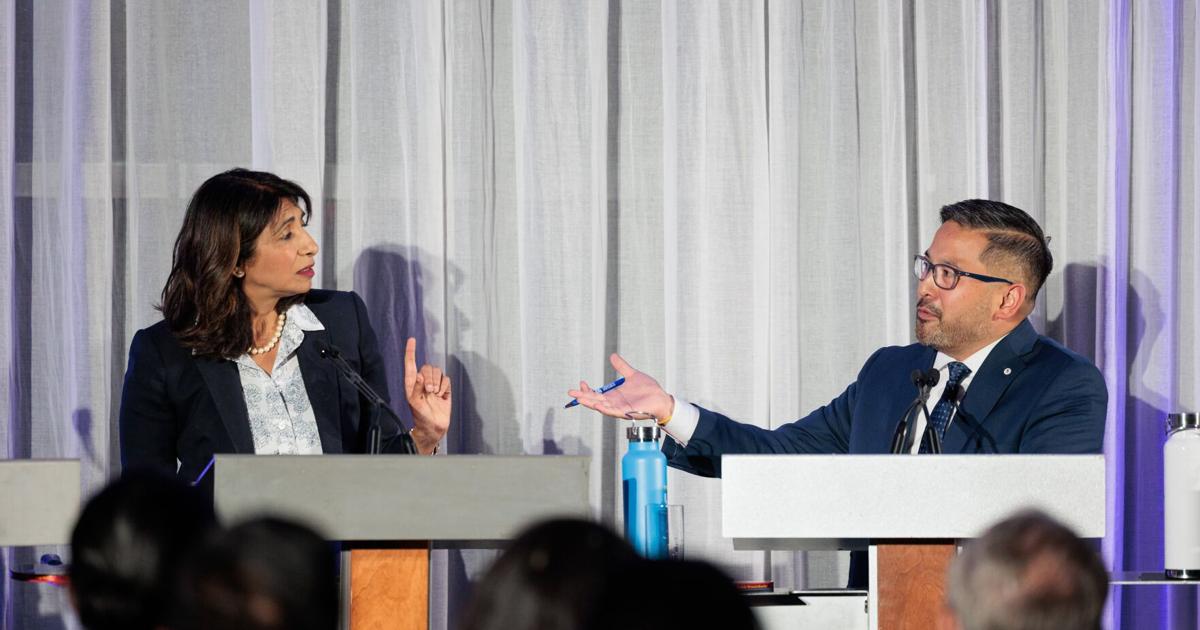
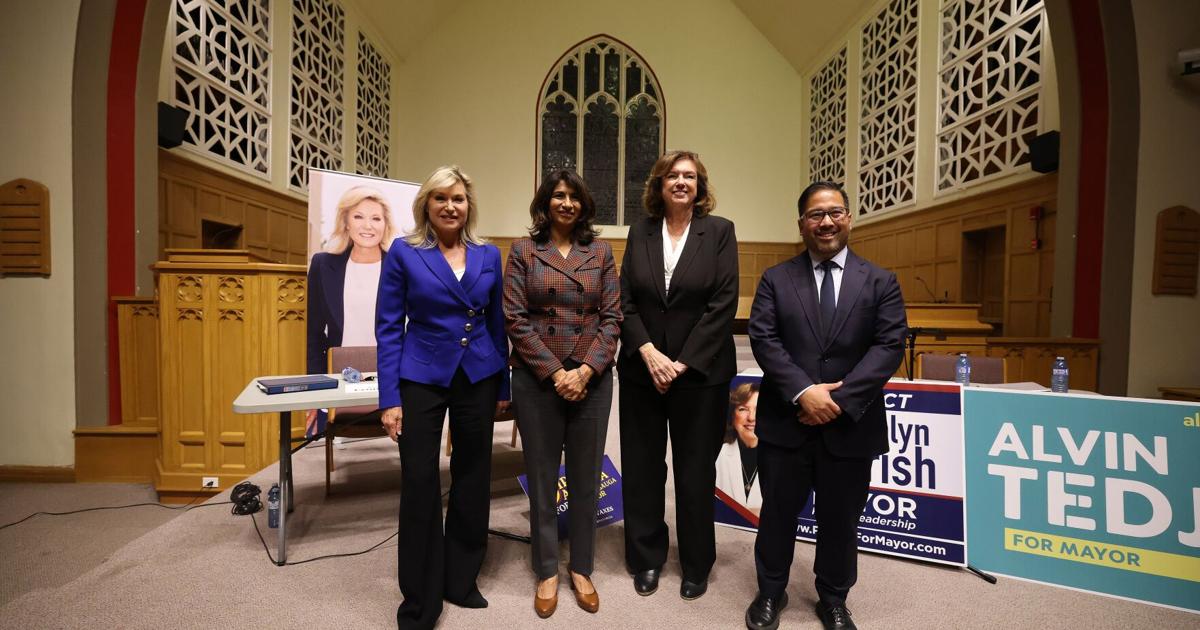
Torontonians mostly agree the city is a good, safe place to work and raise a family, but scratch the surface of civic pride and there is a deep well of pessimism.
asserted
city → agree → pessimism
A wide-ranging Ipsos poll has found respondents were a little more optimistic this year about the future of the city — up seven percentage points from last year to 66 per cent.
asserted
respondents → range → cent
When the poll got into specifics, though, some answers were grim.
asserted
answers → get → specifics
Most people said they think congestion, the cost of living, housing affordability and homelessness are getting worse, and half said crime and good use of taxpayers dollars are getting worse.
The prospect of owning a home for the first time still feels unattainable for most, even with prices dropping.
asserted
prices → say → most
Most people said public transit is holding steady, but only a quarter said they think it’s getting better, according to the poll, which interviewed 1,006 Toronto residents online between Sept. 4 and 8.
uncertain
which → say → Sept.
Ipsos poll of Torontonians underscores a contradiction
It’s hard to square answers that people love living in Toronto, believe the city’s best days are ahead and are optimistic about the future, with the general view that most things are getting worse or at best staying the same, said Darrell Bricker, chair of Ipsos Canada, in an interview.
asserted
Bricker → underscore → interview
“I think some of it might be just people giving up a little as opposed to saying, ‘You know, I think things really are good,’” said Bricker, noting that not much has changed when it comes to how Torontonians perceive the problems in the city compared to last year.
uncertain
Torontonians → think → year
For example, the city remains united in its hatred of gridlock.
asserted
city → remain → gridlock
This year’s poll found 80 per cent agree Toronto would be a better place to live if traffic weren’t as severe as it is, and around 60 per cent say traffic negatively impacts their daily lives and their health.
“They’re really frustrated,” said Bricker.
asserted
Bricker → find → lives
Traffic gridlock pushes residents toward the exits
Of the 37 per cent of Torontonians who say they are very or somewhat likely to leave the city in the next five years, traffic was the second most common reason after affordability.
asserted
traffic → push → affordability
When the Star asked Torontonians across the city to grade traffic alongside a similar Ipsos poll last year, the grind of navigating the city’s congestion also received very low marks.
asserted
grind → ask → marks
Besides the frustration with gridlock, which snarls buses and streetcars along with cars, is another troubling statistic that impacts getting around the city, Bricker said.
asserted
Bricker → snarl → city
While 78 per cent of Torontonians feel safe in their neighbourhoods, only 60 per cent feel very or fairly safe on the TTC.
asserted
cent → feel → TTC
The poll found that 45 per cent of women felt unsafe on public transit, compared to 36 per cent of men.
asserted
cent → find → men
Transit safety emerges as an election issue
Transit safety has emerged as a top issue in the mayoral election, with solutions ranging from a ramped-up police presence to a pilot project that includes AI cameras to detect track intrusions.
asserted
that → emerge → intrusions
Bricker says the poll suggests there is an opportunity to further target women voters on this issue.
uncertain
poll → say → issue
In the mayor’s race, the poll showed incumbent Olivia Chow with a 15-point lead over her main challenger, Brad Bradford.
asserted
poll → show → challenger
Among respondents who said they were extremely likely to vote, more than four in 10 said they would cast a ballot for Chow, and 27 per cent said they backed Bradford, who is councillor for Beaches—East York.
asserted
who → say → Beaches
Four per cent supported Chris Alexander, the former federal cabinet minister and Conservative MP who was a late entry into the race in July.
asserted
who → support → July
The Ipsos survey was conducted before the first mayoral debate to feature the three main candidates, which has focused public and media attention on the race.
asserted
which → conduct → race
More recent polls, including one released Tuesday by Liaison Strategies, found Chow’s lead has shrunk to single digits.
asserted
lead → include → digits
Bricker said it’s unusual for a sitting mayor to face such a serious test.
asserted
mayor → say → test
The most competitive elections are usually open races in which there is no incumbent, such as the 2023 byelection triggered by former mayor John Tory’s resignation, which Chow won.
asserted
Chow → be → which
“Normally, an incumbent mayor is way, way, way ahead,” he said.
asserted
he → say → ?
Bricker said the race could be tighter still if Bradford is able to better pin residents’ dissatisfaction over city issues to the mayor.
uncertain
Bradford → say → mayor
A majority of respondents said they felt concerns related to the cost of living, housing affordability, homelessness and traffic congestion were getting worse, yet many don’t seem to blame Chow for those problems.
asserted
many → say → problems
Almost half said Chow is doing a good job and deserves re-election.
asserted
Chow → say → election
Bradford’s challenge in the weeks before the Oct. 26 voting day is addressing that disconnect and convincing voters he represents “an actual possibility for change,” according to Bricker.
uncertain
he → address → Bricker
If he’s successful, “this race could get a lot closer before it’s over.”
uncertain
it → ’ → ?
What is clear is that there are plenty of problems in the city for mayoral candidates to tackle.
asserted
candidates → be → city
But one of the questions of this election will be how much Torontonians think the fault lies with city hall, the mayor and other public institutions, Bricker says.
asserted
Bricker → think → hall
“At this point people are not taking how they feel about that stuff and necessarily applying it to politics.”
The Ipsos poll is accurate to within 3.8 percentage points plus or minus, 19 times out of 20.
asserted
poll → take → 20
 The Aporia