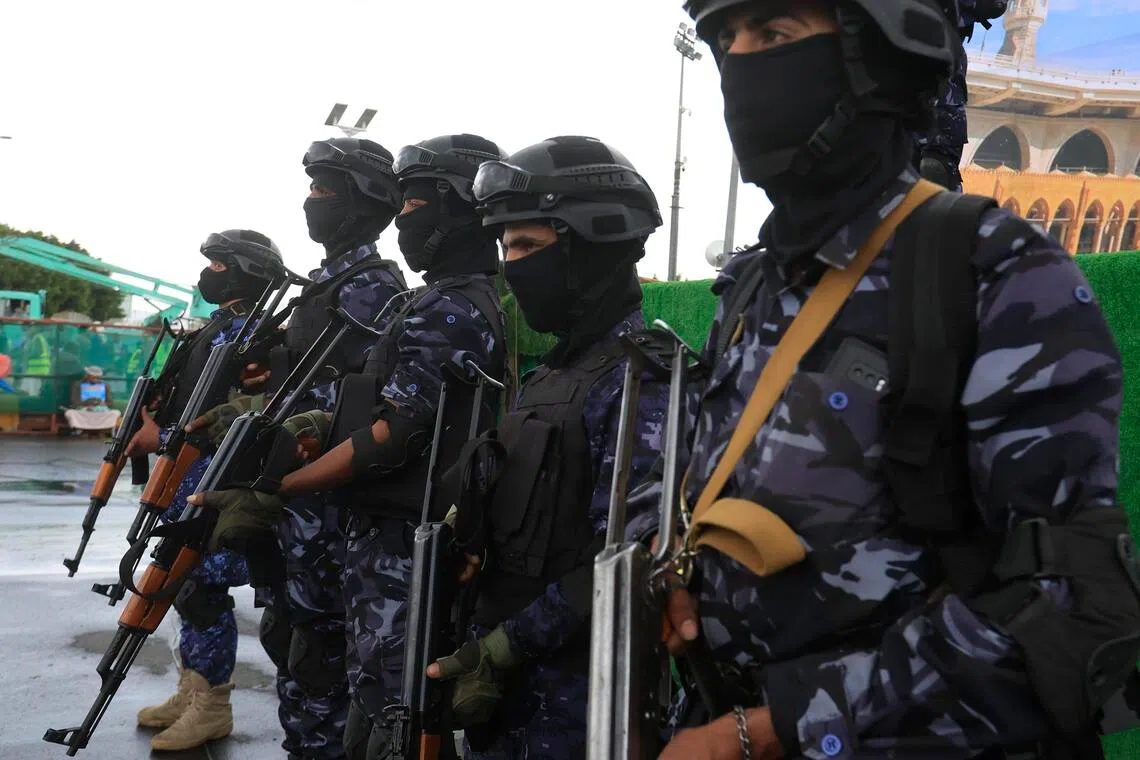
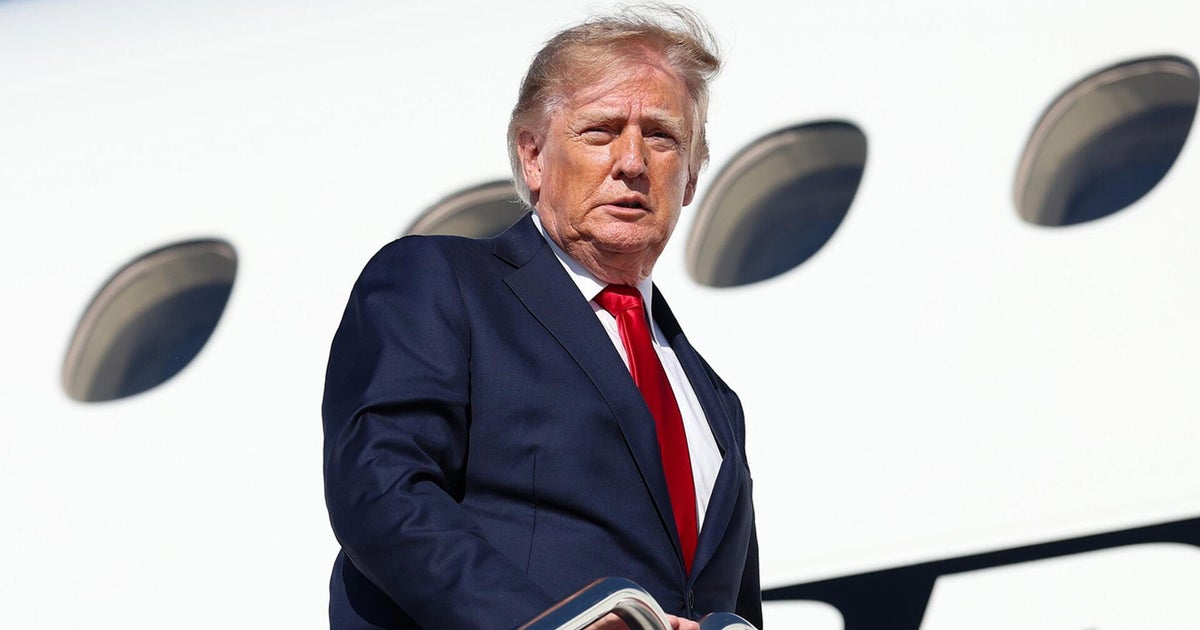
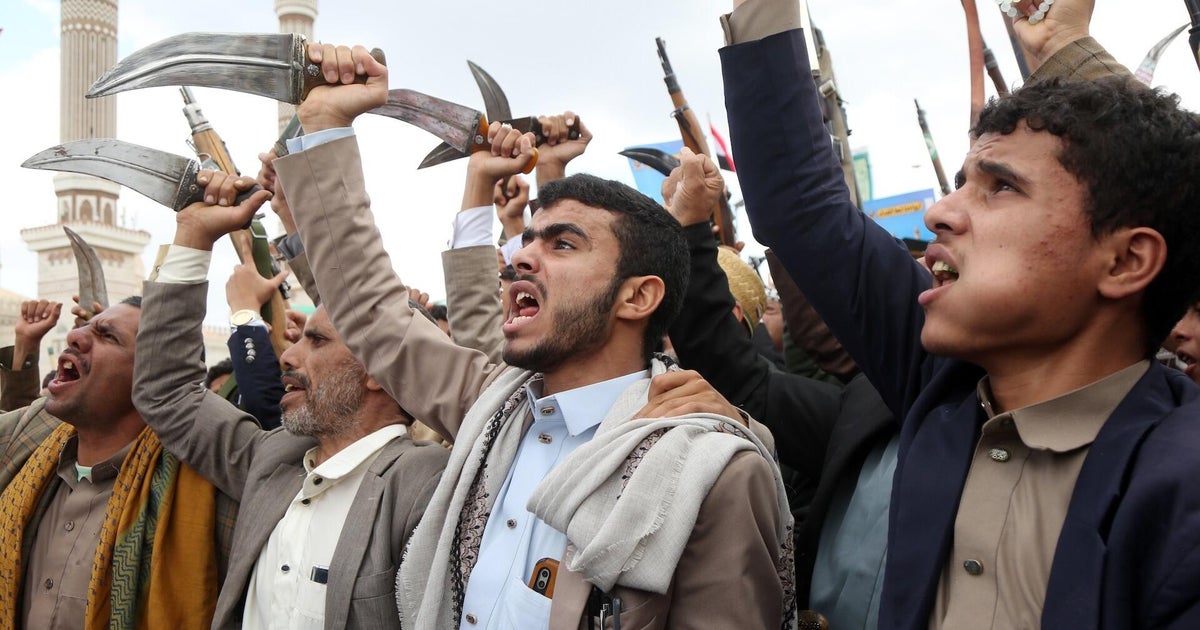
Photo via Washington Examiner

Bombs were loaded, warplanes were ready — but Trump was right to say ‘no’

Read the original at Washington Examiner ↗
Cite

Wargotz, E. (2026, September 23). Bombs were loaded, warplanes were ready — but Trump was right to say ‘no’. Washington Examiner. https://www.washingtonexaminer.com/op-eds/4736829/trump-houthi-airstrikes-gulf-defense-must-take-their-own-action-not-us-shield/

Dated when The Aporia collected the article, usually within hours of publication. Check the original for its exact date and byline.

Washington Examiner · collected 2026-09-23 · by Eric Wargotz

Quick Summary

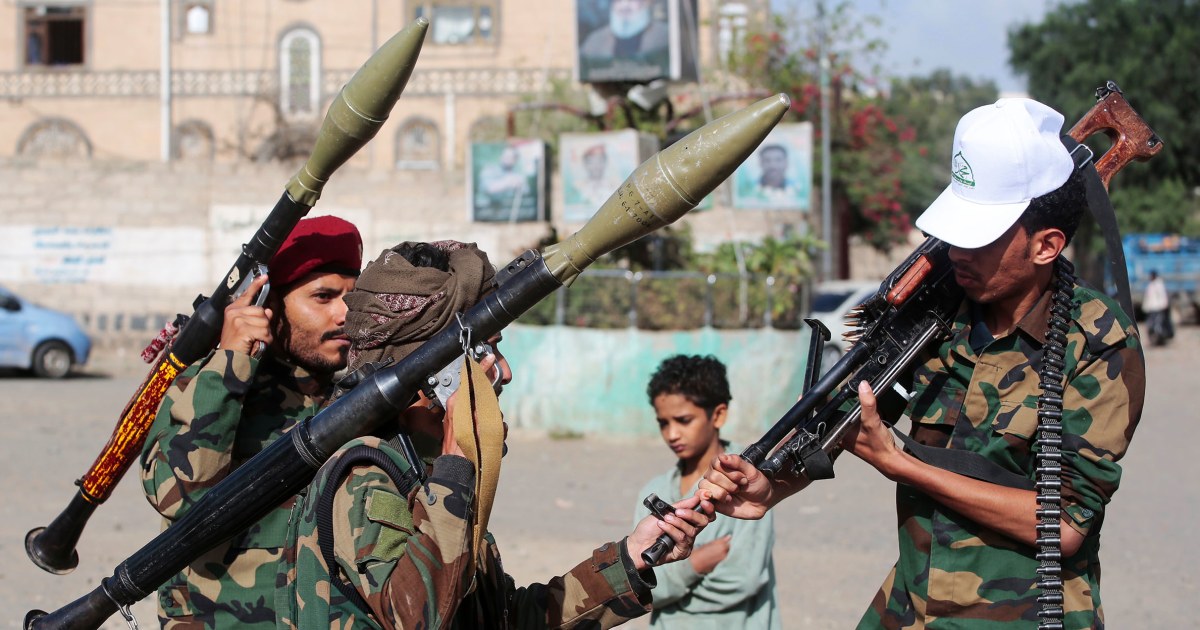
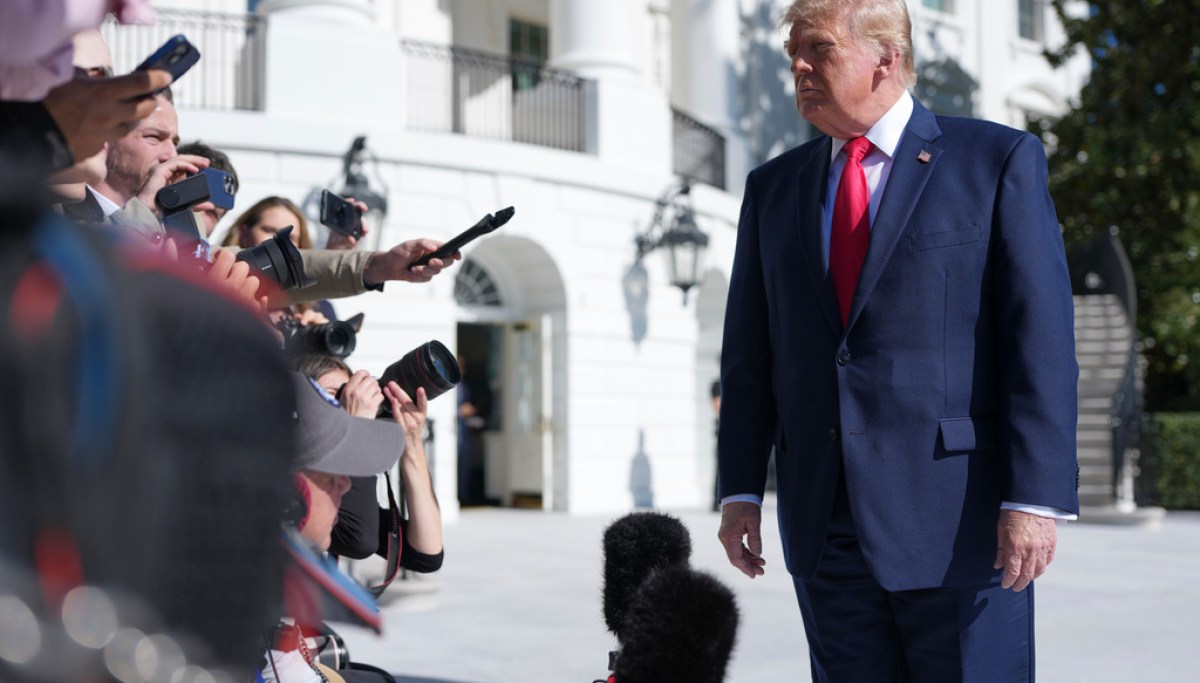
President Donald Trump canceled planned U.S. airstrikes against Yemen's Houthi rebels despite warplanes being ready and target lists approved, according to The New York Times. This decision came after intense pressure from Saudi Arabia’s Crown Prince Mohammed bin Salman. Critics argue that wealthy Gulf states rely too heavily on American military intervention instead of using their own substantial defense capabilities. Trump's refusal highlights the economic risks and regional political sensitivities involved in such actions, challenging these countries to take more responsibility for their own security.
Written by AI on 2026-09-23, from this article's own text only (the story summary below draws on all the coverage).

AI analysis

Story summary

The Houthis, backed by Iran, are rapidly advancing in Yemen and threatening critical waterways like the Bab al-Mandeb strait. President Trump spoke with Yemen's president Rashad al-Alimi about the situation but did not pledge military support to his Saudi-backed government. The U.S. had prepared airstrikes against the Houthis at Riyadh’s request but ultimately canceled them, even as bombs were loaded onto planes. This decision reflects a reluctance by the U.S. to engage militarily in the region and highlights the complex geopolitical dynamics between the U.S., Iran, and Saudi Arabia. Yemen's government is seeking direct military aid from the U.S., fearing that without such support, the Houthis will continue to expand their control over strategic areas. The cancellation of airstrikes also underscores Trump’s strategy to reduce America’s entanglement in Middle Eastern conflicts. Despite this, tensions remain high as the Houthis push for more territory and threaten global shipping routes. Trump's decision to not intervene militarily is seen by some analysts as a necessary step to break a cycle of codependency between the U.S. and its Gulf allies. However, it also raises questions about how effectively these nations can defend themselves without American support.

Written for “Houthis Fighting in Yemen” on 2026-11-02, grounded in this article and the 17 other(s) covering the same event.

Story

📰 Houthis Fighting in Yemen
Politics · 18 article(s) covering the same event. Compare every outlet's account →

Compared with similar articles

This article reads leans right and hedges 4% of its claims. Each row says how that neighbour differs.
The Straits Times
⚖️ Leans right Hedges 1 of 10 claims Outlet record 66/100
“Article A discusses Trump's claim that Houthis have agreed not to attack US on September 20, while Article B provides a broader commentary about military intervention in the Middle East without specifying the same incident or date.”
CBS News
Hedges 0 of 2 claims Outlet record 66/100
The Independent
Hedges 5 of 39 claims Outlet record 59/100
The Free Press
Hedges 1 of 6 claims Outlet record 96/100
“The articles discuss different topics within the broader context of Middle Eastern geopolitics — one focuses on a potential alliance between Pakistan, Saudi Arabia, and Turkey, while the other critiques the passivity of wealthy Gulf states in responding to security threats.”
CBS News
Hedges 0 of 3 claims Outlet record 66/100
“Article A describes current Houthi attacks on Saudi Arabia and Trump's stance towards Iran, while Article B discusses a hypothetical scenario where military intervention might have been considered but was avoided.”
The Hindu
Hedges 1 of 9 claims Outlet record 60/100
“Article A reports on Trump's claim about Houthis agreeing not to attack U.S., while Article B discusses broader context of Gulf allies' reliance on U.S. intervention.”
The Hindu
Hedges 0 of 7 claims Outlet record 60/100
“While both articles discuss Trump's response to a situation involving Yemen and Houthis, Article A specifically reports on a phone call between Trump and Yemen’s President, while Article B discusses a broader context of potential military intervention that may or may not be directly tied to the same specific event.”
Dawn
⚖️ Leans right Hedges 1 of 18 claims Outlet record 72/100
NBC News
⚖️ Leans right Hedges 3 of 23 claims Outlet record 60/100
“While both articles discuss Yemen seeking military support from the US regarding the Houthi conflict, Article A focuses on broader geopolitical commentary about Gulf states' reliance on U.S. intervention, rather than a specific request for help.”
How this article was measured signals, leaning charts, publisher record, byline, topics and claims

Signals How these are calculated →

Claims extracted
56
sentences that state something as happening or true
Uncertain
4%
2 of 56 hedged ("reportedly", "may", "according to")
Leaning
Leans right
of the writing, not the subject · beta estimate
Publisher signals
70/100
Washington Examiner's corrections and hedging, across everything collected from it. Not a measure of accuracy.
Outlets on this story
18
Politics
Same framing elsewhere
1
articles that frame the event the way this one does
Analyzed 2026-09-23 · how these are computed

How this is being covered How these are calculated →

Article leaning vs. publisher reliability
Source leaning vs. consistency

Publisher

Washington Examiner · 3900 article(s) · 7 correction(s) detected
Running correction rate · 7 correction(s)

Who wrote this

Eric Wargotz
45 article(s) here · 1 carrying a prediction
🔮 MAGA has become the central pillar holding up the modern Right, meaning its exit would pull down the entire architecture.
2026-10-31 · assertive framing · MAGA won the party. It just lost the math
🔮 The timing of this rapidly unfolding development could not be more dangerous.
🔮 But right now, all these conflicting voices in his ear, the domestic polling, and the foreign pressure might just be clouding his judgment.
🔮 A highly active, independent 85-year-old with multiple risk factors might experience significant, long-term survival benefits from continuous lipid management.
🔮 When we — whether ordinary citizens or high-level officials — flirt with systemic collapse simply because we despise the current administration, we play with a fire that will consume everyone.
🔮 National surveys published by the Pew Research Center Climate Pessimism Study document that roughly 60% of Americans express deep anxiety that global actors will fail to mitigate the worst environmental impacts due to political division.
2026-10-09 · assertive framing · The climate war’s dumbest lie: Jobs vs. nature
🔮 If your only window into the American soul is the nightly cable news broadcast, you would assume we are a nation completely irreconcilable, locked in a permanent cultural cold war.
🔮 Meanwhile, Trump boldly cut through the bureaucratic panic, signaling that the White House has no appetite for heavy-handed domestic regulations that would cripple our edge and stating that our primary guardrails remain the rule of law and the Department of Justice.
🔮 When we look at this disparity under the microscope, we find that it is neither a failure of individual willpower nor a consequence of an isolated genetic pool.
🔮 Every single time I hit “send” on a new draft, a cynical voice in my head asks the exact same questions: Will the editor accept this, as they’re overwhelmed with tons of these a day?
Also by Eric Wargotz
MAGA won the party. It just lost the math
2026-10-31 · Washington Examiner
Nothing else under this byline is closely related to this article, so these are simply their most recent.
All 45 articles by Eric Wargotz →

Topics

American Houthis Saudi U.S. Washington

Subjects

Israel GPE · 4× American NORP · 3× Houthis NORP · 3× Western NORP · 3× Arab NORP · 2× Riyadh GPE · 2× Saudi NORP · 2× U.S. GPE · 2× Washington GPE · 2× British NORP · 1×

Narrative

They amply possess the Western hardware to execute front-line strikes, the advanced Chinese surveillance infrastructure and commercial drone technology to monitor their immediate peripheries, and the localized regional intelligence networks necessary to identify and neutralize the precise threats targeting their borders.
framing: assertive · carried by 1 article(s) · first seen 2026-09-23
🔮 Bowing to Riyadh’s pleas would only perpetuate a dangerous cycle of codependency.
2026-09-23 · Washington Examiner
Bombs were loaded, warplanes were ready — but Trump was right to say ‘no’ · assertive framing

Claims (56 extracted, 2 hedged)

To the casual observer of geopolitics, the security crisis in the Middle East looks like an exercise in passivity. asserted
crisis → look → passivity
Our wealthy Gulf “allies,” “neighbors,” and “friends” sit atop billions of dollars of advanced military hardware. asserted
allies → sit → hardware
Their hangars are filled with American F-15s, British Typhoons, and French Rafales. asserted
hangars → fill → F-15s
Yet, when confronted by a rapid offensive from the Houthis in Yemen, these regimes frequently appeal to Washington for military intervention. asserted
regimes → confront → intervention
They choose to outsource their defense rather than unleashing their own immense firepower. asserted
They → choose → firepower
For many American taxpayers and policymakers, this triggers an immediate and frustrated question. asserted
this → trigger → question
Why should U.S. troops protect countries that refuse to protect themselves? asserted
that → protect → themselves
President Donald Trump was fundamentally right to abruptly call off planned U.S. airstrikes against the Houthis. asserted
Trump → call → Houthis
He halted the operation even as American warplanes sat on the tarmac with target lists approved and bombs loaded. asserted
bombs → halt → tarmac
This last-minute reversal came despite intense, personal appeals from Saudi Crown Prince Mohammed bin Salman, according to reporting by The New York Times. uncertain
reversal → come → Times
Bowing to Riyadh’s pleas would only perpetuate a dangerous cycle of codependency. asserted
Bowing → bow → codependency
Answering this crisis requires looking past the immediate panic of the Saudi regime. asserted
Answering → answer → regime
We must examine a matrix of economic arguments, volatile regional optics, and shifting military realities. asserted
We → examine → arguments
Defenders of the Gulf states often point to the fragile nature of their economies. asserted
Defenders → point → economies
They argue that offensive campaigns invite catastrophic, asymmetric retaliation. asserted
campaigns → argue → retaliation
This retaliation could destroy tourism, paralyze global supply chains, and scare off foreign investment. uncertain
retaliation → destroy → investment
The United States faces these exact same fiscal risks. asserted
States → face → risks
Therefore, economic risk cannot become a blank check for regional allies. asserted
risk → become → allies
They cannot sit back, absorb hits, and outsource the bloody business of sovereign defense to Washington. asserted
They → sit → Washington
If sovereignty is to mean anything, it requires accepting the financial and operational risks of protecting one’s own borders. asserted
it → mean → borders
Analysts at the Center for Strategic and International Studies have long maintained that an over-reliance on foreign shielding fundamentally erodes a nation’s long-term defense posture. asserted
reliance → maintain → posture
However, looking strictly at economics ignores a deeper layer of this paralysis. asserted
looking → look → paralysis
Since the outbreak of these conflicts, a dominant thread of regional reality has been the treacherous political tightrope these regimes must walk. asserted
regimes → walk → reality
Historical analysis by the Council on Foreign Relations shows how local public opinion heavily restricts the choices of these governments. asserted
opinion → show → governments
A high-profile, offensive military alignment with Western powers carries immense internal risk. asserted
alignment → carry → risk
For leadership in Riyadh or Abu Dhabi, launching an offensive alongside non-Muslim Western nations against fellow Muslims triggers severe domestic and regional vulnerability. asserted
launching → launch → vulnerability
This remains true even when fighting radicalized groups such as the Houthis or Iranian-backed militias. asserted
This → remain → Houthis
The fear of being branded by the Arab street as Western puppets acts as a powerful psychological brake on offensive operations. asserted
fear → brand → operations
This is precisely where Israel fits into the broader equation. asserted
Israel → fit → equation
Unlike the Gulf states, Israel has long established a doctrine of self-reliance. asserted
Israel → establish → reliance
It fights its own battles and bears its own front-line costs without expecting foreign troops to shield its borders. asserted
troops → fight → borders
In this complex theater, keeping Israel structurally separated from any broader Gulf military confrontation is a strategic necessity. asserted
keeping → keep → confrontation
By ensuring Israel remains a distinct, independent actor fighting its own localized battles, the region avoids a toxic narrative. asserted
region → ensure → narrative
It prevents adversaries from claiming a Western alliance is waging war on Arab soil. asserted
alliance → prevent → soil
This deliberate separation lowers the temperature of the religious optics. asserted
separation → lower → optics
Crucially, it makes it vastly easier for Arab nations to eventually broker lasting, formalized peace agreements under transactional, America-first frameworks administered by the U.S. Department of State once the smoke clears. asserted
smoke → make → State
By keeping these agreements strictly diplomatic rather than relying on permanent U.S. military entanglements, Washington can facilitate localized stability while ensuring American blood and treasure are never used as bargaining chips to force regional integration. asserted
blood → keep → integration
Yet, these political optics and economic fears can no longer dictate a passive status quo that drains American resources. asserted
that → dictate → resources
The U.S. cannot care more about the stability of the Red Sea or the Arabian Peninsula than the nations that actually border them. asserted
that → care → them
The path forward requires a fundamental restructuring of the alliance. asserted
path → require → alliance
…and 16 more, not listed.

💬Give feedback
🕘History 🎫Support