Photo via Euronews

Qatar's emir urges talks with Iran as regional leaders demand stronger action against Israel at UN

Read the original at Euronews ↗
Cite

Elashi, M. (2026, September 23). Qatar's emir urges talks with Iran as regional leaders demand stronger action against Israel at UN. Euronews. https://www.euronews.com/2026/09/23/qatars-emir-urges-talks-with-iran-as-regional-leaders-demand-stronger-action-against-israe

Dated when The Aporia collected the article, usually within hours of publication. Check the original for its exact date and byline.

Euronews · collected 2026-09-23 · by Mohamed Elashi

Quick Summary

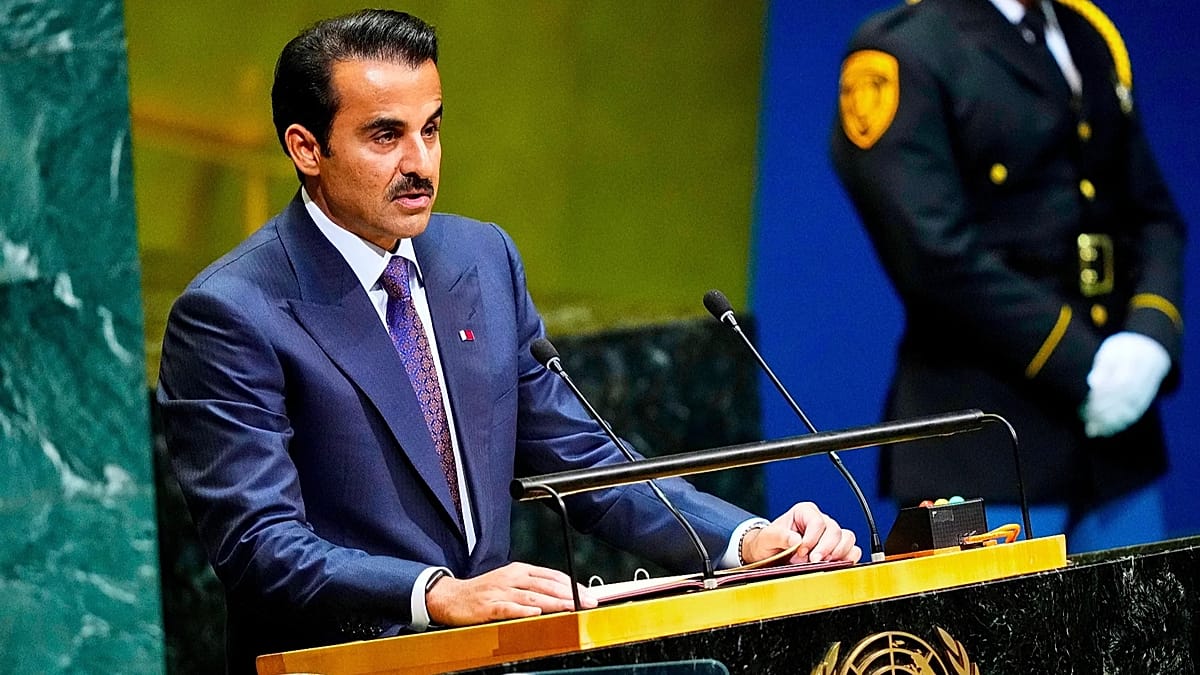
Qatar’s Emir Sheikh Tamim bin Hamad Al Thani addressed the United Nations General Assembly on Tuesday, urging regional leaders to engage in talks with Iran and calling for a collective security system in the Gulf to prevent further conflicts. He emphasized the need for diplomatic solutions and criticized Israel's actions in Gaza, Syria, and Lebanon, describing conditions there as genocidal and urging international intervention. Turkish President Recep Tayyip Erdoğan also spoke, advocating for freedom of navigation through the Strait of Hormuz and increased pressure on Israel regarding its military operations in Gaza.
Written by AI on 2026-09-23, from this article's own text only (the story summary below draws on all the coverage).

AI analysis

Story summary

As of September 2026, President Donald Trump told reporters that the U.S. is "hopefully toward the end" of its ongoing war with Iran, which began on February 28 and has lasted for seven months. Despite this hopeful statement, there are no clear timelines or significant de-escalation efforts in sight. The conflict continues to disrupt global oil supplies through the Strait of Hormuz, pushing up oil prices to over $108 per barrel. Additionally, Iran's foreign minister is under pressure from China and international concerns to reopen the strait and return to a previous interim peace deal with the U.S.

Meanwhile, tensions have escalated beyond Iran into Yemen, where Houthi rebels, aligned with Iran, pose significant threats near the Red Sea, complicating efforts at regional stability. The conflict has also drawn in other nations such as Saudi Arabia, which is offering extra crude oil through Oman to ease supply disruptions and stabilize oil prices.

At the United Nations General Assembly, Trump further alarmed global leaders by threatening to "annihilate" Iran if necessary, raising concerns about the potential for catastrophic outcomes involving nuclear weapons. This rhetoric contrasts sharply with past U.S. presidents who emphasized caution regarding such extreme measures. Despite these challenges, there is an urgent need for multilateral solutions and effective engagement through international bodies like the UN to address ongoing conflicts and crises around the world.

Written for “Trump's UN Speech Controversies” on 2026-10-31, grounded in this article and the 206 other(s) covering the same event.

Story

📰 Trump's UN Speech Controversies
Politics · 207 article(s) covering the same event. See how they differ ↓

Compared with similar articles

This article reads unscored and hedges 7% of its claims. Each row says how that neighbour differs.
Al Jazeera
Hedges 0 of 2 claims Outlet record 60/100
Al Jazeera
Hedges 0 of 2 claims Outlet record 60/100
“While both articles discuss speeches at the UN General Assembly regarding tensions with Iran, Article A focuses on Trump's comments about a meeting with Iran, whereas Article B centers on Qatar's Emir Sheikh Tamim bin Hamad Al Thani's speech urging diplomacy and talks.”
Renewed peace push Same event
Dawn
⚖️ Leans strongly left Hedges 2 of 16 claims Outlet record 72/100
ABC News (AU)
Hedges 3 of 27 claims Outlet record 68/100
“The articles describe speeches by different leaders (Qatar's emir and Iran's president) at the UN General Assembly on the same day, but they do not cover the same specific incident.”
The Straits Times
Hedges 3 of 25 claims Outlet record 66/100
“The articles describe different speeches and statements made by leaders from Qatar and Iran at separate times, not the same specific incident.”
Al Jazeera
Hedges 0 of 2 claims Outlet record 60/100
“The articles discuss related geopolitical situations involving Iran but describe different events - one about Tehran setting peace terms through Qatari mediators, and another about Qatar's Emir calling for talks with Iran at the UN.”
Al Jazeera
Hedges 0 of 1 claims Outlet record 60/100
“The articles discuss related topics but describe different speeches or statements made at distinct times.”
BBC News
Hedges 1 of 29 claims Outlet record 68/100
“While both articles discuss diplomatic efforts related to Iran at the UN in New York, they describe different specific meetings or speeches.”
Al Jazeera
Hedges 0 of 3 claims Outlet record 60/100
“While both articles discuss diplomatic efforts at the UN General Assembly, Article A focuses on a meeting between US and Iran overseen by Qatar, while Article B covers the emir's broader speech calling for talks with Iran and addressing issues with Israel.”
The Guardian
⚖️ Leans strongly left Hedges 4 of 34 claims Outlet record 66/100
“Both articles report speeches at the UN General Assembly on the same day, but they describe different speakers addressing distinct themes.”
How this article was measured signals, leaning charts, publisher record, byline, topics and claims

Signals How these are calculated →

Claims extracted
27
sentences that state something as happening or true
Uncertain
7%
2 of 27 hedged ("reportedly", "may", "according to")
Leaning
withheld
no quote in the article backed the model's score
Publisher signals
60/100
Euronews's corrections and hedging, across everything collected from it. Not a measure of accuracy.
Outlets on this story
207
Politics
Same framing elsewhere
1
articles that frame the event the way this one does
Analyzed 2026-09-23 · how these are computed

How this is being covered How these are calculated →

Article leaning vs. publisher reliability
Source leaning vs. consistency

Publisher

Euronews · 1130 article(s) · 1 correction(s) detected
Running correction rate · 1 correction(s)

Who wrote this

Mohamed Elashi
12 article(s) here · 1 carrying a prediction
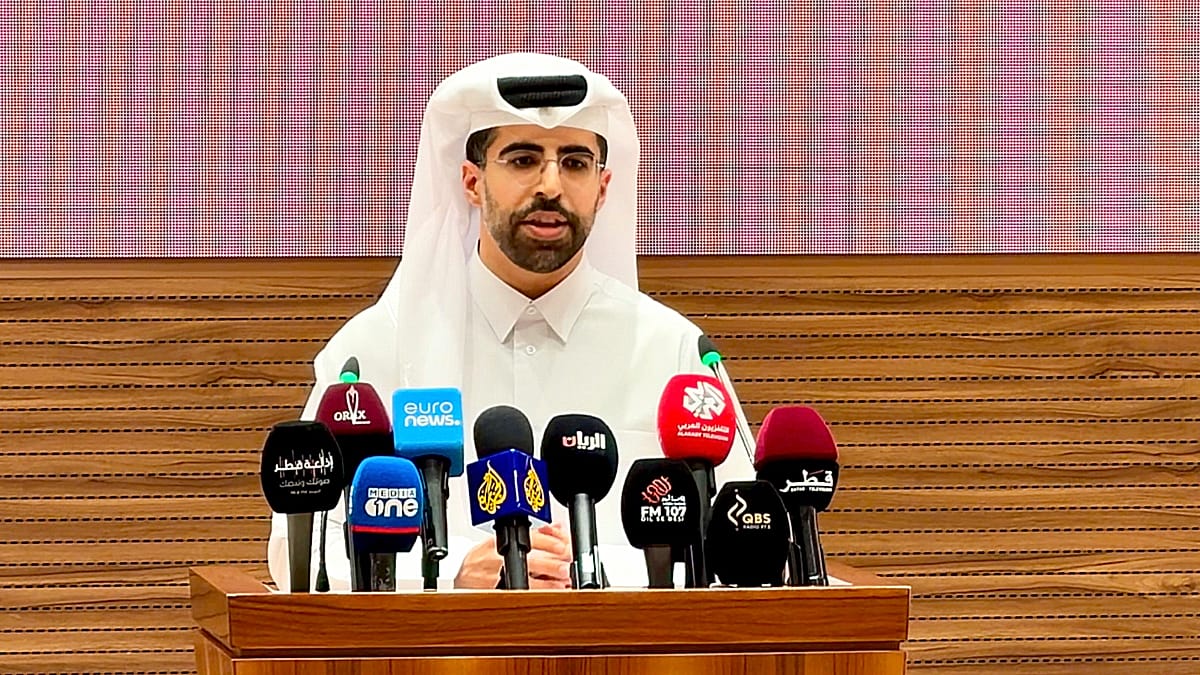
🔮 Qatar urged Iran on Tuesday to “show goodwill” by stopping threats against countries in the region and reopening the Strait of Hormuz, as efforts to broker a deal with the United States continued. "We have heard positive statements from the Iranian side on this issue, but they still need to show goodwill,” Ibrahim bin Sultan Al Hashmi, director of the foreign ministry’s Media and Communication Department, told a weekly briefing in Doha.
🔮 Parliament’s statement did not specify what assistance Egypt would provide or announce that troops were being sent.
🔮 Qatar will soon announce a new defence partnership, Deputy Prime Minister Sheikh Saoud bin Abdulrahman Al Thani said on Monday, while also calling for talks and closer economic ties with Iran to prevent further conflict.
🔮 France also said on Sunday it would continue supporting the Gulf kingdom in defending its territory and infrastructure.
🔮 Momeni said a technical delegation would hold further meetings on the issue following the talks in Doha, Iranian state broadcaster IRIB reported on Tuesday.
🔮 He would not say how far the negotiations had progressed.
🔮 Such a system could have prevented the current Iran war and without it, he warned, vital facilities could be attacked and important waterways closed. Any lasting agreement with Tehran should protect the whole region, including Iran, Sheikh Tamim said.
🔮 The ministry’s announcement did not say when pumping would resume or give a full account of the damage.
🔮 The talks mark the countries’ highest-level meeting since the start of the US-Israel war with Iran, as the UAE has been making it clear through presidential diplomatic adviser Anwar Gargash that "trust is the mountain we will have to climb," as "geography leaves us no alternative to engagement," but that those relations will need to be judged by actions and not words to rebuild the shattered trust.
🔮 An Egyptian television presenter faces execution after a Cairo court sentenced her to death for financing and coordinating a synthetic drug network, but her lawyer says they will appeal, and legal experts say the case is far from over. Sarah Khalifa, known for hosting the crime programme Mission Impossible on private channel Al-Mehwar and for her events business, was sentenced on Saturday alongside 11 others in a major synthetic drug manufacturing and trafficking case. Nine defendants received life sentences and seven were acquitted.
Also by Mohamed Elashi
Nothing else under this byline is closely related to this article, so these are simply their most recent.
All 12 articles by Mohamed Elashi →

Topics

Gaza Israel Qatar Tehran Turkey

Subjects

Israel GPE · 6× Gaza GPE · 4× Qatar GPE · 4× Tamim PERSON · 4× Jordan GPE · 3× Turkey GPE · 3× Iran GPE · 2× Israeli NORP · 2× Palestine GPE · 2× Tehran GPE · 2×

Narrative

Underlining that Qatar is "a trusted mediator," Sheikh Tamim called for the Strait of Hormuz to be reopened and warned that Gulf countries were being drawn into a war that was not theirs. “We remain convinced that the crisis in the Gulf can be resolved through diplomatic means, through reopening the Strait of Hormuz to maritime navigation, in order to avert war,” the Qatari emir said.
framing: assertive · carried by 1 article(s) · first seen 2026-09-23
🔮 Such a system could have prevented the current Iran war and without it, he warned, vital facilities could be attacked and important waterways closed. Any lasting agreement with Tehran should protect the whole region, including Iran, Sheikh Tamim said.

Claims (27 extracted, 2 hedged)

The leaders of Qatar, Turkey and Jordan called for talks with Tehran and greater international pressure on Israel. asserted
leaders → call → Israel
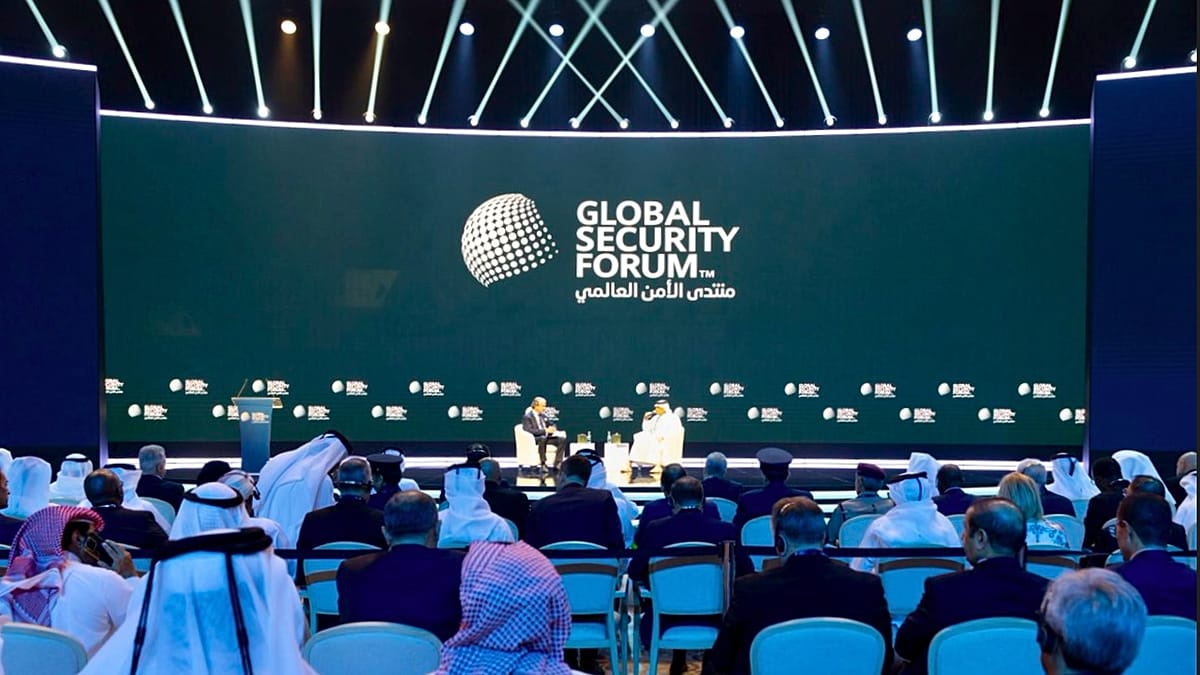
Qatar’s Emir Sheikh Tamim bin Hamad Al Thani told the United Nations General Assembly that the Gulf was going through "one of the most dangerous phases" in its recent history and that the Iran war was the result of cumulative years of postponing diplomatic solutions. asserted
war → tell → solutions
In his speech at the UN headquarters in New York on Tuesday, Sheikh Tamim called for a “regional system of collective security” based on national sovereignty, non-interference and the peaceful resolution of disputes. asserted
Tamim → call → disputes
Such a system could have prevented the current Iran war and without it, he warned, vital facilities could be attacked and important waterways closed. Any lasting agreement with Tehran should protect the whole region, including Iran, Sheikh Tamim said. uncertain
Tamim → prevent → Iran
“The opportunity for a peaceful diplomatic solution, which we believe is both possible and realistic, must not be missed," he added. asserted
he → believe → solution
Underlining that Qatar is "a trusted mediator," Sheikh Tamim called for the Strait of Hormuz to be reopened and warned that Gulf countries were being drawn into a war that was not theirs. “We remain convinced that the crisis in the Gulf can be resolved through diplomatic means, through reopening the Strait of Hormuz to maritime navigation, in order to avert war,” the Qatari emir said. asserted
emir → underline → war
Qatar was doing “everything in our power to address the conflict in the region through diplomatic means," he added. asserted
he → do → means
On Gaza, Sheikh Tamim stated that what had happened there was “genocide in every sense of the word." asserted
happened → state → word
“There can be no talk of a just international order as long as Palestine remains in its plight," he said, adding that the scale of the destruction had not been matched by the international response. asserted
scale → remain → response
He called on Israel to fully implement the ceasefire by ending military operations, withdrawing from Gaza, lifting the blockade and allowing humanitarian aid to enter without conditions. asserted
aid → call → conditions
The emir also criticised Israeli actions in Syria and Lebanon, adding that the international response would show whether international law was being applied equally. asserted
law → criticise → Syria
Turkey warns against wider war asserted
Turkey → warn → war
In his speech at the General Assembly, Turkish President Recep Tayyip Erdoğan called for freedom of navigation through the Strait of Hormuz to be maintained and said Turkey was working with other countries to end the fighting in the Gulf. asserted
Turkey → call → Gulf
He added that letting the war spread to neighbouring countries would help no one. asserted
war → add → one
On Gaza, Erdoğan described the territory as the “most inhumane and shameful concentration camp of our time” and urged UN members to increase pressure on Israel. asserted
Erdoğan → describe → Israel
He also called on countries that have not recognised Palestine to reconsider their position. asserted
that → call → position
During his fiery speech, the Israeli delegation left the hall. asserted
delegation → leave → hall
The Turkish president also criticised Palestinian President Mahmoud Abbas's absence from the General Assembly. asserted
president → criticise → Assembly
Abbas could not attend after the US denied him a visa for the second consecutive year. uncertain
US → attend → year
Erdoğan renewed his demand for UN Security Council reform, arguing that decisions affecting more than 190 countries should not depend on its five permanent members. asserted
decisions → renew → members
He repeated his long-standing slogan that the “world is bigger than five” and said international law should not be applied differently to strong and weak countries. asserted
law → repeat → countries
Jordan says international inaction is a choice Jordan's King Abdullah contrasted the international response to Israel with the sanctions, asset freezes, embargoes and diplomatic isolation used in other conflicts. When it came to Israel, he said, resolutions had repeatedly remained on paper. asserted
resolutions → say → paper
He called the failure to act a political “choice” and said the problem was not a lack of available tools. The Hashemite kingdom's monarch accused Israel of seizing land, expanding settlements and allowing settler violence against Palestinians in the occupied West Bank, and said that forced displacement constitutes a war crime. asserted
displacement → call → crime
He described Gaza and the occupied West Bank as two parts of an effort to make a viable Palestinian state impossible. asserted
state → describe → effort
King Abdullah said decades of managing the Israeli-Palestinian conflict instead of tackling its causes had allowed temporary measures to become permanent policy. asserted
measures → say → causes
He also warned that Israeli actions in southern Syria, including territorial expansion around water resources, posed a direct threat to Jordan’s northern border and water security. asserted
actions → warn → border
On Iran, King Abdullah said the war was hurting trade and investment and raising energy and food bills worldwide. asserted
war → say → bills

💬Give feedback
🕘History 🎫Support