This article is brought to you by American Purpose, the magazine and community founded by Francis Fukuyama in 2020, which is proudly part of the Persuasion family.
asserted
which → bring → family
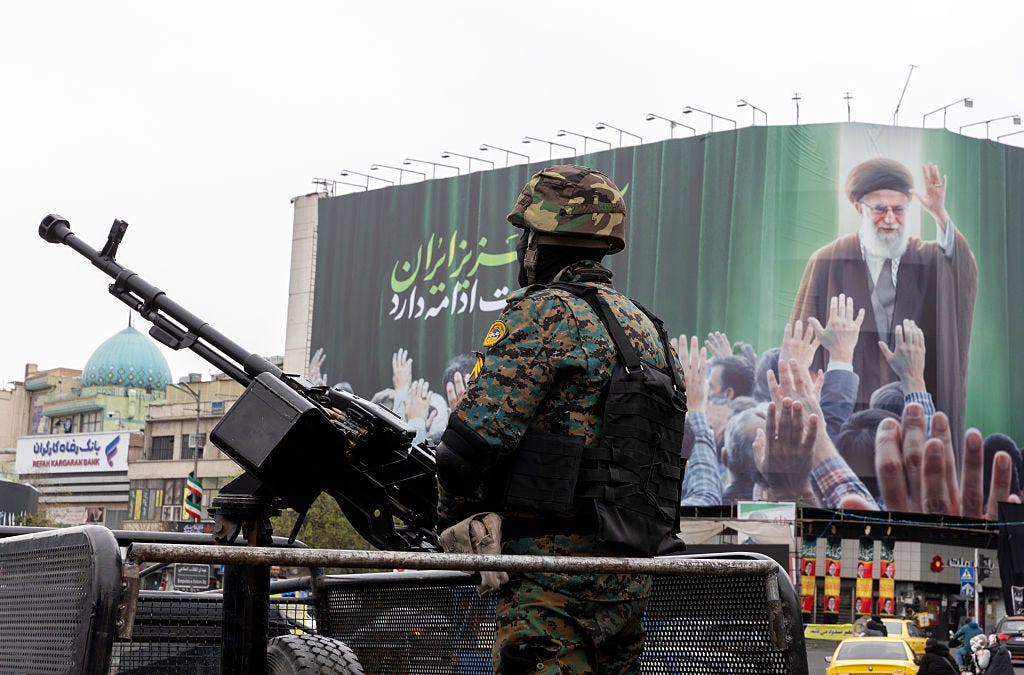
The creation of a police high school in the Islamic Republic of Iran marks a new attempt to recruit personnel and professionalize the force.
asserted
creation → mark → force
The Police Commander recently declared that initially 400 students will be admitted to police schools in three provinces, Tehran, Alborz, and Qom.
asserted
students → declare → provinces
While the stated aim is to educate the elite, build disciplinary knowledge, and train the next generation of police, the political importance of this plan is much greater than the number of students or the quality of education.
asserted
importance → educate → education
The creation of a police high school should be seen as a continuation of the Islamic Republic’s reliance on security and coercion for the survival of the regime—but with one difference.
asserted
creation → see → difference
In the past, the government’s main problem was recruiting loyal individuals for the police.
asserted
problem → recruit → police
Now, it seems that the Iranian police are trying to develop and train their people much earlier, starting in the teenage years, before inducting them into a police environment.
asserted
police → seem → environment
To understand this transformation, we must first look at the history of police forces in Iran after the 1979 revolution.
asserted
we → understand → revolution
The Islamic Republic created Revolutionary Committees to guard cities, maintain political order, and—more importantly—identify and arrest counter-revolutionary forces.
asserted
Republic → create → forces
Despite the purification of the pre-existing city police, Shahrbani, and gendarmerie, the regime still believed that these forces were not trustworthy enough.
asserted
forces → exist → police
The Islamic Revolutionary Committees were usually formed out of religious and conservative networks, and became active in repressing the opposition, controlling neighborhoods, enforcing Islamic rules and dress codes, gathering intelligence, and conducting surveillance in neighborhoods.
asserted
Committees → form → neighborhoods
In 1991, after the end of the Iran-Iraq War and the election of Hashemi Rafsanjani as president, the regime merged the city police, the gendarmerie, and the Islamic Revolutionary Committees to form a new disciplinary-security force called Niru-ye Entezami-ye Jomhuri-ye Eslami, or NAJA.
asserted
regime → merge → force
The new organization had one important political characteristic from the beginning: NAJA’s chief commander came from the Islamic Revolutionary Guard Corps (IRGC)—created to safeguard the revolution—and was appointed directly by the Supreme Leader.
asserted
commander → have → Leader
In addition, like other military and security organizations, NAJA created two parallel organizations: an ideological-political organization representing Ayatollah Khamenei in the police, and a counterintelligence organization.
asserted
NAJA → create → police
From its creation, almost all NAJA commanders and many high-ranking police commanders came from the IRGC, bringing the organization closer to the security core of the Islamic Republic.
asserted
commanders → rank → Republic
Therefore, the professionalization of the police in the Islamic Republic was never only about professionalizing a nonpolitical institution with the goal of implementing the law.
asserted
professionalization → professionalize → law
From the beginning, the expansion of police capacities coincided with the expansion of its capacities to control protests, conduct surveillance of society, and maintain and defend the Islamic Republic.
asserted
expansion → coincide → Republic
The experience of urban riots from 1991 to 1994, the student protests of 1999, the Green Movement of 2009, and subsequent protests, gave the police opportunities to renew its organization, expand its branches and capacities, acquire additional equipment, and create new operational and intelligence branches.
asserted
experience → give → branches
During the commandership of Ismail Ahmadi Moghadam, a former IRGC commander who became police commander in 2005, the police shifted from recruiting Iranians from the general society to relying more and more on the Basij militia (the paramilitary wing of the IRGC) to recruit new cadres.
asserted
police → become → cadres
According to the police commander, more than 75 percent of police personnel recruited in 2006 and more than 80 percent of those recruited in 2007 were selected from among Basij members.
uncertain
percent → accord → members
They also announced that, in the future, they would try to recruit all police personnel from the Basij militia.
asserted
they → announce → militia
The aim was to strengthen the political identity of the police and the ideological core of the Islamic Republic.
asserted
aim → strengthen → Republic
Basij members, because of their organizational backgrounds, ideological selection, and indoctrination, were considered much more loyal to the security and police apparatus than ordinary Iranians.
asserted
members → consider → Iranians
In addition to the Basij, the police usually recruited from the families of martyrs or police personnel and other armed forces for their new cadres.
asserted
police → recruit → cadres
The result was the strengthening of conservative attitudes and the ideological mentality of the police, and an increasing cultural gap between police forces and parts of Iranian society—especially the younger generation, which is less religious, more secular, and more progressive.
asserted
which → increase → society
From this perspective, the creation of police high schools can be seen as the next step in addressing the same question of political loyalty.
asserted
creation → see → loyalty
The police now have the opportunity to become involved in the selection and socialization of Iranian youth much more actively and directly.
asserted
police → have → youth
Iran’s police have previously tried to shape a voluntary police force from Iranian youth, most notably in 2010.
asserted
police → try → 2010
Under the name of “Honorary Police,” there were two levels of volunteers: first, people over eighteen who worked with the police and performed limited law-enforcement duties; and second, teenagers above fifteen years old who took part in educational activities, public awareness programs, and some forms of local cooperation with the police.
asserted
who → be → police
In some cases, these people helped collect information in their local communities as police informants in exchange for benefits, such as priority in future recruitment by the police.
asserted
people → help → police
Police high schools can be seen as a more organized and professional version of the same idea.
asserted
schools → see → idea
The school is part of the process of preparing future personnel for the police and security system.
asserted
school → prepare → system
This is also true of the Islamic Republic, whose main philosophy prioritizes Taahod (ideological commitment) over Takhasus (expertise).
asserted
philosophy → prioritize → Takhasus
This prioritization becomes especially important in security organizations, including the police, which are expected to repress ordinary people during crises and protests.
asserted
which → become → crises
Since its inception, the regime has used several methods to ensure the political loyalty of its security forces, including ideological screening, mass indoctrination, recruitment of Basij members and families connected to the regime, and the creation of specialized universities and training centers.
asserted
regime → use → universities
Police high schools will complete this system, giving the Islamic Republic more time to identify, evaluate, and train the people it needs for political repression.
asserted
it → complete → repression
 The Aporia